
Day Porter Service · Miami
A Day Porter Service Level Agreement Built Around Your Building
Clear daytime coverage for lobbies, restrooms, and common areas, put in writing so both sides know what to expect.
By Ryan Jurney · Published November 8, 2026
Your lobby is the first thing residents, guests, and tenants notice each day. When no one owns it during business hours, it slips fast. A day porter service level agreement puts those daytime duties in writing, so everyone knows what gets done, when, and how it’s checked. Here’s what a Miami-Dade property should define.
What Is a Day Porter Service Level Agreement?
A day porter service level agreement is a written contract that sets a daytime porter’s scope, schedule, service standard, and checking method.
A day porter works while the building is occupied. The job is to keep lobbies, entryways, restrooms, and common areas clean and orderly during business hours. That’s different from a general janitorial contract, which often centers on cleaning after people leave. Day coverage is about steady presence and quick response while the building is in use.
Condo associations, HOA boards, property managers, and building owners in Miami-Dade County are the typical readers here. Properties with tenant-facing lobbies, guest arrivals, or heavy daytime foot traffic are common fits. That includes buildings in Brickell, Coral Gables, and South Beach.
Gator Protection, Inc. provides commercial janitorial and commercial landscape maintenance throughout South Florida. The guidance below is written for properties in that service area.
If your Miami-Dade lobby or common areas need daytime coverage and clear written terms, reach out to our team to start the conversation. Talk it through with our team — the first consultation is free, confidential, and carries no obligation.

What Should a Day Porter Agreement Cover?
A good agreement names each area and task, so nothing depends on assumption. Include these areas:
- Lobby and entryways: spot cleaning, door and glass touchpoints, dry-mopping floors, and litter pickup.
- Restrooms: restocking supplies, cleaning fixtures, and reporting broken items during the shift.
- Trash and recycling: emptying receptacles, moving bins to pickup points, and keeping entry areas clear.
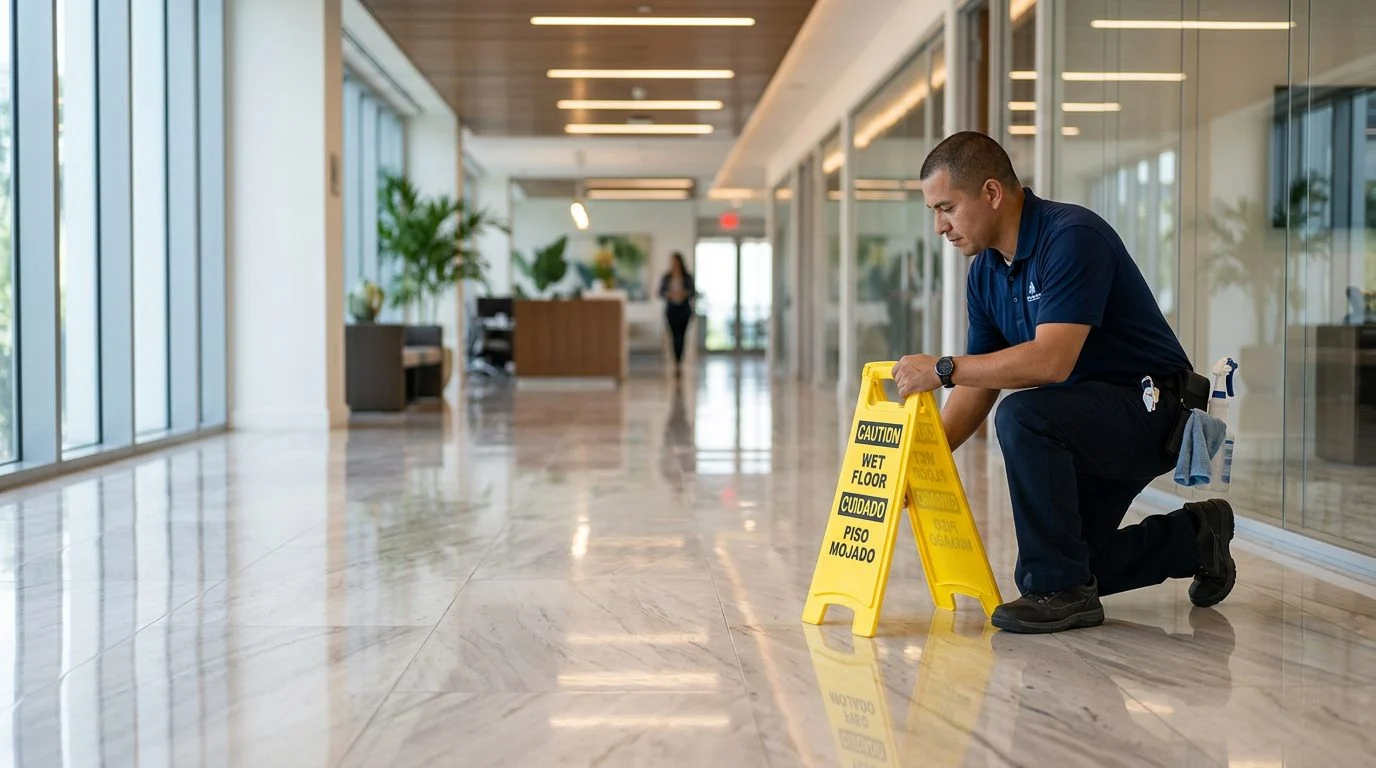
- Spills and hazards: immediate response, with wet-floor signs placed during cleanup.
- Common areas: elevator interiors, handrails, and high-touch surfaces.
- Related services: floor care maintenance, landscape services, and pressure washing, listed as separate line items if the property needs them.
Keeping janitorial products organized and easy to identify, with crews familiar with their proper use, is a common practice in well-run facilities. The agreement should say who provides that training. Having spill response steps in writing helps staff act quickly and consistently when a spill occurs.
If landscape work is added, watering schedules are worth planning carefully, and our team can talk through them during your free first consultation, which is confidential and carries no obligation to continue.
List supplies, equipment, and excluded tasks separately. That way, no one assumes they’re included.
Which Terms Matter Most in the Written Agreement?
The terms that matter most are service hours, task frequency, response times, reporting, and how changes get approved.
- Service hours: the exact daytime window and any weekend or holiday coverage.
- Task frequency: a set schedule for each area, such as lobby checks at fixed intervals.
- Response times: how quickly urgent requests like spills or broken fixtures get handled.
- Checkpoints: a shift checklist and a simple way for the property to sign off or raise concerns.
- Reporting: how completed tasks and open issues are logged and shared with the property contact.
- Supplies: who buys and stocks restroom and cleaning products.
- Absence coverage: how a replacement porter is arranged and communicated.
- Changes: how scope, price, and approval work when building use changes.
A vague phrase like “as needed” is a common gap. It sounds flexible, but it leaves both sides guessing about what counts as finished. Replace it with a time, a frequency, or a checklist item. Industry frameworks such as the ISSA Cleaning Industry Management Standard address service quality and staffing. They make a useful reference for what your agreement should track.
How Does the Process Work?
The process moves from a first consultation to a written draft, a signed agreement, and ongoing review.
- First consultation: talk through the property, its hours, its traffic, and its current problems.
- Walkthrough: review lobby, restroom, trash, and common-area needs, plus any floor care or exterior work.
- Written draft: put scope, schedule, response terms, and the reporting method on paper for review.
- Revisions and signing: the property manager or board requests changes, and then the agreement is signed.
- Onboarding: set up a site-specific checklist and a point of contact for the first few weeks.
- Ongoing review: check at agreed intervals that the schedule still fits, and change terms only in writing.
The start date and onboarding length are set in the agreement itself. You’ll confirm the schedule before any work begins. Each step also gives you a chance to correct the scope before anything takes effect.
Why Work With Gator Protection, Inc.?
Gator Protection, Inc. can put day porter service, floor care maintenance, landscape services, and pressure washing into one agreement for the same property.
- One agreement, four service lines: day porter service, floor care maintenance, landscape services, and pressure washing.
- Scope built around your building: terms reflect the building’s own hours and traffic, not a generic template.
- Support staff: our team includes assistants and office staff who help keep scheduling and communication organized.
- Clear written terms: scope, response times, and reporting are spelled out so both sides know what to expect.
- Regional coverage: services are offered throughout South Florida, including Miami-Dade County.
One set of terms and one reporting method means fewer handoffs get lost between separate vendors.
Common Questions About Day Porter Agreements
Most questions come down to scope, hours, and who handles what.
How is a day porter different from a nightly crew?
A day porter works during occupied hours to keep lobbies and restrooms presentable. Nightly crews usually handle deeper cleaning after hours.
Does a day porter replace floor care?
No. Porters handle daily upkeep, while floor care maintenance is scheduled separately and can be added to the same agreement.
Can the agreement change later?
Yes. Scope, hours, and frequency can be revised in writing as the property’s needs change.
Who decides what’s in scope?
The property and provider agree on it during drafting, and the agreement lists included and excluded tasks.
Who handles spills during the day?
The porter places wet-floor signs during cleanup. The agreement defines how spills and hazards get reported and handled.
Not sure what your next step is?
Talk it through with our team — the first consultation is free, confidential, and carries no obligation.

Talk to Gator Protection About Your Miami-Dade Property
Your next step is a first consultation to map out daytime coverage in writing.
Think about the busiest hour in your building. Who is responsible for the lobby and restrooms then, and how would you know the work was done? Those questions are where a written agreement starts.
Your first consultation is free, confidential, and comes with no obligation to continue.
If your Miami-Dade property needs that conversation, fill out the contact form or call the office to get started.
What You Can Expect From Our Agreements
Tasks Defined in Writing
We list the daytime duties, areas, and frequencies in the agreement so there is no guesswork once work begins.
Coverage That Fits Occupied Hours
Day porter work is scheduled around your tenants, staff, and visitors, so the building stays presentable while it is in use.
Coordinated With Your Other Services
Porter upkeep can sit alongside floor care maintenance and landscape services under one plan for your property.
Direct Communication
Our team stays in touch with your property contact to review the agreement and discuss adjustments as needs change.
Tip Before You Sign
Walk through the building during occupied hours with your property contact and note the high-traffic areas. A detailed site list makes the agreement easier to write and easier to follow.
Key Points to Cover in a Day Porter Agreement
Scope of Daytime Tasks
Define which lobbies, restrooms, entry points, and common areas are included and what routine upkeep looks like in each.
Hours and Staffing
Agree on the daytime hours the porter is on site and how coverage is handled for busy periods or building events.
Supplies and Equipment
Clarify who provides cleaning supplies and equipment so responsibilities are clear from the first day.
Review and Changes
Set a simple process for reviewing performance and updating the agreement when your building's needs change.
Ready to Put a Day Porter Agreement in Place?
More of our services
- Day Porter Service in Miami-Dade