
Day Porter Service · South Florida Condos
Day Porter Coverage Built Around Your Condo's Daily Hours
Learn how day porter hours are planned for condo buildings in Miami-Dade, Broward, and Palm Beach counties, and what shapes the right schedule for your property.
By Ryan Jurney · Published October 25, 2026
Why There Is No Single Hour Count for Every Condo
The short answer to how many hours of day porter does a condo need is that no single number fits every building. A day porter’s hours follow what the building needs during the day, not a fixed formula. If you sit on a board or manage a building, this question may have landed on you suddenly. Maybe the budget is due, or the lobby and restrooms look worse than they should by afternoon.
Start with the facts of your building. Count the units, floors, and elevators. Then look at how shared spaces are used from morning to evening. For an overview of the service, see our day porter service in Miami-Dade page.
The right answer depends on the facts of each building. The steps below help you turn those facts into a plan you can review with a provider.

If your board is stuck on a complaint, a budget line, or a gap in daytime coverage, you don't have to sort it out alone. Talk it through with our team — the first consultation is free, confidential, and carries no obligation.
What a Day Porter Does in a Condo
A day porter is a daytime, on-site worker. The job keeps shared areas clean and orderly while residents and guests are active. The role centers on visible upkeep, the spaces people walk through, wait in, and notice.
Typical duties include:
- Lobby and entry upkeep
- Restroom checks throughout the day
- Elevator and hallway tidying
- Trash and recycling room upkeep
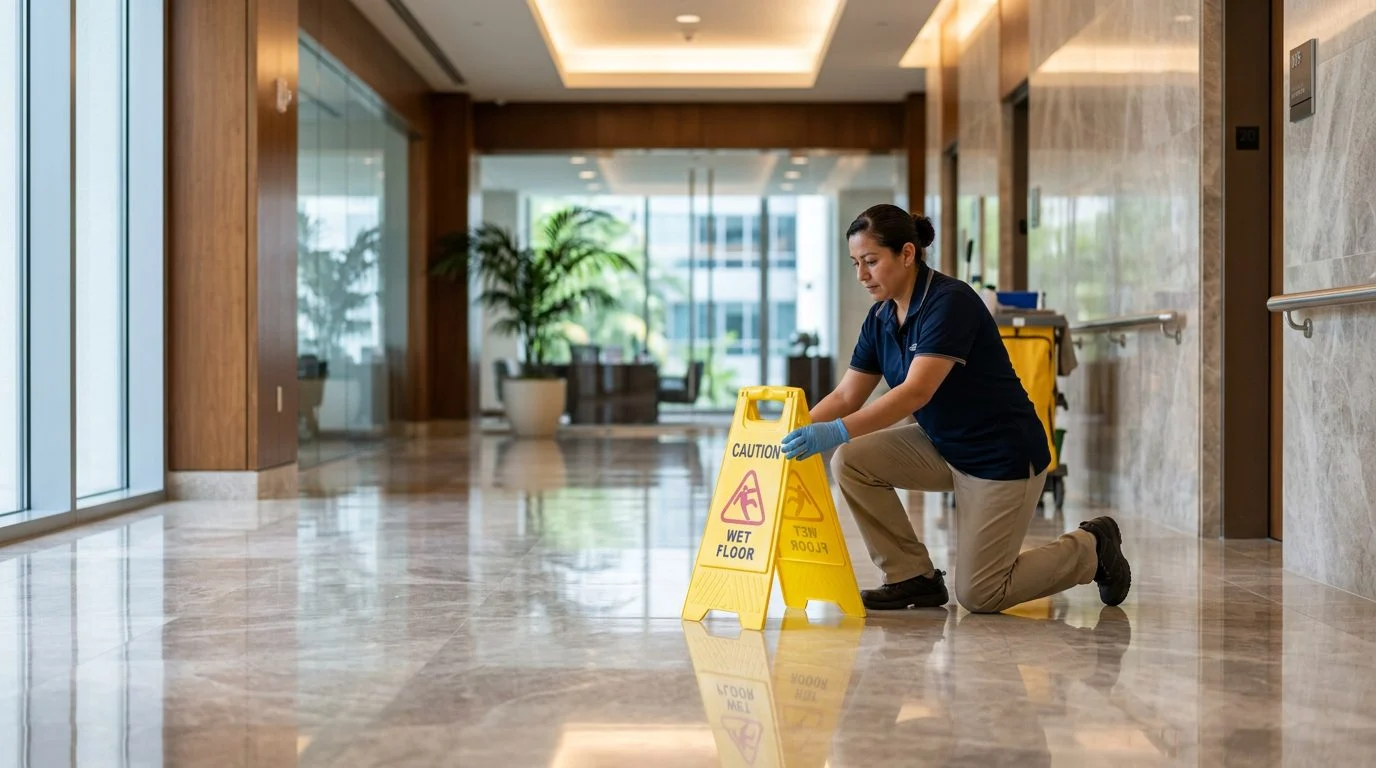
- Spill response, so a wet floor doesn’t sit unmarked
- Answering requests from the management office
A nightly crew usually works when the building is empty. That means a spill at 2 p.m. can wait until the next shift. Floor safety rules matter here. Keeping walking surfaces clean, dry, and free of slip hazards is a core goal of day porter and floor care work.
What Drives the Number of Hours
Traffic and duties set the hours. Square footage alone does not reliably set them. Four factors matter most.
Units, floors, and elevators. More residents mean more people using the lobby, elevators, and halls.
Amenities. A pool deck, gym, party room, or valet area each adds duties and another place to check.
Traffic patterns. Move-in and move-out days, deliveries, and commute peaks create short bursts of heavy use.
Front desk staffing. A staffed desk may take some lobby duties. Without one, the porter carries more of the lobby presence.
Keep floor care maintenance, pressure washing, and landscape work out of this daily count. They run as separate scopes on their own schedules. Landscape maintenance in these counties benefits from its own plan, separate from janitorial scheduling.
How Daily Hours Are Usually Divided
Most daily hours go to recurring tasks. A smaller block stays open for as-needed work. This split keeps the building looking right on a busy day.
A sample routine might look like this:
- Recurring blocks: lobby and entries, restroom rounds, common areas, trash and recycling room
- As-needed blocks: spills, resident requests, incidents, and extra attention on move-in days
Recurring tasks set the baseline. As-needed time is the buffer. If the buffer is too small, one spill can push every other task back. If it’s too large, you pay for idle time.
Chemical handling needs a plan too.
Request a written task list with time estimates for each block. That list ties the hours to specific duties, which makes the number easier to check.
Day Porter vs. Nightly Janitorial: Where the Hours Fall
A day porter maintains the building while people use it. Nightly janitorial usually works after hours, when the building is quieter.
Many buildings use both. The gap between shifts is where problems start. A lobby can look fine at 6 p.m. and be littered with mail and cups by noon. If no shift owns that window, nobody fixes it on time.
Plan the split on paper. List each task and assign it to a shift. A shared schedule document lets the board see which tasks belong to which shift, and where a daytime area could fall through.
If you notice these, contact us for a free, confidential first consultation with no obligation to continue, and we will review your building's needs. Talk it through with our team — the first consultation is free, confidential, and carries no obligation.
Questions to Ask Before Setting the Hours
Before you decide how many hours of day porter does a condo need, gather facts about the building. Start with these questions:
- Which complaints come up most about lobby or restroom condition?
- When is the building busiest?
- Which areas do residents see most often?
- Which tasks are currently assigned to no one?
Next, compare the existing contract’s scope and hours with what the building actually experiences. Note any gap between what’s promised and what happens.
Florida law sets a standard for condo leaders. Officers and directors have a fiduciary relationship to the unit owners, under Fla. Stat. § 718.111. Written reviews of hours and contract scope give the board a clear record of its decisions.
Revisit the hours when the building changes. New amenities or a shift in resident count can change daytime traffic.
When Coverage Is Missed: Common Problems and Next Steps
When coverage is missed, document the gap first. Note dates, times, and photos of the affected area. Then compare what was scheduled with what happened.
A common problem is a scheduled visit that never happens. Our guide on what to do when a cleaning company doesn’t show up lays out the steps a board can take.
Another common situation is a contract nearing its end. Review the notice terms early. Contact our team to talk through that planning.
Contact our team to discuss the paperwork your board needs for this service. Ask for records showing staff are eligible to work, and keep them on file. Contact our team to talk through what to check for your property.
Talk Through Your Building’s Hours With Gator Protection
If your board is stuck on a complaint, a budget line, or a gap in daytime coverage, you don’t have to sort it out alone. Our team can help you work through your building’s daytime needs. We can connect the task list to how the hours fit with nightly janitorial, floor care, pressure washing, and landscape work.
We offer a free first consultation, confidential and with no obligation to continue. To start, use our contact form, call the office, or request a free quote.

Frequently Asked Questions
How many hours of day porter does a condo need?
There is no single number that fits every condo. The right amount depends on the building’s size, number of units, foot traffic, and shared spaces. Request a free, confidential first consultation with no obligation to continue, and our team will review your building’s needs with you.
What factors affect how many day porter hours a condo building needs?
The main factors are the number of floors and units, how many residents and visitors use the common areas each day, and how many shared spaces need regular care, such as lobbies, elevators, mailrooms, and restrooms. Our team can walk through these details with you during a free first consultation.
Do smaller condo buildings need a full day of porter service?
Not always. Smaller buildings often need fewer hours, and coverage can be scheduled around the busiest times of day. Contact us for a free, confidential first consultation to find a schedule that fits your building.
How can I tell if my condo’s day porter hours are enough?
Warning signs include lobbies, elevators, or restrooms that look worn or dirty during the day, or common areas that go too long between cleanings. If you notice these, contact us for a free, confidential first consultation with no obligation to continue, and we will review your building’s needs.
Not sure what your next step is?
Talk it through with our team — the first consultation is free, confidential, and carries no obligation.
What We Review With Your Board or Management Team
Building Size and Layout
We consider the number of units, floors, and common areas that need regular attention throughout the day.
Foot Traffic and Resident Patterns
Lobby activity, move-in and move-out days, amenity use, and peak hours all influence how coverage should be scheduled.
Coverage Timing
We discuss which hours need an on-site presence and which tasks are better suited to other times of day.
Scope of Daily Tasks
We align the porter's responsibilities with the building's priorities, from lobby and elevator care to trash areas and restrooms.
Plan Before You Commit
Hours that look sufficient on paper can fall short once a building's real traffic is considered. Review your current schedule against resident activity before changing contracts.
How Our Day Porter Planning Works
1. Tell Us About Your Building
Share your location, unit count, and the common areas you need maintained during the day.
2. Review Your Needs
Our team reviews traffic patterns, shared spaces, and current cleaning gaps with you.
3. Receive a Proposed Schedule
You get a recommended coverage plan that you can review, adjust, and discuss at your own pace.
Ready to Talk About Your Condo's Day Porter Hours?
Related practice areas
- Day Porter Duties in a South Florida Condo Building