
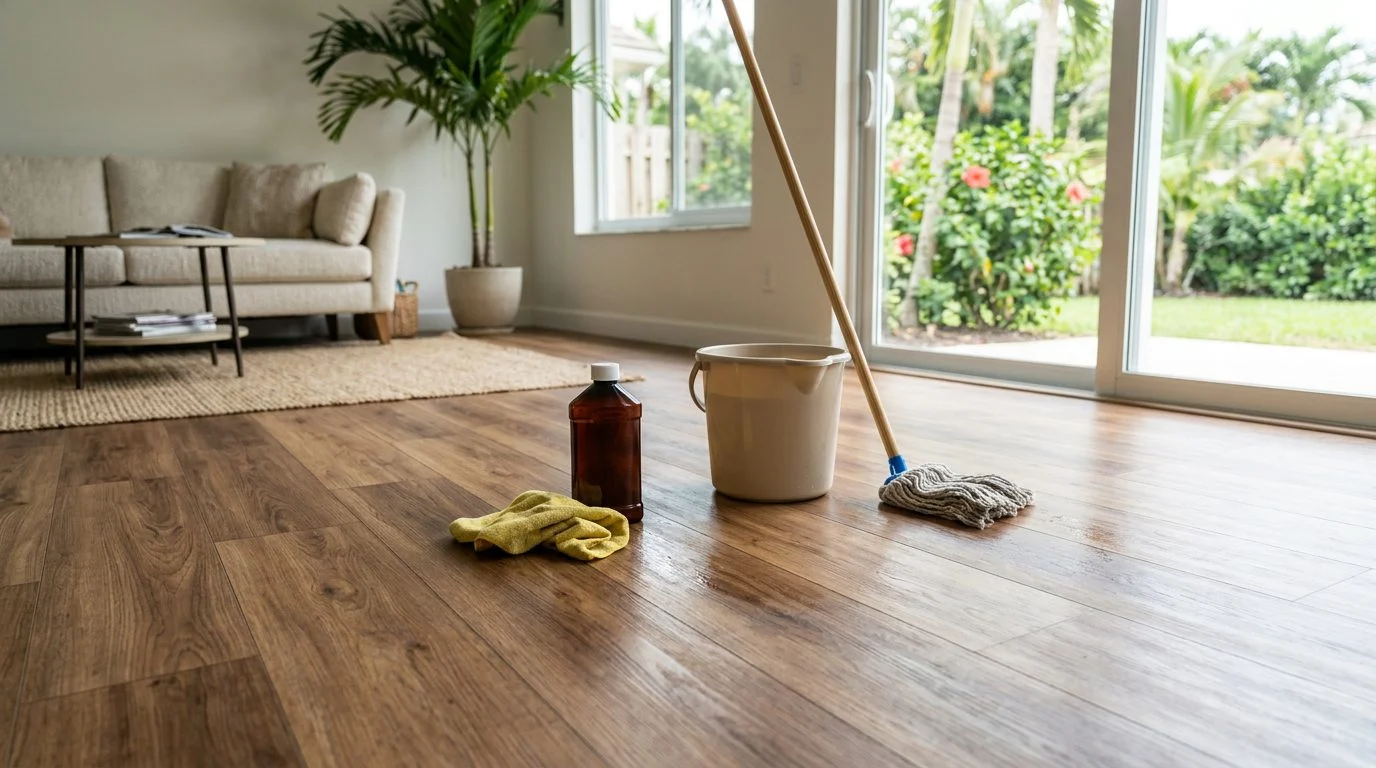
Floor Care Maintenance | South Florida
Keep Your Laminate Floors Looking New, Without the Wrong Soap
Why Murphy's Oil Soap isn't the right choice for laminate, and what to use instead. Gator Protection offers a free, confidential first consultation with no obligation to continue.
By Ryan Jurney · Published November 4, 2026
Is Murphy’s soap good for laminate floors?
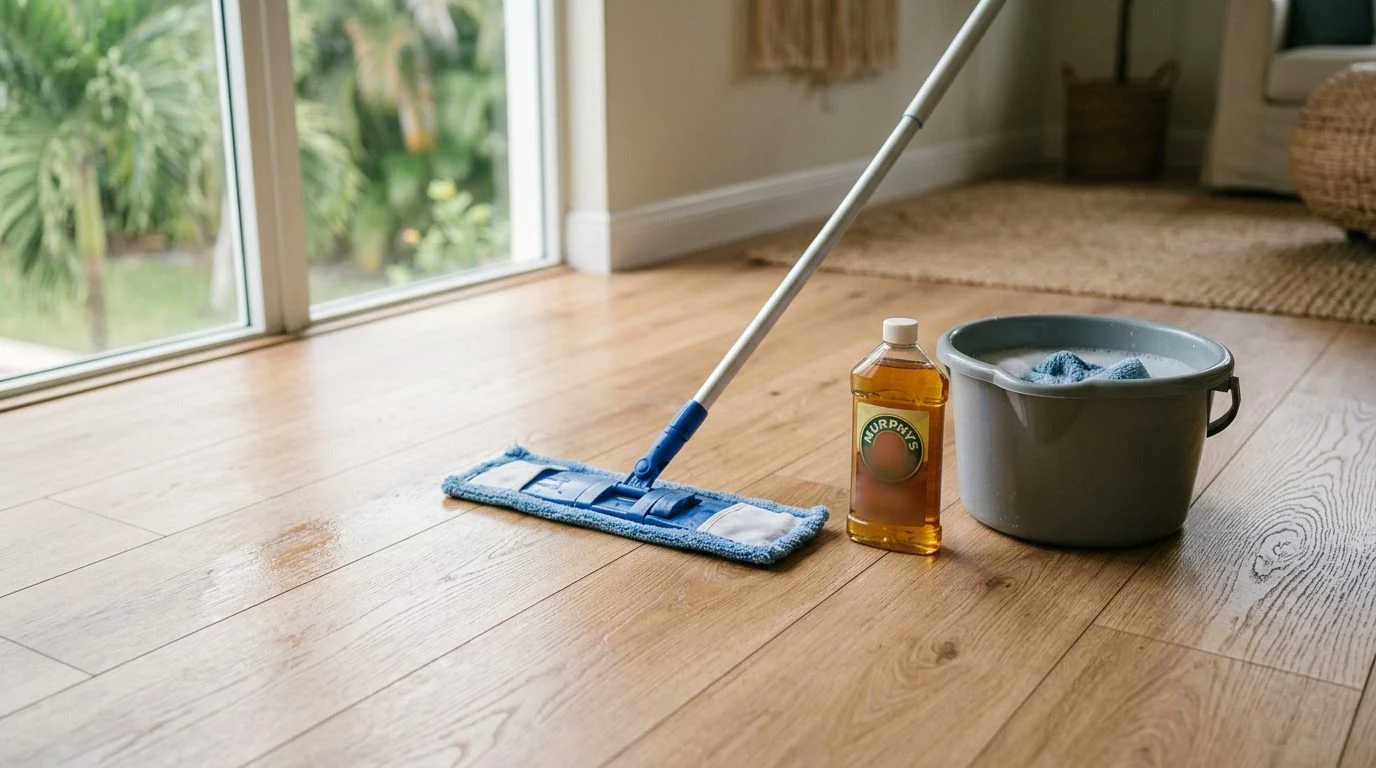
Generally, no. Murphy’s Oil Soap is an oil-based soap, and oil-based cleaners can leave a film on laminate. Murphy’s own floor cleaning mop guide describes its soap as a cleaner for finished wood floors. The same guide points to a washable microfiber mop for laminate.
Laminate is built differently from solid wood. It has a printed image layer under a clear protective wear layer. It doesn’t soak up cleaner the way raw wood does. Any leftover product stays on the surface, and that is why a soap that works on wood can leave laminate looking hazy.
Many people reach for Murphy’s because it’s already in the closet. Still, a cleaner that suits one floor type can be wrong for another. The answer also depends on the floor’s own care guidance, so check the manufacturer’s instructions first.
If you're responsible for floors you didn't clean, you don't have to sort this out alone. Talk it through with our team — the first consultation is free, confidential, and carries no obligation.
Why does oil soap leave residue on laminate?
Oil-based soap leaves a thin film on the floor, and that film builds up. Each mopping adds a little more. Over time the floor looks dull or hazy, even when it looks clean right after mopping.
The film also grabs dust and dirt. A hallway mopped in the morning can look dingy again by afternoon. The surface may also feel tacky under foot.
That matters in busy lobbies, hallways, and retail floors. A slippery spot in a high-traffic area is a safety problem, not just a cosmetic one. Buildup is gradual. A floor may look fine after one cleaning and show haze after several. Catching it early makes the fix easier.
Can you use Dawn dish soap on laminate or vinyl plank floors?
Dish soap is a poor choice for most floors, including laminate and vinyl plank. It’s made to cut grease on dishes, not to clean floor finishes. On a floor, it can leave streaks and a thin film.
Strong mixtures cause the most trouble. Too much soap in the water leaves a sticky feel that traps dirt. Even a small amount needs thorough rinsing.
Vinyl plank and laminate do better with a cleaner made for those floors. Use it diluted as directed, then follow with a clean, damp mop.
What soap works for laminate floors?
Choose a pH-neutral, residue-free cleaner that the floor’s manufacturer or a flooring professional recommends for laminate. Read the label and check the dilution before you buy.
Use a damp microfiber mop, not a soaked one. Wring it out well. Excess water can seep into seams and make edges swell. Dry the floor promptly so no standing moisture stays on it.
Not sure what your next step is?
Talk it through with our team — the first consultation is free, confidential, and carries no obligation.
What should you not clean laminate floors with?
Avoid soaking the floor, and avoid oil-based products, wax, polish, and heavy-film cleaners. These products build up and dull the finish.
Avoid abrasive pads, steel wool, and stiff brushes. They can scratch the wear layer. Avoid steam mops unless the floor’s manufacturer lists them as acceptable.
Standing water and film both work against that goal. When in doubt, test a small hidden area first.
How do you remove oil soap residue from laminate?
Start by mopping with a clean, damp microfiber pad and a small amount of pH-neutral laminate cleaner. Work in small sections so the cleaner doesn’t dry before you rinse it.
Rinse with clean water. Change the water and the pad often so you don’t spread the film around. Dry the floor fully, then check it in natural light to see whether the haze is gone.
Old film from months of use may take several passes. If dullness covers a large area, the floor may need professional attention rather than repeated home cleaning.
Talk with our team about floor care maintenance
If you’re responsible for floors you didn’t clean, you don’t have to sort this out alone. Building managers and staff often inherit a dull, sticky, or slippery laminate floor after someone else’s cleaning went wrong.
Gator Protection, Inc. provides floor care maintenance for commercial spaces across South Florida, including Miami-Dade, Broward, and Palm Beach counties. Our team can look at the floor type and the cleaning routine in place.
Can Murphy’s oil soap be used on floors?
Murphy’s Oil Soap is designed for finished wood floors. For laminate, choose a cleaner made for laminate instead.
What soap is safe for laminate floors?
A pH-neutral, residue-free cleaner that the floor’s manufacturer recommends is the usual choice. Dilute it as directed.
Why do floors feel sticky after mopping?
Leftover cleaner film is a likely cause. Rinse with clean water and dry the floor fully.
If the floors in your building look dull or feel slippery after cleaning, reach out. Our free first consultation is confidential and comes with no obligation to continue. Contact Gator Protection to start the conversation.
Have questions about what happened?
Ask our team directly. The first conversation is free, confidential, and there is no obligation to continue.
How Gator Protection Approaches Floor Care
Careful Product Choices
We select cleaning products that suit the floor surface, so laminate is never treated with a soap meant for finished wood.
Scheduled Maintenance
Regular floor care keeps high-traffic commercial spaces clean and presentable between deeper cleanings.
South Florida Coverage
We support commercial properties across Miami-Dade, Broward, and Palm Beach counties, including Coral Gables, Brickell, and South Beach.
Free First Consultation
Our first consultation is free, confidential, and comes with no obligation to continue.
Warning: Skip the Oil Soap on Laminate
Murphy's Oil Soap is designed for finished wood floors. Oil-based and residue-leaving soaps can dull laminate and leave a film that attracts dirt. Choose a cleaner made for laminate and follow the floor manufacturer's directions.
A Simple Routine for Cleaning Laminate Floors
1. Check the Care Guide
Start with the floor manufacturer's cleaning instructions so you know which products and methods are approved.
2. Choose a Laminate Cleaner
Use a pH-neutral, residue-free cleaner made for laminate rather than a general-purpose or oil-based soap.
3. Dilute and Damp-Mop
Mix the cleaner as directed and mop with a barely damp cloth or pad. Excess water can seep into seams and cause damage.
4. Dry the Surface
Wipe up any standing liquid promptly so the floor doesn't stay wet or streaky.