
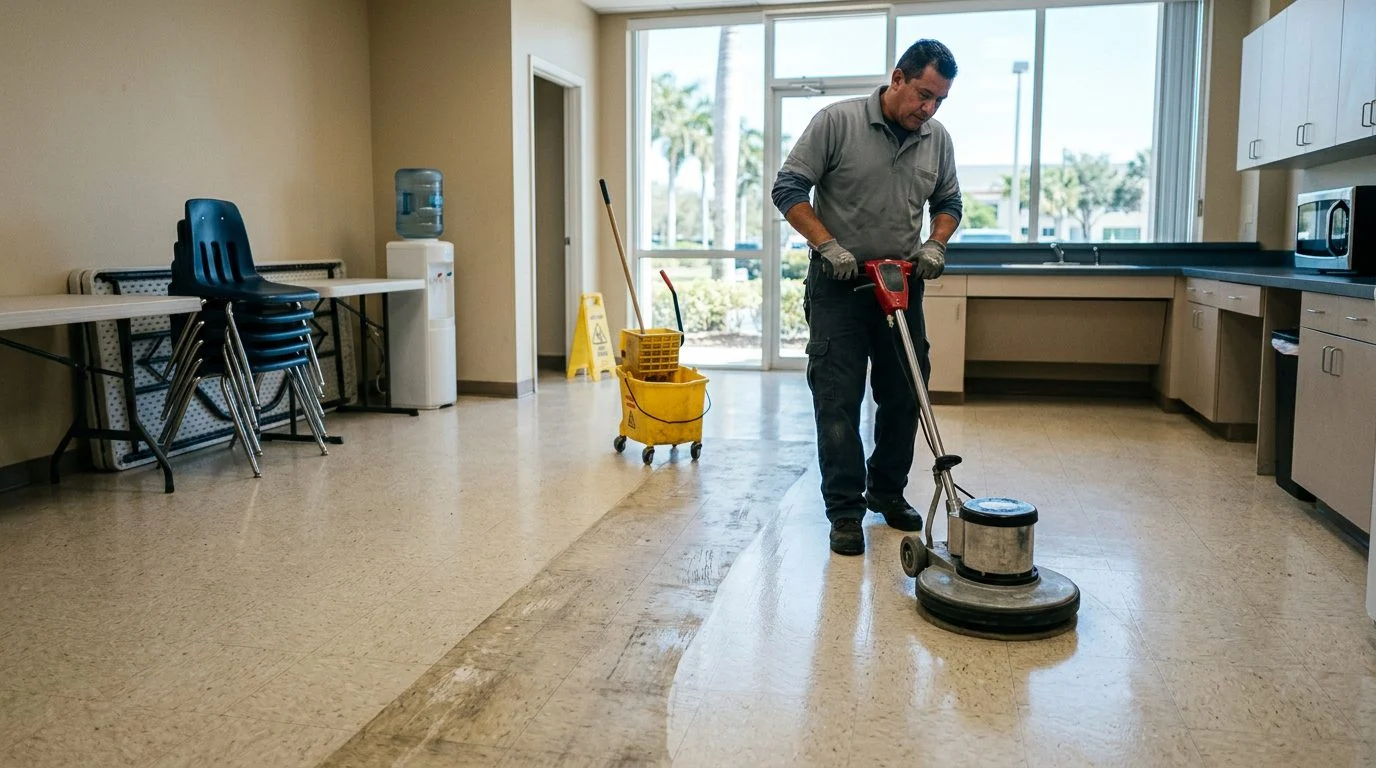
Floor Care Maintenance | South Florida and Atlanta
Dull Floors Right After Cleaning? Here's What's Going On
A floor that looks worse the moment the crew leaves is frustrating for any store owner. Learn the usual causes and how a regular maintenance plan keeps your floors in better shape.
By Ryan Jurney · Published November 26, 2026
You mopped the floor, and it still looks dull, cloudy, or streaky. A floor looks dull after mopping when something is left on it. The usual causes are leftover cleaner, dirty mop water, mineral deposits from hard water, built-up wax or grout haze, and a cleaner that does not suit the floor. This page covers each cause in a practical order you can follow during a shift.
Too Much Cleaner Leaves a Film on the Floor
Using more cleaner than the label directs is one of the most common mopping mistakes. Extra product does not clean better. It dries into a thin, dull film that sits on top of the floor.
Look for the signs. The floor looks flat or streaky and feels slightly tacky underfoot. Dull patches often show up where foot traffic is heaviest, such as near entrances and checkout lanes. The cleaning may have worked, but the residue still makes the floor look worse.
Many crews add a little extra cleaner because the floor looks dirty. That habit causes the problem. A floor that still looks dirty after a rinse often needs fresh water and clean pads, not more product.
Fix it in a few steps. Measure the dilution exactly, not by eye. Write the mix on the bucket so every shift mixes it the same way. Wring the mop until it is damp, not soaked. If you suspect residue, rinse the floor with clean water, mop again, and let it dry fully before you judge the shine.
If a dull floor landed on your desk after a customer complaint, you don't have to sort out the cause alone. Talk with our team about your store floors and the cleaning routine in place. Talk it through with our team — the first consultation is free, confidential, and carries no obligation.
Dirty Mop Water and Worn Pads Spread Grime
Mop water picks up soil with every pass. Once it turns gray, reusing it puts that soil back on the floor. The floor ends up coated with grime instead of cleaned.
A dirty or saturated mop pad does the same job. It leaves gray marks, streaks, and a hazy look, even when the cleaner was mixed correctly. A sour or stale smell from old water is another clue. It means the water has been in use too long.
Change the water at set times during a shift, and do not wait until it looks dirty. Keep a second bucket for rinsing when the job is heavy. Rinse pads often, and replace any pad that no longer leaves a clean finish. A worn pad spreads soil that a fresh one would pick up.
Mop heads should also dry between uses. A damp head left in a closet can sour and carry odor into the next shift.
Hard Water Deposits Cause a Cloudy Haze
Hard water carries dissolved minerals. When the water dries on a hard floor, those minerals stay behind as a cloudy or chalky haze. Tile and other hard surfaces show this most clearly, especially in dull patches that look damp even after mopping.
The problem builds over time. Each mopping can leave a little more mineral behind. The floor slowly looks duller, even after a careful cleaning. If the haze comes back after every clean, mineral deposits are a likely cause. Rinsing with clean water and avoiding too much water on the floor helps keep deposits from forming and sitting on the surface.
Once deposits have built up for a long time, routine mopping may not remove them. In that case, a targeted cleaning step is the better plan. Schedule it as separate work rather than trying to mop the haze away during a busy shift.
Wax Buildup and Grout Haze Dull the Finish
Floor finish and wax add a thin layer of shine. When they build up in thick coats, they trap dirt and can turn yellow or dull. High-traffic lanes usually show the damage first, because that is where the coating wears and collects soil.
Grout haze is a related problem. It forms as a light film on grout lines and tile when cleaner or mineral residue is left behind. The grout can look dirty even after mopping, because the film sits right in the lines.
When buildup is the cause, stripping the old finish and reapplying a thin, even coat can restore clarity. Hard-surface common-area floors call for ongoing routine maintenance, including sweeping, mopping, stripping, waxing, and buffing. Treat stripping and waxing as part of your floor care maintenance plan, not a one-time fix.
Freshly waxed floors can also be slippery. OSHA slips and falls guidance says wet and newly waxed surfaces increase slip risk.
Using the Wrong Cleaner for Your Floor
Porcelain tile, sealed concrete, and luxury vinyl do not respond the same way to every product. A cleaner that works well on one surface can leave a film on another. The floor material decides which product fits.
Some cleaners are too acidic, too alkaline, or too oily for a given finish. When that happens, the cleaner can dull the finish or leave residue behind. Read the product label, and match the cleaner to the floor material and the type of soil. Do not switch products without a reason. Each change can leave a new residue that is hard to rinse away.
The EPA Safer Choice floor products list identifies floor-cleaning, floor-finish, and floor-stripper products that carry Safer Choice certification. It is a useful reference when you compare product options.
A steady routine with the right products tends to give a more even look than frequent product changes.
Why Floors Look Dusty or Smell After Mopping
Fine dust settles on floors that were not swept or dry-dusted first. A damp mop then smears that dust into a dull film. Sweeping or dry-dusting before mopping removes loose debris, so the mop is not spreading it around.
Odor has its own causes. Leftover cleaner, standing or dirty water, and damp pads that never dried can all leave a smell after mopping. A floor that smells is usually holding moisture or residue.
Let the floor dry fully before customers walk on it. Dry mop heads and store them so they do not sour between uses. Keep wet areas marked while they dry so people can see them.
Not sure what your next step is?
Talk it through with our team — the first consultation is free, confidential, and carries no obligation.
How to Restore Shine and Keep It
Start with a simple order. Check for residue first. Then check the water and pads. Next, look for mineral haze, then buildup, then whether the cleaner matches the floor. Most dull floors reveal their cause in that order.
Once you find the cause, a clean, rinse, and dry sequence often brings back the look of the floor. Thick buildup or heavy mineral deposits may need specialized care. Plan that work as its own job rather than mopping harder.
Gator Protection, Inc. provides floor care maintenance for commercial floors throughout South Florida. Ongoing maintenance keeps routine cleaning, rinsing, and periodic stripping and waxing on a schedule.
Does too much cleaner make floors look dull?
Yes. Leftover cleaner dries into a thin film that dulls the shine and can feel tacky. Rinse with clean water and let the floor dry before you judge it.
Why does a floor smell after mopping?
Leftover cleaner, dirty mop water, and damp pads that never dried can all cause odor. Change the water and dry the pads between uses.
Should a store floor be dry before customers walk on it?
Yes. Wet and newly waxed floors raise slip risk, so allow time for the floor to dry.

Talk With Our Team About Your Store Floors
If you are looking into this for a store you manage or own, you may be doing it because a customer or inspector raised the floor. You may not be ready to hire anyone yet, and that is fine.
Our team can talk through the floor in question, the cleaning routine in place, and whether ongoing floor care maintenance would suit your store. La consulta inicial es gratuita, confidencial y sin compromiso de continuar.
When you are ready, reach out through our contact form or call the office to start the conversation.
Don't Add More Cleaner
When a floor looks dull, it is tempting to use extra product. More cleaner usually leaves more residue, which makes the problem worse. Rinse the floor with clean water and let it dry before you judge the result.
How We Can Help Your Store
Free First Consultation
The initial consultation is free, confidential, and carries no obligation to continue.
Scheduled Floor Care Maintenance
Regular cleaning on a set schedule helps prevent buildup before it dulls the finish.
Day Porter Service
Our team keeps floors and common areas looked after during business hours.
Trained Attention to Detail
Our team follows careful cleaning and rinsing steps so floors dry clean and bright.
Get a Floor Care Plan That Fits Your Store
More of our services
- Floor Care Maintenance for Miami-Dade Condos, Apartments and Gated Communities
- Burnishing vs Buffing vs Scrubbing: What Each Does to Floors