
Floor Care Maintenance · South Florida
Bring Back the Shine in Your Terrazzo Floors
Worn, dull, or stained terrazzo can often look better than you expect. Here is how to tell what your floor needs and when to bring in help.
By Ryan Jurney · Published November 18, 2026
Your terrazzo floor looks dull, stained, or worn, and you want to know if it can look right again. In many cases it can be improved. Terrazzo can usually be ground, polished, and sealed back to a smoother finish, but the result depends on the floor’s condition.
Can Terrazzo Floors Be Restored? The Short Answer
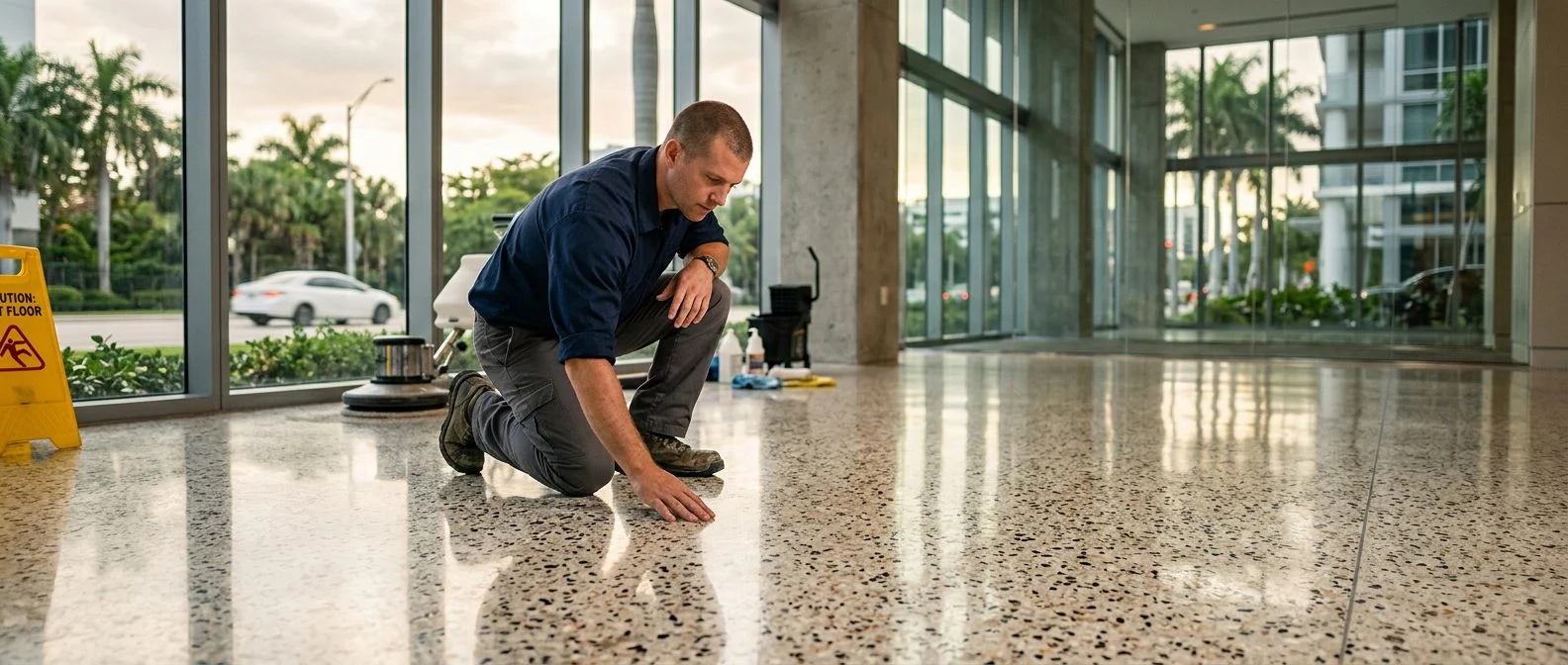
Terrazzo is a matrix, usually cement or epoxy, with marble or stone chips set into it. Because the chips are hard and locked in place, the surface can be ground down and polished. That removes the worn top layer and brings the color of the chips back up.
Restoration improves how a floor looks. It does not make an old floor new. Deep chips or cracks may not disappear completely.
Three things decide how much a floor can recover: its age, how deep the wear goes, and how much damage it has taken. You can’t judge those from a photo. An on-site look is the most reliable way to know what a specific floor needs.
If your terrazzo has lost its shine and you're unsure whether it can be brought back, we're glad to talk it through and look at the floor with you. Talk it through with our team — the first consultation is free, confidential, and carries no obligation.
What Causes Terrazzo to Dull or Look Worn
Grit does most of the damage. Sand and dirt get tracked in on shoes and cart wheels. They scrape the polished top a little at a time, leaving a hazy, matte look. Entries, hallways, lobbies, and commercial corridors show this wear first because they carry the most foot traffic.
Cleaning products can add to the problem. Harsh or acidic products can dull the polish over time. The NTMA terrazzo care guide covers the products to avoid. Our guide to products to avoid goes into more detail.
Worn sealer is the other common cause. When the sealer thins out, dirt, oils, and liquids can soak into the surface and leave stains. The longer a stain sits, the harder it is to lift.
Many owners wait until the floor looks clearly worn before they act. By then, the wear has often reached deeper than the polish. Acting earlier usually means less grinding and a shorter job.
The Restoration Process: From Dull to Dazzling
Restoration starts with an assessment. The floor is checked for cracks, chips, loose areas, and how deep the wear goes. Then comes deep cleaning to lift embedded soil, so the true condition shows.
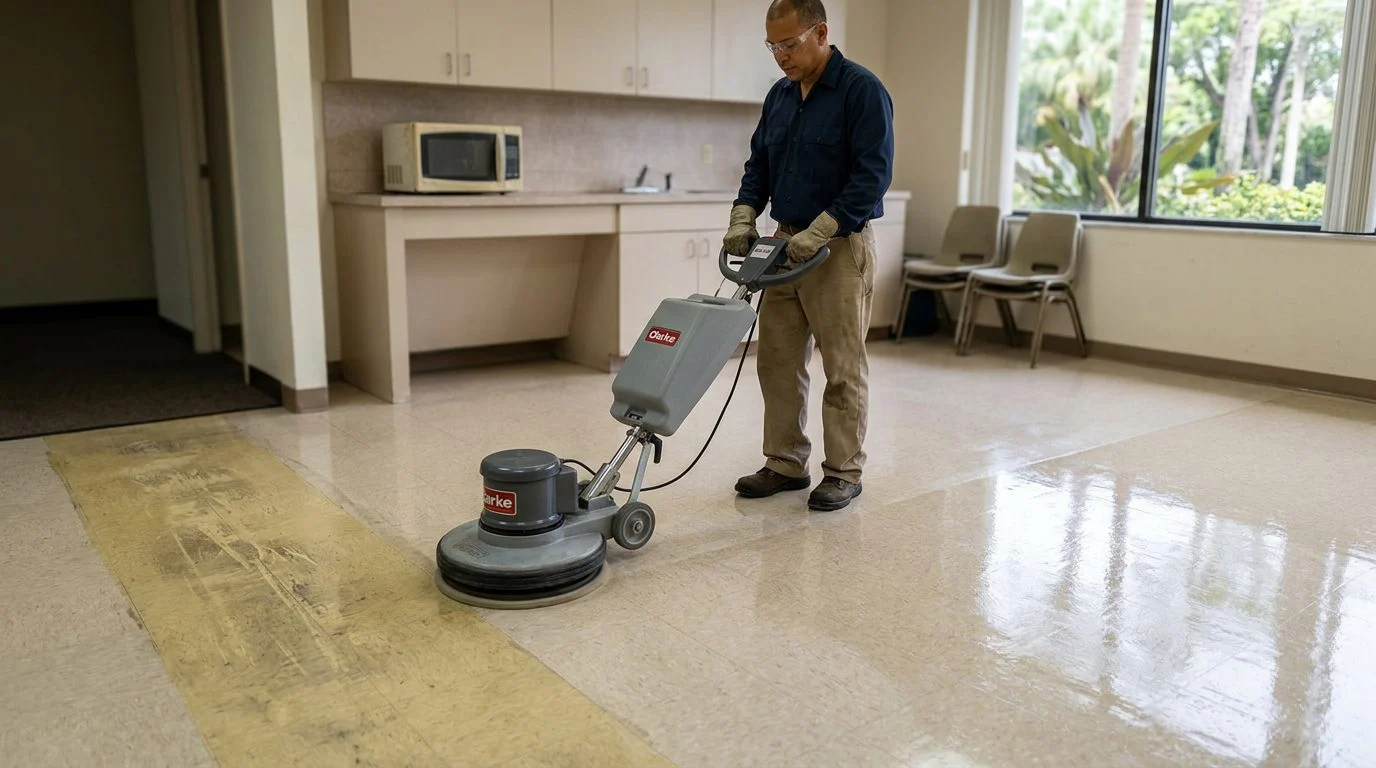
Next, grinding or honing removes the worn top layer and levels uneven spots. Polishing follows in progressively finer steps. This brings back the shine and the color of the chips. A sealer goes on last to protect the finished surface.
Each step builds on the one before it. Timing depends on the size of the area and how much work it needs. The NTMA guide also addresses stripping old sealer and resealing as needed. That step matters when the old coating has broken down.
Stain Removal, Chip Repair, and What Restoration Can Address
Most surface stains lift during cleaning and polishing. Deeper stains may need extra treatment. Results vary by stain type and by how long the stain has been in the stone.
Small chips and cracks can often be filled and blended so they are less noticeable. Polishing also restores the contrast between the chips and the matrix. That contrast is often what makes a floor look worn in the first place.
Large cracks, structural movement, or widespread damage need a separate look. Polishing alone does not fix those problems. The assessment shows which situation you have before any work starts.
Keeping Restored Terrazzo Looking Its Best
Dust mopping or sweeping on a regular schedule removes grit before it can scratch the surface. Use neutral-pH cleaners made for stone and terrazzo. The NTMA guide covers recommended neutral-pH products and cleaning procedures. Avoid acidic products and abrasive pads.
Re-seal on a schedule that matches the traffic. The EPA Safer Choice product list identifies floor-cleaning and granite/stone cleaning products certified under EPA criteria. Use that list as a reference when you choose cleaners.
Regular floor care and attention to moisture on busy commercial surfaces are part of keeping a property well maintained. Good daily habits support both the look and the safety of the floor.
A floor care maintenance plan helps keep a floor from sliding back into a dull, worn state between restoration projects. Good habits help a restored finish last longer.
Can I restore terrazzo myself?
Some surface cleaning is simple. Grinding and polishing require equipment and a careful assessment, so a professional look is the safer first step.
Does restoration remove every crack?
No. Large cracks and structural movement need separate evaluation, and polishing alone does not fix them.
Cost, Timing, and Next Steps for Your South Florida Property
Our team can see the floor in person during your first consultation. Commercial buildings in Miami-Dade, Broward, and Palm Beach counties often need work scheduled around business hours. A day porter service can keep the floor looking good in between projects.
Maybe you manage a lobby that has lost its shine. Maybe you’re handling a family member’s home or a rental unit’s floor you didn’t plan to deal with. Either way, you may be weighing options without a clear plan yet.
If you’re ready to find out whether your terrazzo can be restored, reach out through our contact form, call the office, or request a quote. The initial consultation is free, confidential, and carries no obligation to continue. (La consulta inicial es gratuita, confidencial y sin compromiso de continuar.)
Why Property Managers Choose Gator Protection
Assessment First
We look at the condition of your floor before recommending any work, so you know what is needed and why.
Scheduled Around Your Operations
Our team plans floor care work around your business hours to limit disruption to tenants, staff, and visitors.
Serving South Florida
We provide floor care maintenance across Miami-Dade, Broward, and Palm Beach counties, including Coral Gables, Brickell, and South Beach.
Part of a Full Service Team
Floor care pairs with our day porter, landscape, and pressure washing services, so one provider can keep your property looking its best.
Check Before You Clean
Harsh acidic cleaners and aggressive machine work can dull or etch terrazzo. Before you start any restoration project, ask for an assessment of the surface and any cracks.
How a Terrazzo Restoration Typically Progresses
Assessment
We examine the surface, identify wear, staining, and any cracks, and explain which steps make sense for your floor.
Deep Cleaning
Embedded dirt, grime, and old residue are removed so the true condition of the stone and matrix becomes visible.
Grinding and Honing
Worn or uneven areas are smoothed with diamond abrasives, progressing through finer grits to level the surface.
Polishing and Protection
The floor is polished to the desired sheen and sealed, then maintained with a routine cleaning schedule.
Talk With Gator Protection About Your Terrazzo Floors. Your First Consultation Is Free.
More of our services
- Day Porter Service for Gated Apartment Communities in Miami-Dade
- Day Porter Service for Wynwood and Midtown Mixed-Use Buildings
- Resident Locked Out of a Miami Condo Lobby After Hours?
- Signs Your Miami Condo Day Porter Is Overloaded