
Day Porter Service · Miami
Day Porter Service in Miami, Managed With Care
Learn what a day porter does, how to write a clear scope, and how to switch to Gator Protection with a smooth handover across Miami-Dade, Broward, and Palm Beach counties.
By Ryan Jurney · Published October 25, 2026
A day porter service keeps shared areas of a building clean, safe, and presentable while people use them. In Miami-Dade, that means lobbies, elevators, restrooms, and entrances that stay in good shape from morning to evening. This guide explains what the role covers, how it differs from janitorial work, and how a board or property manager can switch vendors without a gap in coverage.
What a day porter service covers in Miami-Dade buildings
A day porter is on-site daytime staff who keep shared spaces clean and orderly during business hours. The work is visible. Residents, tenants, and visitors see it happen, and they notice when it slips.
Daytime presence matters in Miami-Dade for a few reasons. Condos and apartment buildings have steady foot traffic from residents, guests, delivery drivers, and contractors. Commercial properties see the same pattern during office hours. Trash builds up, spills get walked through, and restrooms need checks between cleanings. A porter on site can catch these problems in minutes instead of waiting for the next scheduled visit.
A porter also serves as the building’s front line. Staff can point people to the right area and report a broken light or a leaking faucet to the manager. That is not a substitute for maintenance, but it shortens the time between a problem and a fix.
Coverage is not one-size-fits-all. A small condo lobby needs a different plan than a multi-story tower with a pool deck and a parking garage. The right scope comes from a walk-through of the actual property. For a fuller definition, read our guide on what a day porter service includes.

Not sure what your next step is?
Talk it through with our team — the first consultation is free, confidential, and carries no obligation.
Day porter duties, task by task
Most day porter work is a set of recurring tasks done on a set schedule. A good scope lists each task, how often it happens, and which areas it covers.
Common tasks include:
- Lobby and entryway care, such as sweeping, spot mopping, and wiping glass doors
- Restroom checks, with restocking and cleaning as needed
- Trash and recycling routes from common areas to the collection point
- Wiping elevator cabs, handrails, call buttons, and other high-touch surfaces
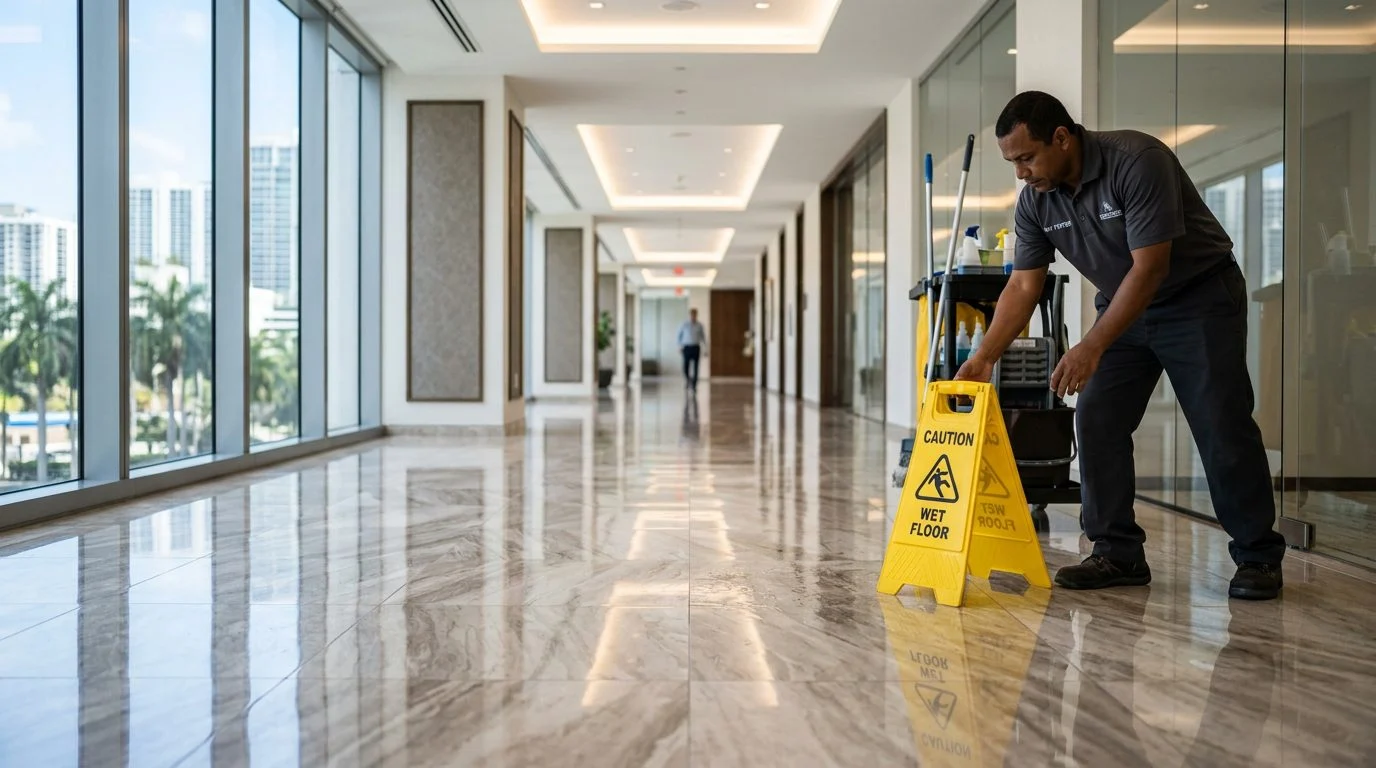
- Spill response, which means setting out a wet-floor sign and cleaning the spill quickly
Spill response matters more than it sounds. Wet floors create slip hazards. eCFR Subpart D, Walking-Working Surfaces
Tasks should be grouped into a daily or weekly schedule the property manager can review. Timing should match building traffic. Heavier lobby work fits before the morning rush, and restroom checks fit midday. A written schedule gives the manager something to check against.
Ask for the schedule in writing before work starts. Many disputes begin when a task was assumed, not agreed. Put a frequency beside each task. Also list the areas the porter does not cover, such as garages or pool decks handled by another crew.
Day porter service: what it covers
A day porter works in view during business hours. A janitor usually cleans on a set shift, often after the building empties out.
The difference shows up in three places. The first is timing. A porter handles daytime presence and quick fixes.
The second is visibility. A porter interacts with residents, tenants, and staff. A janitor often works with few people around. The third is pace. Porter work responds to what happens: spills, trash, and complaints get handled as they come up. Janitorial work follows a plan.
A building may need one, the other, or both. A small office with light traffic may only need a scheduled janitorial crew. A busy condo lobby often needs a porter during the day and a janitorial team at night. The right mix depends on traffic and building rules.
Commercial janitorial work can overlap with porter duties. The contract should say who does what. Otherwise two crews may clean the same lobby while no one cleans the restroom.
Floor care, pressure washing, and landscape work alongside the porter
Floor care, pressure washing, and landscape maintenance handle the parts of a property a porter does not reach.
Floor care maintenance is scheduled work that protects flooring in lobbies and corridors between porter visits. It can include scrubbing, buffing, and recoating, depending on the floor type. A regular plan keeps floors consistent and reduces the buildup that makes spills harder to clean.
Cleaning chemicals carry federal rules too. Ask any vendor for its Safety Data Sheets and training records. OSHA Hazard Communication Standard
Pressure washing covers walkways, entrances, garage floors, and exterior surfaces. It works best on a schedule, because grime, mildew, and tracked-in sand build up in the same places again.
Landscape maintenance covers grounds and common outdoor areas. In South Florida, watering rules shape the plan. A landscape plan should follow those rules from the start. SFWMD landscape irrigation rules
If a vendor applies pesticides or fertilizer on the grounds, ask for its state license. FDACS pesticide licensing
Bundling these services under one vendor can simplify scheduling and communication. The manager makes one call, gets one schedule, and receives one set of records.
How many hours and how much staffing a building typically needs
Required coverage depends on the building. No single hour count fits every property.
Several factors drive the number. Building size and floor count matter. Foot traffic matters more. A lobby used by hundreds of residents needs more attention than one used by a few tenants. Amenities add work, including pools, gyms, party rooms, and parking garages. The scope the board or manager wants also matters. A building that expects a spotless lobby all day needs more coverage than one that accepts a clean-enough standard.
A walk-through is how the scope gets built. A trained team member walks the property with the manager, notes traffic points, and marks where trash, restrooms, and elevators get the most use. Those notes become a proposed schedule. The manager can then review hours, tasks, and gaps before signing anything.
Be careful with a proposal that lists hours but no tasks. Hours alone do not show what gets cleaned or when. Ask for both. The schedule should show start and end times, the tasks in each block, and who supervises the work.
A common mistake is copying hours from another building. A condo and an office tower of the same height can have very different traffic patterns. Let the walk-through set the number, not a template.
Day porter needs across Miami-Dade property types
Each Miami-Dade area puts different pressure on a porter. Three examples show how scope changes.
South Beach condo buildings often have heavy lobby traffic and frequent guest turnover. Doors, glass, and entries take the most wear. A porter’s day usually centers on keeping the lobby and elevators presentable as people come and go, plus quick response to spills and trash near the entrance.
Coral Gables gated communities depend on grounds, entries, and shared spaces that look consistent from the street. A porter there often works alongside landscape maintenance and pressure washing of walkways. The goal is a consistent look across the whole property.
Brickell apartment and mixed-use buildings often see heavy elevator and amenity use. Residents move between floors, gyms, and lounges all day. A porter can focus on elevator cabs, amenity rooms, and the trash route between floors.
Gator Protection, Inc. provides these services throughout South Florida, including Miami-Dade, Broward, and Palm Beach counties. The same checklist applies across those counties, but each building’s schedule should follow its own traffic.
Have questions about what happened?
Ask our team directly. The first conversation is free, confidential, and there is no obligation to continue.
Warning signs your current vendor is failing
The clearest warning sign is coverage you can see is missing. Missed shifts, unfilled gaps, and lobbies or restrooms that look neglected at the same time of day are common examples.
Watch for these signs:
- Shifts that don’t happen, or that start late without notice
- Gaps in the daily schedule where no one covers the lobby or restrooms
- Complaints that come back again without a fix
- Restroom or lobby condition that changes from one day to the next
- Slow replies when the manager asks for service
A pattern matters more than a single bad day. One missed shift can be an accident. Repeated missed shifts in the same month point to a problem with the vendor.
Document the problem as it happens. Write down dates, times, and what was missed. Take dated photos of the affected area. Send written notices that name the specific issue and ask for a fix by a set date. This record keeps the conversation factual and supports any later decision.
Reviewing your contract and timing the switch
Read the current contract’s term, renewal, notice, and termination terms before you act. Those clauses control how and when you can switch.
Look for the end date, any automatic renewal, the notice period, and the method of notice the contract requires. Some agreements require notice by a set method. Missing a notice window can extend an agreement you want to end. If a clause is unclear, have the board or manager read it closely before sending notice.
Plan an overlap. The smoothest transition starts the new vendor before the old one ends. That gives the new crew time to learn the building and prevents a service gap. Set a handoff date in writing, and name who walks the building with the new crew.
For condominiums, keep the paperwork.
Send written notice that states the end date and the handoff date. Keep a copy and proof of delivery. Clear notice protects both sides and answers the question of who is responsible on each day.
Vetting a new vendor and the paperwork to request
Contact our team to learn about our insurance, licensing details, and how we verify our workers.
Proof of insurance protects the building if something goes wrong on site. Licensing matters for any chemical or pesticide work. Employment eligibility matters too.
Florida law also makes it unlawful to knowingly employ, hire, recruit, or refer a person who is not authorized to work under U.S. immigration law.
Ask for the vendor’s Safety Data Sheets and chemical training records. Ask for the names of the people who will supervise the site. Contact our team to talk about your building’s size and foot traffic.
Our team can walk you through the scope, schedule, supervision, and communication terms in a written proposal. Ask how the vendor reports missed work and how quickly it responds to a manager’s call.

Next step: request your free walk-through quote
If your porter is missing shifts or your cleaning contract ends soon, a walk-through is the practical next step. It shows the building’s traffic, layout, and any floor, pressure washing, or landscape needs before you commit to anything.
Picture a condo board that has logged several missed shifts this month, with a contract renewal date coming up. That board needs a clear scope, a written schedule, and an overlap plan before it gives notice.
Contact Gator Protection, Inc. through the contact form at https://gatorprotec.com/contact/, or call our office to set up a walk-through. The visit ends with a written quote for the scope you choose.
Our first consultation is free, confidential, and carries no obligation to continue (consulta inicial gratuita, confidencial y sin compromiso).
Does a day porter clean bathrooms?
Many day porter programs include restroom checks and cleaning. The written scope should name which restroom tasks are included.
Is a day porter the same as a janitor?
No. A day porter works in view during business hours and handles quick responses. Janitorial crews usually do scheduled, deeper cleaning.
Can I switch janitorial companies before my contract ends?
Read the notice and termination terms first. The contract decides when a switch can happen, so plan an overlap before the old vendor leaves.
Common Day Porter Duties
Restroom Checks
Regular checks of restrooms during business hours to keep supplies stocked and spaces presentable. Confirm which restroom tasks are included in your scope.
Lobby and Common Areas
Quick upkeep of lobbies, elevators, break rooms, and entries so tenants and visitors see a clean space throughout the day.
Spill and Trash Response
Prompt attention to spills, high-traffic messes, and waste removal so issues are handled as they happen.
Floor Spot Care
Targeted spot cleaning on hard floors and entry mats between scheduled floor care visits.
Want to know where you stand?
Tell us what happened and our team will walk you through the options available to you, at no cost.
A Smooth Switch to Gator Protection
Confirm the Scope in Writing
We help you list each task, area, and frequency so expectations are clear from day one.
Plan the Handover
Our team coordinates timing with your current arrangement so your property is not left without coverage.
Set a Schedule That Fits Your Hours
We align day porter shifts with your building's business hours, tenant traffic, and peak periods.
Free, Confidential First Consultation
Start with a free first consultation. It is confidential and comes with no obligation to continue.
Put the Scope in Writing Before You Switch
A clear written scope is the best way to avoid gaps in service. Make sure it names each restroom, floor, entry, and exterior task included, along with how often each one happens.
Ready to talk about your property? Start with a free, confidential first consultation with no obligation to continue.
Related practice areas
- How To Vet Commercial Cleaning Vendor Miami Dade
- Day Porter Service Law Firm Coral Gables
- Day Porter Service Law Firm South Florida