
Dog Run Cleaning | Condo Day Porter | Miami
Clear Scope, Clean Dog Runs, Fewer Surprises
A plain-language guide to what a day porter handles at a condo dog run, what needs deeper cleaning or pressure washing, and how to set a schedule that fits your property.
By Ryan Jurney · Published November 3, 2026
A condo day porter can handle the short, repeating parts of pet waste and dog run upkeep. Station checks, bag restocking, bin emptying, and wiping high-touch spots fit a daily route. Deeper run cleaning and pressure washing usually need their own scope.
This guide helps condo boards and property managers in South Florida decide what belongs on the porter’s route. It also covers how often to check the area and how the trash-room handoff should work.
What Pet Waste and Dog Run Upkeep Includes in a Condo
Pet waste and dog run upkeep covers a short list of routine tasks and a few periodic jobs. The routine tasks happen on the daily route. The periodic jobs happen on a set schedule.
Daily tasks include checking each pet-waste station, restocking bags, emptying the bin, and picking up waste left in the run. Touchpoint cleaning covers gate latches, handles, and railings that residents grab every day.
Periodic tasks include deeper surface cleaning and pressure washing of the run’s hard surfaces. Write the full task list into the service scope. That way the board and the porter work from the same list, and nobody guesses who owns a task.

Not sure what your next step is?
Talk it through with our team — the first consultation is free, confidential, and carries no obligation.
Should the Day Porter Handle Pet Waste and Dog Runs?
Yes, when the task is short, repeats, and fits the route. A day porter can add station checks and bin emptying without leaving lobby, elevator, or common-area duties.
Use a simple fit test. Ask three questions. Does the task take a few minutes per visit? Does it repeat on the same schedule? Can the porter finish it without falling behind on other work?
If the answer is no, split the task out. Large jobs like pressure washing a run or cleaning drainage need more time and different equipment. Planted borders around the run belong under landscape maintenance. Gator Protection, Inc. provides pressure washing and landscape services in South Florida and parts of Atlanta, Georgia.
How Often Pet Waste Stations and Dog Runs Should Be Checked
Check pet-waste stations on every porter shift. Restock bags and empty bins as part of the daily route.
Run sweeps and sanitation should follow a schedule the building agrees to in writing. How often that schedule needs to be tighter depends on resident traffic, the number of dogs using the area, and the weather.
South Florida heat and rain change the math. Heat speeds up odor. Heavy rain can leave waste sitting in low spots and drains. A run that gets heavy use in summer may need deeper cleaning more often than one in a quieter building.
Planted areas near the run may need watering. Local watering practices vary by property, so our team can discuss your landscape’s needs with you. Plan irrigation around those rules, not around the porter’s schedule.
Dog Run Surfaces and What Each Needs
Hard surfaces like concrete and pavers need regular sweeping and periodic rinsing. Waste dries and stains faster in heat, so these surfaces benefit from a steady routine.
Gravel holds waste and moisture. Remove waste often, rake the surface when needed, and check that water drains away from the run. Artificial turf needs its own cleaning method. Follow the product’s care guidance and avoid harsh methods that can damage the surface.
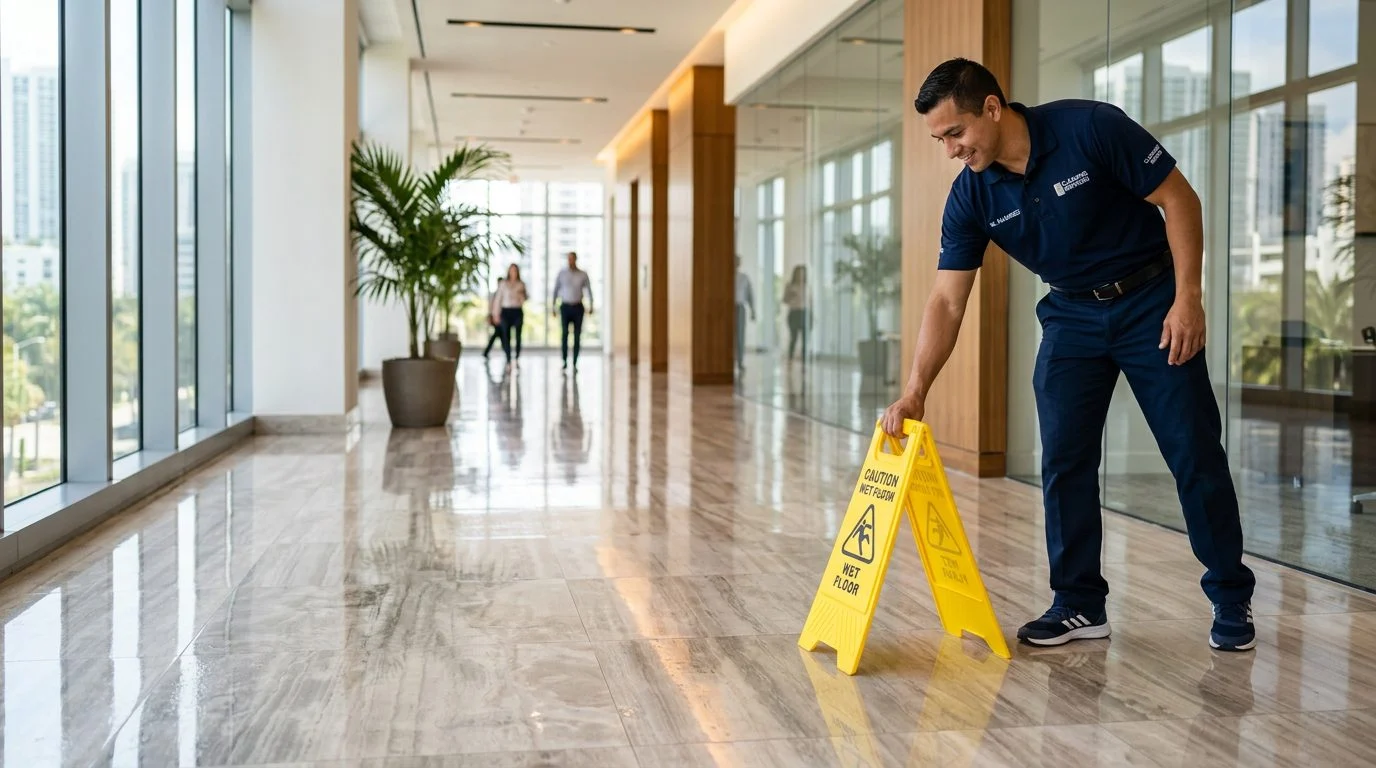
Smooth floors near the run can become slippery when wet. Keeping commercial floors clean and dry is a core part of routine floor care. Prompt spill response is part of keeping floors safer for everyone who walks on them.
Surface damage and drainage problems are separate work. Price them apart from routine porter tasks.
Have questions about what happened?
Ask our team directly. The first conversation is free, confidential, and there is no obligation to continue.
The Trash-Room Handoff for Pet Waste
Pet waste should be bagged, sealed, and labeled before it leaves the run area. Sealed bags keep odor down in corridors and elevators.
Move sealed bags to a staging area near the trash room. Use lidded bins at the staging area so waste stays covered while it waits. Then move the bags to the dumpster or compactor on the building’s route.
Clean the staging area after each handoff. Wipe the bin lids and the floor. This keeps the trash room organized for other staff and stops odor from building up.
Cleaning products are part of many janitorial jobs, and how they are chosen and handled matters. Chemical handling is an important part of janitorial and porter work.
Writing Pet Waste Duties Into the Day Porter Scope
A written scope should name the covered stations, check times, sanitation frequency, the trash-room handoff, and who handles periodic pressure washing. Without these details, gaps appear between the porter, the board, and residents.
Keep the scope dated and on file.
When a building adds a dog run or a new station, update the daily route in writing. Set the new check times and assign any periodic work before the change starts.
Frequently asked questions
Can a day porter clean a dog run?
Yes, for routine work like picking up waste and checking the area. Deeper cleaning and pressure washing are usually separate tasks.
How often should pet waste stations be emptied?
Set the schedule with the board based on traffic, the number of dogs, and the weather. Check stations on every shift.
Who handles pet waste in a condo common area?
The written scope should name the person or company. Put that assignment in writing so no task goes unowned.
Plan Pet Waste and Dog Run Upkeep for Your Building
If your board is weighing whether dog run upkeep should move onto the day porter’s route, start by sorting the tasks into daily and periodic groups. Then decide which tasks fit the porter’s time on site.
Our first consultation is free, confidential, and carries no obligation to continue. To talk through your building’s route and scope, contact Gator Protection, Inc.. We can review your dog run, station count, and trash-room handoff, and help you split the work between day porter and periodic services.
Want to know where you stand?
Tell us what happened and our team will walk you through the options available to you, at no cost.
Where Day Porter Work Ends and Deeper Work Begins
Routine day porter tasks
Picking up pet waste, emptying and restocking waste stations, checking gates and surfaces, and noting problems during each shift.
Floor care maintenance
Scheduled care for hard surfaces and common-area floors that sit beside or lead into the dog run, keeping traffic areas safe and presentable.
Pressure washing
Periodic deep cleaning of run surfaces, walkways, and fences when buildup goes beyond what routine porter work can address.
Landscape upkeep
Grounds maintenance around the run, including turf, planting beds, and edges that affect drainage and how the area looks.
Key Point for Condo Boards
Routine porter visits and deeper cleaning are usually separate tasks with separate schedules. Agreeing on which is which in writing prevents gaps in coverage and surprise charges.
Common Questions About Dog Run Scope
Can a day porter clean a dog run?
Yes, for routine work such as picking up waste and checking the area. Deeper cleaning and pressure washing are usually handled as separate tasks.
How often should waste stations be emptied?
The schedule is set with the board based on traffic, the number of dogs, and the weather. Stations should be checked on every shift.
Who decides the cleaning plan?
Our team works with your board or property manager to define routine tasks, periodic deep cleaning, and grounds upkeep, then documents the plan.
What about Miami's rainy season?
Heavy rain and humidity increase buildup and odor. Plan for more frequent checks and schedule pressure washing around the wet months.
Get a Free First Consultation: Confidential and With No Obligation
Related practice areas
- Day Porter Service in Miami-Dade: What It Covers and How to Switch Vendors
- Day Porter Service in South Florida
- Day Porter Service in Miami-Dade County
- Day Porter Service in Broward County