
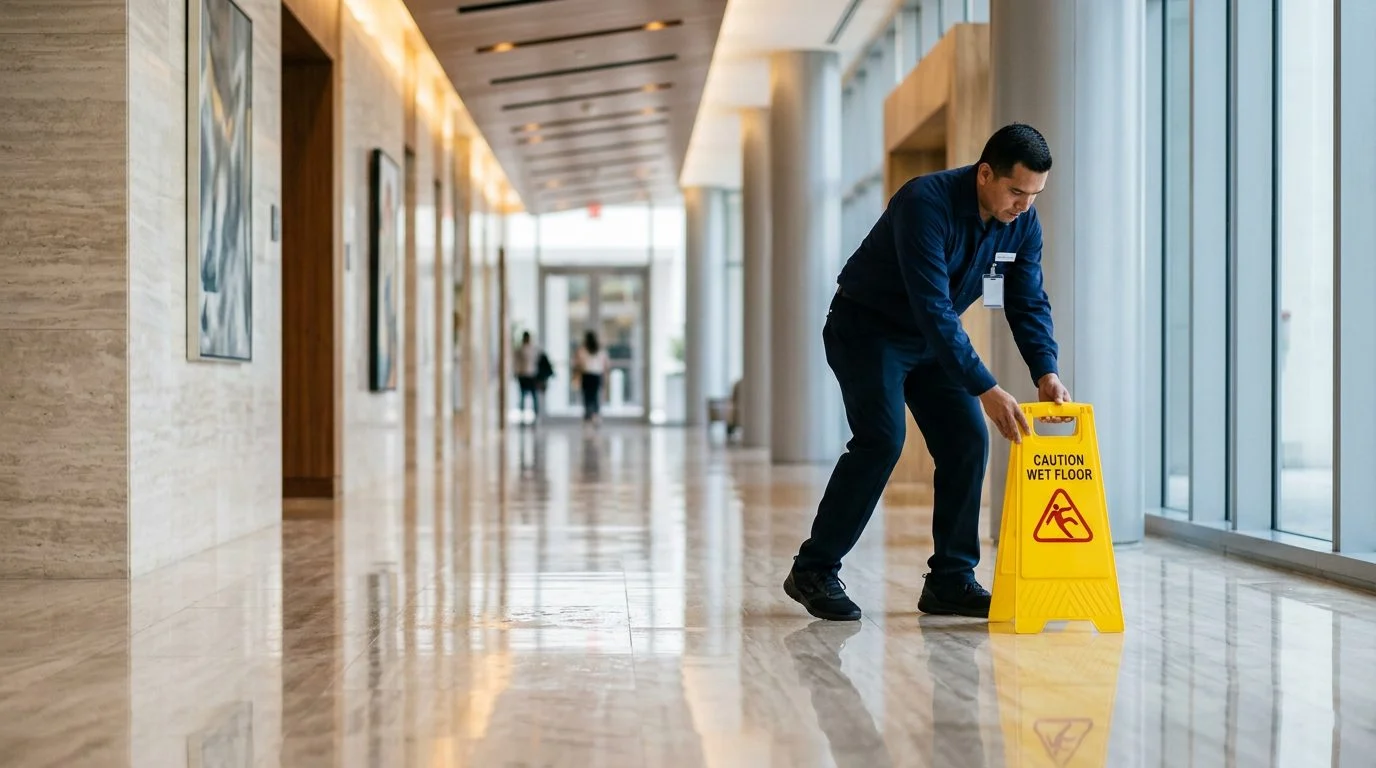
Day Porter Service | Condo Recycling Rooms | Miami
A Clean Recycling Room Starts With a Daily Checklist
Use this practical checklist to keep condo recycling rooms in Miami clean, organized, and safe for residents. Gator Protection's day porter service handles it every day.
By Ryan Jurney · Published November 7, 2026
A day porter checks, cleans, logs, and reports on a building’s shared waste areas during the day. In a condo, those areas are the trash chute and the recycling room. A day porter recycling room condo Miami routine turns that work into a repeatable checklist. Daily attention catches small problems before they become odors, spills, or resident complaints.
What a Day Porter Covers in a Condo Recycling Room and Trash Chute
A day porter covers the chute and the recycling room on a routine schedule, not only at periodic deep cleans. That routine is inspection, cleaning, and reporting, done while residents use the building. Many households use these two spaces every day. Trash, cardboard, and food waste arrive in steady loads. Spills, odors, and blockages can build up within hours if no one looks. A daily visit lets the porter spot a loose chute door or a full bin early. Daytime checks also give management a written record of what was found and when. That record helps a board review coverage. Many buildings pair porter visits with deeper work on floors and drains. For the full scope of day porter work, see the day porter service overview.
If your condo's recycling room or trash chute is overflowing, smelling, or going unchecked, reach out and we'll talk through what your building needs. Talk it through with our team — the first consultation is free, confidential, and carries no obligation.

Trash Chute Opening, Door, and Hopper Checks
A day porter checks each chute door and the hopper at the base of the chute. Start on the upper floors and work down. Confirm each door closes fully and latches. Look for cracks, gaps, or worn seals that let odor escape into hallways. Check the chute entry for sticky residue, buildup, and debris caught on the lip. At the bottom, inspect the collection hopper or bin area for overflow, spilled material, and blockages. Note any jam or item too large for the chute. A porter should never force an oversized item through the opening. Report it so management can arrange proper removal.
Some problems go beyond routine care. Cracks or movement in the chute structure call for a licensed professional’s judgment. Condominium milestone inspections are performed by licensed architects or engineers, and they assess load-bearing and primary structural components, according to a Miami-Dade County building document. The porter’s job is to notice and report, not to judge structure.
Recycling Room Floors, Bins, and Containers
A day porter keeps the recycling room floor clean, dry, and free of trip hazards. Sweep and mop spills as they happen. Vacuum tracked-in debris from the doorway inward so it doesn’t spread. Wet or greasy floors are a slip risk.
Next, check each bin for fullness, cracks, lids, and labels. Clear labels help residents sort materials correctly, so a faded label is worth reporting. Break down loose cardboard and place it in the right container. Don’t leave it stacked on the floor or against the wall. Keep the path to each bin open.
Cleaning products matter too. Use products labeled for the surface and the job. The EPA list of selected disinfectants shows products and their label claims.
Odor, Moisture, and Pest Signs to Report
A day porter should report persistent odors, standing water, and pest signs the same day they appear. Persistent odors often point to spoiled food, liquid waste, or a drainage problem. Check floor drains and the area around the hopper for slow drains or residue. Standing water and damp floors can lead to mold and slip hazards, so note any wet spots and exactly where they sit. Pest signs include droppings, gnaw marks, and insect activity near bins, chute openings, and floor drains. The porter’s role is to spot the sign, record it, and send the report to building management. Short, specific notes work best. “Smell at chute, floor 6, around 8 a.m.” helps far more than “bad smell in trash room.” Keep notes factual and avoid guessing at the cause.
Signage, Access, and Safety Checks
A day porter confirms that sorting signs and instructions are posted, readable, and current. Old signs confuse residents and push trash into the wrong bin. Check lighting in the room and chute area so bins and surfaces are easy to see. Test that doors, locks, and access points work, and that the room stays secure. Look for trip hazards such as damaged flooring, loose mats, or wet surfaces. If a hazard can’t be fixed right away, block off the area and report it.
Safety is part of the job. That guidance does not set a training length for day porters. So the scope of work should spell out how staff are trained and how they are supervised.
Bulk Items and Overflow Near the Chute and Room
Bulk items should not sit beside the chute or inside the recycling room. A porter identifies furniture, mattresses, appliances, and other large items left in these spaces and flags them. Overflow piles that block doors, exits, or bin access need attention first. The porter keeps the approach to each area clear so residents can still use the chute and bins safely. A porter should not move heavy bulk items alone when they create a safety risk. Coordinate with management on where bulk items should go and how often they’re cleared. A written schedule for removal helps stop the same pile from returning again and again.
Not sure what your next step is?
Talk it through with our team — the first consultation is free, confidential, and carries no obligation.
Logging Issues and Escalating to Building Management
A simple daily log shows what was checked, cleaned, and reported in the chute and recycling areas. Each entry should list the date, time, area, what was found, and what was done. Add photos or short descriptions for damage, overflow, or pest activity when useful. Define which issues the day porter handles directly, such as sweeping, straightening bins, and cleaning spills. Other issues, like a broken chute door or a drain repair, go to building management or a repair professional. Over time, the log reveals recurring problems, such as the same chute door or bin area needing repeated attention. The Community Associations Institute supports organized maintenance programs and checklists when developing vendor scopes of work, as described in its maintenance best practices report.
Ready to Get Your Condo’s Waste Areas Under Control?
A recycling room that smells, overflows, or goes unchecked for long stretches is a sign the building needs a clearer day porter plan. Start with the chute and the room, then build the scope around what you find. Our free first consultation is confidential and carries no obligation to continue.
Gator Protection also provides floor care maintenance and pressure washing, which can handle deeper work on recycling room floors, chute room drains, and trash enclosures. Our day porter service pages for Miami-Dade County, Broward County, and South Florida cover local details.
What does a day porter do in a condo recycling room?
A day porter sweeps and mops spills, checks bins and labels, breaks down loose cardboard, and reports problems. The work happens during the day so issues are caught early.
Who fixes a damaged trash chute door?
The porter reports the damage, and building management or a repair professional handles the repair. The porter’s log helps show when the problem started.
Does a day porter handle pest problems?
The porter spots and records pest signs and sends the report to building management. Treatment is a separate decision for management.
If your condo’s recycling room or trash chute is overflowing, smelling, or going unchecked, contact Gator Protection and we’ll talk through what your building needs.
Daily Recycling Room Checklist
Floors and Spills
Sweep the floor, mop up any spills or residue, and check drains and corners for buildup. A clean floor keeps odors and pests down.
Bins and Containers
Check that each bin is in its proper place, that lids close, and that no bin is overflowing. Note any bins that are cracked or damaged.
Cardboard and Bulky Items
Break down loose cardboard and stack it neatly so it does not block walkways, doors, or bins. Keep bulky items out of the work area.
Labels and Signage
Confirm that recycling labels and posted instructions are visible and legible. Replace faded or missing signs so residents sort correctly.
Reporting Problems
Record damaged doors, chute issues, leaks, or pest signs and report them to building management the same day. Early reports prevent small problems from growing.
Why Condo Associations Work With Gator Protection
Daytime Attention
Our day porter service keeps recycling rooms checked during the day, so issues are caught early and not left until the next cleaning cycle.
Consistent Routines
Our team follows a clear checklist so every shift covers the same tasks in the same order.
Trained Support Staff
Our support staff and team members are assigned to your property and communicate with building management.
South Florida Coverage
We serve Miami-Dade, Broward, and Palm Beach counties, including South Beach, Coral Gables, and Brickell.
Keep Walkways and Doors Clear
Loose cardboard and bulky items left in hallways or near doors can create trip hazards and block emergency access. Break down boxes and move items to the proper area right away.