
Day Porter Service | Miami-Dade County
Test Day Porter Service Before You Commit
A practical guide to running a day porter trial in Miami-Dade: what to cover, what to measure, and how to judge the results.
By Ryan Jurney · Published November 6, 2026
A day porter trial period is a short, defined stretch in which a new vendor runs your building’s daily upkeep under written standards. It tests whether the work gets done on your property, not whether a proposal sounds convincing. Miami-Dade buildings face rain, sand, heat, and humidity, so a fair trial has to reflect those conditions. This guide walks through the steps. Gator Protection, Inc. offers day porter service, floor care maintenance, landscape services, and pressure washing across South Florida and parts of Atlanta, Georgia.
What a Day Porter Trial Period Is Meant to Show
A trial shows whether a vendor performs the defined duties on your site. Start with a clear list of what the day porter covers. That usually includes lobby and restroom upkeep, trash and recycling, spill response, and entrance and glass cleaning. If the contract bundles floor care, pressure washing, or landscape tasks, include those too.
Before the new vendor starts, record the current condition of the property. Take dated photos of entrances, restrooms, elevator lobbies, and exterior walkways. Note any existing problems. Without this baseline, you can’t tell later whether things improved or slipped.
Floor safety belongs in the test from day one. See the walking-working surface rules for the full text. Our day porter service page explains these daily duties in more detail.
If you're weighing a change to your day porter coverage under pressure, we can talk through your site, schedule, and standards with you. Talk it through with our team — the first consultation is free, confidential, and carries no obligation.
Write the Scope and Standards Before the Trial Starts
A written scope protects both sides. List every recurring task with its frequency. For example: restroom checks every hour, lobby sweeps twice a day, and trash removal at the end of each day.
Next, set response expectations. Decide how fast a spill gets addressed and who gets notified. Decide how a tenant complaint is logged and answered. Then agree on a written cleanliness standard for high-traffic areas. That way, both parties judge results against the same description.
Name one point of contact on each side. Confirm after-hours access, key or badge handling, and security steps in writing. Gaps in these areas often cause the first disputes.
Chemical handling needs a written answer too. Ask the vendor how its staff are trained and where the Safety Data Sheets are kept.
Set Measurable Checkpoints Throughout the Trial
Checkpoints turn impressions into evidence. Use a daily task log that shows what was scheduled, what was completed, and the time each task was finished. Keep it the same way every day, on paper or in a shared file.
Schedule walkthroughs at set points. A common pattern is the end of the first week and the midpoint of the trial. Use the same checklist each time, so findings line up across visits. Note what passed, what failed, and what needs follow-up.
Take dated photos of key areas on the same schedule. Compare entrances, restrooms, and walkways against your baseline photos. Photos catch slow decline that is easy to miss during daily walkthroughs.
Track two specific measures. First, how quickly the vendor responds to a flagged issue. Second, whether the same issue comes back. A fast fix that repeats every week tells you something different from a single slip that is corrected and stays corrected.
Give both sides access to the same logs. Shared records keep the review fair for everyone.

Test the Conditions South Florida Properties Actually Face
A trial should run through the weather and site conditions your building faces. Test the work during the rainy season, not only on a dry week.
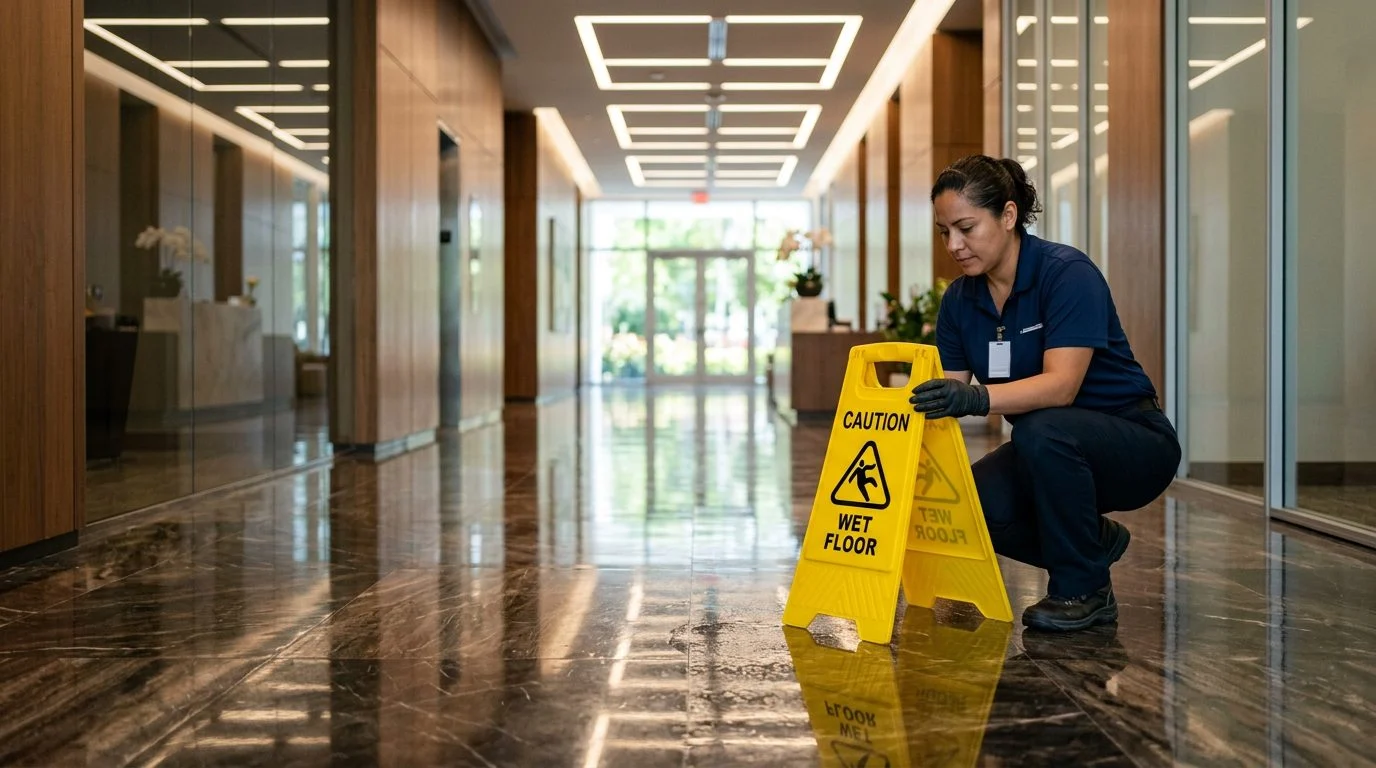
Heavy rain tracks sand, grit, and standing water into lobbies and onto entrance floors. Check how the vendor handles entryway mats, floor drying, and wet-floor signs. Look for slip hazards before tenants find them.
Heat and humidity affect exterior surfaces. Walkways, curbs, and landscape beds collect leaves, litter, and debris. Include outdoor clearing in the trial, and agree on how often it happens.
Irrigation matters for landscape scope. Confirm that any landscape work in the trial follows those rules.
Coverage gaps often show up only after a trial starts. Confirm weekend, holiday, and after-hours coverage if your tenants need it. If your properties span Miami-Dade and nearby Broward County, confirm that routes, travel time, and staffing still meet your standards.
Review the Results and Decide What Happens Next
Judge the trial by its records. Compare the task logs, checkpoint notes, and photos against the written standards. Your general impression matters less than what the paper shows.
Document each gap with a date, a location, and the task involved. Give the vendor a fair chance to fix it before the trial closes. The record then shows how the vendor responded to feedback.
Hold a closing review meeting. Agree on what was met, what was missed, and what must change before any longer agreement. Write the summary down and have both sides confirm it in writing.
Ask about the crew, too. Whether a worker is an employee or an independent contractor turns on the working relationship and the working conditions. Ask how each person on the crew is classified.
Whether to extend, adjust, or end the trial depends on the facts recorded during it. Make that call from the documented evidence.
Talk With Our Team About Your Trial Planning
If you’re planning this trial because a current contract is failing or a tenant has complained, you’re probably under real pressure. You may also be managing a change you didn’t choose. That’s a hard position, and you don’t have to map it out alone.
Our team handles commercial janitorial and day porter work, along with floor care, landscape services, and pressure washing, across South Florida and parts of Atlanta, Georgia. We start with a conversation about your specific site, its schedule, and its standards.
Our first consultation is free, confidential, and comes with no obligation to continue.
How long should a day porter trial period last?
A trial should cover a full routine week, including at least one weekend. That way you see both regular and off-peak work.
What should a trial test first?
Start with the tasks that drive complaints: restrooms, lobby floors, entrances, trash, and spill response.
Can a trial include pressure washing and floor care?
Yes. Add each bundled task to the written scope and test it on the same checklist.
If you’re weighing a change to your day porter coverage, request a free quote and we’ll plan the trial around your property.
What a Good Day Porter Trial Covers
A Full Routine Week
Cover every weekday and at least one weekend so you see both regular and off-peak work.
The Tasks That Drive Complaints
Restrooms, lobby floors, entrances, trash areas, and spill response are the first places to look.
Clear Expectations in Writing
Agree on a task list, timing, and check-in points before the trial begins.
Open Communication
Set a simple way to report issues and request changes during the trial period.
Avoid Judging Too Early
One strong morning or one missed afternoon will not tell you much. Review the full week, including busy periods and weekend coverage, before you decide.
Steps for Planning Your Trial
Set Your Goals
Define what a clean, well-kept building looks like for your tenants, staff, and visitors.
Map Your Coverage
Identify the hours, areas, and weekend needs that matter most to your property.
Track the Work
Keep simple notes on completed tasks, issues raised, and how quickly they were resolved.
Review and Adjust
At the end of the trial, compare results against your goals and refine the scope before continuing.
Ready to Plan Your Day Porter Trial in Miami-Dade?
Start with a free first consultation: confidential and without obligation.