
Day Porter Service | South Florida
Do Porters Clean Bathrooms? Here's What Day Porters Handle in Restrooms
Restrooms are one of the areas a day porter checks most often during business hours. Learn what restroom duties usually cover and how to set them up for your building.
By Ryan Jurney · Published October 26, 2026
Do porters clean bathrooms? The short answer
Yes, day porters often clean restrooms as part of their daytime routine. They usually handle restrooms alongside sweeping, mopping, and trash removal. Whether a specific porter cleans bathrooms depends on the building and the scope agreed in advance.
Day porter service keeps shared indoor spaces clean while people are still using them. In South Florida, that often means office lobbies, condo common areas, and restrooms that see steady use from morning through late afternoon. Restroom work is one of the most visible parts of that routine.
The answer depends on the paperwork. If the written scope names restrooms, they are part of the job. If it does not, ask before work starts so nobody is surprised later.
Our day porter service overview explains how the work is set up across Miami-Dade, Broward, and Palm Beach counties. This page focuses on one question: what a porter does in a bathroom, and what decides whether that work is in scope.

If you're responsible for a building and unsure what a day porter will cover, you're not alone in asking. Talk it through with our team — the first consultation is free, confidential, and carries no obligation.
What a cleaning porter does in a bathroom
A cleaning porter keeps restrooms clean, stocked, and presentable during business hours. Typical restroom work includes cleaning and disinfecting toilets, urinals, sinks, and mirrors. Staff also wipe partitions and fixtures, restock paper and soap, empty waste bins, and mop the floor.
Spills and quick touch-ups are common in daytime restroom work. A paper towel dispenser runs empty at lunch, or a sink splashes water onto the floor. These need attention now, not at the end of the night. That is why day porters often handle them in real time.
Restroom upkeep also connects to floor care maintenance. The floor inside and just outside a restroom gets the most foot traffic and moisture. See the walking-working surface rules.
Day porter vs. janitor or custodian
Janitor, custodian, and porter are often used interchangeably. Job titles vary by region and by employer. The label matters less than the written list of tasks.
Public job descriptions describe day porters as staff who handle restroom maintenance, trash removal, and spill cleanup, often during business hours. Traditional janitors more often work after hours on whole buildings. The difference is about when and where the work happens.
That difference is not a fixed rule about which tasks each title may perform. Two people with the same title can have very different scopes. For how staffing levels are estimated, read about how many janitors per square foot.
What decides whether restroom cleaning is part of the job
Restroom cleaning is part of a day porter’s job when the service agreement names it. Four factors shape that scope:
- Named tasks: The written scope lists restrooms and the work inside them.
- Traffic: How many people use the restrooms during the day, and how often they need attention.
- Building type: Occupied offices, residential condos, and gated communities have different daytime demands. Compare condo day porter work in South Beach with gated community coverage in Coral Gables.
- Floor and fixture needs: Restrooms that need regular floor care, sanitizing, or trash handling take more time than light touch-ups.
Each factor changes how many hours the work takes. A restroom in a busy lobby needs more visits than one on a quiet floor. Put the numbers and frequency in writing so both sides agree.
Not sure what your next step is?
Talk it through with our team — the first consultation is free, confidential, and carries no obligation.
Where to start when cleaning a bathroom
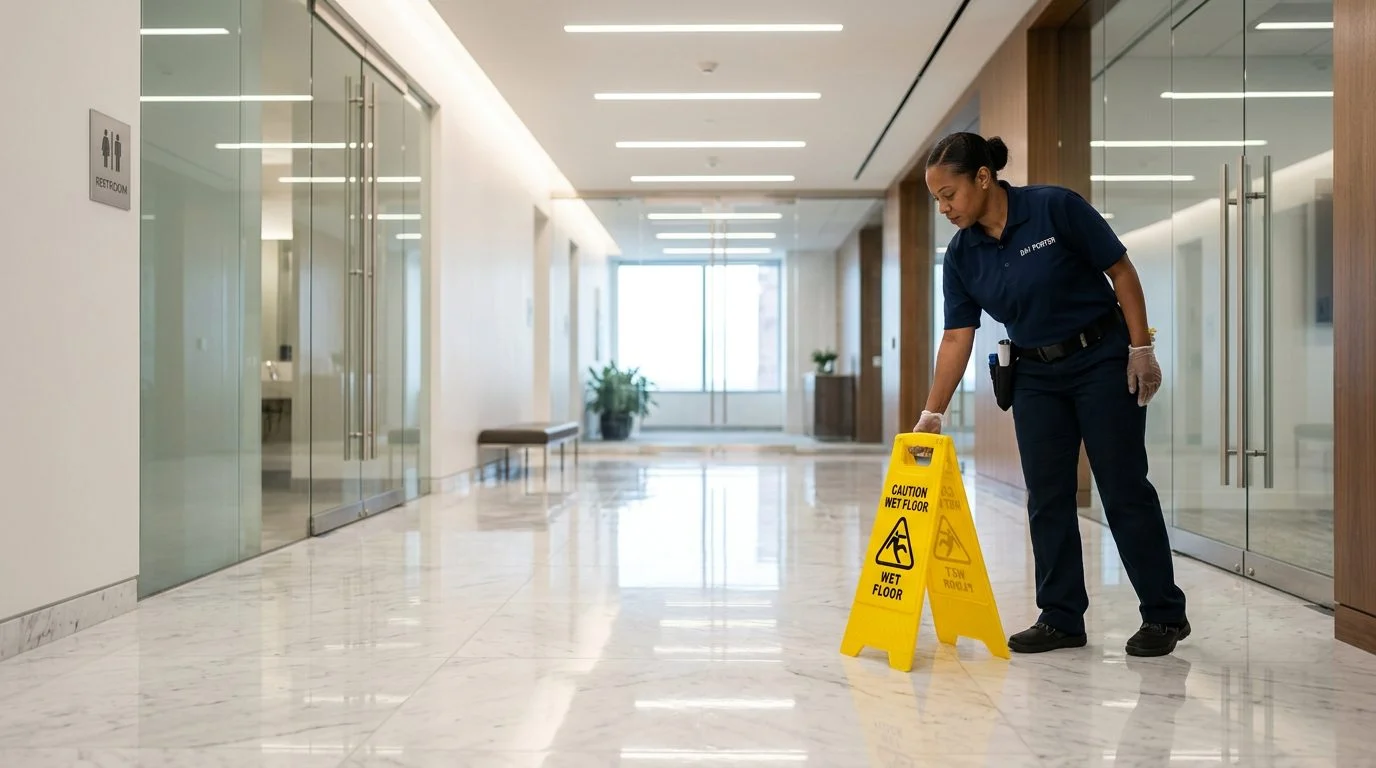
The first step is safety, and then the work moves top to bottom. Put on gloves, set up ventilation, and place wet floor signs before you start. These steps protect the worker and anyone walking nearby.
Next, dust or wipe high points, then clean fixtures and sinks. Clean toilets and urinals before mirrors and partitions. Mop the floor last. Splashes and drips fall during cleaning, so the floor gets done after everything above it.
Restocking and trash removal usually come at the end. Once surfaces are clean, fresh supplies won’t get splashed. Use each cleaning product as its label directs, and never mix products together.
Read the OSHA Hazard Communication Standard for the full requirements. The U.S. EPA also publishes selected EPA-registered disinfectants, which show each product’s registered label claims.

Plan restroom cleaning for your building
Building managers and board members often need to confirm restroom coverage before a day porter starts. Many have not handled this scope before. Writing down the tasks, the traffic levels, and the floor needs makes that conversation faster and clearer.
Do porters clean bathrooms in office buildings?
Yes, when the written scope names restrooms as a daytime task. Office restrooms often need the most frequent attention during business hours.
What is a cleaning porter?
A cleaning porter keeps shared indoor areas clean and presentable during business hours. Restrooms are one of the main areas they cover.
Is a day porter the same as a janitor?
The roles often overlap, but titles vary by employer. The tasks in the written agreement decide what the porter does.
If you’re responsible for a building and unsure what a day porter will cover, you’re not alone in asking. Reach out to our team to talk through your building’s restroom needs. Our free first consultation is confidential and comes with no obligation to continue. Start on our contact page.
Why Daytime Restroom Attention Matters
Frequent use calls for frequent checks
Restrooms in busy offices, medical buildings, and retail spaces can need attention several times during a single workday.
Visitors notice first impressions
A clean, stocked restroom is often the first thing clients and guests judge about a property's upkeep.
Scope agreed in writing
Restroom tasks are defined in your service scope, so building managers know exactly what is covered and how often.
Support for tenants and staff
Consistent restroom care helps tenants, employees, and visitors use shared facilities with confidence throughout the day.
Tip: Define Restroom Tasks Before You Start
Ask that your service scope list restroom tasks, frequency, and supplies. Clear details prevent confusion about what is included.
Questions to Settle With Your Day Porter Provider
Which restroom tasks are included?
Confirm whether the scope covers fixtures, floors, mirrors, dispensers, and trash removal, and how often each is done.
How often will restrooms be checked?
Set daytime check-in times that match your building's traffic, such as peak lunch hours or high-volume periods.
What supplies will be provided?
Clarify who supplies paper goods, soap, sanitizer, and liners so restrooms stay stocked between visits.
How are issues reported?
Agree on how problems like leaks, broken fixtures, or low supplies are flagged to your building contact.
Get a Restroom Plan Built for Your Building
Have questions about what happened?
Ask our team directly. The first conversation is free, confidential, and there is no obligation to continue.
Related practice areas
- Janitorial Vendor E-Verify Requirement in Florida