
Condo Boards | South Florida
Give Your Board Records It Can Check Line by Line
Clear, dated documentation makes every board conversation about building care easier to settle.
Start With a Conversation
Free
First consultation
Confidential
Every initial discussion
No obligation
No commitment to continue
By Ryan Jurney · Published November 9, 2026
Your board wants to know whether the lobby was clean last month. A memory of the work won’t settle that question. A day porter report is a dated record of what was done, where, by whom, and what is still open. You can build one from four pieces: a duty list, a daily log, a zone tracker, and a one-page summary.
Why Boards Ask for Day Porter Documentation
Boards ask for day porter documentation because they want proof, not a verbal summary. Questions about lobby condition, elevator cleanliness, or resident complaints often come up at the meeting itself.
As the manager, you report work done on the association’s behalf. Florida’s condominium law sets how association records are handled. Under Fla. Stat. § 718.111, “all other written records of the association … related to the operation of the association” count as official records.
The law also sets a clock. So write each log as if an owner will read it.
For background on the service itself, see our day porter service guide. The goal is a repeatable record that shows what was done, where, when, and what remains open.
Facing a board meeting with thin cleaning records is stressful, and you don't have to rebuild them alone. Reach out to our team to talk through your building's situation. Talk it through with our team — the first consultation is free, confidential, and carries no obligation.

Start with a Written List of Day Porter Duties
Start with a written duty list, because a board can only judge work that was defined in writing. A log without a list is just a diary of tasks. Nobody can say whether those tasks were the ones owed.
Common day porter duties in a condo building include:
- Lobby and entrance care
- Restroom checks
- Trash and recycling area upkeep
- Elevator and stairwell cleaning
- Spot cleaning of high-traffic surfaces, such as door handles and handrails
Match the list to the scope the association actually contracted for. If the contract calls for twice-daily lobby care and the list says once, the log will show gaps that aren’t real. A list written after a complaint often reflects what someone wishes was done, not what was agreed.
The Community Associations Institute maintenance best practices support organized maintenance programs and checklists when a board develops a vendor scope of work. Keep the duty list as page one of your report, so every log entry maps to a defined task.
Build a Daily Log That Records the Essentials
A daily log should record the date, start and end time, area, task, the person who did it, and any notes. Those fields answer the questions boards ask most: when, where, what, and who.
Timestamps matter. If a board asks whether the elevator was cleaned on a certain Tuesday, a log that says “weekly” can’t answer it. Add a sign-off or initials column so each entry traces back to a person.
Record exceptions in the same log. A skipped task, a damaged fixture, or a resident request all belong there, with the time it was reported. Write it down the day it happens. A log that shows a missed task and a same-day fix is more believable than one with no gaps at all.
Track High-Traffic and Common Areas by Zone
Track high-traffic areas by zone so the board can see coverage across the whole building. A single task list can hide a zone that got no attention for a week.
Typical zones include the lobby, elevator landings, mailroom, laundry room, garage entrances, and pool deck. Give each zone its own row. Add a frequency column, such as daily, twice daily, or weekly, that matches the agreed schedule.
Use a simple check or color system. A blank or red cell marks a missed visit, with the reason written beside it. The board sees coverage before reading a single word.
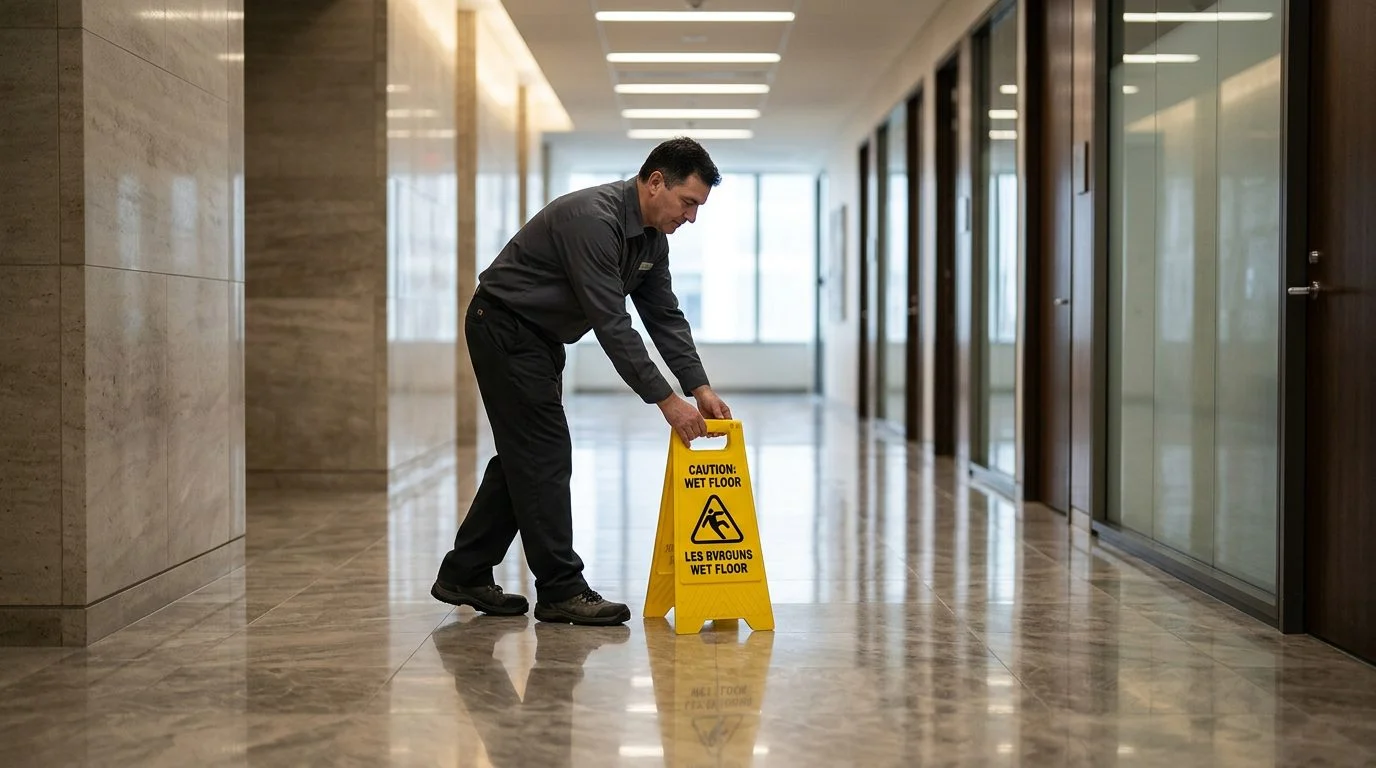
Floor safety matters in entrance zones. Keeping floors clean, dry, and free of slip hazards is a central part of floor care maintenance. A zone row for entrances can note when floors were checked for wet spots.
Log Floor Care, Pressure Washing, and Landscape Visits Separately
Keep floor care, pressure washing, and landscape records apart from the porter log. Each service needs different details, and mixing them buries those details in a long list.
Floor care records should show the surface, the date, and the method, such as scrubbing or buffing a lobby floor. Keep product safety sheets with these records.
Pressure washing records should list the area, such as walkways, garages, or pool decks, plus the date. Take before-and-after photos from the same spot. Matching the camera position makes the comparison fair.
Landscape visits should record the date, areas serviced, and items flagged for follow-up, such as irrigation problems. Note the watering schedule on each landscape visit. For regional context, see our South Florida day porter guide.
Turn the Logs into a One-Page Board Summary
A one-page summary gives the board its answer, with the detail kept on file. Boards read the summary, and the logs back it up if someone asks.
Use four sections: coverage by zone, tasks completed versus scheduled, open items, and resident concerns with their status. Add a simple weekly count of completed tasks. It shows whether coverage is steady or slipping.
Date the summary and state the period it covers. A summary for March 1 through March 31 can be compared with the next one. Without dates, nobody can tell which month a problem came from.
Under Fla. Stat. § 718.112, a residential condominium association must have a structural integrity reserve study completed at least every 10 years after the condominium’s creation for each building on the condominium property that is three habitable stories or higher in height. For Miami-Dade and Broward buildings, see the Miami-Dade day porter guide and the Broward County day porter guide.
Not sure what your next step is?
Talk it through with our team — the first consultation is free, confidential, and carries no obligation.
Handle Gaps, Complaints, and Corrections Openly
Report missed tasks openly, along with the fix. Boards tend to trust a record that shows problems and how they were solved.
Use a short corrective note for each gap: issue, date found, action taken, and date resolved. For example: “Issue: lobby mopping missed on the 12th. Found: the 13th. Action: re-mopped and added a check to the shift list. Resolved: the 13th.”
Keep complaints separate from confirmed gaps. A resident saying the lobby looked dirty is a complaint. A blank cell on the log is a confirmed gap. Record them in different columns, so the board neither treats every complaint as proof nor ignores a real gap.
Never change original entries. If a line was wrong, add a new dated note that explains the correction. Editing old lines later makes the whole log look unreliable.
Next Step: Talk Through Your Building’s Situation
Many managers face this work with a board meeting already on the calendar and records that don’t quite match what happened. That spot is hard, and it’s often one you didn’t choose.
If your duty list, logs, or summary template aren’t ready, we can help you set them up before the meeting. Your first consultation is free, confidential, and carries no obligation to continue (consulta inicial gratuita, confidencial y sin compromiso). Use the contact form or call our office to request it. Every board is different, so no particular meeting outcome can be promised.
Can an owner ask to see day porter logs?
Request a Free Quote
Should floor care and pressure washing go in the porter log?
No. Keep them in separate records, since each needs its own details such as surface, method, or before-and-after photos.
What a Strong Day Porter Report Gives Your Board
Dated proof
Each entry shows what was done, when, and where, so the board works from records rather than recollection.
Zone-by-zone visibility
Lobbies, elevators, garages, and common areas are tracked separately, so gaps are easy to spot.
Open items in plain view
Unfinished tasks and resident concerns stay on the record until they are resolved.
Ready for the meeting
A one-page summary gives directors a clear picture before the agenda item is discussed.
Avoid Relying on Memory
Verbal updates at a board meeting are hard to verify later. Ask for written logs that are completed during or immediately after each shift, and keep them with your other building records.
Four Parts of a Board-Ready Report
Duty List
The standing tasks for each area, so everyone knows what the day porter is responsible for.
Daily Log
A dated entry for each completed task, with notes on anything that needs follow-up.
Zone Tracker
A view of each lobby, floor, and outdoor area, showing when it was last serviced.
One-Page Summary
A short overview of the month that highlights completed work and open items for the board.