
Day Porter Service | Miami
In-House Porter or Contracted Day Porter? A Clear Look at Your Options in Miami
Keeping shared areas clean and orderly during business hours takes planning. Here is how the two approaches compare for South Florida properties, and how Gator Protection can help you choose.
By Ryan Jurney · Published November 7, 2026
For a Miami building, the in-house porter vs contracted day porter decision comes down to three things: cost, control, and coverage. An in-house porter is your employee, and you manage the pay, schedule, and backup. A contracted day porter works for a service company that supplies the worker, covers absences, and supervises daily tasks under a written scope.
This guide walks through each factor for buildings in Miami-Dade, Broward, and Palm Beach counties, including South Beach, Brickell, and Coral Gables. Gator Protection, Inc. provides day porter service, floor care maintenance, landscape services, and pressure washing services across South Florida and parts of Atlanta, Georgia.
What a Day Porter Does in a Miami Condo
A day porter keeps shared spaces clean and presentable during building hours. Typical tasks include:
- Lobby floors, entry glass, and door mats
- Elevators, hallways, and stairwells
- Restroom and amenity room checks
- Trash and recycling routes
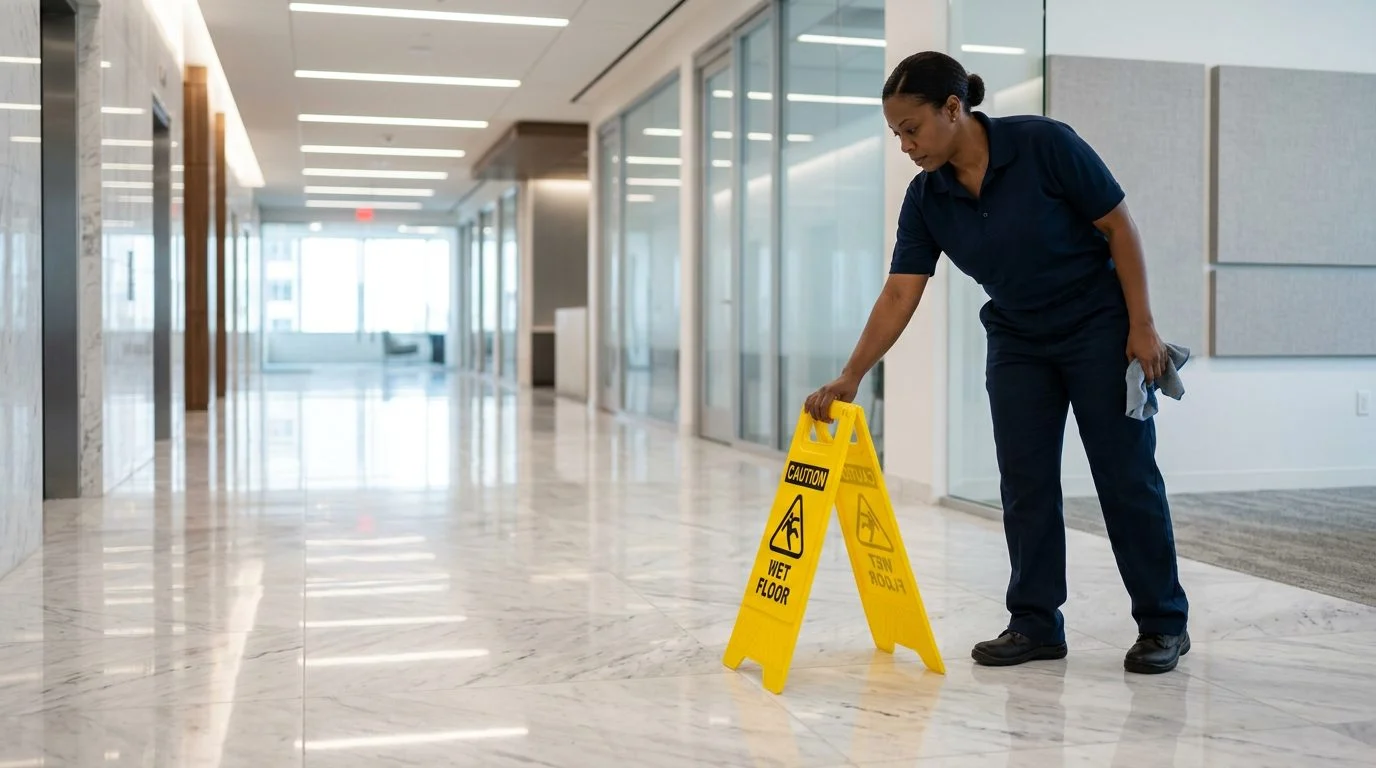
- Spill response and quick touch-ups as traffic moves through the day
A janitor usually follows a scheduled cleaning cycle, often after hours. A porter works in view during the day and responds to what residents and guests see. That presence matters in busy buildings in South Beach, Brickell, and Coral Gables, where the lobby sets the tone for the whole property.
Cleaning chemicals carry their own rules.
If your condo lobby is slipping and your board is weighing a staffing change, our team can help you compare the options for your building. Talk it through with our team — the first consultation is free, confidential, and carries no obligation.

In-House Porter vs. Contracted Day Porter: The Core Trade-Off
An in-house porter is on the building’s payroll. A contracted porter is on the service company’s payroll. Both models can keep a building clean, but they divide the work differently.
- Cost structure: An in-house porter adds wages, taxes, insurance, and supplies to your budget. A contract is one fee tied to a defined scope.
- Daily direction: The board or manager directs an in-house worker directly. With a contract, the written scope sets the standard, and the provider supervises the crew.
- Gaps: An in-house building covers absences itself. A contracted building relies on the provider to send coverage.
Decision rule: An in-house model fits a building that wants close, daily supervision of one steady worker. A contracted model fits a building that wants predictable coverage and fewer employer duties to manage.
Cost: What Each Model Actually Includes
Compare the full in-house cost with the contract fee for the same hours and tasks. Wages alone leave out a lot.
In-house line items include:
- Base wages and any overtime
- Payroll taxes and workers’ compensation
- Paid time off and holiday pay
- Training, uniforms, equipment, and cleaning supplies
- Management time to hire, schedule, and review the work
Florida law requires covered employers to secure workers’ compensation for their employees. Fla. Stat. § 440.10 sets that duty, so plan for the premium in your in-house budget.
Hidden in-house costs include coverage during vacations and sick days, recruiting after a resignation, and the weeks a new hire needs to learn the building.
Contract costs to check include:
- Extra visits or hours beyond the written scope
- Whether floor care, pressure washing, or landscape work is priced separately
- Charges for after-hours calls or emergency spill response
29 CFR 795.105 states that labeling employees as “independent contractors” does not make federal minimum wage, overtime, and recordkeeping protections inapplicable. Ask how any crew is classified and paid. Cost varies with building size, number of floors, hours of coverage, and the number of common areas.
Control: Who Directs the Work and Sets the Standard
With an in-house porter, the board or manager sets priorities and corrects work directly. With a contract, the written scope sets the standard, and the provider handles daily supervision.
Standards to define in either model:
- Arrival time and daily start and end hours
- Lobby, elevator, and restroom cleaning frequency
- Trash and recycling routes
- How and when damage, leaks, or spills get reported
- After-hours contacts for urgent issues
With a contract, the building has a named company to call about a missed task. A single in-house worker may have no backup on the same day. Put these standards in writing either way, so performance is easy to review.
Coverage: Absences, Breaks, Gaps, and Emergencies
A single in-house porter leaves the building uncovered when that person is sick, on leave, or resigns. Coverage stops until a replacement is hired and trained.
Under a contract, the provider arranges substitute coverage for scheduled absences. Specify these points in writing:
- Days and hours covered
- Holiday and weekend schedules
- How fast a missed shift gets replaced
Floors also matter for safety.
Floor care, pressure washing of entrances and garages, and landscape upkeep are usually scheduled apart from daily porter tasks. Put them in the scope either way.
How a Contracted Day Porter Program Starts and Runs
A contracted program starts with a first consultation, then moves through a site walk-through, a written scope, a start-up plan, and ongoing review. Each step shapes the next.
- First consultation: Review the building, the current condition of common areas, and what the board wants to change.
- Site walk-through: Confirm areas, floor finishes, traffic patterns, and the hours the scope must cover.
- Written scope and proposal: List tasks, frequency, hours, and any add-ons such as floor care or pressure washing.
- Start-up plan: Set the first-week schedule, a daily checklist, and a contact point for the building.
- Ongoing review: Document schedule and task changes as the building’s needs change.
Gator Protection, Inc. provides day porter, floor care, landscape, and pressure washing services in South Florida and parts of Atlanta, Georgia. Our team covers the building and its grounds under one scope. Our support staff handles scheduling and billing questions.
Not sure what your next step is?
Talk it through with our team — the first consultation is free, confidential, and carries no obligation.

Questions Condo Boards and Managers Ask
Most boards want three answers: what it costs, who covers gaps, and who directs the work. The answers below cover those points.
What is a day porter?
A day porter is a daytime worker who keeps shared areas clean and orderly while the building is in use.
What is the difference between a day porter and a janitor?
A day porter works during building hours and responds to traffic. Janitorial work usually follows a scheduled cleaning cycle.
Is a contracted day porter more expensive than an in-house porter?
The answer varies by building. Compare the full in-house cost, including payroll taxes and workers’ compensation, with the contract fee for the same scope.
Can a contracted porter handle floor care and pressure washing?
Yes. These can be included in the scope or priced as separate services.
Choosing between an in-house porter and a contracted day porter often means solving a staffing gap, a budget review, and a lobby problem at the same time. Gator Protection’s first consultation is free, confidential, and carries no obligation to continue. Fill out the contact form, call the office, or request a free quote, and the team will review your building and the scope you need.
What to Weigh Before You Decide
Coverage During Building Hours
Consider when traffic peaks in your building, including lobbies, restrooms, elevators, and common areas. Coverage should match those peaks, not just a general cleaning window.
Staffing and Continuity
An in-house porter depends on one person's schedule, leave, and training. A contracted team can keep service steady when absences happen.
Supervision and Accountability
Decide who will set standards, review the work, and respond to tenant requests. Clear reporting makes day-to-day service easier to manage.
Budget and Predictability
Compare the full cost of an employee, including payroll administration, supplies, and equipment, with a defined service agreement that has a predictable monthly scope.
Why Businesses in South Florida Choose Contracted Day Porter Service
Scheduled to Your Building
Day porter coverage can be set around your tenants, visitors, and operating hours in Miami-Dade, Broward, and Palm Beach counties.
Trained Support Behind the Work
Our team supports daily operations so your property has consistent service, even when schedules change.
Clear Standards
We set out what will be cleaned, how often, and how issues are reported, so expectations are clear from the start.
One Point of Contact
Floor care, pressure washing, and landscape services can be coordinated alongside day porter coverage through one provider.
Key Tip: Start With Your Peak Hours
Before choosing any staffing model, note when your building is busiest and where problems show up first. Coverage that matches real traffic usually works better than a fixed schedule set by habit.
Not Sure Which Option Fits Your Property? Start With a Free Consultation.
Related practice areas
- Day Porter Service in Miami-Dade: What It Covers and How to Switch Vendors
- Day Porter Coverage for Miami Beach Condos With Short-Term Rental Guest Turnover
- Day Porter Floor Care for Older Miami-Dade Apartment Buildings With Terrazzo and Marble Lobbies