
Landscape Services | South Florida
Is $100 an Hour Too Much? Read the Rate Before You Judge It.
A practical way to weigh an hourly landscape quote against the crew, the work included, and what the price actually covers.
By Ryan Jurney · Published November 17, 2026
You’re asking whether $100 an hour is too much for landscape work. Maybe a quote is on your desk, or you’re setting a budget for a property you don’t manage yourself.
The short answer is that $100 an hour is not automatically too much or too cheap. The rate has to cover far more than one worker’s time on site. Crew size, billing unit, and scope decide whether the number fits the job.
Why $100 an hour can look high at first glance
Most people compare the rate to a worker’s hourly pay. That comparison leaves out most of what the price pays for.
A worker’s wage is only one piece of the cost. Florida’s minimum wage is set in the state constitution and rises to $15.00 an hour on September 30, 2026. Even at that floor, pay is just one line in the rate.
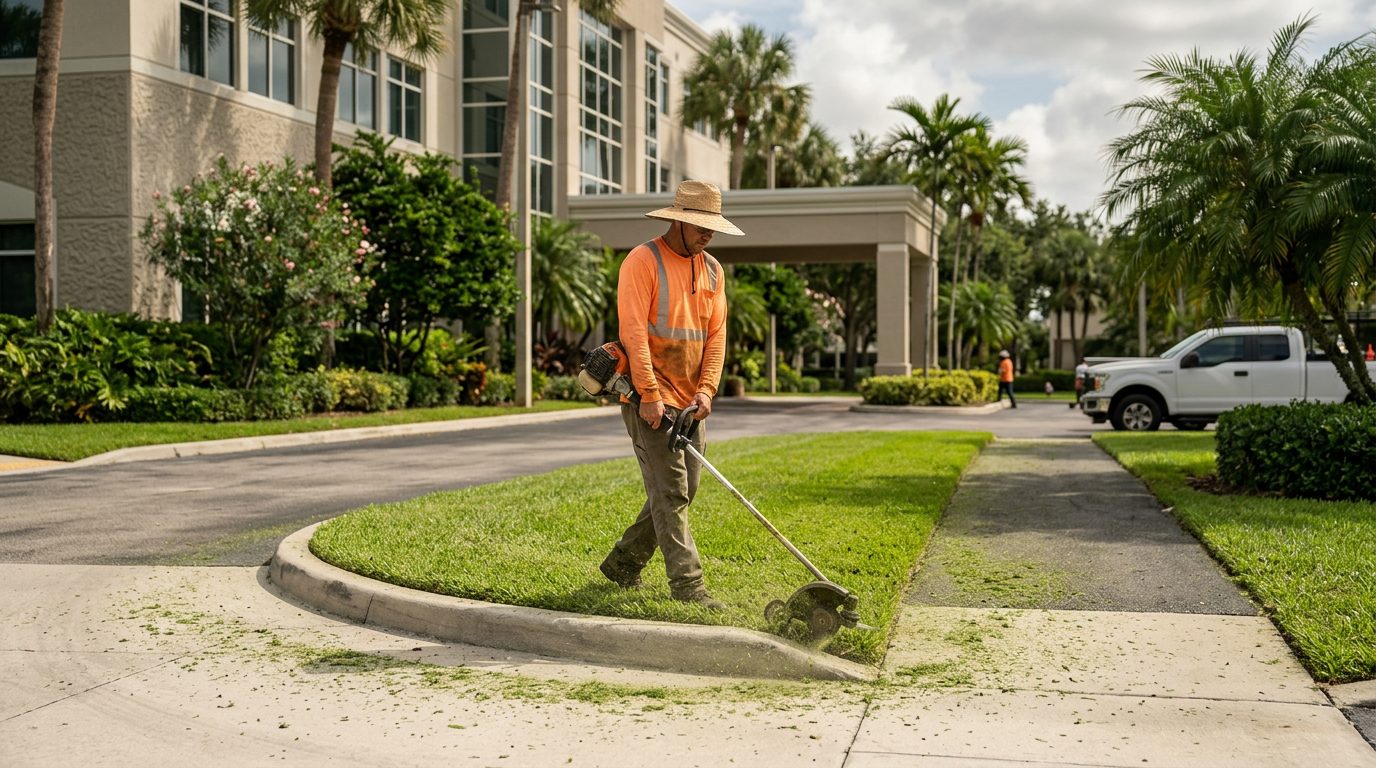
The hourly figure also isn’t only the minutes a crew spends mowing. It’s what the client pays for the whole visit, including getting equipment to the site, the work itself, cleanup, and the business running behind the job.
A worker’s hourly pay and a business’s hourly rate answer two different questions. One asks what the worker takes home. The other asks what it costs to deliver the service and stay in business.
If a landscape quote is sitting on your desk and the numbers still don't line up, our team is glad to talk through your property with you. Talk it through with our team — the first consultation is free, confidential, and carries no obligation.
What an hourly landscape rate has to cover
A commercial landscape rate covers labor, equipment, vehicles, insurance, supplies, and the time it takes to schedule and supervise the crew.
Each of these costs money even when it doesn’t show on the invoice. Mowers, trimmers, and blowers need purchase, repair, and replacement. Trucks and trailers need fuel and upkeep. Insurance and supplies are owed whether a visit runs long or short.
Travel between sites, plus setup and cleanup, usually sits inside the rate. A crew that drives between two properties is paid for that time before the first cut.
Licensing adds cost too. Training is part of doing landscape work properly.
A high-looking rate on a small, simple job can still be thin once overhead is counted. A rate on a large, equipment-heavy job spreads that overhead differently. Read the number against the work.
Crew size and billing unit change the math
A rate per worker and a rate per crew are not the same price, even when both say $100 an hour.
Here’s a simple example with made-up hours. Say a visit takes two hours on site.
- Quote A: $100 per worker per hour, three workers, two hours. Total: $600.
- Quote B: $100 per crew per hour, three workers, two hours. Total: $200.
Same rate, same job, very different invoices. Quote A costs three times as much because it bills each person.
Minimum hours change the math too. A crew billed for a four-hour minimum on a one-hour job pays for three hours it didn’t use. Ask about minimums before you agree.
Before you accept any hourly quote, get these answers in writing. Is the rate per person or per crew? How many workers come? What minimum hours apply?
What the work includes and how scope shifts the value
Routine maintenance and specialized work don’t cost the same per hour. The scope matters as much as the rate.
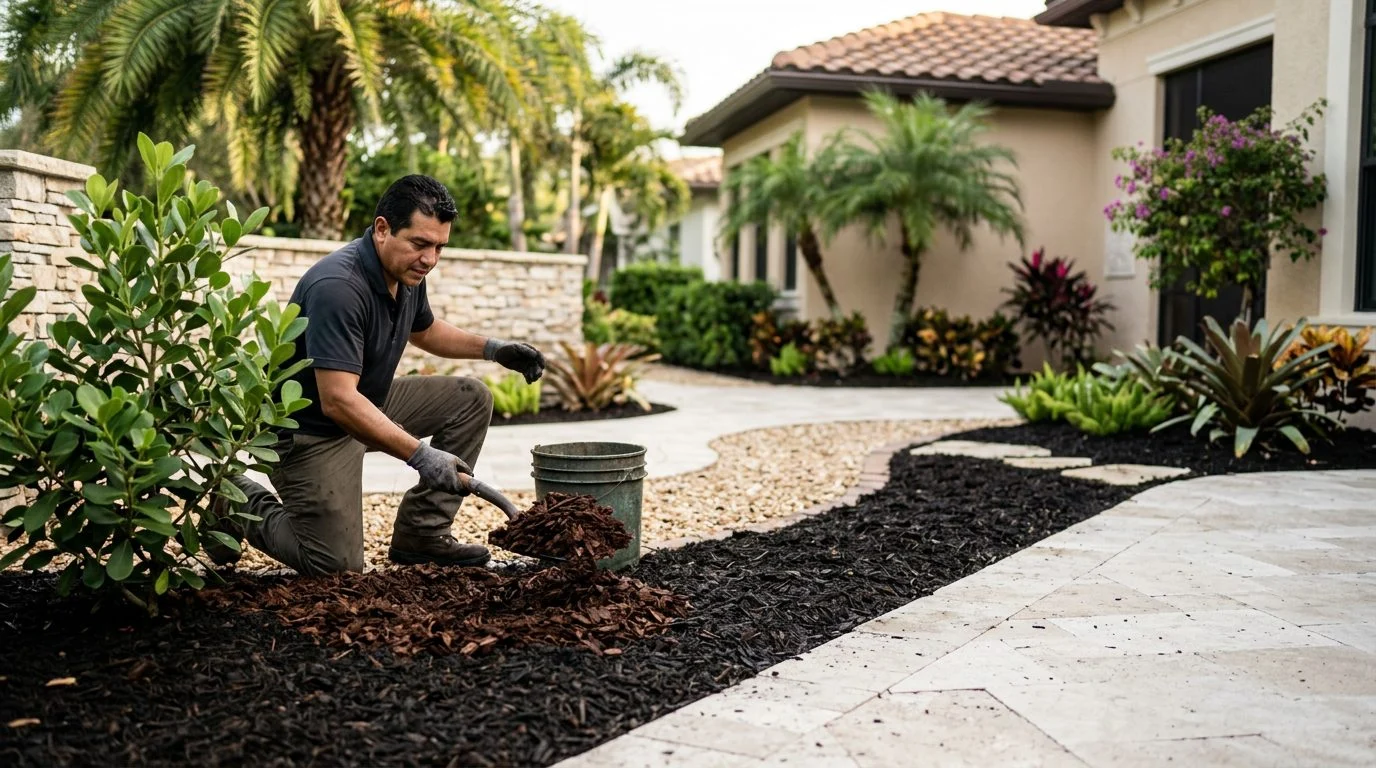
Routine commercial landscape maintenance in South Florida usually includes mowing, edging, hedge and shrub trimming, weeding, debris removal, and seasonal cleanup. These tasks are predictable, so they can be scheduled and priced by the visit or by the month.
Specialized work costs more. Irrigation repair, heavy debris hauling, and tree work that needs different equipment or skills all add cost. Irrigation also has rules.
Exterior hard surfaces are a separate service. If a quote bundles pressure washing with landscape work, the pressure washing guide explains how that work is scoped.
Monthly contracts and hourly billing are both valid. A figure like $200 a month can’t be judged on its own. You need the hours, the crew, and the tasks it covers.
How to weigh the number for your property
Judge the rate against the hours on your property, not against a single number.
Bring these questions to our team during your free first consultation:
- What tasks are included in the rate?
- How many workers come to each visit?
- How many hours does each visit run?
- How are travel, setup, and cleanup billed?
- How are changes in scope priced?
Reasonable hours turn on the property. Lot size, how dense the plantings are, how easy the site is to reach, and how often the crew comes all change how many hours a visit should take.
If a quote is sitting on your desk and the numbers still don’t line up, reach out to our team to talk through your site. La consulta inicial es gratuita, confidencial y sin compromiso de continuar.
For the next reading step, see the day porter service guide for Miami-Dade.
Quick answers
Is $100 an hour too much for landscape work?
Not by itself. Read the rate against the crew size, billing unit, and tasks it covers.
Does an hourly landscape rate include travel time?
Usually, because travel and setup are part of what the rate has to cover. Confirm how they’re billed in writing.
Is $200 a month for lawn care good?
A monthly price can only be judged once you know the hours, crew, and tasks it includes.
What to Check Before Comparing Any Hourly Rate
Crew Size
A single technician and a full crew can both bill by the hour, so the number of people on site changes what the rate buys.
Billing Unit
Confirm whether you are billed by the hour, by the visit, or by the job, and whether minimum visit times apply.
Tasks Included
Mowing, edging, hedge trimming, debris removal, and irrigation checks may or may not be part of the same rate.
Travel and Setup
Travel time, equipment setup, and cleanup are real work. Ask whether they are built into the rate or billed separately.
How We Approach Commercial Landscape Pricing
Scope in Writing
We put the tasks, visit frequency, and billing terms in writing so you know exactly what your rate covers.
Crew Matched to the Job
We explain how many people the work requires and why, so the rate reflects the site rather than a guess.
Clear Visit Schedules
We outline when crews arrive, how long visits typically run, and how travel and setup are handled.
Answers Before You Commit
Our team walks through every line of a quote so you can decide with confidence.
Ask This Before You Sign
Confirm in writing whether travel, setup, cleanup, and equipment are included in the hourly rate. Hidden line items are often what make a quote look higher later.