
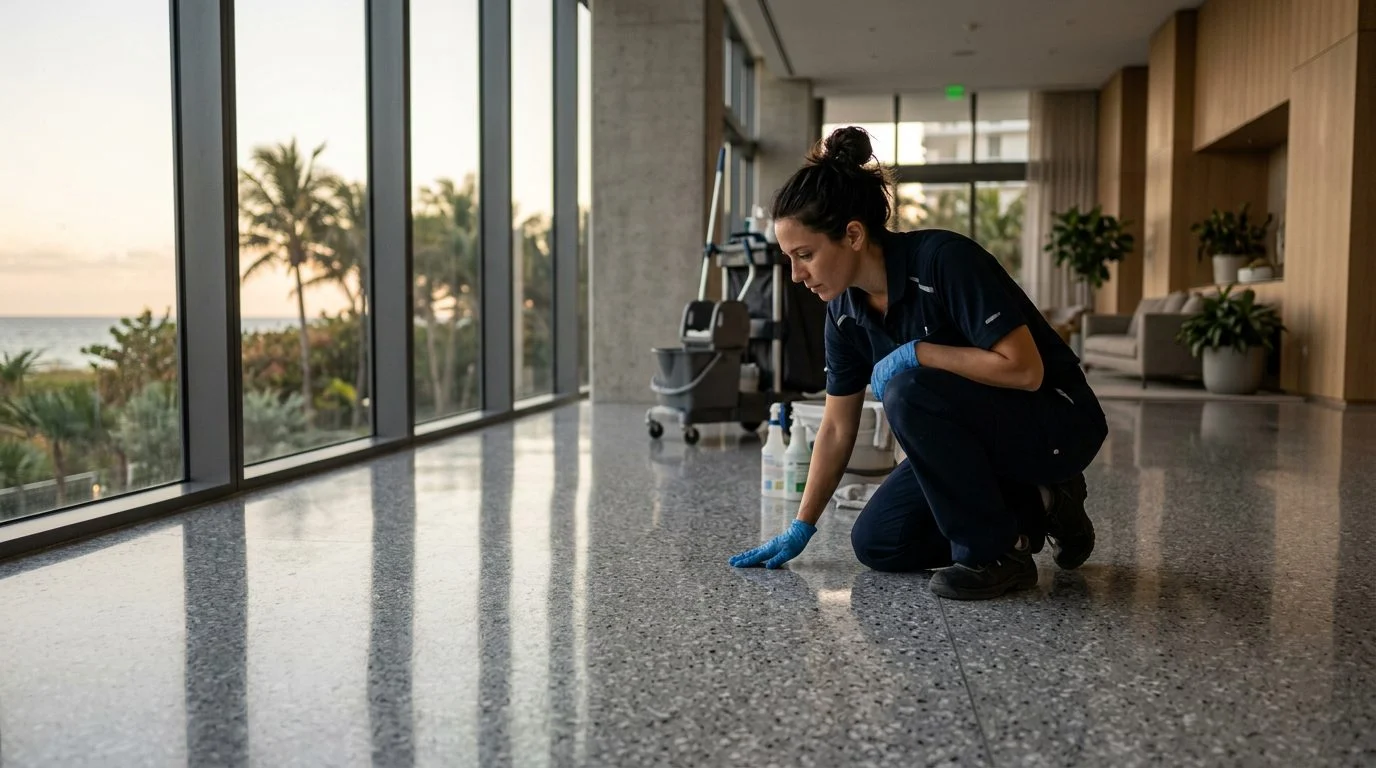
Floor Care | South Florida Condos
Condo Lobby Entry Mats That Keep Every Entrance Clean
Entry mats trap sand, water, and grit before they reach your lobby floors. Here is what they do, where they belong, and how they fit into a steady cleaning routine.
By Ryan Jurney · Published November 6, 2026
An entry mat in a condo lobby catches sand, grit, and water before they reach the finished floor. It protects the floor finish, lowers slip risk near the door, and makes daily cleaning easier. This page explains what an entry mat does, where it belongs, and how it fits into the day porter and floor care work your building already relies on.
Why the Lobby Entrance Takes More Wear Than It Looks
The entrance takes the most wear because it is where the outside comes in. Sand, rain, leaves, and pet paws ride in on shoes, rolling carts, and umbrellas. Most of that grit lands within a few steps of the door, which is why the floor near the entry often looks worn first.
You may be looking at a dull patch near the door, or you may have heard about a slip after a storm. Often a board member or property manager is the one who has to decide what to do about it.
Whether a mat is worth adding depends on the facts of your building: how many people walk through, how much weather reaches the door, and what the floor is made of. The entry works as a system, from the walkway outside to the mat to the floor inside. The sections below walk through each factor so you can judge your own lobby.
If you're weighing a lobby mat for your board or building, we're glad to talk through your entrance, traffic, and floor type with you. Talk it through with our team — the first consultation is free, confidential, and carries no obligation.
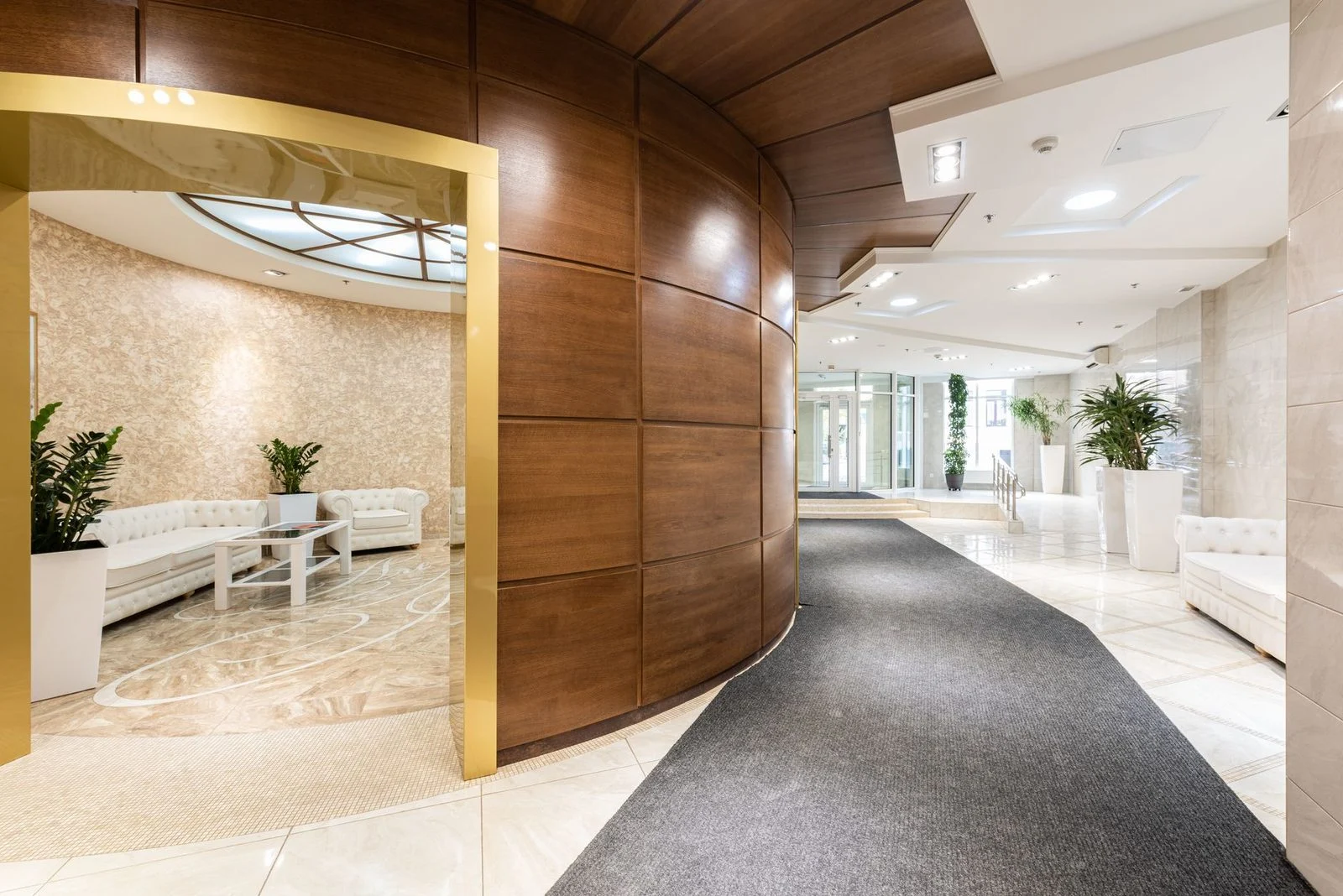
What an Entry Mat Actually Does on a Condo Lobby Floor
An entry mat holds grit and moisture at the door so they stay off the finished floor.
Fine grit works like sandpaper under foot. Each step grinds sand into tile, stone, or terrazzo, and that wear dulls the finish over time. A mat traps much of that grit at the entrance, so less of it reaches the lobby floor. Terrazzo and polished stone show scratches over time, so this matters most for those finishes.
Wet shoes and umbrellas bring water inside too. A mat holds some of that moisture, which keeps the area just inside the door less slick. That matters most on a rainy day, when people arrive in a hurry.
A mat also stops debris from spreading deeper into the lobby. Fewer particles across the floor means less sweeping and a cleaner path for the people doing the work.
A slick entry floor is one condition worth tracking as part of that duty, so it belongs on the building’s checklist.
Should the Mat Go Inside or Outside?
For most condo lobbies, the mat belongs just inside the entrance, where it catches what comes in from outside.
An outside mat catches sand and rain first. It needs the right size, a firm anchor, and a surface that drains, so water does not sit underneath. Without those, a mat can slide when people step onto it in wet weather.
Some buildings use both. A coarse mat or scraper at the outer threshold removes the heaviest grit, and an absorbent mat just inside holds what is left. Each one has a different job.
Choose the placement by looking at two things: where water collects after a storm, and where the floor shows the most wear. Walk the entry on a rainy afternoon and note where the water and grit end up. That walk-through tells you more than a general rule about inside or outside.
What to Look for in an Outdoor or Wet-Entrance Mat
Look for a mat that stays in place, lets sand and water fall through, and drains instead of pooling. Check these features:
- Backing that will not slide on wet tile or stone.
- A surface that lets sand and water drop through instead of sitting on top.
- Drainage underneath, so water does not collect beneath the mat.
Size matters too. The mat should cover the full door swing and the path people actually walk, not just the threshold.
A mat that stays damp loses its usefulness, so airing it out and rotating it helps. Check the edges for curling or fraying during each cleaning. A good-looking mat in the wrong spot will not solve a drainage problem.
Keep the choice of mat with the people who will maintain it. Put the specification in writing so the building and its vendor agree on it.
What Mat Treatment and Upkeep Involve
Mat treatment is the routine care of the mat itself: lifting it, shaking or vacuuming it, cleaning it, and replacing it when it wears.
A lobby mat usually needs frequent sweeping or vacuuming of its surface, a periodic deeper cleaning, and a check of the floor beneath its edges. Grit that works under the edges can scratch the floor even when the mat looks clean. Check those edges every time you lift the mat. A ridge of grit there often means the mat has been moving or cleaning has been skipped.
Your building’s traffic sets the exact schedule. A busy entry needs more attention than a quiet one, and a rainy season adds to the load.
A neglected mat can become the problem it was meant to solve. A full, dirty mat puts its grit back onto the floor. That is why upkeep belongs in the decision from the start, not as an afterthought.
Organized maintenance programs and checklists can help when writing vendor scopes of work. The mat’s cleaning frequency and replacement trigger belong on that list.
Is an Entry Mat Worth Adding to Your Lobby?
A mat is worth adding when it keeps grit and water off the floor and someone is clearly responsible for keeping it clean. Ask these four questions before you decide:
- How much sand, water, and debris enters the lobby each day?
- Does the floor finish show scratches or dulling?
- Do people slip when it rains?
- Who lifts, cleans, and replaces the mat?
Compare the mat’s upkeep cost with the cost of repairing or refinishing a worn lobby floor. Upkeep belongs in that comparison, because a mat that is not maintained stops doing its job.
If a vendor will handle the mat, ask for the scope in writing and for proof of coverage. Ask for that proof before work starts.
A short trial with written expectations can show you how the arrangement works before you commit to a longer plan. The decision is yours, made with the facts of your own building.
Not sure what your next step is?
Talk it through with our team — the first consultation is free, confidential, and carries no obligation.
How Entry Mats Fit Into Day Porter and Floor Care Routines
An entry mat works as one step in a daily routine, and day porter service is where that routine happens.
A day porter sweeps the entrance during the day, removes debris, and checks the mat and the floor beneath it. Catching a problem at the door early keeps it from spreading across the lobby. Day porter work and mat care share the same set of checks, which is why one routine can cover both.
Floor care maintenance covers the finished lobby floor itself. Mat choice and floor care planning should be coordinated, so the mat protects the finish the floor care plan is meant to preserve.
Grit often arrives from outside the building. Pressure washing services can clear walkways and exterior surfaces that feed debris toward the door. Landscape services can address plantings that shed mulch or sand onto those paths.
Keep lobby care separate from structural review.
Gator Protection, Inc. provides these services throughout South Florida, including Miami-Dade, Broward, and Palm Beach counties.
Frequently Asked Questions
Should a condo entry mat go inside or outside?
For most condo lobbies, the mat sits just inside the entrance. A coarse mat outside helps when heavy sand and rain reach the door.
Who usually cleans the lobby entry mat?
The mat is part of the floor care and day porter routine. It should appear in the vendor’s written scope of work.
Does an entry mat replace floor care?
No. A mat reduces the grit that reaches the floor, but it does not replace regular floor care.

Talk Through Your Lobby’s Entrance With Our Team
If you’re weighing an entry mat for a board or building, you don’t have to sort out the mat, the upkeep, and the vendor terms by yourself. You may be doing this on someone else’s behalf, after a slip or a floor that is already showing wear. Those are real problems, and they deserve a clear plan.
Contact Gator Protection to talk through your lobby’s entrance layout, foot traffic, weather exposure, and floor type. Bring notes on where water collects and where the floor wears first. Our free first consultation is confidential and carries no obligation to continue.
What a Well-Kept Entry Mat Does for a Condo Lobby
Protects the floor
A mat catches sand, grit, and moisture at the door, so less of it is tracked across tile, stone, or wood flooring.
Improves first impressions
A clean, flat, and intact mat tells residents and visitors that the building is cared for.
Reduces slip risk
Keeping mats dry, flat, and free of debris helps limit wet spots that can make an entrance slippery.
Cuts daily cleaning time
When the mat catches most of the dirt, the day porter has less to sweep, mop, and polish throughout the day.
Tip: Check the Mat Before It Checks You
A saturated, buried, or curled mat stops doing its job. Ask whoever maintains your lobby how often mats are shaken out, vacuumed, and replaced, and make sure that routine is written into the cleaning scope.
Common Questions About Condo Entry Mats
Inside or outside?
Most condo lobbies use a mat just inside the entrance. A coarser mat outside the door can help when heavy sand and rain come in during the rainy season.
Who cleans the mat?
Entry mat care usually falls under floor care and day porter service. It should be listed in the written scope of work so everyone knows who is responsible.
How often does it need attention?
High-traffic lobbies and busy weather days call for more frequent attention. A regular schedule, plus spot checks during the day, keeps mats performing well.
Does the mat affect the floor care plan?
Yes. A good mat reduces the grit that wears down finishes, so it works alongside scheduled stripping, buffing, and sealing.