
Day Porter Service · Miami Condos
What Should a Day Porter Not Do in a Miami Condo?
A day porter keeps the building clean, safe, and running smoothly. Knowing where that role stops protects residents, staff, and the property.
By Ryan Jurney · Published November 6, 2026
A day porter should not take on licensed trade repairs, work inside private units, security or rule enforcement, or heavy jobs that need their own scope. Those tasks belong to a licensed contractor, building staff, or a separate work order. For a Miami condo board or property manager, putting that line in writing saves time and arguments.
Maybe someone asked you to fix a leak, clear a garage, or handle a stain in the hallway. This page explains where day porter duties stop and how to word a request so nobody is guessing.
Why Day Porter Scope Limits Matter in a Miami Condo
Clear scope limits prevent missed tasks and disputes over who was responsible. Vague requests cause most of the trouble. A board asks the porter to “keep the building looking nice.” The porter wonders whether that includes the garage ramp, the pool deck, or a sticky door closer. Nobody is sure, so the task slips through.
Florida condominium law gives associations a framework for this.
A written scope turns a general wish into a standard the association can point to. It also gives the porter, the manager, and residents the same picture. This page covers what a day porter does, what falls outside that role, how other service lines fit in, and how to word a clear request.
If you're deciding what belongs in your porter's day and what needs its own work order, we can talk it through with you. Talk it through with our team — the first consultation is free, confidential, and carries no obligation.

What Is a Day Porter, and What Is in Scope?
A day porter is a daytime, on-site worker who keeps shared spaces clean and presentable. The job centers on the areas residents and visitors use every day.
Routine duties often include:
- Lobby and entrances
- Corridors, elevators, and stairwells
- Restrooms
- Break rooms and kitchens
- Trash and recycling areas
- High-touch surfaces, such as door handles and handrails
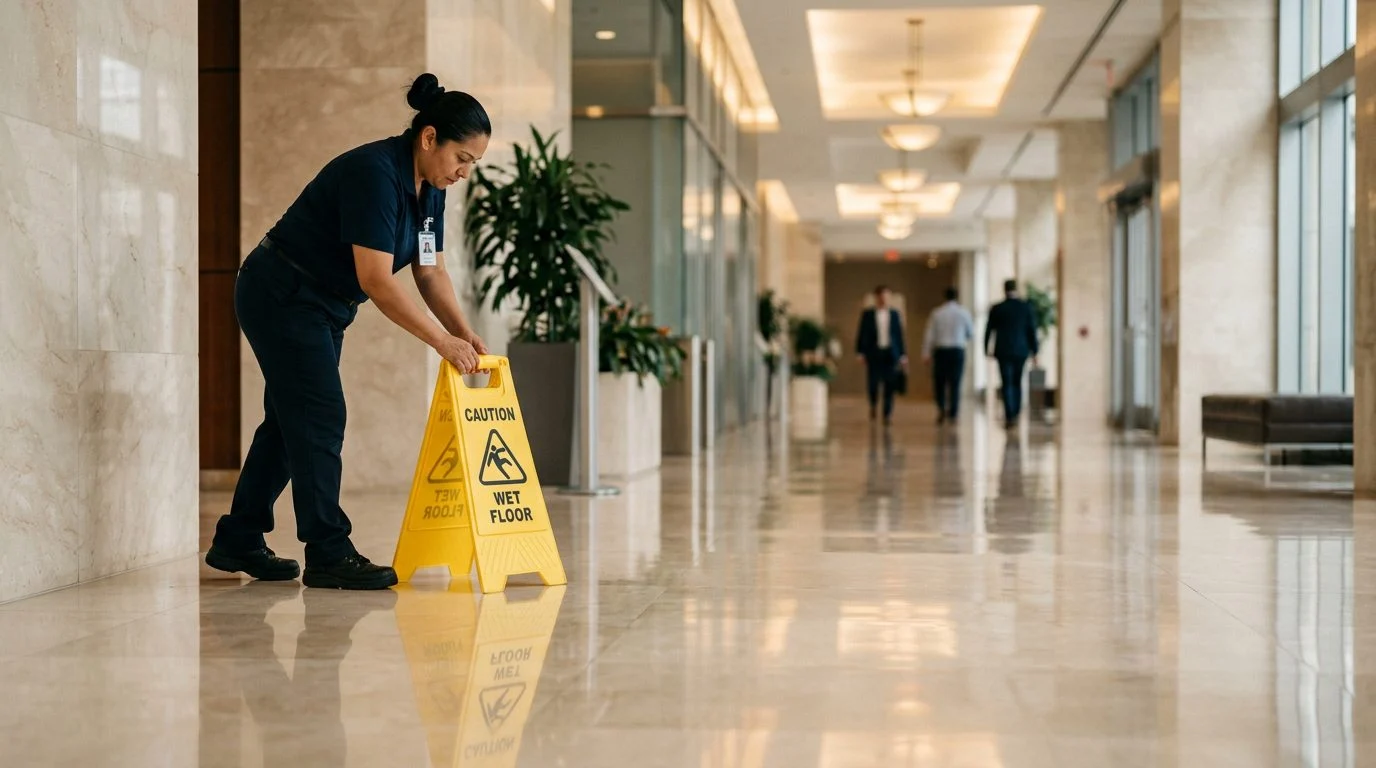
Cleanliness also has a safety side. Routine floor care is a practical part of keeping commercial spaces clean and organized for employees and visitors. A wet lobby floor left alone is a real hazard, so a porter who spots one should act or report it quickly. You can read the federal walking-surface rules in 29 CFR Part 1910 Subpart D.
The same task can be in scope in one building and out of scope in another. What counts is the written scope the association approves.
What Should a Day Porter Not Do in a Condo?
A day porter should not take on licensed trade repairs, unit work, security duties, personal favors, or equipment-heavy jobs without a separate scope. Each of these has a better home.
- Licensed trade repairs. Plumbing, electrical, HVAC, and appliance repair belong to a licensed trade. The porter reports the problem and documents it.
- Work inside private units. Unless the association assigns it in writing, unit work stays out of the porter’s day.
- Security and rule enforcement. Access control and rule enforcement belong to building staff or management.
- Personal favors. Errands for one resident fall outside a common-area assignment.
- Chemical and equipment-heavy jobs. These need training and equipment, so they should be scoped separately.
A common mistake is adding tasks one at a time until nobody tracks the full list. Each small add seems harmless. Together, they turn a cleaning role into a repair role without anyone deciding that.
Chemicals need extra care. See the OSHA hazard communication standard. Ask who supplies the chemicals and where the safety data sheets are kept.
Work That Belongs to Other Service Lines
Heavy exterior washing, deep floor restoration, and grounds care belong to separate service lines, not the day porter’s routine. Gator Protection, Inc. offers floor care maintenance, pressure washing services, and landscape services as distinct services. Keeping them separate keeps schedules and pricing clear for the association.
- Pressure washing: garages, walkways, and building exteriors.
- Floor care maintenance: stripping and recoating lobby or garage floors.
- Landscape services: planting, hedges, irrigation, and grounds upkeep.
Irrigation has its own rules. Landscape irrigation is a topic covered by the South Florida Water Management District, and it is worth considering when planning landscape maintenance for a commercial property. Sprinkler scheduling belongs with the grounds work, not the porter’s cleaning route.
Leaks and Spills: Report, Document, Escalate
When a leak or spill shows up, a day porter’s first job is to notice it, report it, and record it. Finding the source and fixing it belong to others.
A useful report includes the exact location, the time it was found, and photos. Note whether the water is still spreading. A report that says “wet near the elevators at 10:15, photos attached, still spreading” gives the next person something to act on.
Define the chain before the problem happens. Name who gets the call during business hours and who handles after-hours calls. Also decide what the porter does while waiting, such as keeping people away from a slick floor. Waiting until the next scheduled visit to report a leak is a common and costly mistake.
A dated log of reports helps the association show what was reported and when.
How to Write a Clear Scope or Work Order
A clear work order names each area, each task, how often it happens, and who approves changes. Vague wording invites disputes later. Specific wording gives everyone a shared checklist.
- List areas by name, such as “third-floor corridor,” not “common areas.”
- State the frequency for each task: daily, weekly, or as needed.
- Name who reports problems and who approves additions.
- Record every change in writing, with a date.
Written scopes also support record-keeping.
For planning, the Community Associations Institute’s maintenance best practices report supports organized maintenance programs and checklists when you develop vendor scopes of work.
A clear scope also cuts confusion for staff and residents. Everyone knows who does what, and fewer problems fall through the cracks.
Not sure what your next step is?
Talk it through with our team — the first consultation is free, confidential, and carries no obligation.
Talk Through Your Building’s Scope With Our Team
If you’re deciding what belongs in your porter’s day and what needs its own work order, you don’t have to sort it out alone. Board members and managers often face this question after a recurring problem or a dispute over one task. Listing the areas, tasks, and schedule on paper is a good first step.
Common questions
Can a day porter do repairs in a condo?
A day porter should report repairs, not perform licensed trade work like plumbing or electrical.
Should a day porter enter private units?
Not unless the association assigns that work in writing.
Can a day porter pressure wash a condo garage?
Heavy washing is a separate pressure washing job, scoped apart from routine porter duties.
Our first consultation is free, confidential, and carries no obligation to continue. Reach out through our contact form or call the office to talk through your building’s areas, tasks, and schedule.
Four Tasks Outside a Day Porter's Role
Licensed trade work
A day porter should report the problem and leave the repair to the right person.
Entering private units
A day porter should not enter a private unit without clear, written authorization from the association or property management.
Handling keys and personal belongings
Keys, packages, and residents' belongings should follow the building's set procedures. Improvising with them creates avoidable risk.
Guessing at unfamiliar equipment
Pressure washers, floor machines, and chemicals need proper training and the right products. Using them without that preparation can damage surfaces or injure someone.
Report It, Don't Fix It
When a day porter spots a leak, a broken fixture, or a safety hazard, the best step is to document it and report it promptly. Quick reporting keeps small issues from becoming costly ones.
What Good Day Porter Service Looks Like
Clear boundaries
Staff know which tasks are theirs and which belong to licensed trades or building management.
Consistent daily schedules
Lobbies, common areas, and high-traffic spots are maintained on a predictable routine.
Written reporting
Issues are logged and passed along so the right people can act on them.
Safety first
Equipment and cleaning products are used the way they are meant to be used.
Open communication
Property managers and residents know who to contact and what to expect.
Not sure whether a task belongs to your day porter?
Start with a free first consultation. It is confidential and comes with no obligation to continue.