
Condo Lobby Cleaning | South Florida
Clear Answers on Lobby Cleaning Responsibility in Your Florida Condo
A practical guide for condo boards, owners, and property managers who want their building's entrance kept clean, safe, and welcoming.
By Ryan Jurney · Published November 9, 2026
Who is responsible for lobby cleaning in a Florida condo? In most cases, the condominium association is responsible, and the building’s governing documents and budget decide how that work is assigned and paid for.
This question often comes up in the middle of a problem. A lobby floor stays dirty for days. Residents complain in the hallway. A board member or property manager is asked to fix it. This guide explains the general rule, what the documents show, and where day porter service fits.
Why This Question Comes Up for Condo Owners and Boards
Owners and board members usually ask this question when a common area is already causing trouble. The lobby looks neglected, a resident raises a complaint, or a new board inherits an old cleaning arrangement. Few people ask it during a calm planning meeting.
The person researching is often not the one who chose the building or the vendor. A board member may be covering for a former chair. An owner may be trying to understand a bill. A property manager may be handed a question nobody wrote down.
Unclear responsibility can stall a fix. When no one knows who owns a task, the task often waits. A written answer lets the board act and lets owners see who made the decision. The answer comes from the association’s own documents and contracts, read in order.
If a dirty lobby or a board decision about cleaning has you caught in the middle, our team is glad to talk through your building's options with you. Talk it through with our team — the first consultation is free, confidential, and carries no obligation.
The Short Answer: The Condo Association Is Generally Responsible
The condominium association is generally the party responsible for common elements, and that usually includes the lobby. Fla. Stat. § 718.103 defines “association” to include the entity responsible for operating common elements owned in undivided shares by unit owners. That definition is the core of the answer.
Each unit owner holds an undivided share in the common elements, under the same statute. Owners hold the shared spaces together, not one owner alone. The association runs them on everyone’s behalf through its board of administration.
Which party cleans which spot, and how often, comes from the building’s own documents.
What Counts as a Common Area in a Florida Condo
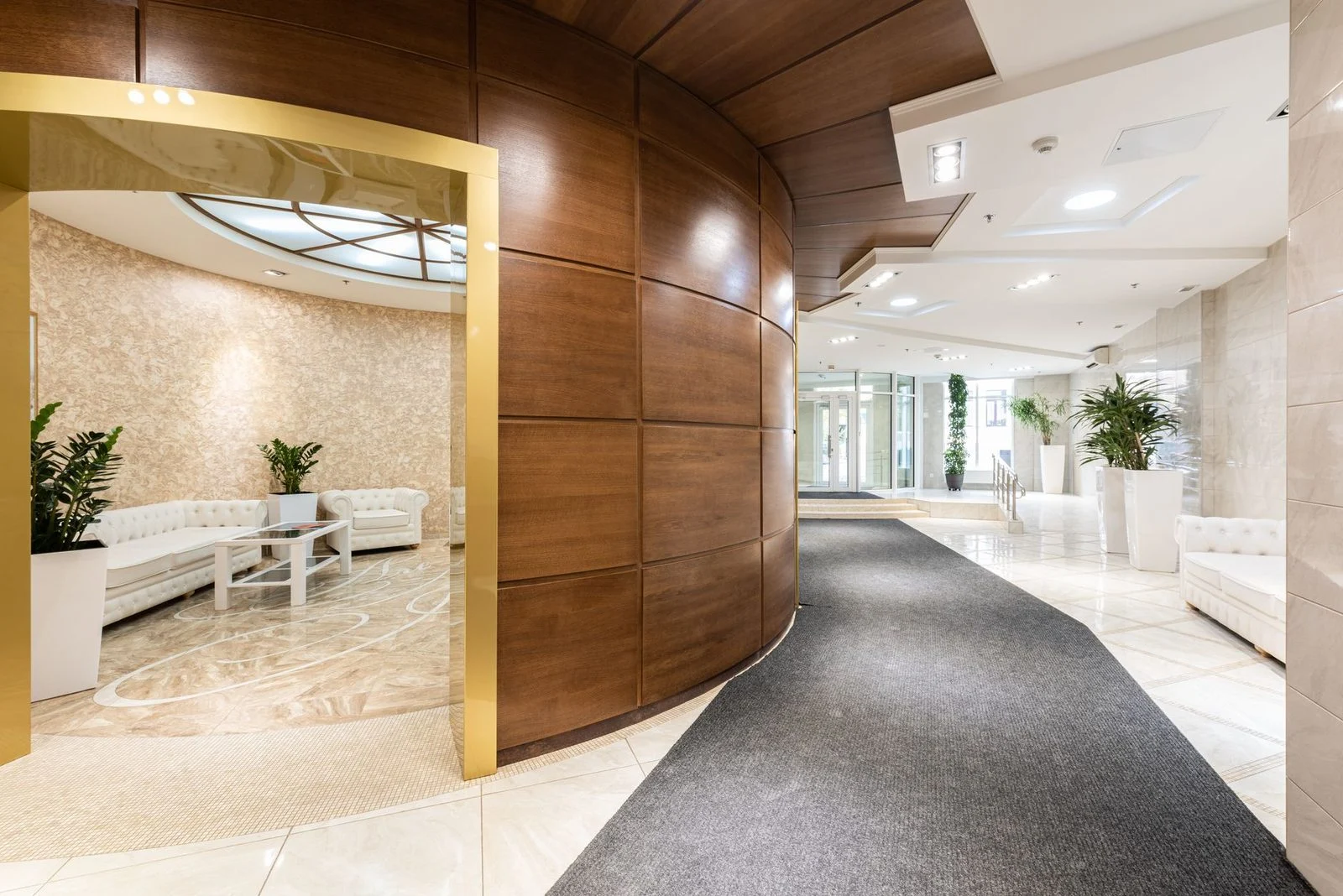
Common areas are the shared spaces every owner uses. These often include the main lobby, lobby seating, mailbox areas, hallways, stairwells, and elevator cabs.
Shared amenity spaces, entry walkways, pool decks, and parking areas that serve the whole building can also be common areas. Those spaces often need pressure washing and floor care alongside lobby work. Areas that sit between a single unit and the shared building need a closer look at the declaration.
Individual unit interiors are generally not common areas. The boundary comes from the condominium documents. A declaration must include a survey and graphic description with enough detail to identify the common elements and each unit, as Fla. Stat. § 718.104 requires.
How the Declaration and Board Decisions Shape Who Does the Work
The declaration and bylaws are the first documents to check, because they set how the association is governed. Under Fla. Stat. § 718.112, the association is governed by its articles of incorporation, if it is incorporated, and by its bylaws. The bylaws are included as exhibits to the recorded declaration.
The board then decides how the work gets done. It may assign cleaning to association staff or hire an outside vendor. A declaration can assign some upkeep differently than the general rule, so check those terms before assuming a default.
Board meetings also leave a record. In a residential association of more than 10 units, the board must meet at least once each quarter. Minutes often show when a cleaning schedule or vendor was approved, which is a quick way to see who decided what.
How Lobby Cleaning Costs Reach Owners
Lobby cleaning is usually an association expense, and owners share it through assessments. The cost is generally spread across owners rather than billed to one unit.
Under Fla. Stat. § 718.116, a unit owner is liable for all assessments that come due while he or she owns the unit. A new owner is also jointly and severally liable with the previous owner for unpaid assessments that came due before the transfer of title. That matters when a sale happens during a dispute over a cleaning invoice.
Clear paperwork helps the board track spending. A written scope, a signed vendor contract, and monthly invoices show what was done and what was charged. Under Fla. Stat. § 718.111, bids for work to be performed or for materials, equipment, or services must be kept for at least one year after receipt. Official records must be kept in an organized way that lets an owner inspect them.
Where Day Porter Service Fits in Lobby Cleaning
Day porter service is ongoing, on-site upkeep of the lobby and common areas during the day. It keeps shared spaces presentable between deeper cleaning cycles.
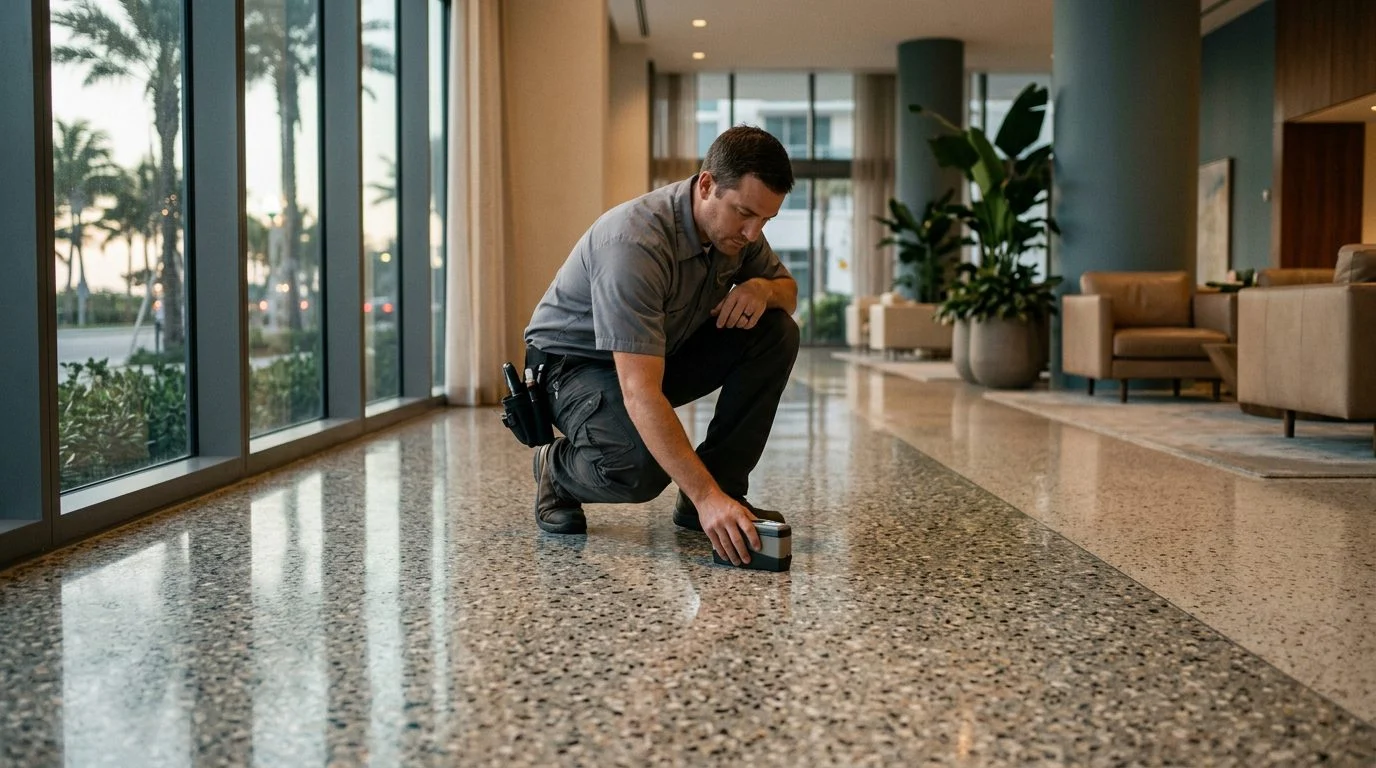
Typical day porter tasks include spot cleaning, restroom checks, handling trash and recycling, keeping entries and lobby seating tidy, and responding to spills. Boards often pair this work with floor care maintenance for hard floors and with pressure washing for walkways and entries.
The scope belongs in the contract. A written list of covered areas, tasks, and response times gives the association and vendor one shared understanding. Chemical safety matters too. Ask any vendor how it handles those steps.
Not sure what your next step is?
Talk it through with our team — the first consultation is free, confidential, and carries no obligation.
Questions to Answer Before Deciding Who Handles the Work
Five questions usually show who owns lobby cleaning and how it gets paid for.
- Does the declaration assign lobby and common-area upkeep to the association, and does it name any owner duties?
- Is there an existing cleaning contract, and what does its scope of work include?
- What does the current budget allocate for lobby and common-area cleaning?
- Did the board approve the schedule and vendor in meeting minutes?
- Who receives vendor invoices, and who checks them against the scope?
The Community Associations Institute maintenance best-practices report supports organized maintenance programs and checklists when a board writes a vendor scope. A checklist approach fits this step well.
When Lobby Cleaning Responsibility Is Disputed or Unclear
When the documents are unclear or conflict, the board should settle the question in writing at a noticed meeting. Waiting usually makes the problem harder to fix.
Start with the declaration, then the contract, then the minutes. Compare each invoice against the agreed scope. If an invoice includes work outside that scope, the board can raise it in writing before paying.
Keep records of complaints, requests, and responses. A dated log shows the board’s timeline and what it did about each issue. Board meetings require notice. Under Fla. Stat. § 718.112, notice must be posted at least 48 continuous hours before the meeting, except in an emergency.
Safety comes first on wet floors. A spill should get a prompt response while the question of who pays is sorted out.

Talk With Gator Protection About Your Building’s Lobby
If your building needs lobby and common-area cleaning, Gator Protection can talk through the scope with your board or manager. We provide day porter service, floor care maintenance, landscape services, and pressure washing across South Florida, including Miami-Dade, Broward, and Palm Beach counties.
Who is responsible for lobby cleaning in a Florida condo?
The condominium association is generally responsible. The declaration and bylaws show how that work is assigned.
Who pays for lobby cleaning in a Florida condo?
Owners usually share the cost through association assessments. Unit owners are liable for assessments that come due while they own the unit.
Have questions about our floor care services?
Our first consultation is free, confidential, and carries no obligation to continue. If a dirty lobby or a board decision about cleaning has you caught in the middle, reach out through our contact form, call the office, or request a free quote. We’ll walk through your building’s options with you.
How Gator Protection Supports Condo Lobbies
Day Porter Service
Regular on-site attention keeps lobbies, entrances, and common areas looking their best throughout the day.
Floor Care Maintenance
Scheduled floor care helps protect lobby surfaces and keeps high-traffic areas presentable.
Pressure Washing
Entryways, walkways, and exterior surfaces can be cleaned to refresh the first impression your building makes.
Local Coverage
Our team focuses on condominiums across Miami-Dade, Broward, and Palm Beach counties, including South Beach, Coral Gables, and Brickell.
Not Sure Where Your Building Stands?
Cleaning duties can differ from one building to the next. Reviewing your building's current scope of work with your board or property manager is a helpful first step before making changes.
Services for Condo Lobbies and Common Areas
Day Porter Service
Ongoing daytime cleaning that keeps lobbies, elevators, and entrances tidy for residents and visitors.
Floor Care Maintenance
Routine care for lobby and corridor floors, supporting appearance and long-term upkeep.
Landscape Services
Maintained grounds and entry landscaping that complement a clean, well-kept building exterior.
Pressure Washing
Exterior cleaning for walkways, entrances, and surfaces that collect dirt and grime over time.