
Floor Care Maintenance | South Florida
Why Your Laminate Floors Still Look Dirty, Even With Regular Maintenance
A cleaning schedule helps, but residue, grit, extra water, and the wrong products often leave laminate looking dull. Here is what to check and how our team can help.
By Ryan Jurney · Published November 7, 2026
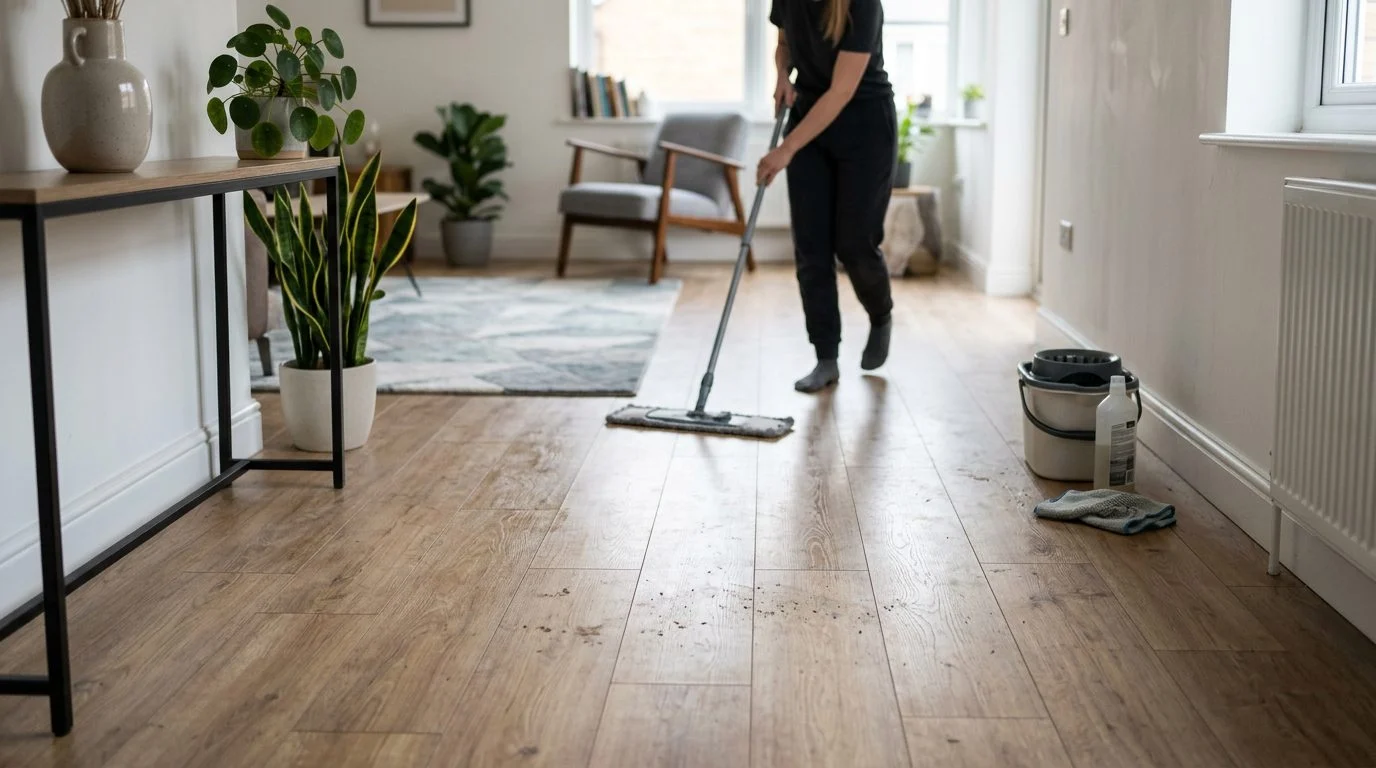
Laminate floors usually look dirty for a few common reasons: leftover residue, fine grit, extra water, the wrong tools, and heavy traffic. A regular schedule helps, but it doesn’t guarantee clean-looking floors. The method and the products matter too.
Why laminate can look dirty even after regular cleaning
A schedule alone doesn’t keep laminate looking clean. The method, the products, and the conditions all play a part. Start by sorting out what you’re seeing. Some of it is real dirt, like dust, sand, or tracked-in grime sitting on top. Some of it is dullness, haze, or streaks. Those usually come from residue, water, or tiny scratches left behind after cleaning. Dirt comes off with the right wipe. Haze often doesn’t, and mopping again can make it worse. The sections below cover the most common causes and how each one shows up on the floor.
If a floor in your building or home keeps looking dull no matter how often it's cleaned, our team can help you work out why and what to change. Talk it through with our team — the first consultation is free, confidential, and carries no obligation.
Residue, film, and the wrong cleaner
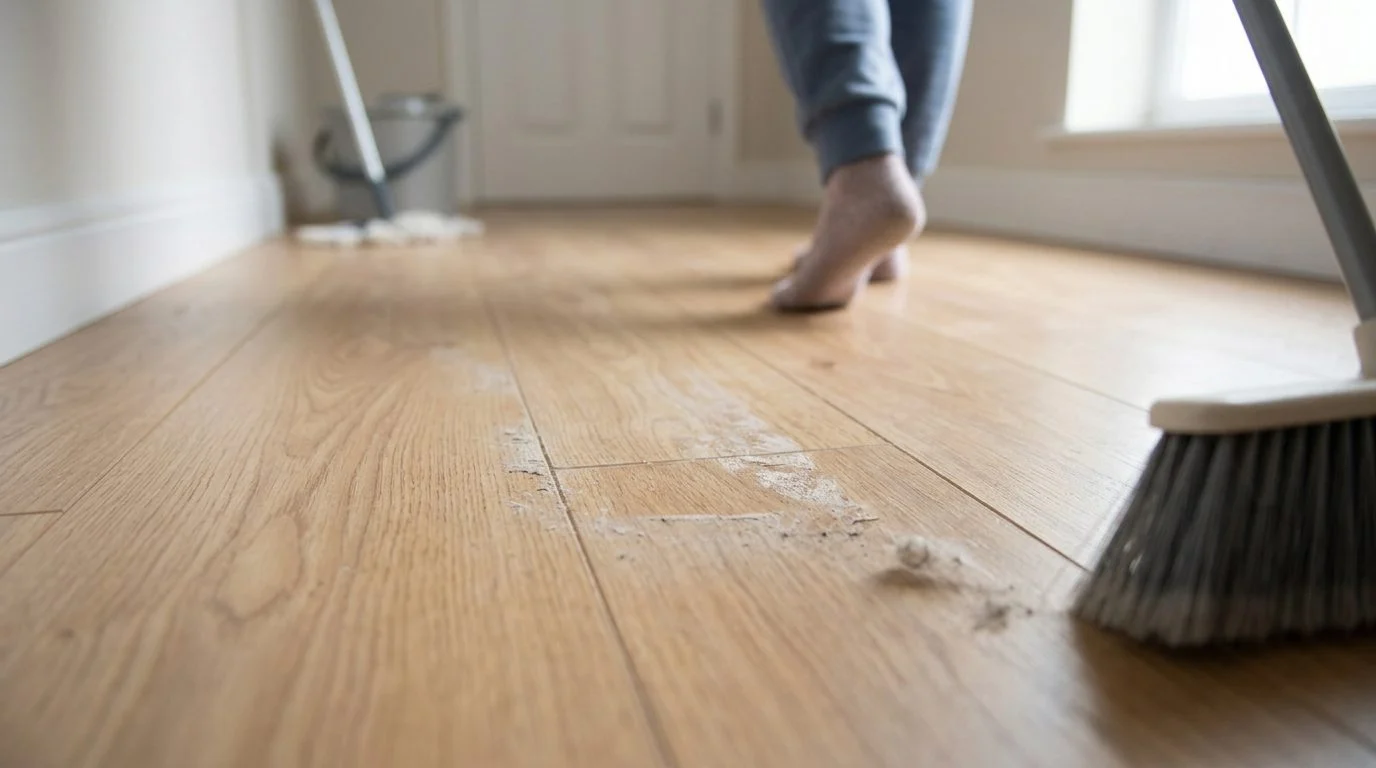
Leftover cleaner is one of the most common reasons laminate looks dirty soon after mopping. The thin film it leaves gives new dust and footprints something to cling to. Heavy-duty cleaners, oil-based products, and wax-based products can leave a sticky layer like this. Traffic shows up faster on that layer, and the same spots look dingy again quickly.
Dish soap is a common household choice, so it’s worth a direct answer. Is Dawn dish soap safe for laminate floors? It’s designed to cut grease on dishes. On a floor, it can leave a film that causes streaks and dullness. For laminate, it’s generally not the cleaner of choice. Follow the floor manufacturer’s cleaning guidance before choosing a product.
Use the amount of product the directions call for, not more. Wring the mop until it’s barely damp, and rinse it often. Less product means less film to trap dirt.
Grit, sand, and scratches that trap dirt
Fine sand and grit act like sandpaper on laminate. When people walk over it, or a dirty mop drags it across the floor, it scratches the clear wear layer on top. Each scratch becomes a tiny groove. Dust and grime settle into those grooves and look like a permanent haze, even after a wipe.
That’s why removing loose grit first matters. Dust or sweep the floor before any wet cleaning. Taking grit off first keeps it from being pushed across the surface. Rough scrubbing pads can add new scratches, so a soft cloth or microfiber head is the better choice for everyday work. Walk-off mats at entrances catch much of the grit before it reaches the floor.
Too much water and damp mopping
Too much water is a common reason laminate keeps looking grimy. Water can seep into seams and edges. Over time, that can cause swelling, cloudiness, and dirty lines along the joints. A soaking mop leaves more moisture than the floor needs. The usual approach is a damp pass with a well-wrung tool, followed by drying. Let the floor dry fully so moisture doesn’t sit on the surface.
Keeping floors dry matters for safety too. Prompt spill response fits that goal. Wet spots left in busy areas can cause slips, so clean them right away.
Why dry pads and quick sweeps often fall short
A dry pad can remove loose dust, but it often leaves film, sticky residue, and embedded grit behind. That’s why a floor can still look dirty after a Swiffer pass. The pad does its job on dust. The dullness comes from something it can’t lift.
A quick dry sweep can also move dust around. Without a damp or microfiber follow-up, fine dust settles back onto the floor. Microfiber, soft-bristled equipment, and a properly rinsed mop tend to work better on film than rough pads. Match the tool to the job, and use the least aggressive tool that does the work. Think of dry pads as the first step, not the whole job.
Traffic, entryways, and South Florida humidity
Entryways, hallways, and high-traffic lanes show dirt first. They collect the most sand, moisture, and grit from people coming in. The rest of the floor can be clean while these spots still look dingy.
South Florida’s rainy season and humidity can bring more tracked-in moisture and sand. In busy spaces, that often means daily touch-ups matter more than an occasional deep clean. Exterior dirt matters too. Walkways and patios can carry grit indoors on shoes and carts. For outdoor surfaces, see our guide on deck power washing schedule.
The same routine may need adjusting when foot traffic, weather, or building use changes. A routine that worked in the dry season may fall short during a rainy month.
Not sure what your next step is?
Talk it through with our team — the first consultation is free, confidential, and carries no obligation.
What a maintenance plan can change, and a next step
A consistent plan works on the causes above at the same time. It combines dust removal, the right products, controlled moisture, and extra attention in high-traffic spots. It can’t promise a single fix. It can address each cause in turn.
Our day porter and floor care maintenance services can be set up around the traffic and conditions of a specific property. You can read more in our day porter service guide for Miami-Dade.
If you manage a building, you may review floors you don’t mop yourself. If it’s your home, you may be tired of mopping daily and still seeing haze. Either way, the question deserves a clear answer. Our team can look at your floors, traffic, and schedule with you. Our first consultation is free, confidential, and comes with no obligation to continue. Fill out the contact form, call the office, or request a free quote.
Why are my laminate floors always dirty even though I have regular maintenance?
A regular schedule helps, but it doesn’t guarantee clean-looking laminate. Residue, grit, extra water, and the wrong tools often cause the dullness.
Is Dawn dish soap safe for laminate floors?
Dawn is made to cut grease, and it can leave a film on laminate. It’s generally not the cleaner of choice for this floor type.
Why is my floor still dirty after using a Swiffer?
A dry pad removes loose dust well. It usually won’t lift film or embedded grit, so a damp follow-up helps.
Common Reasons Laminate Looks Dull
Cleaning product film
Some household soaps leave a thin residue that attracts dust and makes the surface look hazy between cleanings.
Grit under the surface
Fine sand and grit scratch the protective top layer, and those tiny marks catch light and dirt over time.
Too much water
Laminate is sensitive to moisture. Standing water or overly wet mopping can dull the finish and affect the seams.
Wrong tools
Abrasive pads, dirty mop heads, and worn-out cloths can spread soil instead of removing it.
Watch Out for Excess Moisture
Laminate should be cleaned with a damp, well-wrung mop, not a soaked one. Wipe up spills promptly and avoid steam cleaners unless the manufacturer approves them.
How to Keep Laminate Looking Its Best
Use the right cleaner
Choose a pH-neutral cleaner made for laminate and follow the label directions. Avoid products that leave a sticky or oily film.
Remove grit first
Dry dust mop or vacuum the floor before wet cleaning so loose sand and debris do not get rubbed into the surface.
Mop with control
Use a microfiber mop wrung until it is barely damp, and clean in small sections so the floor dries quickly.
Keep the mop clean
Rinse or replace mop heads and cloths often. A clean tool removes soil, while a dirty one redeposits it.
Get Floors That Look Cared For. Start With a Free Consultation.
Related practice areas
- How to Get Wood Floors to Shine in South Florida