
Floor Care Maintenance | South Florida
Dull Condo Lobby Floors? The Problem May Be Under the Shine
Mopping alone rarely fixes a floor that has lost its luster. Here is what usually causes the haze and how a maintenance plan keeps lobby floors looking their best.
By Ryan Jurney · Published November 17, 2026
A dull condo lobby floor is frustrating, especially when the floor was just mopped. Boards and property managers often ask the same thing: why does my condo lobby floor look dull after mopping? The short answer is that mopping removes loose soil but does not restore a floor’s shine. Most dull lobby floors come from leftover cleaner, the wrong product for the floor material, too much or dirty water, grit from foot traffic, or a finish that has worn down.
This page walks through each cause, what it looks like, and what to note before you make a call.
Why a Mopped Lobby Floor Can Still Look Dull
Mopping lifts loose dirt, but it does not bring back the surface finish. A floor can be clean and still look flat, hazy, or streaky. Three different problems can look alike. A dirty floor shows soil in corners and traffic lanes. A film makes the whole floor look cloudy, and it often returns soon after mopping. A worn finish shows dull paths where people walk most. Each needs a different fix, so identifying the problem comes first. Lobby floors take heavy, constant foot traffic, so dulling often shows up first at entrances and near doors. The sections below cover the usual causes and the signs of each.
If your board is fielding resident questions about a lobby floor that looks dull after mopping, our team is glad to talk it through with you. Talk it through with our team — the first consultation is free, confidential, and carries no obligation.
Cleaner Residue and Buildup from Too Much Product
Leftover cleaner dries into a thin film that dulls the floor and holds dust. Using more product than the label calls for, or adding more to the same spot, leaves more residue behind. Cleaning products should be used according to their label instructions. Following the label keeps the film from building up.
Many people ask whether oil soap is good for wood floors. Some soaps can leave a film, and a film makes a wood floor look dull. Watch for three signs. A sticky or tacky feel points to residue. Haze that looks worse in certain light points to residue too. Dull spots that return fast after mopping are another clue. These signs point to residue rather than plain dirt.
Using the Wrong Cleaner for the Floor Material
A cleaner that suits one floor can dull another, so identify the material first. Condo lobbies often have terrazzo, marble, porcelain tile, luxury vinyl, or sealed stone. Each reacts differently to acidic, alkaline, and oil-based products. An all-purpose cleaner used on every surface can leave a dull film on some floors while the others look fine.
Start by confirming the floor material from building records or the installer’s documents. A board can note the material in its report, which makes the problem easier to explain to whoever cleans the floor.
Clear labels help staff identify each product and use it as directed. Training staff on the products they use is a practical part of safe janitorial and floor care work. Ask for the names of the products in use and their safety data sheets.
Too Much Water and Dirty Mop Water
Excess water and dirty mop water leave streaks, cloudiness, and a gray haze as they dry. Stone and tile with grout lines are especially prone to this. Water pools in low spots and along the joints, then dries as visible water marks.
Mop water that turns dirty and goes back into the bucket spreads soil across the floor. Change the water often, and wring the mop until it is only damp.
Look for streaks that appear only after the floor dries. They show up most near entrances and where light from lobby windows hits the floor. Standing water also creates a slip risk. Keeping floors clean, dry, and free of debris is a practical way to reduce the risk of slips.
Grit, Dust, and Florida Entryway Debris
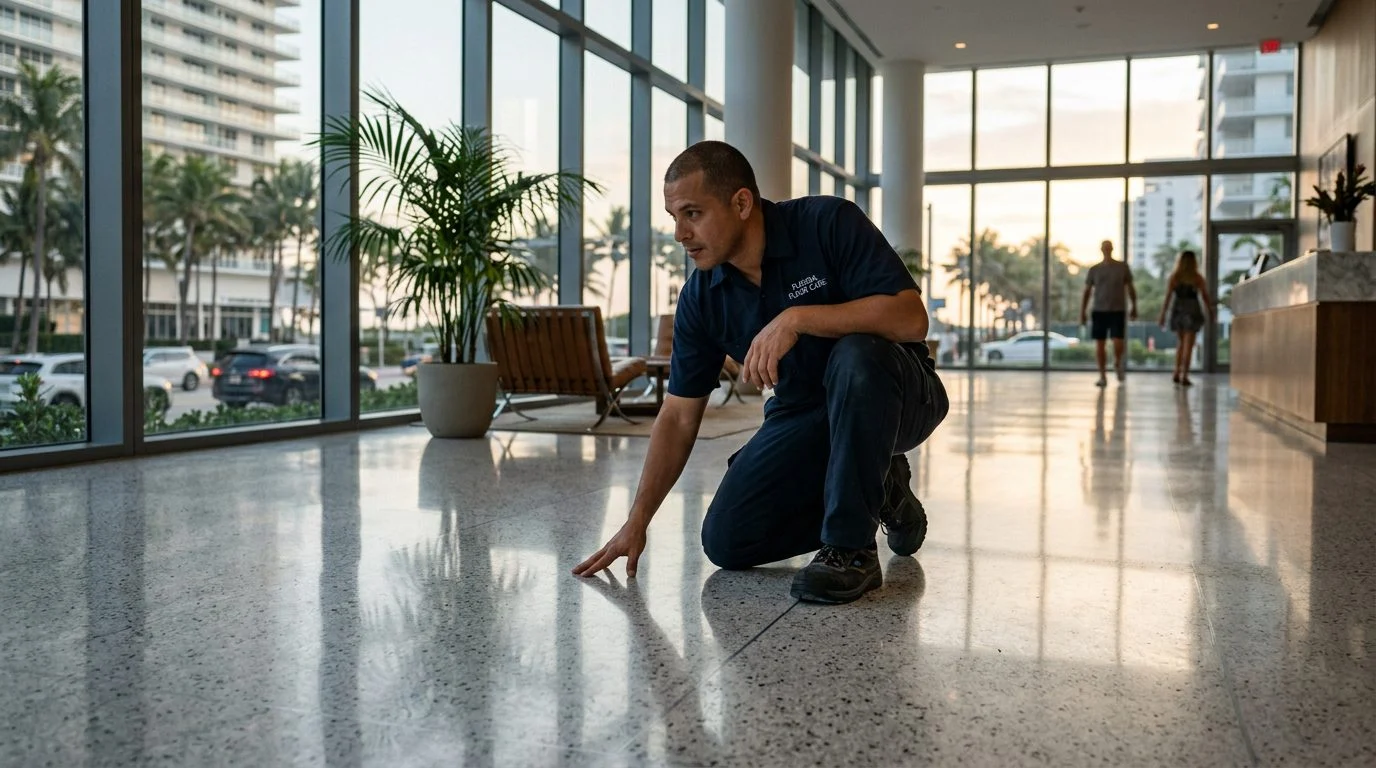
Fine grit tracked in from outdoors scratches the floor and dulls its shine under foot traffic. Sand works like sandpaper when people walk over it. Wet mopping over loose grit grinds it into the finish, which is why dust mopping should come first. Sweep or dust mop the whole floor before you wet mop.
South Florida entries pick up sand, pollen, and palm frond debris from landscaped areas. Once tracked inside, these particles spread across the lobby. Read more about palm frond debris at condo entrances. Clean walkways and entry areas reduce the grit that reaches the lobby.
Outdoor surfaces near entries also need upkeep. For how pressure washing fits into that schedule, see pressure washing frequency for condo garages.
Skipped Preventive Care and Worn Finish
Routine dust mopping, scheduled wet cleaning, and entry mats slow the buildup that dulls a floor between deeper cleanings. When these steps are skipped, grit and soil sit longer and wear the finish faster. A worn finish shows as dull traffic lanes that look different from the rest of the floor. Mopping alone cannot bring that shine back.
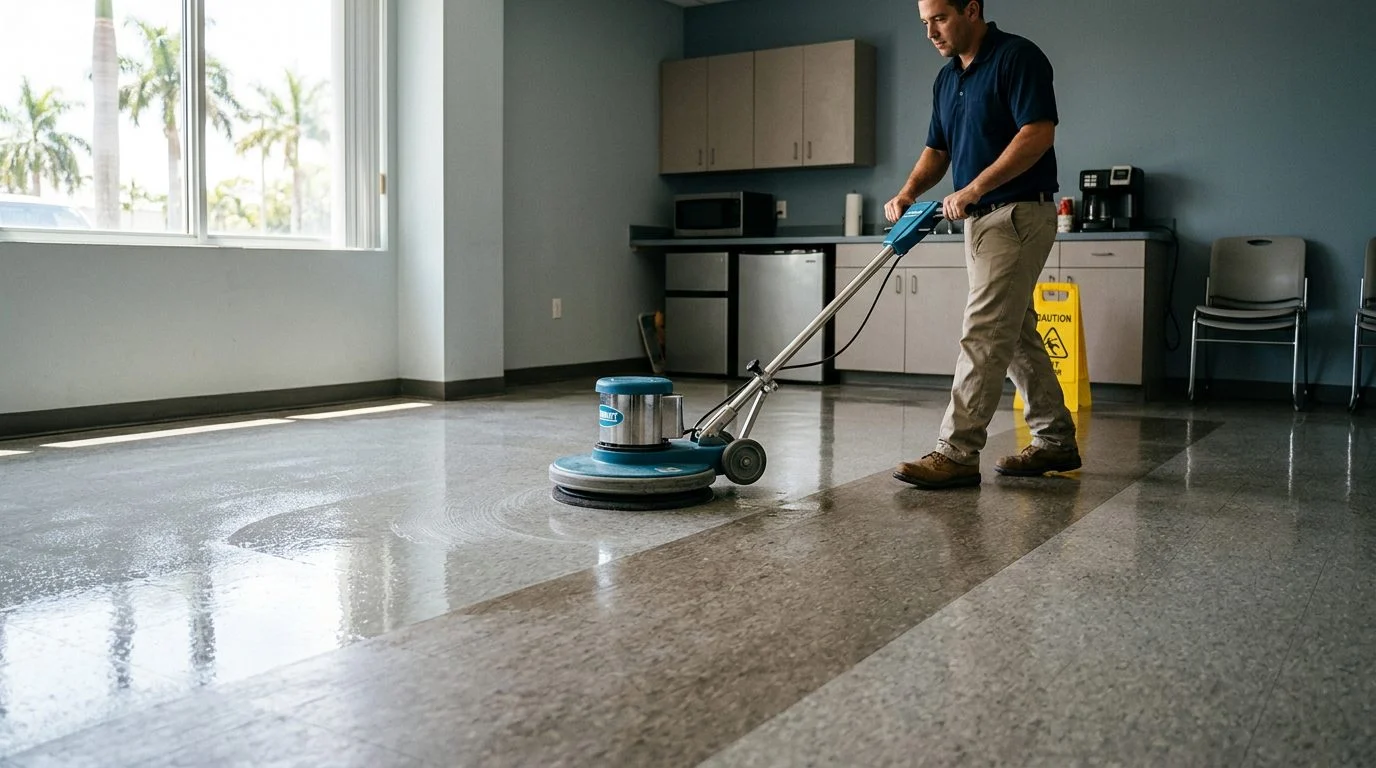
When the finish itself has worn, stripping and recoating or scrubbing and burnishing are the usual routes. Which one fits depends on the floor material and its condition. Ongoing day porter service covers daily floor care in condo lobbies and helps address small problems before they build up.
Not sure what your next step is?
Talk it through with our team — the first consultation is free, confidential, and carries no obligation.
What to Note Before Talking to a Floor Care Provider
Before anyone looks at the floor, write down a few facts:
- The floor material, such as terrazzo or luxury vinyl.
- Where the dullness shows, such as entrances or traffic lanes.
- Whether it looks like a film, streaks, or worn patches.
- How often the floor is mopped, and with what product.
- Whether dust mopping happens before wet mopping.
Take dated photos of the same spot under the same lighting over a few weeks. The photos show whether the floor is changing, and they help when you explain the issue to residents. Organized maintenance programs and checklists like this one are a practical way to plan recurring service.
Why are my floors always so dusty?
Dust and grit usually come in on shoes and through entries. Dust mopping before wet mopping removes loose soil so it doesn’t get ground into the finish.
Is oil soap good for wood floors?
Some soaps can leave a film, which makes a wood floor look dull. Whether a given soap suits a floor depends on its finish.
What causes a sticky or hazy film on a mopped floor?
Cleaner that isn’t fully wiped up dries into a thin layer. Using more product than directed makes that layer thicker.
The initial consultation is free, confidential, and carries no obligation to continue. If your board is fielding resident questions about a lobby floor that looks dull after mopping, our team is glad to talk it through with you. Contact our team to start the conversation.
Common Reasons a Lobby Floor Looks Dull
Cleaner Residue
Leftover soap or detergent can build a sticky film that attracts dirt and dulls the finish. Rinsing and using the right product for the floor type help prevent it.
Layers of Old Finish
Wax and sealer applied over years can yellow, cloud, or trap grime. Stripping and refinishing may be needed before new coats will look even.
Grit Tracked In
Sand and fine dust from entrances scratch the surface and dull it over time. Frequent dust mopping removes it before it can be ground into the floor.
Worn Traffic Areas
High-traffic paths near elevators and entries wear down faster than the rest of the lobby, leaving uneven patches that look dull even when clean.
How Our Floor Care Maintenance Helps
Scheduled Maintenance
Regular cleaning and care keep residue and grit from building up between deeper service visits.
Right Products for Your Floor
Our team matches cleaning methods to the type of floor and finish so the surface is not damaged.
Protection for Your Investment
Well-maintained floors help protect the finish and make the lobby look well kept for residents and visitors.
Coordinated With Your Building
We work around your building's schedule and traffic so the lobby stays safe and presentable.
Avoid Stacking New Coats on Old Residue
Adding more wax or sealer over a dirty or sticky surface usually makes dullness worse. Clean and assess the floor first so new products bond evenly.