
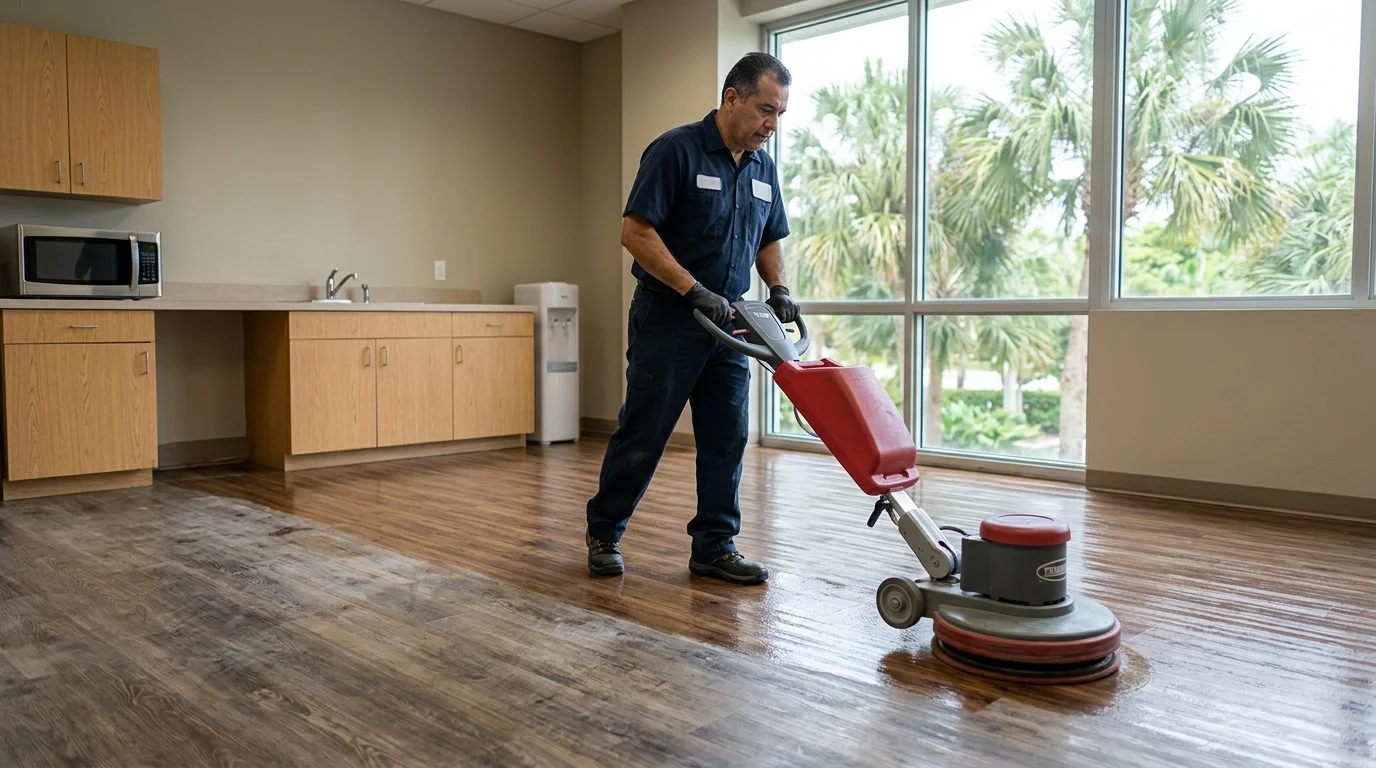
Floor Care Maintenance | South Florida
Dawn on Luxury Vinyl Plank? Here's How to Keep It Looking Its Best
A common household soap can work on LVP, but how often you use it and how you finish the job make a real difference.
By Ryan Jurney · Published November 26, 2026
If your luxury vinyl plank (LVP) floor looks dull after mopping, the dish soap under your sink may be the first thing you suspect. Can you use Dawn on it? Yes, with limits. A small amount, diluted in warm water and rinsed off, can work for routine cleaning. The limits decide whether it helps or harms your floor.
Short answer: can you use Dawn on luxury vinyl plank?
Yes, Dawn can be used on LVP for routine cleaning when it is heavily diluted and rinsed well. It is not the ideal everyday cleaner, though, because it can leave a film behind.
The main risk is not that dish soap is too strong for the surface. The risk comes from what it leaves behind and the water that goes with it. Vinyl is smooth and sealed, so soap that stays on top can build up.
The Resilient Floor Covering Institute notes that vinyl and other resilient hard-surface floors are easy to clean and do not readily absorb spills, soil, odors, or moisture. That makes them easy to maintain. It also means soap sits on the surface until you rinse it away.
In a commercial lobby or entry, a sticky film collects foot traffic and grit all day. Our floor care maintenance guide covers the wider routine behind that work.
If your vinyl plank floor has turned hazy or sticky after cleaning, you don't have to figure out the cause alone. Our team can talk it through with you. Talk it through with our team — the first consultation is free, confidential, and carries no obligation.
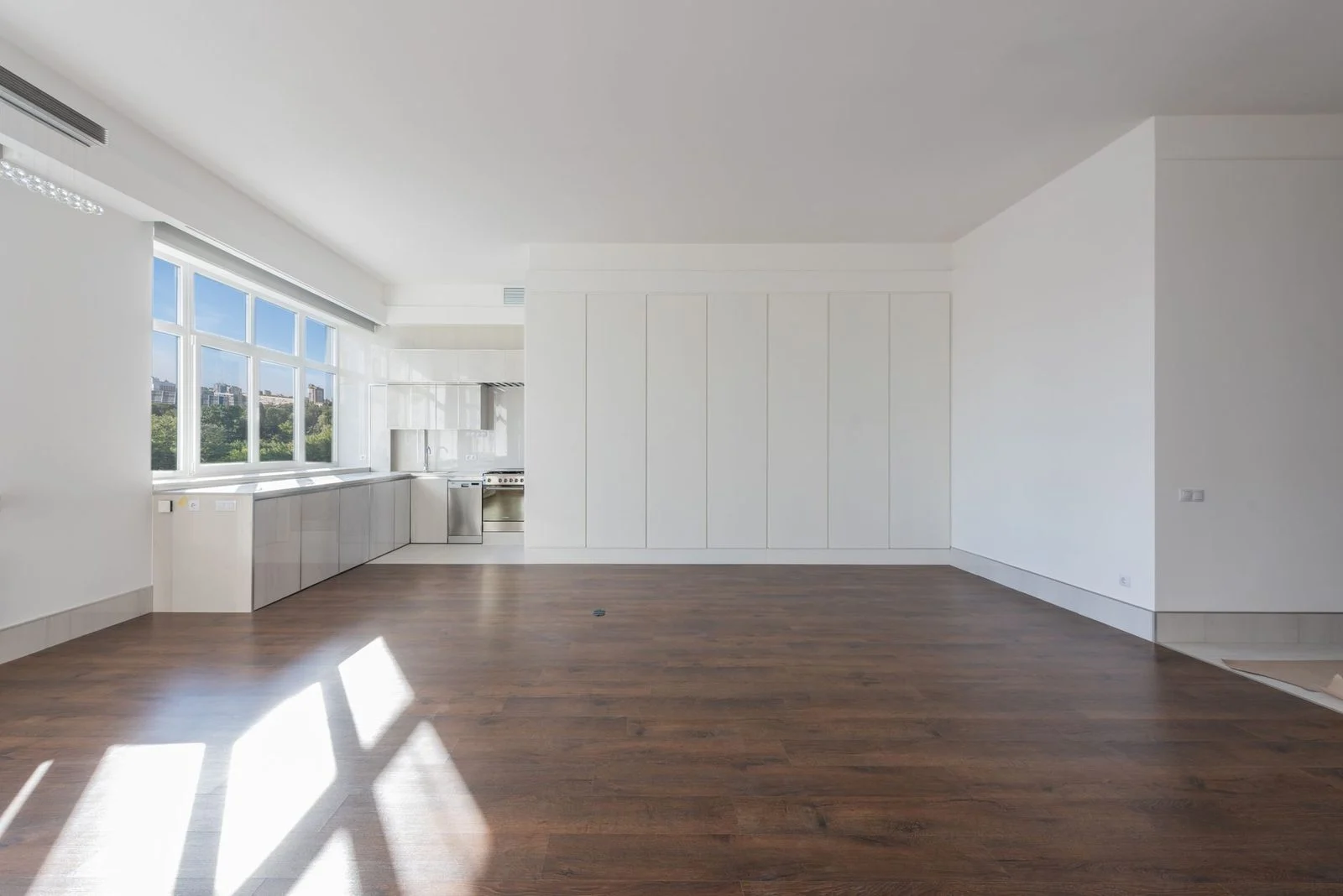
Why dish soap can leave LVP looking dull
Dish soap can leave a thin film that makes LVP look hazy, streaky, or sticky. It is made to cut grease and rinse easily. On a smooth floor, any soap left behind can grab dirt and hold it.
Strength and temperature matter. Use warm water, not hot, and keep the mix light. A few drops in a bucket is enough. A full squirt creates extra suds and extra residue to rinse.
Repeated use without a rinse is the usual cause. Each mopping adds a little more film. After weeks, the floor looks dull even though it was cleaned. Adding more soap or scrubbing harder usually makes the film thicker.
This is why residue is often mistaken for permanent damage. A floor that looks worn may simply be coated. Clearing the film may reveal the original finish, but a worn surface will still show its wear.
How to clean LVP with diluted soap, step by step
Remove loose grit first, then wash lightly, and rinse with clean water. Most people skip the rinse, and that step prevents the film.
- Sweep, dust mop, or vacuum first. Use a vacuum without a beater bar. Loose grit under a wet mop acts like sandpaper.
- Mix a few drops of Dawn into warm water. Wring the mop or cloth until it is only damp.
- Clean in small sections, so the floor never sits wet for long.
- Rinse with clean water and a fresh, damp mop head. Repeat until the rinse water looks clear.
- Let the floor air dry.
Do not soak the floor. Keep water from pooling at seams and edges. Change the wash water often, because dirty water spreads soil back across the planks.
What do you clean luxury vinyl planks with?
A cleaner made for resilient or vinyl flooring is the safer everyday choice. These products are formulated for the surface, so they clean with less film. Follow the dilution printed on the label.
Dish soap is a general-purpose grease cleaner. It can work in a pinch, but it was not designed for a sealed floor. A floor-specific product is built to clean and rinse more cleanly.
Commercial crews and homeowners alike benefit from knowing what a product contains before they use it.
What destroys vinyl plank flooring?
Grit, standing water, harsh chemicals, and abrasive pads do the most damage. Each one harms the floor in a different way.
Grit scratches. Sand and dirt under a mop act like sandpaper. Over time they dull the clear top layer that protects the printed design. Steel wool and scrubbing pads do the same thing faster.
Water causes trouble at the edges. Water that sits at seams can cause swelling or lifting.
Strong solvents can strip the finish or discolor the surface. Heavy residue from the wrong cleaner also attracts more dirt, which restarts the cycle. For more products to avoid, see our guide to what not to use on vinyl floors.
When a dull LVP floor needs professional attention
If your floor stays hazy, sticky, or scuffed after careful cleaning, a professional look at the floor and your routine can help sort out the cause. It may be residue, wear, or moisture at a seam.
This matters most when you are responsible for a floor you did not choose. A property manager may inherit a lobby that was cleaned the wrong way for years. A homeowner may be trying to fix a floor a previous cleaner left coated.
Frequently asked questions
Can you use Dawn on luxury vinyl plank every day?
Daily use can build up a film over time. Diluted soap with a full rinse is the safer option for occasional cleaning.
Why does my LVP look dull after mopping?
Leftover soap, dirt trapped under the cleaner, and too much water are the usual causes. A thorough rinse often helps.
Does water damage luxury vinyl plank?
Standing water can cause swelling or lifting at seams and edges. Wipe up spills promptly and keep water off the surface.
If you are dealing with this floor and are not sure what is behind the haze, our team can review the floor and your cleaning routine with you. Your first consultation is free and confidential, with no obligation to continue. You can contact our office to start that conversation.
Watch for buildup
Repeated use of full-strength dish soap can leave a dull film on vinyl plank. Dilute it well, and rinse with clean water after each cleaning.
Safe Cleaning Habits for Luxury Vinyl Plank
Dilute Before You Clean
Use a small amount of mild soap in a bucket of water rather than applying it straight to the floor.
Rinse Thoroughly
Follow with a clean, damp mop to lift leftover soap and loosened dirt before it can dry on the surface.
Keep Water Light
Mop with a barely damp pad. Standing water can seep into seams and affect the floor over time.
Ask Before You Commit
Floor types and finishes vary. A professional look at your floor can help you choose the right routine.
Why Property Managers and Businesses Work With Gator Protection
Floor Care Maintenance
Regular, consistent care for hard floors in commercial and multi-use spaces.
Clear, Careful Methods
We choose cleaning products and routines suited to each floor surface.
Scheduled Service
Maintenance planned around your operating hours and daily traffic.
South Florida Coverage
Serving Miami-Dade, Broward, and Palm Beach Counties, including South Beach, Coral Gables, and Brickell.
A Dedicated Team
Our team supports your property with responsive, organized service.