
Floor Care Maintenance | South Florida
Keep Your Floors Looking Their Best Without Risking Your Warranty
Clear, practical guidance on how professional cleaning fits with the care terms on your flooring, from our team serving Miami-Dade, Broward, and Palm Beach counties.
By Ryan Jurney · Published November 25, 2026
You manage a building with floors still under a flooring warranty, and now you need floor care. You want to know whether professional floor care could void that coverage.
The answer starts with the written warranty. Read its care terms first, then check the manufacturer’s care guide before any work begins.
What a Flooring Warranty Usually Covers
A flooring warranty is a written promise about how a floor will perform, for a set period and under set conditions. Most are limited warranties. They spell out what is covered, for how long, and what is excluded.
Warranty terms differ by manufacturer, so it helps to read what each one says about a floor’s protective top layer. Surface wear is often the main thing they address, not the whole floor. A warranty might cover a defect in the finish while leaving out damage from everyday wear or from care the guide prohibits.
Florida’s sales-of-goods rules also matter. After a sale or a tenant change, whether the new owner or manager keeps that coverage depends on the written warranty terms. Coverage differs by product, so the written warranty controls.
Not sure what your next step is?
Talk it through with our team — the first consultation is free, confidential, and carries no obligation.

Why Maintenance Terms Appear in Flooring Warranties
Warranties include care terms because the maker sets how the surface should be kept. That baseline also defines normal wear. Normal wear is the everyday scuffing and traffic a floor should handle. Damage from harsh cleaners, the wrong equipment, or improper methods is a different matter.
Commercial traffic is heavier and cleaning is more frequent. The care guide’s baseline still controls, so compare your maintenance schedule against it.
Care guides often list approved cleaners, methods, and products. For terrazzo, the National Terrazzo & Mosaic care guide is a published reference on caring for this surface. Other floor types have their own guides, so match the guide to your floor.
Warranty wording can also limit implied protections. Under Fla. Stat. § 672.316, expressions such as “as is” exclude implied warranties unless the circumstances indicate otherwise. Under Fla. Stat. § 672.314, where the seller is a merchant with respect to goods of that kind, merchantable goods must be fit for their ordinary purposes, unless that protection is excluded or modified.
Floor Care Practices That Deserve a Closer Look
Four practices deserve review before work starts, because each one changes the surface.
Cleaning products. A product that is not in the care guide can raise questions about surface damage. For terrazzo, neutral-pH cleaners are the recommended choice for routine care. Confirm any stronger product in writing first.
Finish stripping and resealing. Removing old sealer and applying new finish changes the surface itself. Follow the manufacturer’s instructions for timing and materials.
Excess water. Wood floors need moisture control. The Florida Department of Health provides general information about mold. South Florida’s humidity makes this a year-round concern.
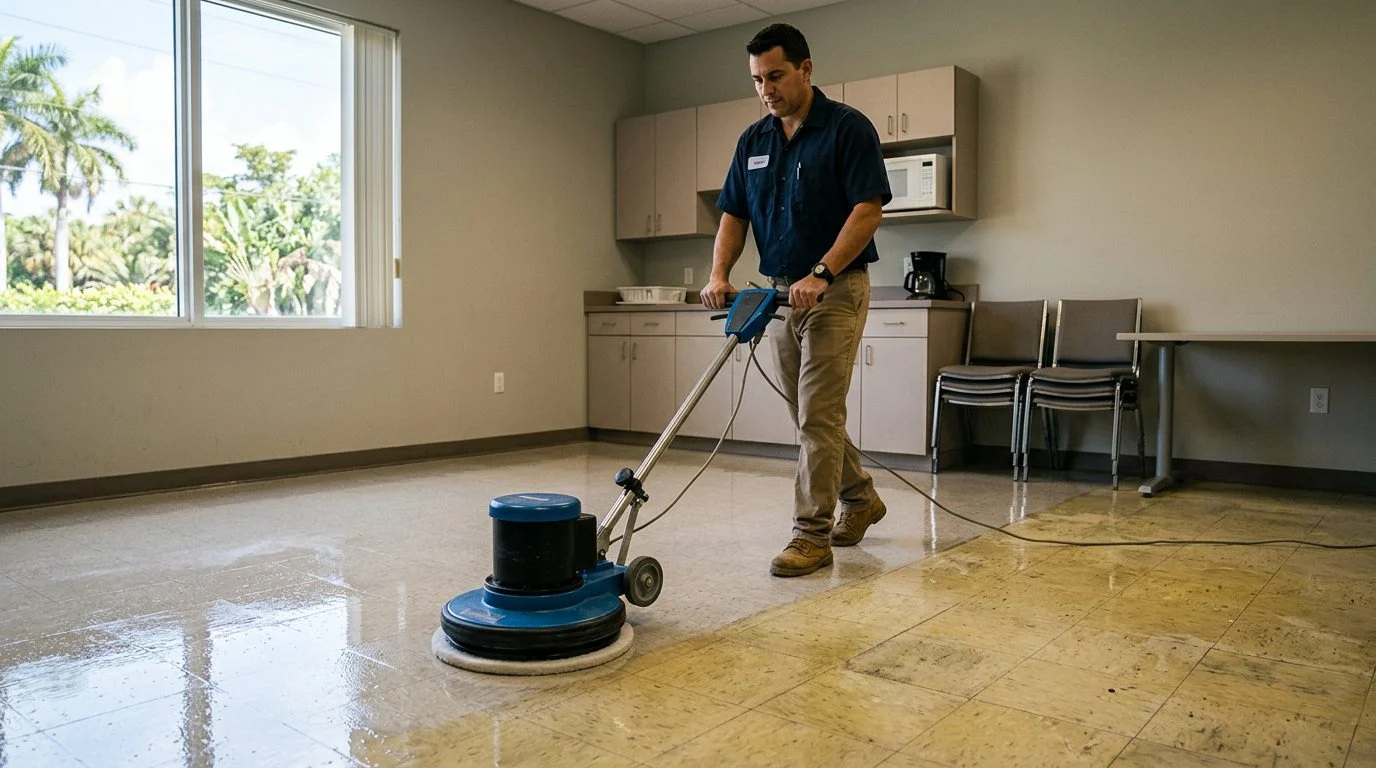
Mechanical methods. Scrubbing, buffing, and burnishing act on a finish in different ways. The method should match the floor type and the care guide. If the guide names a method, the written plan should name it too.
How to Check Your Warranty Before Floor Care Begins
Before work starts, read the care section of the written warranty and the manufacturer’s care guide. Then get the plan in writing.
Look for three things. First, named cleaners and prohibited products. Second, required methods, such as approved equipment or moisture limits. Third, timing rules for stripping or refinishing.
If a product name is not in the guide, don’t assume it’s allowed. Ask first.
Ask for a written cleaning and maintenance plan that lists products, equipment, and schedule. If the warranty is unclear on a point, contact our team to discuss it before the work starts. Keep those answers with your warranty file.
Records and Documentation That Support Your Warranty
Dated records are the simplest way to show what care was done and when. Keep service logs with dates, areas treated, and products used. Take photos of the floor before and after service, especially in high-traffic areas.
Records also matter if a problem appears. Under Fla. Stat. § 672.607, where a tender of goods has been accepted in a sale, the buyer must notify the seller of any breach within a reasonable time after he or she discovers or should have discovered it, or be barred from any remedy. The buyer also carries the burden of establishing any breach. Dated photos and logs help show when a problem was found and what condition the floor was in.
Save invoices and written care plans alongside the warranty file.

Next Steps for South Florida Property Managers and Owners
Professional floor care can work alongside a warranty when its products and methods match the written care terms. The warranty comes first, and the maintenance plan follows from it.
If you manage floors in Miami-Dade, Broward, or Palm Beach County, the practical question is which products and methods your warranty allows. A written plan that lists products, equipment, schedule, and documentation lets you compare those terms with the actual work before the floor is touched.
Frequently asked questions
Does professional floor care void a flooring warranty?
It depends on the warranty’s care terms. Products and methods that match those terms are the safest starting point.
What is a wear layer?
It is the protective top layer of a finished floor. Many warranties address wear at that layer.
Does a flooring warranty cover only the original purchaser?
Some do. Check the wording before a sale or a change in tenants.
If you’re planning maintenance on a floor still under warranty, talk with us about your floor type, warranty terms, and cleaning schedule before work begins.
La consulta inicial es gratuita, confidencial y sin compromiso de continuar.
How We Approach Floor Care
Start With the Care Terms
We begin by reviewing the maintenance instructions in your flooring warranty so cleaning methods match what the manufacturer expects.
Method Matched to the Floor
Our floor care maintenance is planned around the surface, its finish, and its traffic, not a one-size-fits-all routine.
Clear Communication
We explain what we plan to do and why, and we check with you before changing products or methods.
Consistent Scheduling
Regular maintenance keeps floors in steady condition across busy commercial spaces, from South Beach to Brickell and Coral Gables.
Check Before You Change
Before you switch cleaning products or bring in a new floor care method, review your flooring warranty's care section. If anything is unclear, ask first.
Questions to Bring to Your Floor Care Plan
Which care terms apply?
Look for the cleaning, maintenance, and product instructions that came with your flooring.
What is the floor made of?
Materials and finishes respond differently to moisture, abrasives, and cleaning chemicals.
How is the floor used?
Foot traffic, rolling loads, and exposure to outdoor dirt all shape a sensible maintenance schedule.
What records are kept?
Written notes of products, methods, and service dates can be useful if questions come up later.