
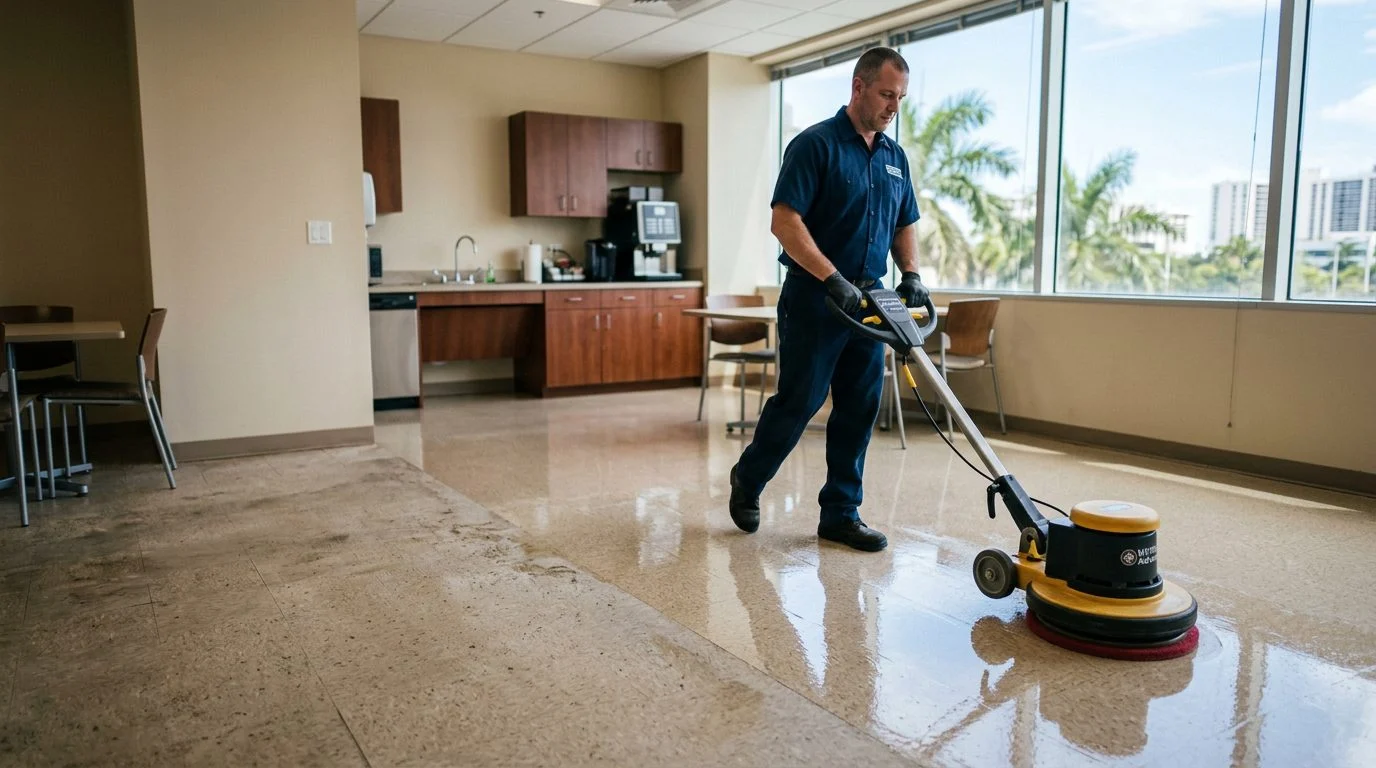
Floor Care Maintenance for Condos | South Florida
A Floor Care Schedule Built for Your Condo Building
Lobbies, elevator corridors, and stairwells take constant foot traffic. Here is how a planned routine keeps them presentable year-round.
By Ryan Jurney · Published November 16, 2026
Condo Floor Care Schedule: How Often to Review in Miami-Dade?
If you manage a condo building, your floor schedule may have been written once and never looked at again. Floors in lobbies and hallways keep changing with traffic, weather, and wear.
The short answer is a review once a year, with an earlier review when conditions change. The rest of this page explains what a review should check and what should prompt one sooner.
If your building's floors are in daily use and the schedule needs a second look, we're glad to talk it through with you. Talk it through with our team — the first consultation is free, confidential, and carries no obligation.
How Often Should a Condo Floor Care Schedule Be Reviewed?
A yearly review is a practical baseline for most condo buildings. The schedule should also change when the building does.
A floor care schedule is a working document. It is not a term you set once and forget. A review checks whether each task still fits the floors it covers and the people who walk on them.
Start with the schedule as written. Compare it with what the crew actually does and with what residents report. A short walk-through of the lobby, garage entrance, stairwells, and amenity rooms can show where the two no longer match.
Floor types matter too. A building with stone lobbies, wood-look hallways, and a tile garage ramp has several cleaning methods to manage. The review should cover each one.
For the broader picture, read the guide to floor care maintenance in Miami-Dade. This page focuses on timing.
What a Condo Floor Care Schedule Typically Covers
A typical schedule has three tiers: daily dry work, weekly washing, and a monthly deep clean.
Daily tasks remove loose grit. Sweeping or dry mopping lifts dust and sand before foot traffic grinds it into the finish.
Weekly washing removes soil that has built up. It keeps busy paths from turning dull and gray between deeper cleanings.
Monthly deep cleaning addresses buildup and surface wear in heavier-use areas. Some floors also need periodic stripping, refinishing, or burnishing. Those are separate, less frequent jobs.
Timing should vary by area. Lobbies, elevator landings, stairwells, garages, and amenity rooms usually need a different rhythm than private hallways. Write each area and floor type on its own line so the board and crew can see what gets done and when.
Staff who use cleaning chemicals need training on their hazards.
Miami-Dade Conditions That Change the Timing
Sand, rain, and humidity can shorten the time between floor visits in South Florida.
Sand and grit come first. Walkways, entry mats, and landscaped areas carry it inside on shoes and wheels. Grit wears a finish faster than dust alone, so entrance zones may need a closer schedule than the rest of the building.
The rainy season runs from late spring into fall. It brings wet shoes, umbrellas, and tracked-in soil. Standing water on entry floors can stain and create slip risks, so entry areas deserve closer checks in those months.
Humidity and salt air affect some floor finishes and grout. Check the flooring manufacturer’s care guidance for the material in each area rather than assuming one schedule fits every floor.
A review done during the rainy season can test whether the entry-area frequency still holds. For regional context, see South Florida floor care and Miami-Dade County floor care.
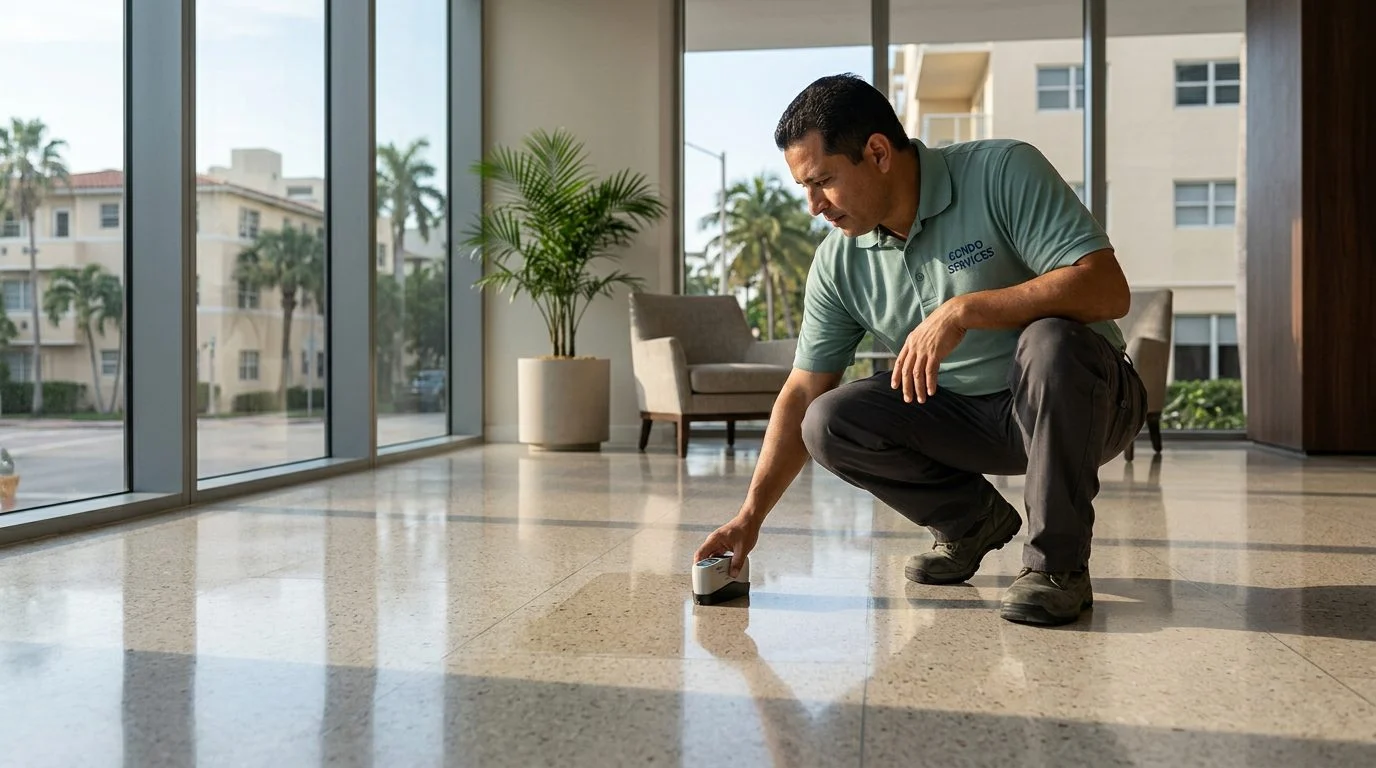
Review Triggers Beyond the Calendar
A review should happen early when a complaint, a safety concern, or a change in the building points to a gap.
Start with safety. A slip concern in any area is a reason to review that area now.
Other triggers include:
- Resident complaints about dirty, dull, or sticky floors.
- Visible finish wear, such as dull paths or worn grout lines.
- Heavier move-in or move-out traffic, with carts, boxes, and extra foot traffic.
- Construction or renovation work that tracks dust and debris through common areas.
- A change in floor type, such as new tile, stone, or wood in a lobby or hallway. The cleaning method may need to change too.
Keep a simple log of complaints and problem areas. Record the date, the area, what happened, and what was done. The next review then has specific evidence to work from. For background on property maintenance practices, see the Community Associations Institute maintenance best practices report.
Coordinating Floor Care With Landscape and Pressure Washing
Floor schedules work best when they line up with grounds work, because soil from outside often reaches indoor floors.
Entry doors and garage access are the main paths. Mulch, sand, and mud from landscaped beds and walkways ride in on wheels and soles. Grounds work alone does not solve that. The floor schedule has to match it.
Sequence matters. Pressure wash exterior walkways, pool decks, and garage areas before an indoor deep clean. Otherwise, loose debris and runoff can be tracked back in soon after the floors are done.
A review should check whether landscape days and exterior washing days line up with the floor schedule. If a deep clean lands on the same day as a heavy grounds job, move one of them.
If the building uses a day porter service, that crew can cover routine entry-area touchpoints between scheduled floor visits. This keeps grit from building up in entry zones during the days in between.
Not sure what your next step is?
Talk it through with our team — the first consultation is free, confidential, and carries no obligation.
Questions to Settle During the Review
The floor manufacturer’s care instructions should decide which cleaners the crew uses.
Is Dawn dish soap OK for wood floors?
Not as a default. Dish soap can leave residue that dulls wood finishes over time, so follow the manufacturer’s care instructions.
What is the difference between a surface cleaner and a floor cleaner?
A floor cleaner is made for a floor’s finish and the soil on it. A general surface cleaner may not be. Match the product to both. The EPA Safer Choice product list includes floor-cleaning, floor-finish, and wood-cleaning products that have earned certification.
How do you clean a floor?
Work in layers. Remove loose dust first, wash with the approved cleaner, then rinse or dry as the finish requires.
How do you maintain a wood floor?
Limit standing water, use entry mats, and follow the finish’s recommended recoating or refinishing interval. Those habits protect the finish.
Talking Through Your Building’s Floor Care Review
If you’re reviewing a building’s schedule, you’re probably doing it while the floors are already in daily use.
You may be a board member or property manager. The review may follow a resident complaint, a slip concern, or a budget discussion. You don’t have to settle every detail in one meeting.
Bring the current schedule, a list of floor types by area, and any complaint or incident log. Those three items give a useful starting point.
Gator Protection, Inc. provides floor care maintenance, day porter, landscape, and pressure washing services in South Florida. Reach out through the contact page, by phone, or to request a free quote for a review of your building.
La consulta inicial es gratuita, confidencial y sin compromiso de continuar. (The initial consultation is free, confidential, and carries no obligation to continue.)
What a Condo Floor Care Plan Covers
Timing That Fits Your Building
Routines are planned around resident traffic, move-in days, and common-area use, so work happens when it causes the least disruption.
Floor-Specific Methods
Marble, tile, luxury vinyl, and sealed concrete each need different care. We match the approach to the floor and its finish.
Coordinated with Day Porter Service
Floor care can be scheduled alongside daily porter tasks, so the lobby and common areas stay clean between visits.
Protection for Finishes
Routine maintenance helps slow the wear that builds up from grit, moisture, and heavy foot traffic.
Serving South Florida Condos
We provide floor care maintenance across Miami-Dade, Broward, and Palm Beach counties, including Brickell, Coral Gables, and South Beach.
Clear Communication
Our team keeps building management informed about the schedule, so residents know what to expect.
Before You Choose a Cleaning Product
Not every floor responds well to the same cleaner. Harsh or household products can dull finishes or leave residue over time. Always follow the floor manufacturer's care instructions.
Common Parts of a Condo Floor Schedule
Daily Entry and Lobby Care
Sweeping and spot cleaning at entrances, where dirt and moisture are tracked in most often.
Routine Hard-Floor Maintenance
Scheduled cleaning of tile, stone, and vinyl in lobbies, hallways, and shared amenity spaces.
Periodic Deep Cleaning
Deeper cleaning and finish care on a set cycle to restore appearance and remove built-up grime.
Exterior Walkways and Pressure Washing
Pressure washing of entry walkways, pool decks, and garage areas, scheduled separately from interior floor work.