
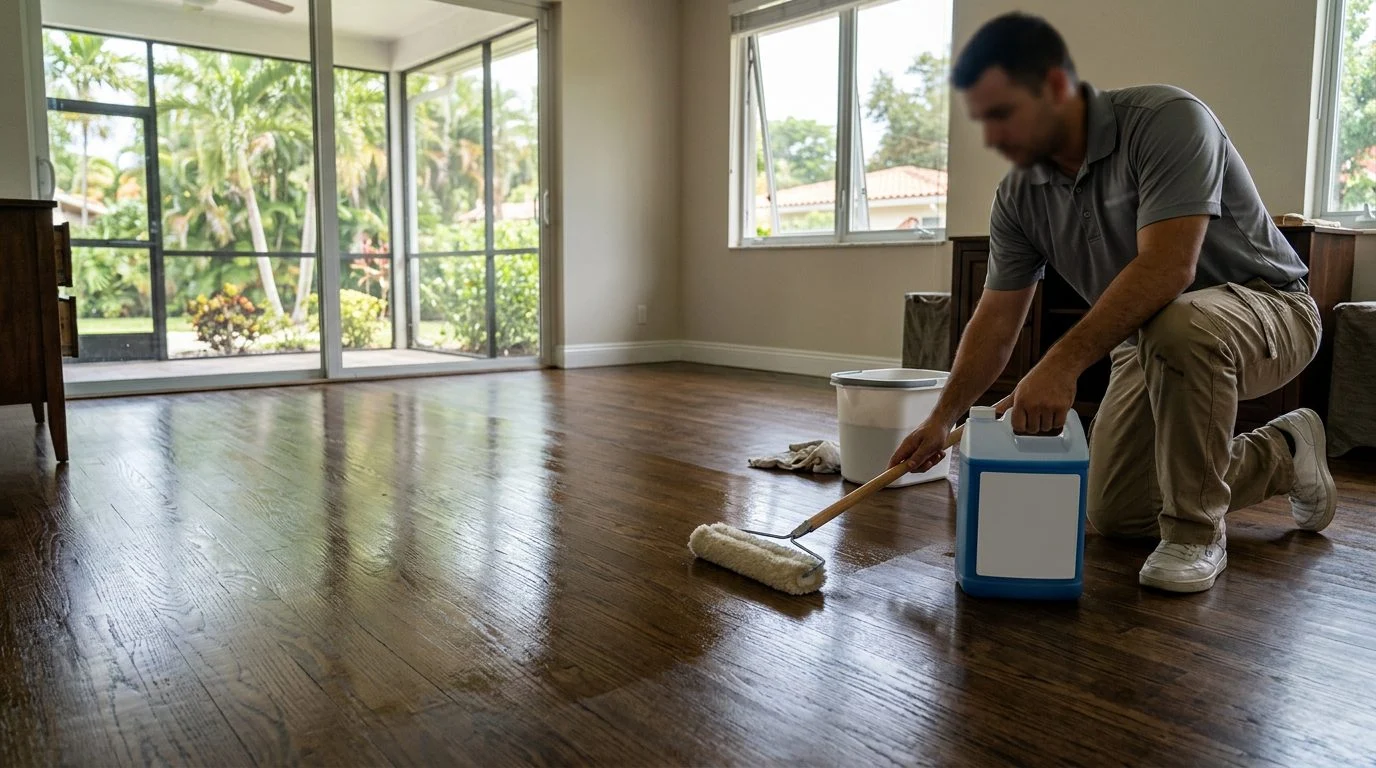
Floor Care Maintenance | South Florida
Thinking About Waxing Your Hardwood Floors?
Humidity, sun, and heavy foot traffic all shape how hardwood responds to wax. Here is what to weigh before you decide.
By Ryan Jurney · Published November 20, 2026
Maybe you’re looking at a hardwood floor that has gone dull, or you’re keeping one in shape for someone else. You want to know whether wax is the right fix.
The Short Answer: Is Waxing Hardwood Floors a Good Idea?
Waxing can be a good idea for some hardwood floors, but it isn’t a fix for every floor. It suits certain finishes and certain levels of foot traffic, and it works best with steady upkeep. The answer depends on the floor’s existing finish, how many people walk on it, and how consistently it gets cleaned.
This page covers waxing as part of floor care maintenance, written for properties in South Florida. Below, we look at what wax does, how it compares with polyurethane, where it causes trouble, how often it may need attention, the general steps, and when professional help makes sense.
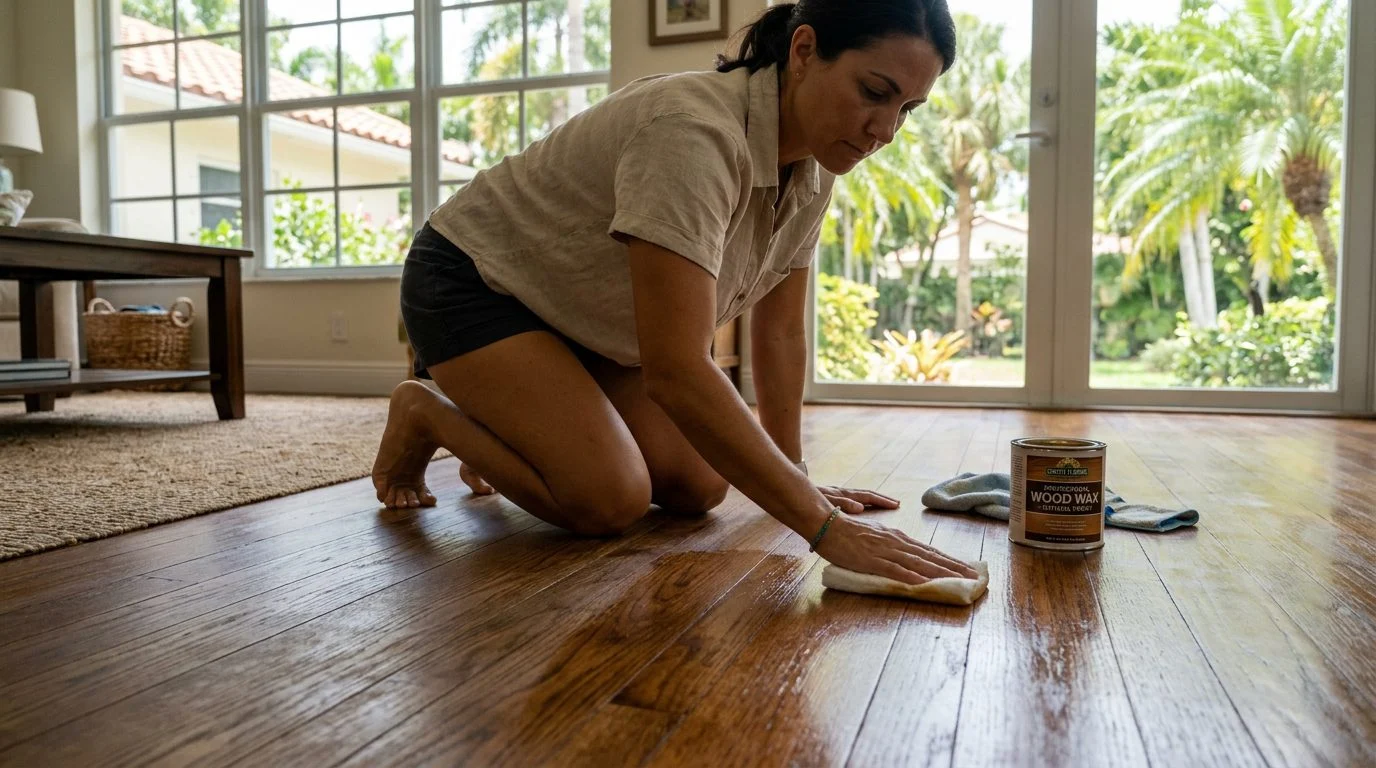
What Wax Does for Hardwood Floors
Wax gives a hardwood floor a soft sheen and a protective layer on the surface. It can also be renewed in sections. A worn traffic lane can get attention without redoing the whole room. For the bigger picture, our floor care maintenance overview explains how waxing fits into a routine.
Wax is usually applied over a sealed or finished floor. On unfinished wood, it may be used only where the product and the wood allow it. Follow the product’s directions before you start. The surface should be clean and dry, with no loose grit that can scratch as you work.
Wax doesn’t form the hard shell that some finishes provide. It is a softer layer that wears down and gets replaced. That is the trade-off: renewal is easier, but the floor needs attention more often.
Wax Compared With Polyurethane and Other Floor Finishes
Wax is a surface layer you refresh. Polyurethane is a harder finish that forms a film on top of the wood. That difference drives most of the choice. A film finish can hold up longer under wear. Wax is easier to touch up in small areas, but it needs regular upkeep to keep its look.
Application is different, too. Wax is often thinner and simpler to apply in small sections. Polyurethane usually needs more careful preparation and evenly spread coats. Each finish has its own routine, and each one looks different as it ages. Too much wax can look cloudy, and a scratched film finish can show worn spots.
Switching between wax and a film finish usually takes stripping or careful preparation. Wax left on a floor can stop a new coat from bonding well. So the existing finish, more than preference, decides which options are realistic.
Is Wax Good on All Floors?
Waxing suits some finishes and floor types, and not others. Before you apply wax, confirm what finish is already on the floor and whether the wax is made for it. Don’t guess based on how the floor looks.
Mixing incompatible products can cause adhesion and appearance problems. A new coat may not bond, may leave streaks, or may peel. These problems often appear after the work is done, so the check before you start is worth the time.
Commercial and residential floors face different demands. A home hallway may see a few people a day. An office lobby, a retail floor, or a shared entry can see constant foot traffic and frequent cleaning. Heavier use wears wax faster and makes buildup more likely. For a related example of commercial floor work, see our retail store floor care page.
Potential Problems: Wax Buildup, Slipperiness, and Removal
Wax buildup happens when layers pile up over time. The surface dulls, looks hazy, and can trap dirt under the sheen. Heavy buildup is often the reason people decide to strip a floor.
Slip risk is the safety issue to watch. The OSHA slip resistance handout states that wet or spilled floors and smooth or newly waxed surfaces increase slip risks. A freshly waxed hallway needs the same attention to spills as any other hard floor. The same handout says spills should be cleaned up or reported immediately.
Removing old wax takes time. Old layers should come off before a new application or a different finish. Otherwise, the new layer may not bond well.
Cleaning products matter, too. Some soap-based cleaners leave a film that can dull a waxed surface over time. Choose a cleaner with the floor’s finish in mind, and keep the routine consistent. Good routines reduce buildup, but they don’t guarantee any particular result.
How Often Should Hardwood Floors Be Waxed?
Waxing frequency depends on foot traffic, the cleaning routine, and the product used. No single schedule fits every floor. Follow the product maker’s directions for the specific wax and floor.
Watch for signs that a floor needs buffing or re-waxing. Look for dull patches, worn lanes near doors and work areas, and spots where the sheen has gone uneven. These usually show where the wax has worn thin.
A written routine helps. The Community Associations Institute maintenance best practices report supports organized maintenance programs and checklists when setting a vendor’s scope of work. A checklist that lists what gets cleaned, buffed, and re-waxed, and when, keeps a floor from being left until it looks worn. For regional context on floor care in South Florida, see our South Florida floor care page.
Not sure what your next step is?
Talk it through with our team — the first consultation is free, confidential, and carries no obligation.
The General Steps: Preparing, Applying, and Buffing Wax
Start with preparation. Clean and dry the floor, and remove old buildup where it has formed. Wax applied over dirt or old layers traps grime under the new coat.
Apply wax in thin, even coats, following the product’s directions. Thick coats take longer to dry and can look cloudy or sticky. Work in manageable sections so no area stays open too long.
Allow proper drying time before buffing, then buff to the sheen you want. Buffing too early can smear the wax. Buffing too little can leave it hazy. Technique and equipment both shape the result, and a poor application can create the buildup, slip, and adhesion problems described above.
These steps are general. They are not a recommendation for a particular brand.
When Waxed Hardwood Floors Need Professional Help
Many people ask this question while caring for a floor they don’t fully control. It might be a worn lobby, a shared office, or a rental unit. You may be weighing whether to strip, re-wax, change finishes, or keep a steady maintenance routine.
Each option carries a trade-off in time and risk. Stripping removes old layers but needs careful work. Re-waxing is simpler, but it adds to buildup if the floor is already heavy. Changing finishes usually means stripping first. A steady routine may be the most practical path for a busy space.
Is a waxed hardwood floor slippery?
Yes, it can be, especially when it’s wet or freshly waxed. Clean spills quickly to lower the risk.
How do I remove old wax buildup?
Old layers usually need to come off before a new application. The method depends on the floor and the buildup.
Can you wax over polyurethane?
Sometimes, but the existing finish decides it. Confirm compatibility before you apply anything.
If you’re responsible for a floor and aren’t sure which option fits, reach out through our contact form or call the office to talk through your floors. La consulta inicial es gratuita, confidencial y sin compromiso de continuar.
How Gator Protection Can Help
Floor Care Maintenance
Routine care that keeps hardwood and other floors looking their best between larger projects.
Day Porter Service
On-site support that keeps your common areas clean, safe, and presentable during business hours.
Pressure Washing
Exterior cleaning that supports the overall appearance of your property.
Check the Floor Before You Wax
Waxing over heavy old buildup or an incompatible finish can leave a floor looking uneven. Have the surface assessed before applying any product.
Signs Your Hardwood Floor May Need Attention
Dull or Patchy Finish
Uneven shine across a room can point to worn areas or buildup that needs attention.
Visible Wax Residue
A cloudy film or sticky spots often mean old layers should be addressed before new product goes down.
Worn High-Traffic Paths
Entryways and walkways tend to show wear first and may need targeted care.
Moisture Concerns
Areas that stay damp or show swelling should be evaluated before any coating is applied.
Your First Consultation Is Free, Confidential, and Comes With No Obligation to Continue
More of our services
- How Do You Make a Vinyl Floor Look New Again? South Florida