
Floor Care Maintenance | South Florida
Ask the Right Questions Before You Sign a Floor Care Contract
By Ryan Jurney · Published November 27, 2026
You have a floor care proposal in hand, and it’s asking for your signature. Before you sign, ask the company a short list of specific questions about floor types, cleaning frequency, finishes, insurance, documentation, and scope.
The questions below help you read any proposal in front of you. Each one comes with what a complete answer should include.
Why Ask Before You Sign a Floor Care Contract
Ask these questions before you sign, because the written details decide what you actually receive. A floor care agreement usually sets recurring work, so a vague promise at the start can turn into a dispute months later.
Each question targets a detail that can be written down. An answer like “we clean your floors” tells you very little. A complete answer names each floor, the method, the schedule, and the record you’ll receive.
Keep the proposal open while you read. Check every answer against the written scope. If a promise isn’t on paper, it isn’t part of the deal.
Good questions also show how a company works. A vendor who explains its methods plainly is easier to hold to its word than one who keeps the details vague.
If a floor care proposal is sitting on your desk, we can walk your floors with you before you sign, so the scope matches your building. Talk it through with our team — the first consultation is free, confidential, and carries no obligation.
Which Floor Types Should the Proposal Name?
The proposal should name every floor type on your site, along with the cleaning method for each one. A single line that says “all floors” leaves too much open.
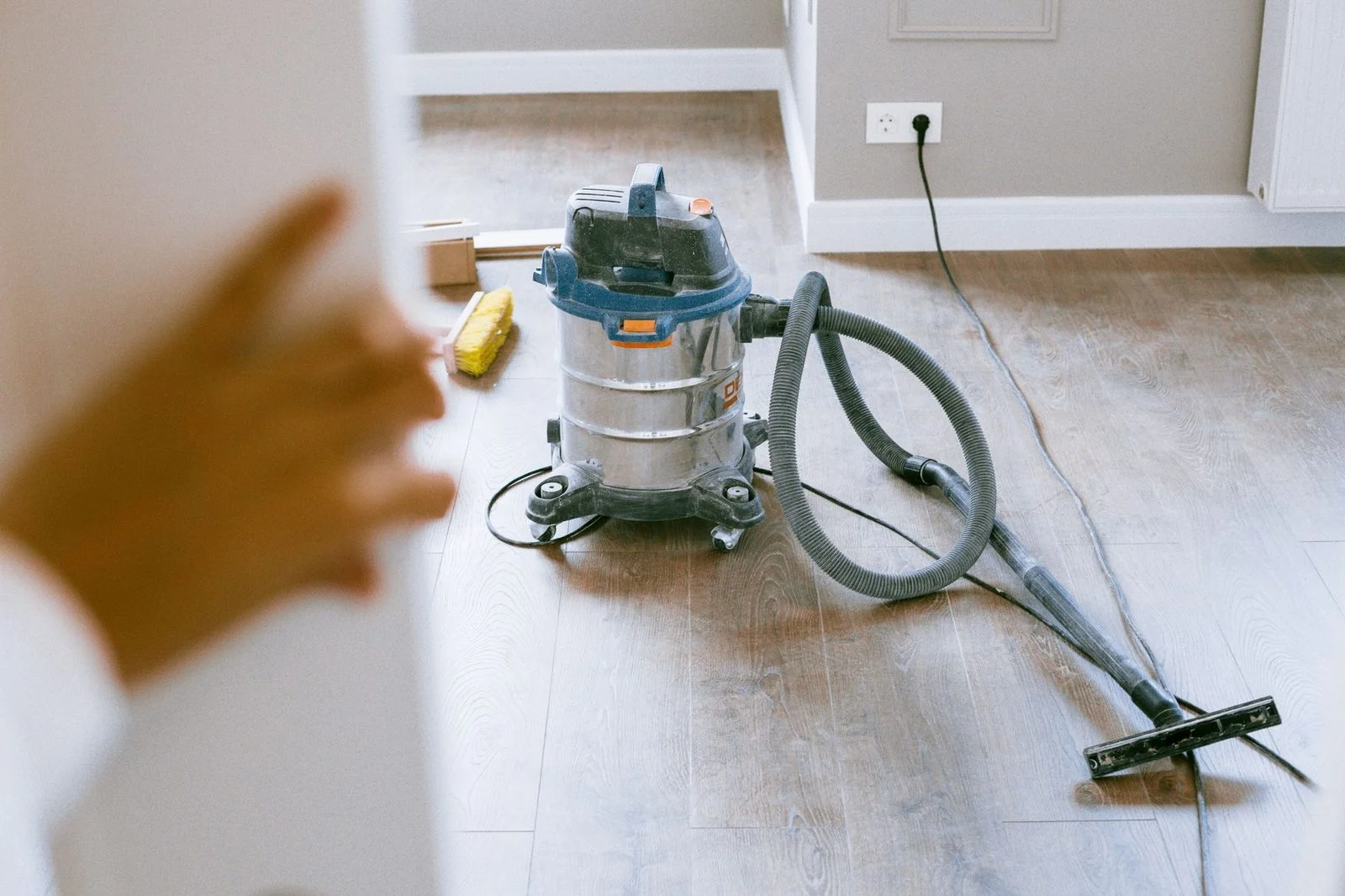
Start by walking the building and listing each surface. Common commercial floors include terrazzo, vinyl composition tile (VCT), resilient tile, sealed concrete, porcelain and ceramic tile, and wood or laminate.
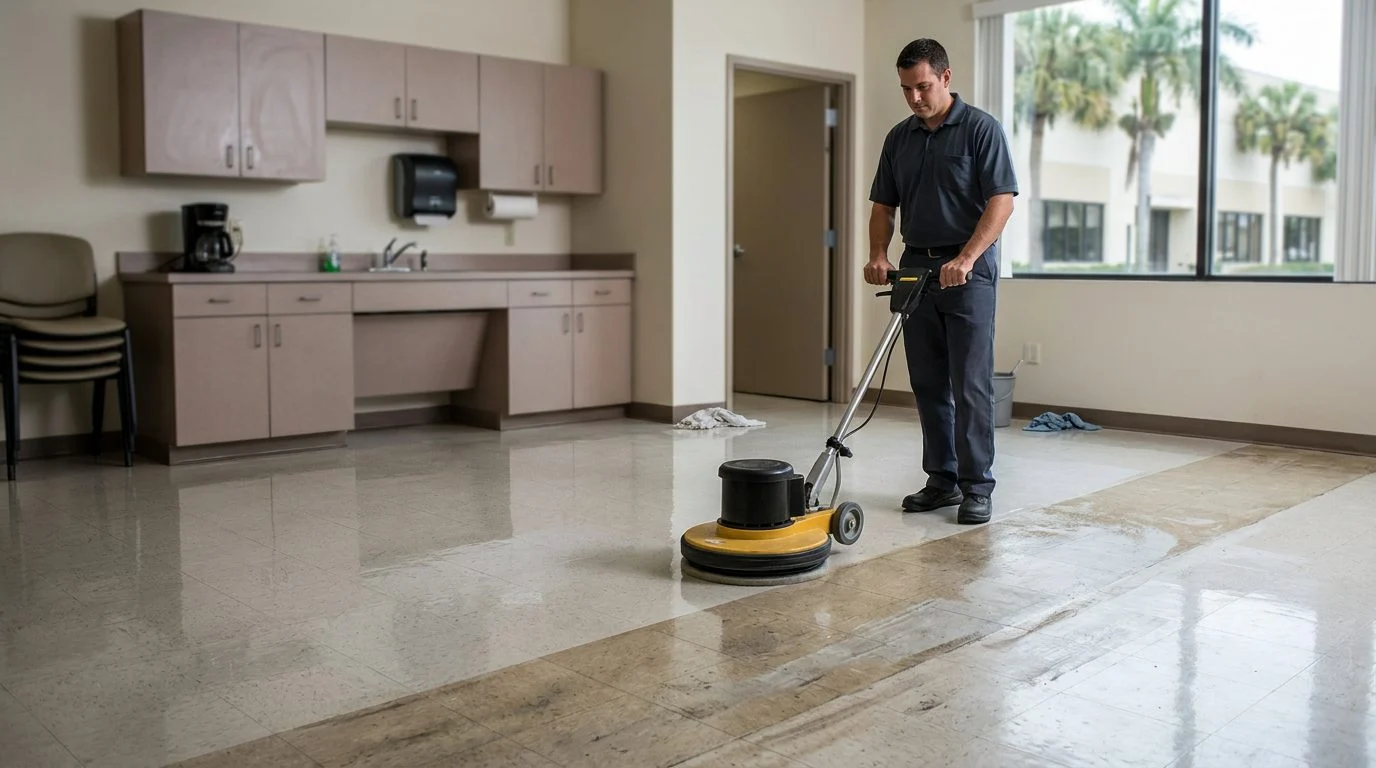
Terrazzo needs its own plan. The NTMA terrazzo care guide recommends neutral-pH cleaners for routine care. It also covers sealing and, when needed, stripping old sealer and resealing.
Ask the company which cleaner it uses on terrazzo and how it handles the sealer. A specific answer shows the crew has a plan for that floor.
Wood and laminate need moisture control. The Florida Department of Health mold guidance addresses mold in indoor environments. Ask how the crew avoids soaking these floors during cleaning.
How Often Will Each Floor Area Be Serviced?
Each floor area should have a stated frequency. Periodic work, such as stripping and refinishing, should appear on its own line in the proposal.
Hard surfaces need recurring care. The Carpet and Rug Institute states that hard-surface floors need recurring sweeping, mopping, stripping, waxing, and buffing. It also notes they may need substantially more annual cleaning than carpet.
Look for daily, weekly, or periodic labels on each area. Also look for a note on whether frequency rises with foot traffic. An entrance lobby and a back office rarely need the same schedule.
Ask how a missed or rescheduled visit is handled and what notice you’ll get. Put the answer in writing so there’s no guessing later.
Check the frequencies against how many people walk each area each day. If the schedule doesn’t match your traffic, the price won’t tell you much about the service you’ll get.
Which Finishes and Cleaning Products Will Be Used?
The proposal should name the finish or sealer for each floor type, the number of coats, and the cleaning products the crew will use. Vague wording like “a protective coating” doesn’t tell you enough.
Ask what sheen the finish produces and how many coats a refinish uses. Ask how maintenance coats are applied between full services, and how often.
Ask for the safety data sheet (SDS) for every product.
Slip resistance matters too. Ask how the finish is checked for slip resistance in areas where wet floors are a risk, such as entrances, lobbies, and restrooms.
Ask how products are diluted, too. Mixing strength affects both the finish on the floor and the safety of the people using the product.
What Insurance Proof Should You Request?
Request a current certificate of insurance that lists general liability and workers’ compensation coverage. Check its dates and the policy holder’s name.
Clean floors are part of basic walking-surface safety.
Check that the workers’ compensation coverage includes the crew that will work in your building. Office staff alone isn’t enough to tell you who is covered on site.
Ask whether your organization can be named as an additional insured. If you need that, the certificate should show it.
Confirm the coverage limits listed on the certificate. Then make sure the contracting company’s legal name matches the policy holder on the certificate before you sign.
How Is Completed Work Documented?
Each visit should leave a written record, such as a checklist or service log signed by a site contact. A record that is never signed gives you little to check later.
Ask who signs the log. Ask what happens when no site contact is available that day, and who keeps the log in that case.
For stripping and refinishing, ask whether before-and-after photos are provided. Photos make the finished work easy to check against the contract scope.
Ask how records reach you: by email, through a portal, or as a printed copy. Ask how long the company keeps them. Documentation gives you a record to check the scope against when the work is questioned.
Crew training matters too. Ask whether the technicians hold it, and ask for proof.
Not sure what your next step is?
Talk it through with our team — the first consultation is free, confidential, and carries no obligation.
What Should the Written Scope and Pricing Cover?
The written scope should list each service, its frequency, and each floor area. It should also explain how the price is calculated.
Ask whether pricing is a monthly fee, a per-visit rate, or a per-square-foot rate. Ask what the base fee includes and what counts as an extra charge.
Ask how changes are approved. An added area or a special project should get a written change order before work starts, with its price listed.
Read the term, renewal, and notice terms closely. Know how much notice ending the agreement requires, and whether it renews on its own.
A complete scope makes it easy to see who handles which tasks. Gaps tend to hide in the fine print, so look for them there first.
If a service came up in conversation but isn’t in the document, ask for it in writing.
How Should the Service Fit Your South Florida Site?
The proposal should say when the work happens and how occupied areas are protected during service. Those details decide how much the work disrupts your daily operations.
South Florida buildings carry heavy foot traffic, especially at entrances, lobbies, and food areas. This is true across Miami-Dade, Broward, and Palm Beach counties. Ask how the crew handles those areas during the workday.
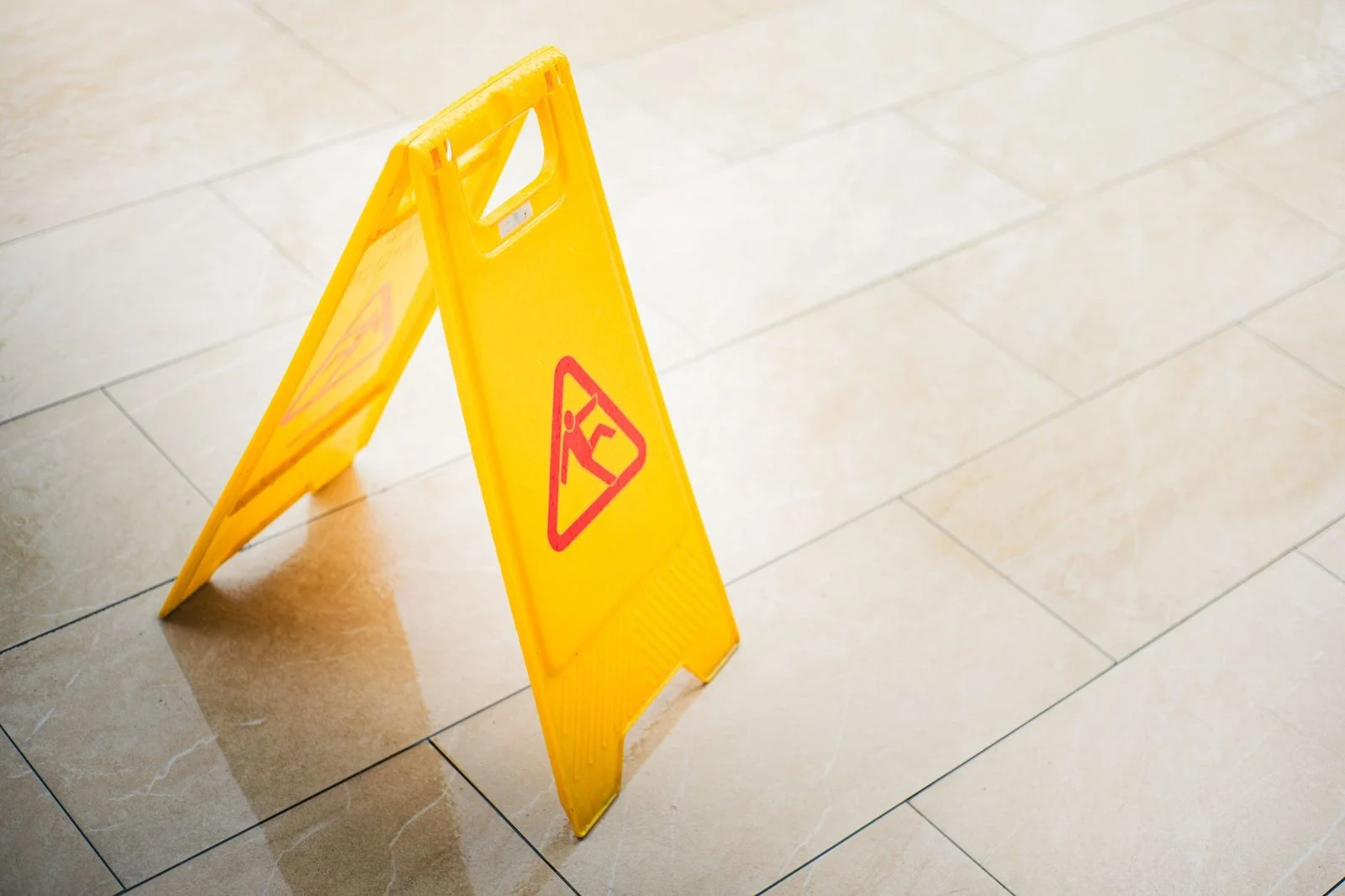
Ask whether the company can work after hours or in low-traffic windows. Ask how the crew keeps walkways safe while it works, and how wet floors are marked.
Coastal humidity and salt air also affect floors. Ask how the plan accounts for that on your site. Wood needs moisture control, as noted earlier.
Ask about your building type too. Office towers, retail stores, hotels, and buildings near the coast each bring different demands. A good answer names your building type and describes the approach for it.
We provide commercial floor care across South Florida. These questions apply whether your building sits in Miami-Dade, Broward, or Palm Beach County.
Talk With Our Team Before You Sign
A walk-through lets the team see your floors before pricing is set. That way, the scope can match the building it will serve.
Picture this: a proposal lists floor care for every level but names no finish. Your lobby has terrazzo, your offices have VCT, and the entry is wood. You need those details before you approve anything.
Your first consultation is free, confidential, and carries no obligation to continue.
Once the team walks the site, the proposal can name each floor, frequency, finish, and document. You can then judge the scope on the facts.
Common Questions
What is the most important question to ask a floor care company?
Ask which floor types the proposal covers and how each one is cleaned. That answer shows whether the plan fits your building.
What should a floor care insurance certificate show?
It should show general liability and workers’ compensation coverage, current dates, and the correct policy holder name.
How often should commercial floors be serviced?
Each area should have its own stated schedule, based on foot traffic and floor type. Ask for that schedule in writing.
If a floor care proposal is on your desk, contact our team and we’ll walk your floors with you before you sign.
What a Strong Floor Care Proposal Should Show
Floor types and methods
The proposal should name each floor surface in your building and describe how each one will be cleaned, maintained, and protected.
Schedule and frequency
Look for a clear calendar of visits, including daily, weekly, and periodic services, so you know when work happens and how often.
Insurance and coverage
Ask for a certificate showing general liability and workers' compensation coverage, with current dates and the correct policy holder name.
Scope and pricing detail
Each service should be itemized, so you can see exactly what is included and what would be billed as an extra.
Get Every Promise in Writing
Verbal assurances about results, timing, or coverage are easy to forget. Before you sign, make sure the scope, schedule, and insurance details appear in the written agreement.
Who will clean my floors?
Ask whether the company's own trained staff performs the work and how supervision is handled when the crew is on site.
How do you handle problems?
Ask how quickly issues are reported, who the point of contact is, and how corrections are made if the work does not meet your standards.
How will you protect my floors?
Ask which products and equipment are used on each surface, and how they are chosen to avoid damage, slip hazards, or finish wear.
How will we communicate?
Ask how service visits are logged, how you receive updates, and how you can reach the office during business hours.