
Commercial Landscape Maintenance · South Florida & Atlanta
A Landscape Maintenance Contract Built Around Your Corporate Office
Clear scope, a set service schedule, and one point of contact keep your grounds looking sharp all year, without you managing the details.
Why Corporate Clients Start Here
Free
First consultation
Confidential
Consultation discussion
4
Core services offered
2
Regions: South Florida and Atlanta
By Ryan Jurney · Published November 21, 2026
Your office grounds are seen every day by employees, visitors, and clients. A commercial landscape maintenance contract for corporate offices is a recurring written agreement that defines ongoing grounds care: what gets done, how often, and at what price. Read it closely before you sign, because unclear wording leads to surprises later.
A strong contract covers six parts: scope, visit schedule, pricing, term, changes, and termination. With those written down, you can review the details with our team before moving forward.
What a commercial landscape maintenance contract covers for a corporate office
It covers recurring care of the grounds around an office, campus, or commercial property, not a one-time project.
A maintenance contract is a standing agreement for regular grounds care. A one-time project, like a new garden bed or a regraded lot, ends when the work is done. A maintenance contract keeps running on a set schedule.
It fits corporate offices, professional campuses, and multi-tenant commercial sites. In South Florida, that includes office properties in Miami-Dade, Broward, and Palm Beach counties, plus busy areas such as Brickell, Coral Gables, and South Beach.
Procurement teams care because one written standard covers the whole site. Employees and clients see the grounds every day, so the expected appearance and response times need to be clear to everyone. Clean grounds also shape first impressions.
Gator Protection offers landscape services, pressure washing, floor care maintenance, and day porter service. A landscape contract can sit alongside those services when a site needs more than grounds work.
If you're replacing a provider or renewing a contract that's about to expire, reach out to our team so we can talk through your site and what the agreement should cover. Talk it through with our team — the first consultation is free, confidential, and carries no obligation.
What the scope of work should itemize
The scope should name every task, the standard for each one, and how often it happens.
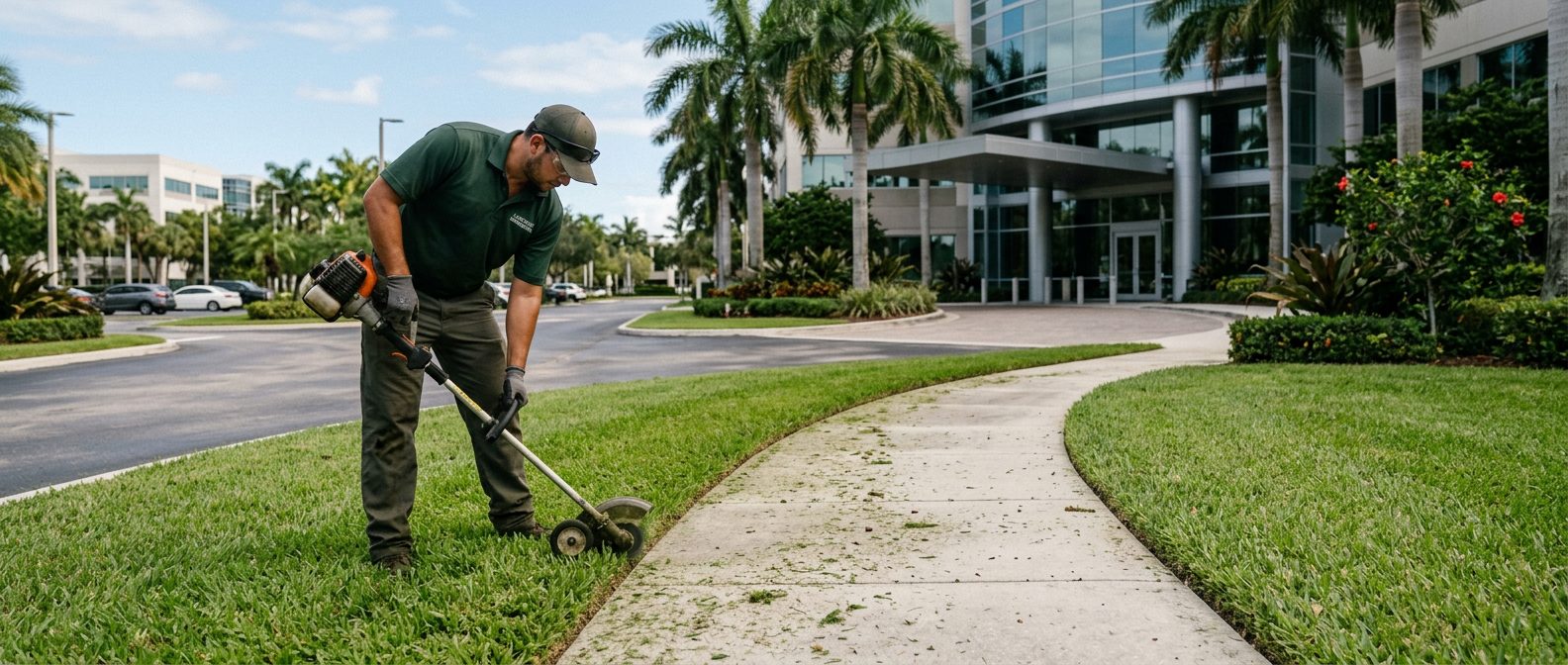
- Turf: mowing, edging, string trimming, and clipping removal, with mowing height and pattern written in.
- Beds and plantings: weeding, pruning and shaping of shrubs and hedges, and removal of spent plant material.
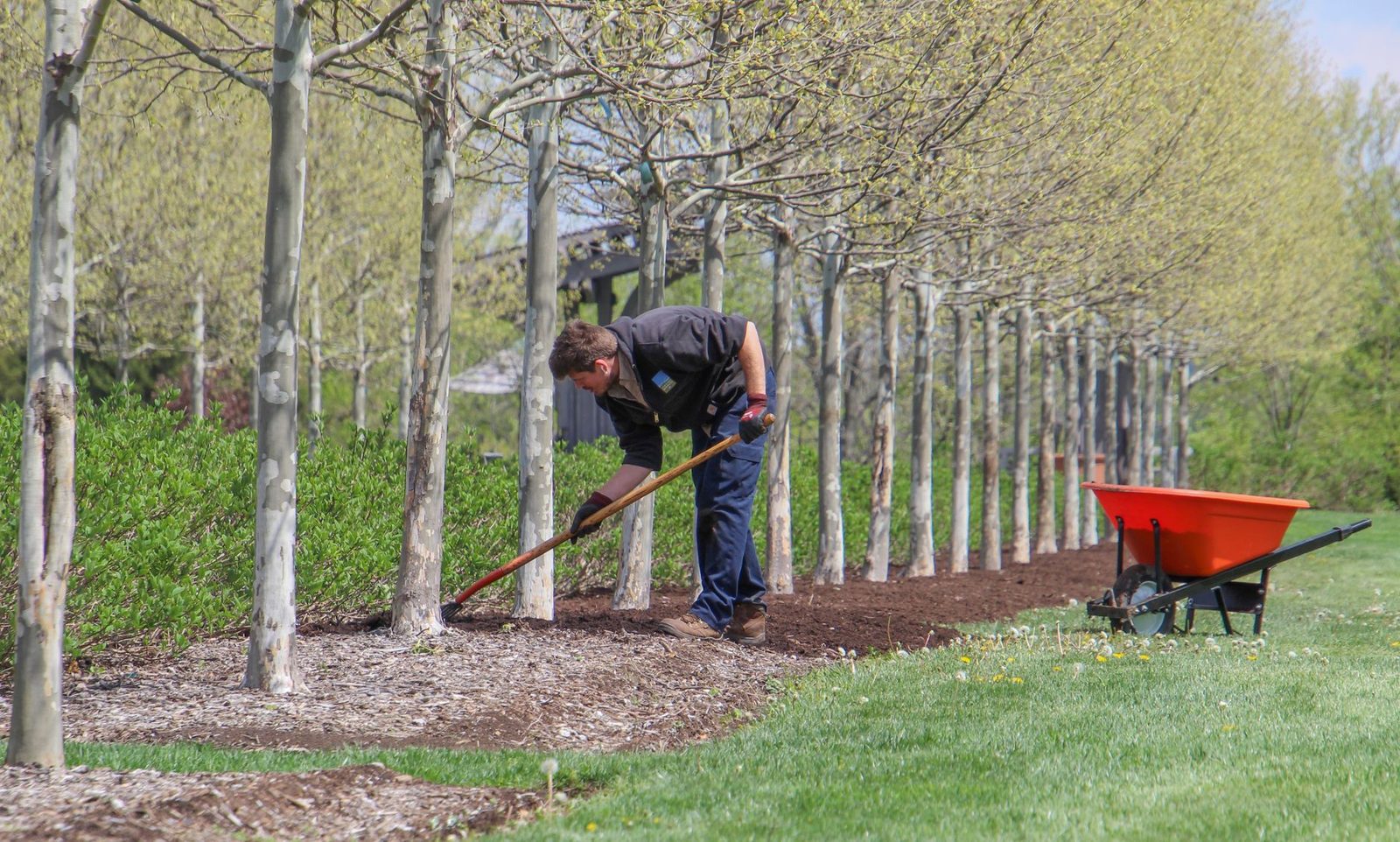
- Mulch and rock: installation, top-dressing, and edging, with material type and depth stated.
- Debris: leaf, litter, and storm debris removal, with routine work defined apart from extra work.
- Add-ons: pressure washing of walkways or hardscape, priced separately or listed as optional.
- Visit schedule: visits per week or month, the days they happen, and what happens when weather prevents a visit.
A missing weather rule leaves both sides guessing about make-up visits and billing.
Ask how crews are trained for fertilizer work, too.
Finally, share your list with our team so we can review the same scope with you. Proposals only compare well when they measure the same tasks.
How service frequency and South Florida conditions shape the schedule
The schedule should match growth and weather, so it needs room for seasonal changes.
Warm, wet months usually bring faster plant and turf growth. That means more mowing and edging in summer than in drier months. A fixed visit count with no room for change can fall behind at peak growth.
Heat and rain also change how often beds, mulch, and new plantings need attention. The contract should say how those changes are proposed and approved before they take effect.
Hurricane season brings a higher chance of storm debris. Ask how post-storm cleanup is scoped, scheduled, and billed. Put that answer in writing before the first storm, not after it.
Clear rules keep the property at the agreed standard without surprise invoices.
How commercial landscape pricing is structured and what moves the number
Most proposals use a fixed monthly fee, a per-visit rate, or a base fee plus priced add-ons.
Each structure shifts risk. A fixed fee makes the budget predictable. A per-visit rate follows the actual number of visits. A base fee with add-ons keeps the core price lower but needs a clear list of extras.
Several site factors move the number:
- Property size
- Amount of turf and planting
- Visit frequency
- Site access and parking
- Level of detail required
- Seasonal and storm work
Watch for unpriced line items. Ask what the base fee includes and what triggers an extra charge.
A site walk-through helps build an accurate proposal, because the right structure depends on the facts of the property.
Term length, renewals, and changes once the contract is running
Pick a term length that fits your budget, then check the renewal, change, and exit terms before you sign.
- Annual or multi-year: an annual term keeps flexibility. A multi-year term supports steady scheduling but runs past one year.
- Renewal: check whether the agreement renews automatically, what notice applies, and whether pricing can change.
- Change orders: define how added or removed areas are requested, quoted, and approved in writing.
- Termination: read the notice period, any conditions for early exit, and how final invoicing and site handover work.
Written agreements should be signed by the party to be charged or by another person lawfully authorized to sign for them.
Florida appeals courts generally do not treat a notice step as a condition that must happen first, unless plain, unambiguous language requires it. Covelli Family v. ABG5 So write each notice step in clear words.
How a corporate landscape engagement works, step by step
The process runs from a first consultation to a site walk-through, a written proposal, review, and onboarding.
- First conversation: La consulta inicial es gratuita, confidencial y sin compromiso de continuar.
- Site walk-through: turf, beds, plantings, hardscape, access, and any areas with special requirements are reviewed.
- Written proposal: an itemized scope, schedule, pricing structure, term, and renewal and termination terms.
- Review and approval: time for legal, finance, or building management review, with revisions handled in writing.
- Onboarding: a confirmed start date, a baseline site walk, and a named contact for scheduling and changes.
- Ongoing management: regular updates on visit schedules, seasonal adjustments, and change orders.
To begin, request a quote through our contact form. Timing from first contact to proposal varies with the property and your bid schedule.
Not sure what your next step is?
Talk it through with our team — the first consultation is free, confidential, and carries no obligation.
Why work with Gator Protection on a corporate landscape contract
Gator Protection provides landscape services, pressure washing, floor care maintenance, and day porter service in South Florida.
- Service area: South Florida, including Miami-Dade, Broward, and Palm Beach counties, and the Brickell, Coral Gables, and South Beach areas.
- Related services: if your site also needs pressure washing, floor care, or day porter service, you can ask for those in the same proposal.
- Written proposals: scope, schedule, and pricing are set out in writing so you can review every detail with our team.
- Support staff: our team includes assistants and office staff.
Frequently asked questions about corporate landscape maintenance contracts
Here are short answers to common questions about these contracts.
What is the difference between a maintenance contract and a one-time project?
A maintenance contract covers recurring care on a set schedule. A project is one defined job, like a renovation or new planting.
Can the scope change after the contract starts?
Yes, through a written change order. It should state the added or removed work, the price effect, and the start date.
Is storm cleanup included in the base fee?
The contract should define storm work, its schedule, and its billing. List it separately so it’s clear what the base fee covers.
Does a multi-year contract need to be in writing in Florida?
Next step for your property
A written, itemized scope is the clearest place to start when you’re building a bid, reviewing a renewal, or changing providers.
You may be preparing a bid for the first time. You may be reviewing a contract that is about to renew, or planning the upkeep of a new property. Either way, the terms you set now will shape your grounds care for the life of the agreement.
If that’s where you are, reach out to our team through the contact form or call our office to talk through your site and what the agreement should cover.
What a Maintenance Contract Covers
A Defined Scope
The contract lists the grounds, beds, lawns, and hardscape areas we service, so both sides know exactly what is included.
A Set Service Schedule
Recurring visits are planned around your office hours, tenant traffic, and seasonal needs.
One Point of Contact
Our team keeps your property manager or facilities staff informed about visits, crew changes, and open items.
Seasonal Planning
Plant care, irrigation checks, and enhancements are timed to the South Florida and Atlanta climates.
Put Every Change in Writing
If you add an area, remove a service, or change the visit frequency, request a written change order. It should describe the work added or removed and how the price is affected before any work begins.
Maintenance Contract vs. One-Time Project
Maintenance Contract
Recurring care on a set schedule, such as mowing, edging, pruning, and seasonal color rotation.
One-Time Project
A single defined job, such as a renovation, new planting, or hardscape installation.
Adding Services
Pressure washing of walkways, entries, and parking areas can be added to the same contract.
Adjusting the Plan
Scope and frequency can be updated as your property or needs change, using a written change order.