
Landscape Services | South Florida
Plan Your Commercial Landscape Budget With Clarity
See how property size, visit frequency, and added services shape a monthly plan for offices, condos, and commercial sites across South Florida.
By Ryan Jurney · Published November 21, 2026
Property managers and board members usually ask one question first: what will commercial landscape maintenance cost per month in South Florida? The short answer is that the monthly figure follows the written scope. Two properties of the same size can carry very different amounts, depending on how many areas get serviced, how often crews visit, and what extra work is included.
This guide explains what a monthly figure covers, what moves it up or down, and how to build a budget you can review with confidence.
What a Monthly Commercial Landscape Maintenance Cost Covers
A monthly commercial landscape maintenance contract is a recurring service for a property’s grounds. You pay a set amount on a set schedule instead of paying per job. The monthly price is built from the tasks written into the contract.
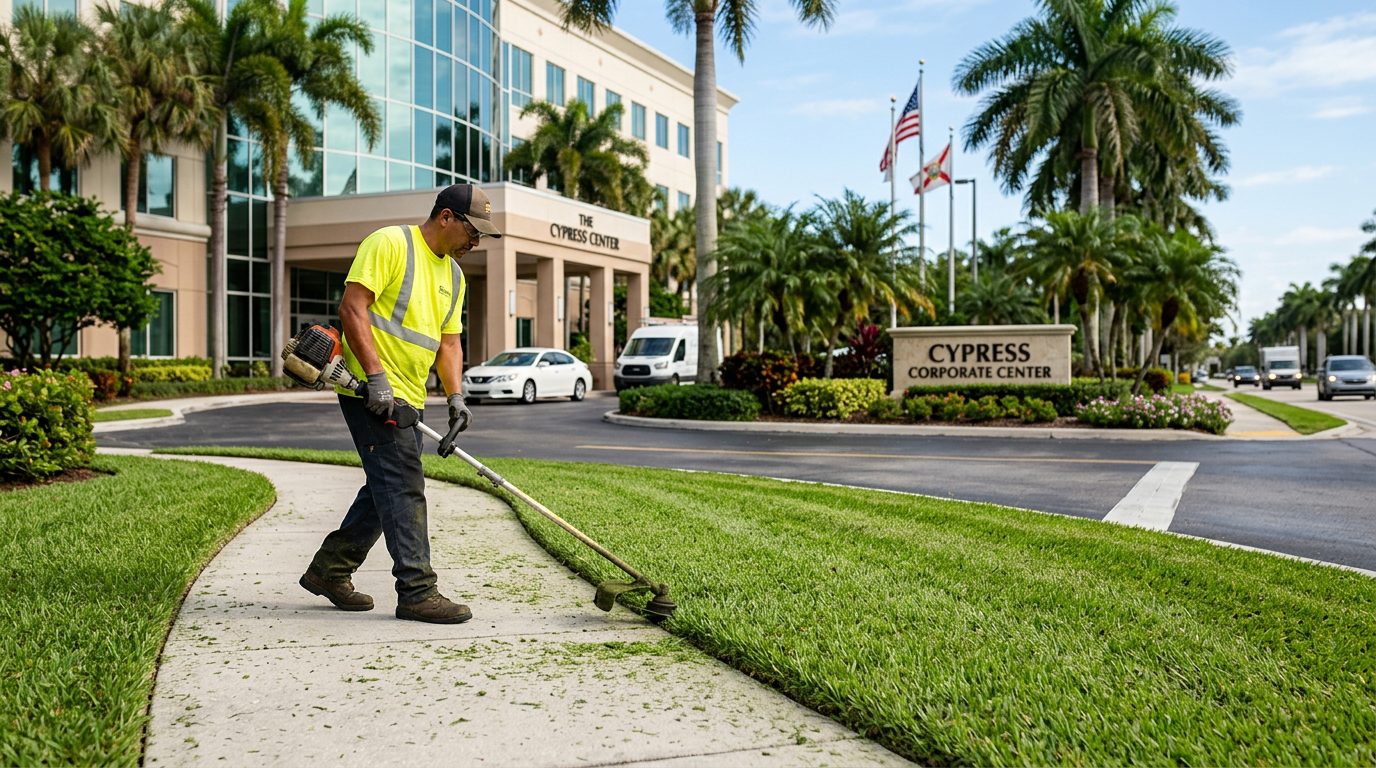
Most monthly figures include the routine visit tasks. These are mowing, edging and trimming, blowing and cleanup, and basic weed control. They repeat on every visit, so they form the core of the budget.
Fertilizing and seasonal work work differently. They belong in the contract only when the written scope calls for them. The Florida pesticide licensing page covers state licensing and certification for commercial applicators of pesticides and fertilizer on landscapes.
Because each contract lists its own tasks, two properties of the same size can carry different monthly figures. The number reflects the agreed scope, not square footage alone.
Not sure what your next step is?
Talk it through with our team — the first consultation is free, confidential, and carries no obligation.
Key Factors That Move the Monthly Figure
Property size, building layout, visit frequency, and extra labor move the monthly figure the most.
Size and layout come first. More turf and planting area means more time on each visit. Several buildings spread across one site add travel time between stops, even when the lawn area is modest.
Visit frequency matters just as much. A weekly schedule and a biweekly schedule do not produce the same monthly total. Moving from every two weeks to weekly roughly doubles the mowing visits.
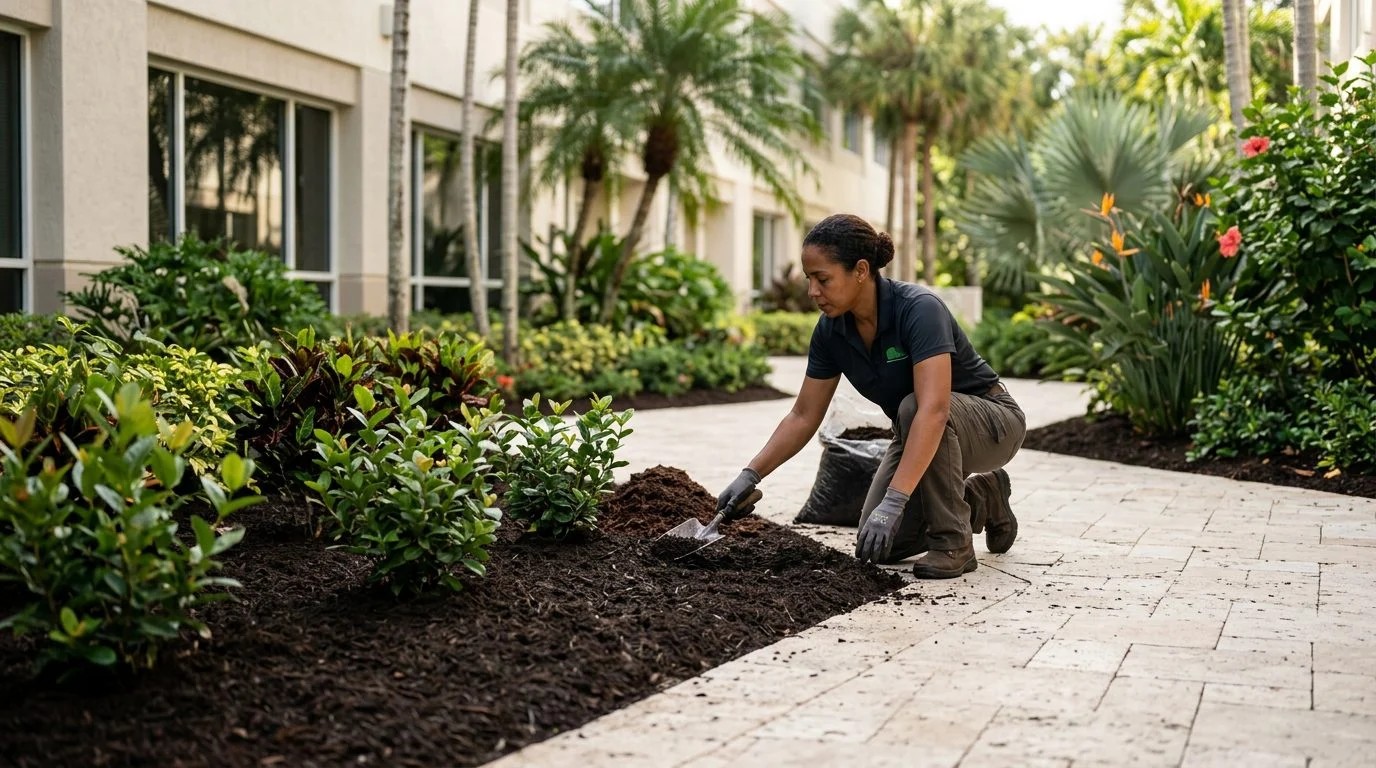
Extra labor adds cost too. Plant beds, hedges, palms, and tree work need separate time beyond routine mowing. Irrigation areas, debris removal, and tight parking or gated access slow each visit, so they belong in the scope.
Coastal sites need a closer look. Properties near dunes on South Beach may face state rules. Dune vegetation is a sensitive area, so questions about any work near it are worth raising before work begins.
Pressure washing of walkways or common areas is usually a separate line. It is not part of routine mowing. Keep it out of the base number unless the scope says otherwise.
The cost depends on the facts of each property, so the scope is measured before a number is set.
How the South Florida Rainy Season Affects Your Monthly Budget
The rainy season usually means more grass growth and more visits. The monthly amount should reflect that.
Warm, wet months push turf to grow faster. Mowing that was a set weekly task in the dry season can need extra passes in peak months. A flat monthly figure hides that change. A manager who expects the same workload all year may get surprised.
Some contracts level the total across the year. Others change the monthly amount by season. Either way, the contract should say which method applies, and how many visits run in each period.
Before you sign, ask how frequency changes during the wet season. Ask who approves extra visits and how they are priced. For a detailed schedule discussion, read our rainy season schedule guide.
Why a Written Scope of Work Keeps Monthly Costs Predictable
A written scope of work keeps a monthly landscape cost predictable. It spells out what the payment buys. Unclear scopes are a common source of surprise charges on recurring contracts.
Florida courts apply contract basics to spoken deals too. Writing the scope down makes those terms easy to check.
A strong written scope names five things. It lists service areas by building, the task list, visit frequency, the equipment used, and cleanup standards. Each item answers a question that would otherwise come up later.
Multi-building properties benefit most from an area-by-area breakdown. When each building has its own line, the board can see its share of the monthly total. For a checklist of items to define, read our multi-building scope guide.
Insurance and Documentation Requirements That Can Affect the Contract
Many condominium associations and commercial property managers ask for proof of insurance before a landscape crew starts work.
Florida law places workers’ compensation duties on employers coming within the provisions of Chapter 440. Under Fla. Stat. § 440.10, every employer within Chapter 440 must secure the payment of compensation to its employees. A property manager may therefore ask for proof of that coverage during onboarding.
The documents a manager typically reviews include a certificate of insurance and proof of workers’ compensation. Requesting them early keeps the contract timeline on track.
Each property sets its own documentation rules through its contract and governing documents. Confirm the requirements for every site. A common-items list appears in our insurance certificate checklist.
Building a Practical Monthly Budget for Your Property
A practical budget lists each area, its visit frequency, its add-ons, and a reserve for one-time work. Follow four steps:
- List each building and grounds area.
- Note the visits per month in each season.
- List add-ons such as pressure washing and cleanup.
- Keep the base contract separate from one-time work.
Condominium boards have their own rules. Under Fla. Stat. § 718.112, a proposed annual budget must be detailed and must show amounts by account and expense classification, including, at a minimum, any applicable expenses listed in s. 718.504(21). The board must adopt the budget at least 14 days before the fiscal year starts. Put landscape maintenance on its own line so the monthly figure fits the approved budget.
Set a reserve for storm cleanup, debris removal, and pressure washing. These costs arrive unevenly. A reserve keeps them from landing on the monthly line.
When a proposal arrives, ask these questions. What is included on each visit? How does frequency change by season? How is extra work priced? How is cleanup handled?
Frequently Asked Questions
How much does commercial landscape maintenance cost per month in South Florida?
The monthly amount follows the written scope, including property size, visit frequency, and add-ons.
Does a monthly landscape contract include fertilizing?
Only when the written scope lists it.
Should landscaping appear as its own line in a condo budget?
Yes, that helps the board see it clearly. Florida rules require the budget to show amounts by account and expense classification.
Not sure what your next step is?
Talk it through with our team — the first consultation is free, confidential, and carries no obligation.

Request Your Quote for a Monthly Landscape Maintenance Plan
If your board or property team needs a monthly figure before its budget date, contact Gator Protection, Inc. for a property review and a written quote. We provide commercial landscape maintenance across South Florida, including Miami-Dade, Broward, and Palm Beach counties, South Beach, Coral Gables, and Brickell. Our team reviews the grounds, the visit frequency you need, and any add-ons, then prepares a quote tied to that scope.
La consulta inicial es gratuita, confidencial y sin compromiso de continuar.
Reach us through the contact form or call the office to set up your property review.
What Shapes Your Monthly Landscape Plan
Property Size and Layout
The total area, number of beds, lawns, and hardscape zones all affect the time a crew needs on site each visit.
Visit Frequency
Weekly, biweekly, or monthly schedules change the work included in each visit and how the monthly total is built.
The Written Scope
The services listed in your agreement define what is covered. Anything outside that document is a separate item.
Add-On Services
Fertilizing, irrigation checks, and seasonal cleanups are priced separately when they are not part of the base scope.
Tip:
Common Services in a Monthly Commercial Landscape Plan
Mowing and Edging
Regular cutting, edging along walks and beds, and clean-up of clippings to keep the property presentable between visits.
Trimming and Hedge Care
Shaping shrubs, hedges, and ornamental plants so they stay within their designed footprint and sightlines stay clear.
Seasonal Cleanup
Removing debris, leaves, and storm litter, and refreshing beds as conditions change through the year.
Fertilizing and Treatments
Included only when the written scope lists them, with timing and products spelled out in the agreement.
Your first consultation is free, confidential, and carries no obligation to continue.
More of our services
- Corporate Office Landscape Maintenance Contracts, Palm Beach