
Landscape Services | Palm Beach Gardens
Campus grounds that look cared for every day
Office parks, headquarters, and multi-building sites need landscaping that runs on a set schedule and holds up to daily traffic.
By Ryan Jurney · Published November 21, 2026
Your campus grounds get seen every day by employees, visitors, and clients.
On a corporate campus, your grounds are cared for on a set schedule across every building and shared outdoor area, with that plan put in writing by zone. Gator Protection, Inc. provides commercial landscape maintenance in South Florida, including Palm Beach County, where Palm Beach Gardens is located.
What Scheduled Landscape Maintenance Means for a Corporate Campus
Scheduled campus maintenance is a recurring agreement that covers each zone of the property on a set calendar. Each building, parking area, entry drive, and shared green space gets its own list of tasks and visit frequency.
This service fits facilities managers, property managers, and campus owners who oversee several buildings in Palm Beach County. It suits anyone who wants one standard across the whole property, not just one lawn.
A one-time cleanup fixes a problem on a single day. A recurring program keeps the work steady month after month, with a written standard to measure against.
Campus grounds also carry a visitor standard. Entrances and main walkways are usually the first things people notice, so they belong at the front of the scope.
The written agreement should name one contact for schedule changes and work requests. That keeps changes from getting lost between departments and tenants.
Want to talk through your grounds first? La consulta inicial es gratuita, confidencial y sin compromiso de continuar.
Not sure what your next step is?
Talk it through with our team — the first consultation is free, confidential, and carries no obligation.

What Our Landscape Services Cover on a Campus
Campus landscape maintenance covers the lawns, beds, palms, irrigation, and hard surfaces that make up your grounds, each listed in the written scope. Typical tasks include:
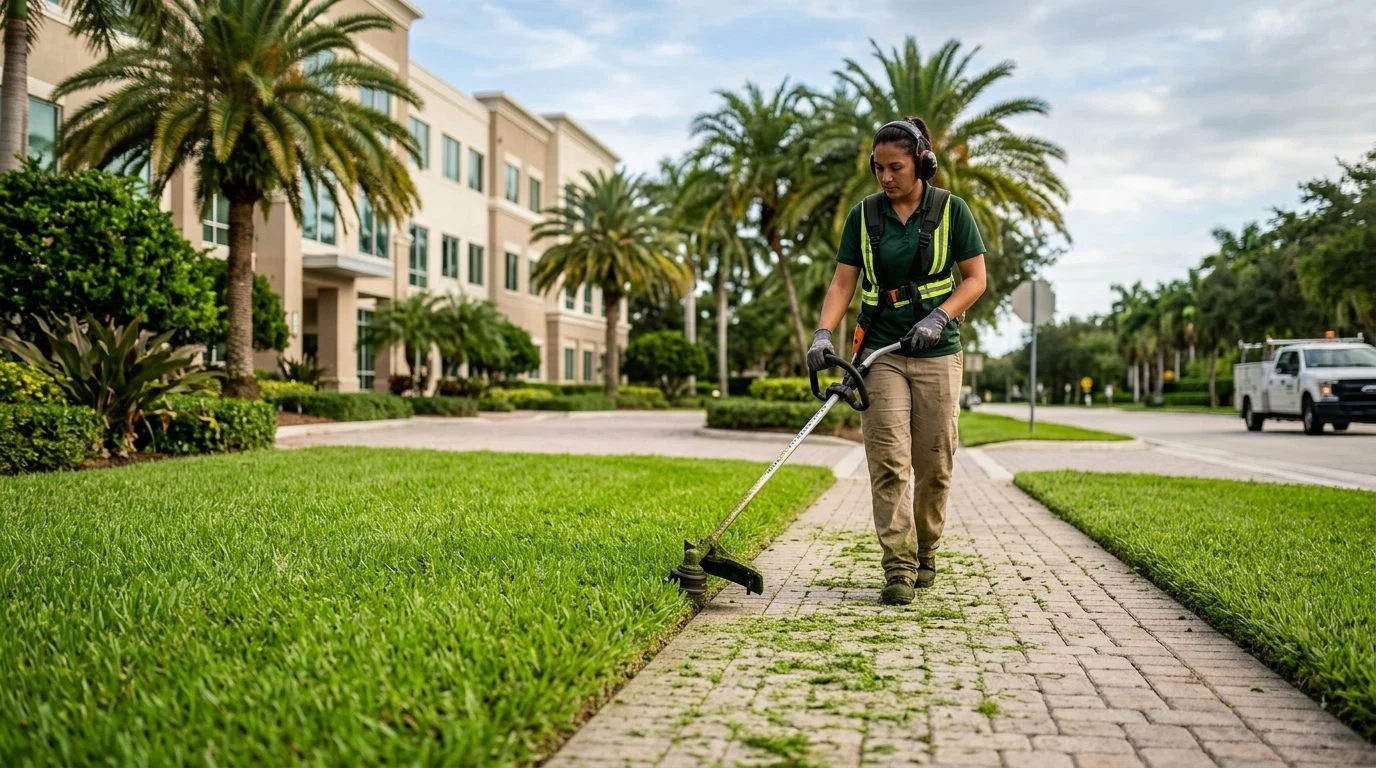
- Mowing, edging, and blowing lawns, berms, and common areas, with edges kept clean along walks and building perimeters.
- Shrub and hedge trimming, bed weeding, and mulch replenishment to keep planting beds defined.
- Palm and tree trimming, including removal of dead fronds and debris, at the frequency your scope sets.
- Irrigation checks on a recurring schedule to catch dry spots and broken heads early.
- Pressure washing of walkways, entry plazas, and parking-area surfaces as part of the grounds program.
Palms drop fronds and seed pods onto walks and parking areas, so palm work is often the most visible task on the list. Its timing should be set during the site walk-through, not left to chance.
Irrigation on a campus rarely lines up with building boundaries. One zone may water a sun-baked lawn while another covers shaded beds. One schedule for the whole property can overwater some areas and miss others. Mapping irrigation zones early prevents that. The Green Industries Best Management Practices program covers fertilizing, irrigation, and water quality for landscape professionals.
Wet walkways are a safety issue on a busy campus. Our floor care maintenance services help keep commercial floors clean and dry for the people who use them. Pressure washing times should fit foot traffic. Storm-season readiness can also be scoped in, with loose debris cleared from walks and parking areas. The timing is set in your written plan.
How a Campus Maintenance Program Works, Step by Step
A campus program starts with a site walk-through and moves to a written schedule before any recurring visit begins. Expect these steps:
- Site walk-through. Map buildings, zones, planting areas, irrigation zones, gates, and access limits.
- Written scope. List each task, its frequency by zone, and any seasonal changes.
- Contact and access setup. Name who approves changes and how work requests reach the office.
- Recurring visits. Work follows the schedule, with visits logged by zone so facilities staff can see what was done and when.
- Periodic review. Check plant health, irrigation performance, and scope, then adjust through the same contact.
The walk-through and written scope come first. That way, the first recurring visit follows expectations everyone already agreed to.
A common mistake is building the scope from a photo of the front entrance. Campuses have back lots, dumpster pads, and drainage areas that are easy to leave out.
What decides how well the schedule holds is the accuracy of the site map and access details. If the map misses a zone, that area is easy to forget. If access rules are unclear, a visit can be delayed or repeated.
Why Facilities Teams Work With Gator Protection, Inc.
Gator Protection, Inc. provides commercial landscape maintenance alongside pressure washing, floor care, and day porter service. Facilities teams can coordinate grounds and shared interior needs with one provider.
- Commercial focus. The company provides commercial janitorial and commercial landscape maintenance across South Florida and parts of Atlanta, Georgia.
- Palm Beach County coverage. Service planning includes South Florida properties, including Palm Beach County.
- Support staff. Assistants and office staff help handle scheduling and documentation for the program.
For a corporate campus, one provider means fewer hand-offs. When one agreement covers the grounds, it is clear who handles each zone. Bundling can also keep grounds and interior work on one coordinated calendar.
Questions to Settle Before the First Visit
Settling scope, schedule, and access in writing before the first visit keeps the program on track. Gather these details first:
- A site map with building numbers, parking areas, and shared green space marked.
- Gate, badge, and after-hours access details, plus any tenant work hours.
- Irrigation zone layout, controller location, and known dry or wet spots.
- A list of palms, trees, and beds that need special handling.
- The name of the person who approves schedule changes.
Before you agree to anything, confirm how seasonal changes and one-time requests are handled. Those details belong in the written agreement, not in a text message.
Many campuses have tenants with set working hours. Visits are often planned around those hours, so access rules should be settled early, before the first visit goes on the calendar.
Frequently Asked Questions
Do you serve Palm Beach Gardens?
Gator Protection serves South Florida, including Palm Beach County, where Palm Beach Gardens is located.
Can one agreement cover several buildings?
Yes. The written scope lists each building and outdoor area by zone.
Can palm trimming be included?
Yes. Palm and tree trimming can be part of the scope, with a frequency set during the site walk-through.
Can pressure washing be added to grounds care?
Yes. Walkways, entry plazas, and parking-area surfaces can be scheduled with landscape maintenance.
How do I start a conversation about my campus?
The office takes requests by phone and through the contact form on this site.
Not sure what your next step is?
Talk it through with our team — the first consultation is free, confidential, and carries no obligation.

Get Your Campus Grounds on a Steady Schedule
A written, zone-by-zone program keeps every building and outdoor area on the same standard, season after season. If you manage several buildings and shared grounds in Palm Beach County, send your site details through the contact form and request a quote for a walk-through of your campus.
How we approach campus landscape maintenance
One written scope
Your agreement lists each building and outdoor area by zone, so everyone knows what is covered.
A consistent schedule
Recurring visits keep turf, beds, and common areas on a routine that suits your site's operations.
Support from our team
Our team coordinates with your property contacts so service changes and site needs are communicated clearly.
South Florida service
We provide landscape maintenance across South Florida, including Palm Beach County and Palm Beach Gardens.
Landscape services for corporate campuses
Lawn and turf care
Routine mowing, edging, and turf attention across large open areas, entrances, and parking perimeters.
Planting bed maintenance
Weeding, pruning, and bed upkeep that keeps entryways and building frontages neat.
Palm and tree trimming
Scheduled trimming of palms and ornamental trees, included in the written scope when requested.
Tip: define the scope before work begins
Confirm which buildings, parking areas, and outdoor zones are included, and how often each one is serviced. A clear written scope avoids confusion later.