
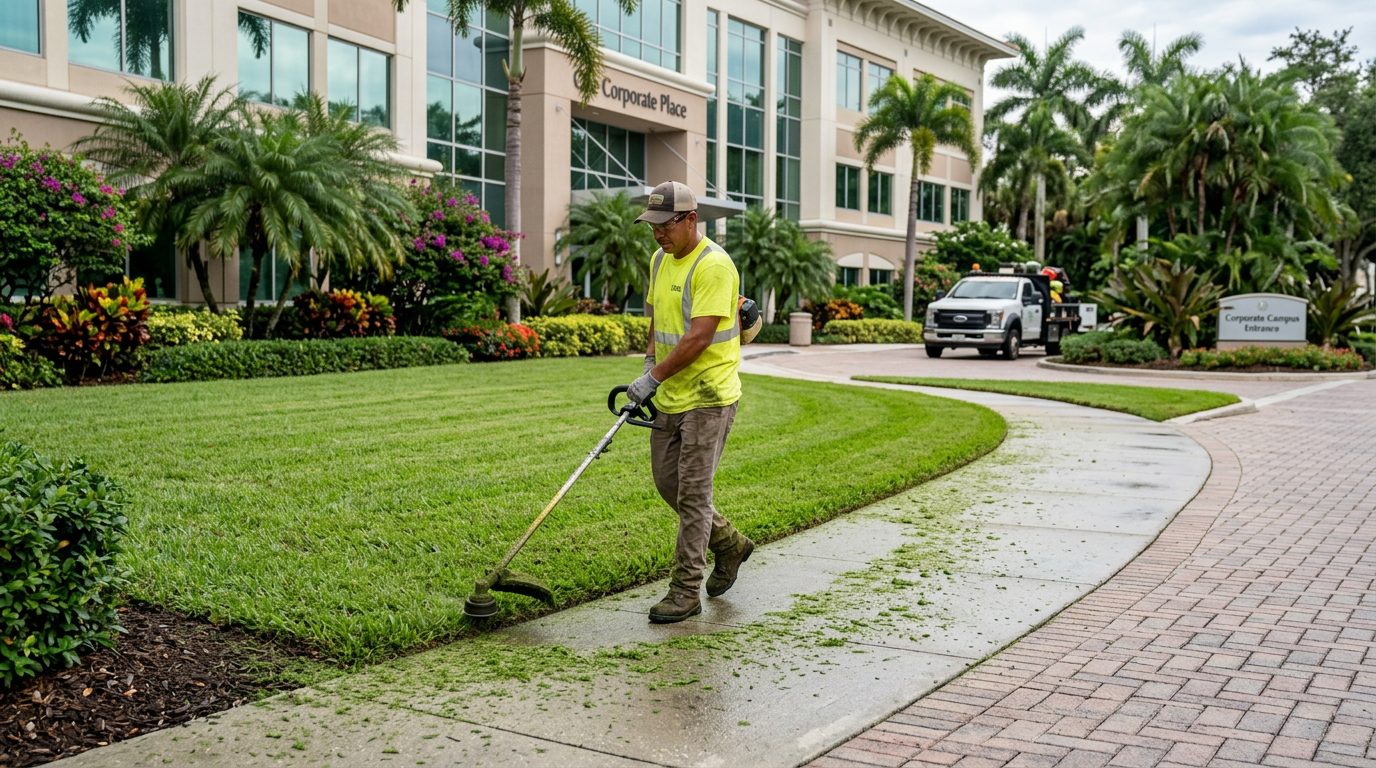
Landscape Maintenance | South Florida and Atlanta
Give Your Campus Landscape Team a Clear Start
Paperwork that is organized before the first visit keeps property managers and crews focused on the grounds.
By Ryan Jurney · Published November 23, 2026
Before a landscape crew sets foot on a corporate campus, the property team needs proof of who is coming and what they will use. That proof is the onboarding packet: a set of documents the vendor gives the campus before its first visit.
This guide walks through what a complete packet contains for a South Florida campus in Miami-Dade, Broward, or Palm Beach County. Use it as a checklist before you approve a start date.
What Does the Packet Do Before Crews Arrive?
The packet is reviewed before the first visit, so the campus knows who is on site and what they will do. It covers four jobs. Access control shows who holds gate codes, badges, and keys. Safety shows which chemicals are on site. Insurance confirms coverage before work starts. A shared understanding of the work prevents later disagreements.
Corporate campuses add complexity. Multiple buildings, shared grounds, and tenant or employee areas each need their own rules. A packet for one small lot can be short. A packet for a campus should show exactly where each task happens.
If you're reviewing a landscape vendor's packet before approving a start date for your campus, our team can walk through what your site needs. Talk it through with our team — the first consultation is free, confidential, and carries no obligation.

Which Insurance and Licensing Documents Should a Vendor Provide?
A vendor should provide a certificate of insurance, proof of workers’ compensation coverage, business registration, and any pesticide or fertilizer license it needs. Start with the certificate of insurance, which shows general liability coverage. List the property owner or managing entity as certificate holder, so the campus can match it to its own records.
Workers’ compensation comes next. Fla. Stat. § 440.10 says a contractor shall require a subcontractor to provide evidence of workers’ compensation insurance. The Florida workers’ compensation insurance guidance explains that employers generally must carry this coverage.
If the crew applies pesticides or fertilizer, ask for the applicator license. Confirm the license matches the crew doing the work. Also collect a W-9 for the vendor entity before the first invoice.
What Safety Documents Belong in the Packet?
The packet should include Safety Data Sheets (SDS) for every product the crew will use, a chemical inventory, and a site-specific safety plan. Request a sheet for each fertilizer, herbicide, insecticide, fungicide, and cleaning product on the vendor’s list. Product-specific sheets matter more than a generic safety handout, because each product has its own hazards.
The chemical inventory lists each product, its purpose, and where it will be stored. Storage location matters. Shared grounds and drainage areas carry different risk than a locked maintenance room.
The site-specific safety plan covers equipment hazards, traffic control around pedestrians and vehicles, protective equipment for crews, and how incidents get reported. It should name an emergency contact on both the vendor and facilities sides.
The UF IFAS Green Industries program offers training on fertilizing, irrigation, and water quality. Asking whether the crew holds this training is a fair packet question.
How Should the Scope of Work and Schedule Be Written?
A clear scope of work lists each task, maps where it happens, and states how often it happens. Start with the task list: mowing, edging, hedge and shrub care, turf care, irrigation checks, mulching, and debris removal. Each task needs a frequency. Vague wording like “as needed” is a common source of disputes.
The service map marks zones, planting beds, turf areas, and restricted areas. It keeps crews out of courtyards or fenced zones the campus has closed. The recurring calendar shows frequency by season and explains how holidays and weather days are handled.
Access details belong in the schedule too: gate codes, badges, keys, crew parking, and work hours. List pressure washing and any day porter tasks separately, each with its own frequency. A Community Associations Institute maintenance report supports organized maintenance programs and checklists for vendor scopes.
Who Manages the Campus, and How Are Issues Reported?
The packet should name the account manager and field supervisor, show crew size, and explain how issues get reported. Ask for a crew roster or staffing plan that shows how many people are assigned and what each one does.
Florida law requires an employer to verify each new employee’s employment eligibility within 3 business days after the employee starts working for pay. The employer must keep those records for at least 3 years, under Fla. Stat. § 448.095. Ask the vendor to confirm it follows this process.
Look for a direct phone line for the account manager and an escalation path for when that person is unreachable. A site visit log or work-order process lets facilities track completed tasks and open issues. Also confirm how crews report damage, irrigation breaks, and safety concerns.
Which Contract Terms Should Be Reviewed Before the First Visit?
Review the pricing breakdown, change-order process, term and termination language, and liability clauses before signing. The pricing breakdown should separate recurring maintenance from add-ons such as pressure washing, leaf removal, and seasonal color.
A change-order process sets how extra work gets approved. Work outside the agreed scope should wait for written approval. The City of Tampa purchase order terms address written changes to service terms and cancellation, which shows what this kind of language covers.
Check the contract term, renewal, and termination notice. Notice language decides how and when either side can end the arrangement. Send indemnification and liability clauses to your own risk team before signing.
Not sure what your next step is?
Talk it through with our team — the first consultation is free, confidential, and carries no obligation.

Next Step for Your Campus Onboarding
Before approving a start date, confirm the packet covers insurance, safety data, and the site scope. Check that each certificate, safety sheet, and map is current and matches the work on your campus.
Common questions
Who should be the certificate holder?
The property owner or managing entity is usually listed. That lets the campus match the certificate to its own records.
Ask the vendor for the license number before the first visit.
If you’re reviewing a landscape vendor’s packet for a South Florida campus, Gator Protection, Inc. can walk through your site’s requirements with you. La consulta inicial es gratuita, confidencial y sin compromiso de continuar. Contact our team.
Why a Complete Packet Matters
One Place for Records
A packet gathers the vendor's core documents so the property team can review them together instead of chasing them across emails.
Clear Crew Information
Knowing who will be on site, and how to reach the supervisor, helps campus staff coordinate access and daily work.
Safety Questions Answered Early
Chemical lists, equipment details, and site rules give everyone a shared reference before work begins.
Scheduling That Fits the Campus
A written service schedule and site map help the landscape team work around tenants, deliveries, and events.
Tip: Ask the Property Team First
Every campus has its own onboarding requirements. Ask the property team which documents they need, in what format, and who should receive them before you schedule a start date.
Common Items in a Landscape Vendor Packet
Certificate of Insurance
Proof of coverage, typically naming the property owner or managing entity so the campus can match it to its own records.
Crew and Contact Roster
Names of supervisors and field staff, plus a primary contact for scheduling and urgent issues on site.
Equipment and Chemical List
A summary of mowers, blowers, trimmers, and any products used on the grounds, with safety data sheets when requested.
Service Scope and Schedule
A description of the work, visit frequency, and seasonal adjustments, along with a site map showing the areas covered.