
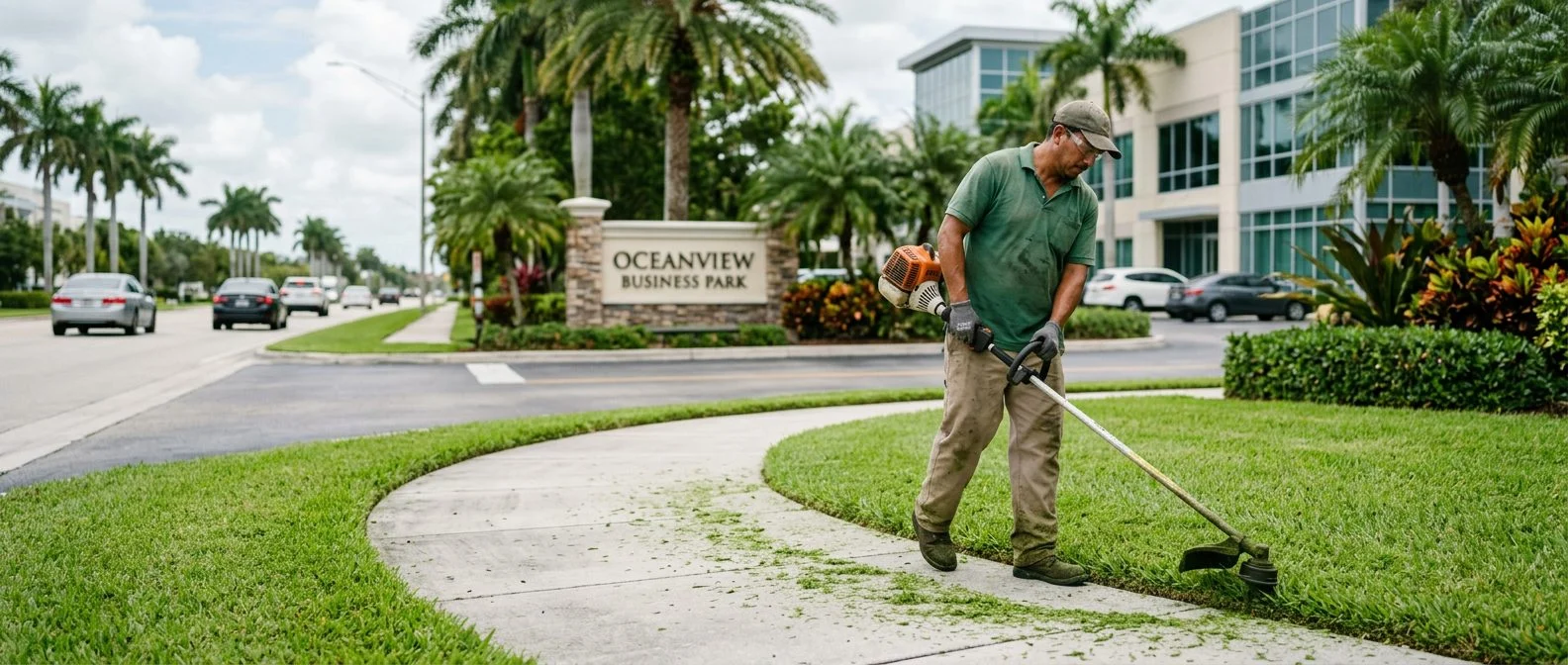
Commercial Landscape Maintenance | South Florida
Get Your Commercial Grounds Storm-Ready Before the Season Hits
A practical guide to the trimming, clearing, and securing steps that help South Florida commercial properties face high winds and heavy rain.
By Ryan Jurney · Published November 21, 2026
If you manage grounds for a condo, HOA, or commercial property, hurricane season is closer than it looks. Most of the work needs to be finished before June 1, not after a storm is named.
To prepare commercial landscaping for hurricane season in South Florida, walk the grounds, remove dead wood, trim canopies, clear drainage, secure loose items, and write one dated checklist. Each step is simple. The timing is what makes it work.
Understanding Florida’s Storm Season
Florida’s hurricane season runs from June 1 through November 30, so grounds work should be done before June 1. The Florida hurricane preparedness guidance from the Florida Department of Health in Santa Rosa County lists the season dates.
Commercial grounds carry more exposure than a single yard. A property may have large canopy trees, long fence lines, shared drainage, and many loose items spread across parking lots and common areas. One missed tree or clogged drain can affect the whole site.
Storm timing is not something a property can plan around after the fact. Grounds in good shape before the season are easier to inspect when the weather turns. Start planning in spring. That gives you time to set work dates that fit residents, tenants, and staff. Treat the list as a property plan, not a single weekend job. Each section below covers one part of that plan.
If your trees, drainage, or fences need attention before the season opens, reach out to our team and we'll plan the work around it. Talk it through with our team — the first consultation is free, confidential, and carries no obligation.
Start With a Site Walk and Hazard Inventory
Begin with a written site walk that maps every tree, palm, fence, sign, dumpster enclosure, irrigation head, and drainage point. Walk the property with a map in hand. Mark each item and note its condition. A simple sketch works, as long as it is complete and dated.
Flag dead, cracked, or leaning limbs and trunks. Note any tree growing close to a roof, parking lot, or power line. Use plain language in the notes. A note like “palm at north gate, brown fronds” is more useful later than “check palms.”
Record which areas see the most foot traffic from residents, staff, or visitors. Review those zones first. A dated map also shows the board or owner what was checked and when.
Keep the map as the working document. You’ll use it to schedule work, set budgets, and run the post-storm inspection later.
Inspect and Trim Trees and Palms
Remove dead and hazardous wood before the season starts. Deadwood is the material most likely to break and fall in high winds. Trees near buildings need the closest look, since a failed limb there can reach roofs, windows, or people.
Thin dense canopies so wind can pass through instead of catching the whole crown. Keep branches clear of roofs, gutters, walkways, and utility lines.
Palms need their own schedule. Remove dead fronds and seed pods regularly. Have any palm with visible decline inspected before the season opens.
Schedule trimming early. Cuts and new growth need time to settle before peak weather arrives. Note any tree that needs more than routine trimming, and add it to the checklist with a target date. Keep records of what was trimmed and when, so the board can see the work was done. A well-shaped tree is also easier to inspect after a storm.
Choose and Maintain Wind-Resistant Plantings
Keep plantings along building edges and walkways low and compact. Large, brittle, or shallow-rooted plants are harder to keep in place when wind pushes on them. Plant choices should match the space, the sun, and the soil on your site.
Avoid large or weak species in exposed spots near parking areas and walkways, where storm debris tends to collect. Use the map to mark where each plant sits, so crews know which areas need a closer look.
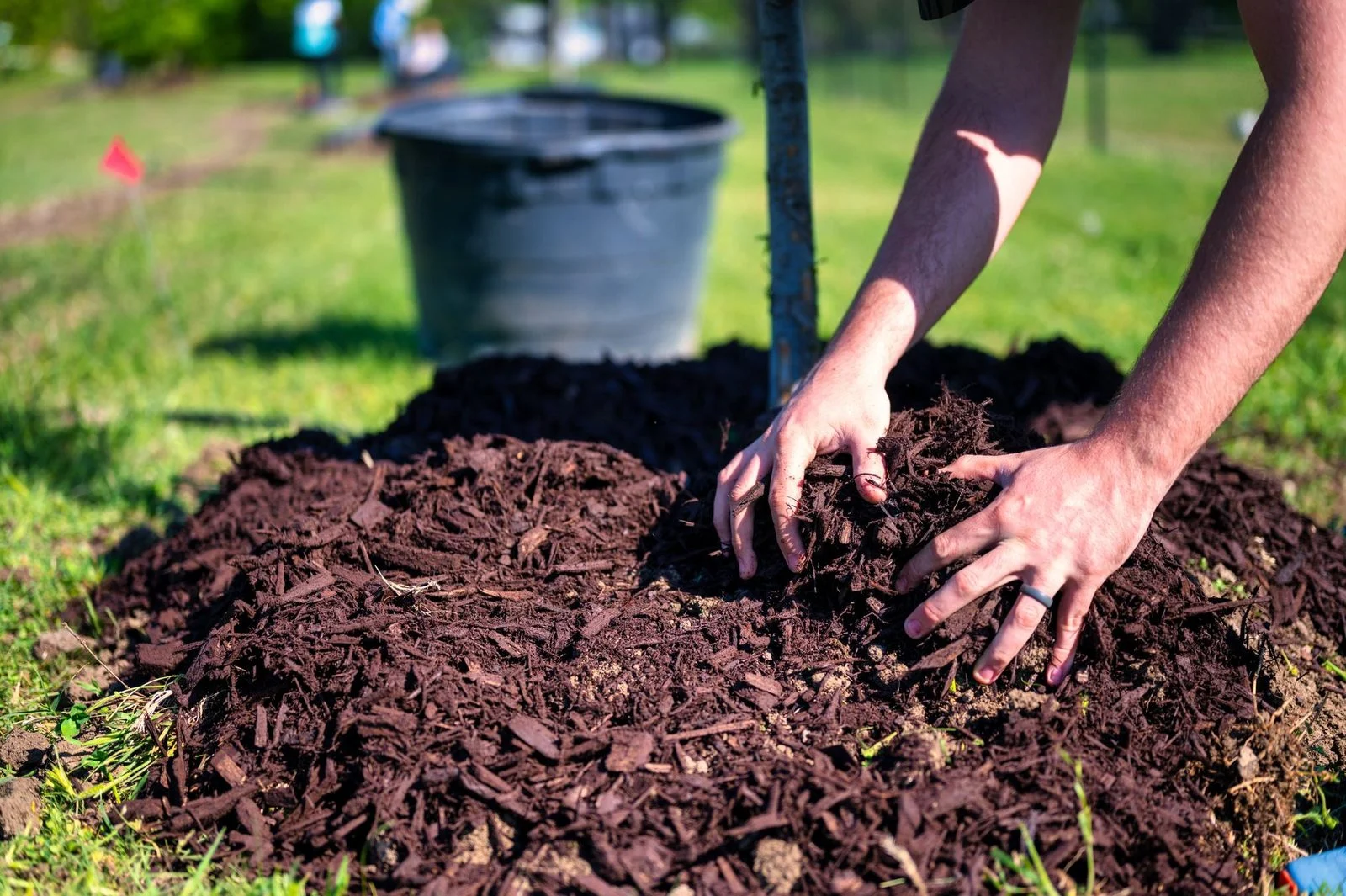
Keep mulch beds neat and contained. Loose mulch washes out in heavy rain and can clog storm drains.
The GI-BMP training program from UF IFAS covers fertilizing, irrigation, and protecting water quality for landscape professionals.
Replacing a poorly placed or weak plant before the season is usually simpler than removing it after a storm damages the area around it.
Ensure Proper Drainage and Water Flow
Clear catch basins, swales, and inlet grates so stormwater can leave the property during heavy rain. Clogged drains are simple to fix before the season and much harder to manage during a storm.
Check that irrigation heads and sprinkler lines don’t spray onto walkways or building foundations. Extra water there adds to standing water in the rainy season. Florida’s water conservation guidance from the Florida Department of Environmental Protection covers landscape irrigation rules and water-saving practices.
Look for low spots that pool after a normal rain. These areas flood faster during a tropical system, so mark them on the map. Water that stands for days after a normal rain tells you the drain or grade needs attention.
Keep sidewalk edges and planting beds graded so water drains away from buildings rather than toward them. Review these items again after the first heavy rain of the season.
Secure Fences, Signs, and Movable Items
Tighten or replace loose fence sections, and anchor signs and loose items before the season opens. Inspect fence posts, panels, and gates. Replace any section that is rotted or broken. Gates that stick or drag need repair before storm season, not during it.
Check freestanding signs, banners, and monument structures. Make sure bases are anchored and free of cracks and rust.
Bring in or anchor planters, benches, and trash receptacles in common areas. Wind can carry loose items into windows, vehicles, or walkways. Make sure gates latch and hinges are firm, since a gate that swings free is a hazard in any wind.
Secure dumpster enclosure gates and lids so they don’t swing open or shift in strong wind. Walk the property again after securing and mark each item done on the checklist.
Not sure what your next step is?
Talk it through with our team — the first consultation is free, confidential, and carries no obligation.
Pressure Washing and Debris Clearance Before and After Storms
Pressure wash walkways, entries, and parking surfaces before the season. Plan a debris route for after the storm. Schedule pressure washing for a dry day, and keep people off the surface until it dries.
Algae, mildew, and grime make wet surfaces slippery. Cleaning them before the rainy season helps keep slip hazards down.
After a storm, clear entrances, drive lanes, drainage points, and pedestrian paths first. Pressure washing can then remove mud and organic material from hard surfaces. Cleaner surfaces are easier to walk and easier to inspect.
Reading product instructions before using cleaning supplies is a sensible habit for any cleaning crew.
Keep a written post-storm list so every walk-through is consistent and documented.
Build a Pre-Storm Checklist and Post-Storm Recovery Plan
Combine every task into one dated checklist, with one named owner for each task. Include the site map, tree work, planting review, drainage check, fence and item securing, and pressure washing. Set a completion date for each.
A checklist that lives in a shared file is easier to update than a paper copy in a drawer. Review the plan once a year so it reflects changes in the property. A property that changes its layout needs an updated map.
Schedule a mid-season check after heavy rain. Rain can reveal drainage problems that were not visible in spring.
Write a post-storm recovery plan. List who inspects first, what gets cleared first, and how the property will be documented for insurance or board records.
Share the checklist with the board, maintenance staff, and any contracted landscape provider. Everyone should work from the same plan.
Plan Your Property’s Readiness With Gator Protection
Booking the work before June 1 gives you time to fix problems before the season opens. If your property has large trees, a long fence line, or drainage problems you noticed this year, add those items to the list now.
Gator Protection, Inc. provides landscape services, pressure washing, day porter service, and floor care maintenance in South Florida, including Miami-Dade, Broward, and Palm Beach counties. The points above form one readiness plan for the grounds, not a set of separate chores.
Does commercial hurricane prep have to finish before June 1?
Ideally, yes. Florida’s hurricane season begins June 1, so the core work belongs in spring.
What should a commercial property trim first?
Remove dead and hazardous limbs first. Then thin dense canopies and clear branches away from roofs and power lines.
Should pressure washing wait until after a storm?
No. Wash walkways and parking surfaces before the season, then plan a clearance route for after the storm.
If your grounds need attention before the season opens, contact Gator Protection, Inc. to talk through the work and plan it around the season. The first consultation is free, confidential, and carries no obligation to continue.
Why Plan Storm Prep With Our Team
Planning Built Around Your Property
We assess your layout, tree canopy, and drainage before recommending a prep schedule.
Local to South Florida
Our commercial landscape work covers Miami-Dade, Broward, and Palm Beach counties, including South Beach, Coral Gables, and Brickell.
Scheduled Around Your Operations
We coordinate visits so tenants, customers, and staff are disrupted as little as possible.
Core Prep Steps at a Glance
Remove Hazards First
Take out dead and damaged limbs, then thin dense canopies near roofs, walkways, and power lines.
Keep Drainage Clear
Clear catch basins, swales, and gutters so standing water can move away from buildings and parking areas.
Secure Loose Items
Anchor or store furniture, planters, signage, and debris that could become airborne in strong winds.
Plan Post-Storm Cleanup
Set up a response plan so debris is cleared quickly and the property is safe for people to return.
Secure Loose Items Early
Furniture, planters, and signage can turn into projectiles in high winds. Clear them from walkways, entrances, and building perimeters well before a storm approaches.