
Landscape Services · South Florida
Water Right After Fertilizing? Florida Lawn Timing, Explained
Timing, product type, and the weather all shape the answer. Here is how to decide for your lawn and landscape.
By Ryan Jurney · Published November 21, 2026
Should I water immediately after fertilizing? Usually, a light watering-in soon after application is the right move. The product type and the weather change the details.
This guide covers South Florida lawns and commercial grounds, including condo and office properties. It explains why watering matters, how product type changes the step, and what to check before you turn on the sprinklers.
Yes, Usually a Light Watering-In Is the Right Move
For most granular fertilizers, a light watering-in right after application is the usual practice. Water helps the granules dissolve and move toward the root zone, where grass can take them up.
Too much water works against you. Heavy watering can push product below the roots or send it off the surface as runoff.
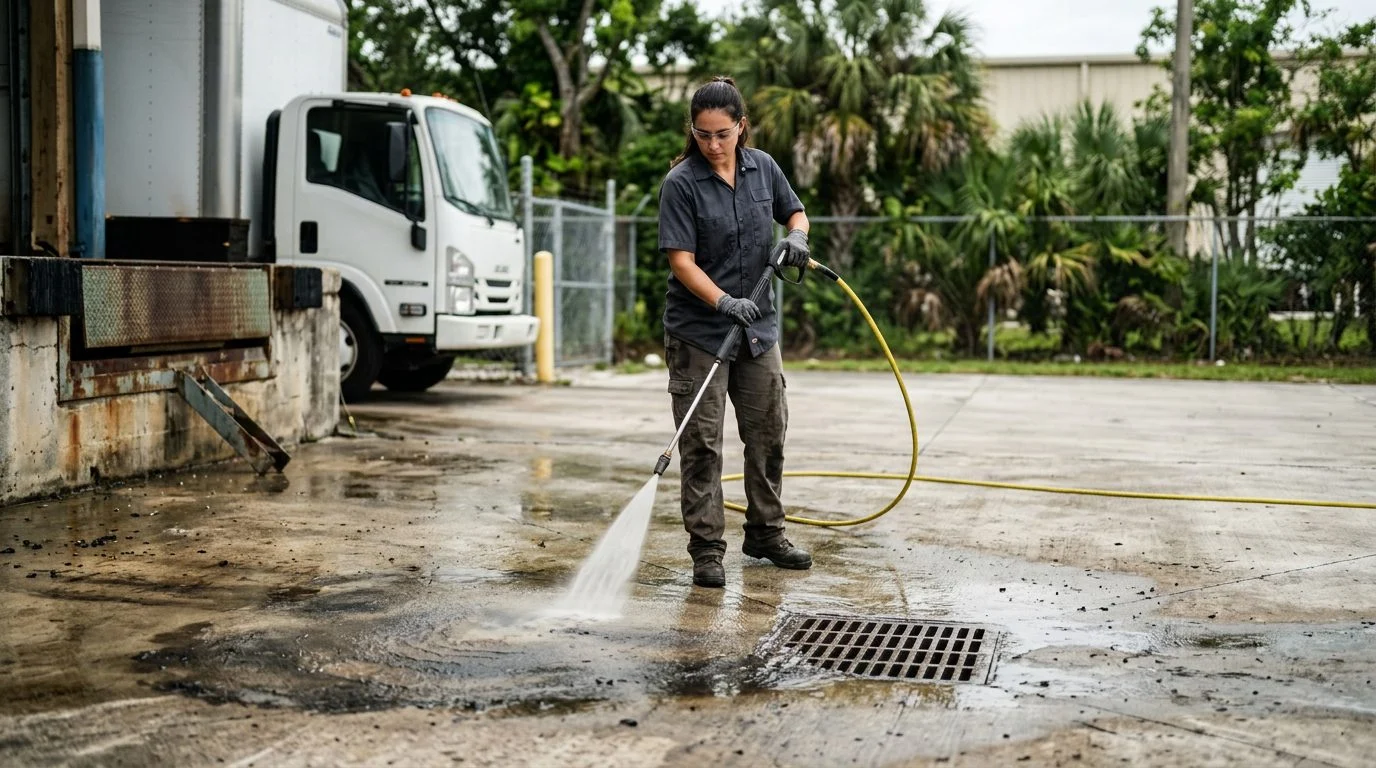
Runoff is a real concern in South Florida. Polluted runoff that enters storm drains is discharged untreated into connected water bodies, according to the South Florida Water Management District.
The product label comes first. Its directions set the rate and tell you whether water is needed right away, so read them before you spread anything. A common mistake is watering a long time to be safe, when a lighter pass does the job.
If you manage grounds you didn't choose and aren't sure how watering fits your property, our team is glad to talk it through with you. Talk it through with our team — the first consultation is free, confidential, and carries no obligation.
Granular and Liquid Products Need Different Handling
The product type decides how much water you need and how soon to apply it.
Granular products need moisture to dissolve, so a light watering-in matters more with them. Liquid products sit on the leaf surface. They can burn grass when applied in heavy concentration or during the hottest part of the day.
Applying more than the label allows does not speed results. It raises the risk of leaf burn and runoff, so the rate matters more than how often you apply.
Some liquid labels call for watering in, while others ask you to let the product dry first. Follow the label for your product.
The UF IFAS GI-BMP training covers fertilizing, irrigation, and water-quality practices for landscape professionals in Florida.
Rain, Watering Length, and Irrigation Rules Shape the Timing
Check the forecast first. Heavy rain soon after application can wash unabsorbed product off the grounds.
If heavy rain is on the way, the rain may do the watering itself. Washed-off granules can then reach drains, so timing matters.
Short, repeated watering sessions are not automatically a problem. What matters is the total water that reaches the root zone without running off the surface.
Irrigation rules matter too. Active Florida irrigation water-shortage restrictions have phases and geographic scope, according to the South Florida Water Management District landscape irrigation page.
New Grass Seed Changes the Timing
Starter fertilizer for new seed is usually applied at seeding and watered in. That way, seedlings can reach it as their roots form.
New seed needs the seedbed kept consistently moist during germination. That schedule differs from established turf, which can handle longer gaps between watering.
The most common mistake is using a regular lawn product on fresh seed at a heavy rate. Heavy application can damage emerging seedlings, so stay within the label’s rate.
Plan around the seed’s needs, not a fixed calendar. Starter products are labeled for seeding, so check the label for that product’s rate and timing before you apply.
Commercial Grounds and Your Next Step
On commercial grounds, watering after fertilizer is also a question of runoff and water quality.
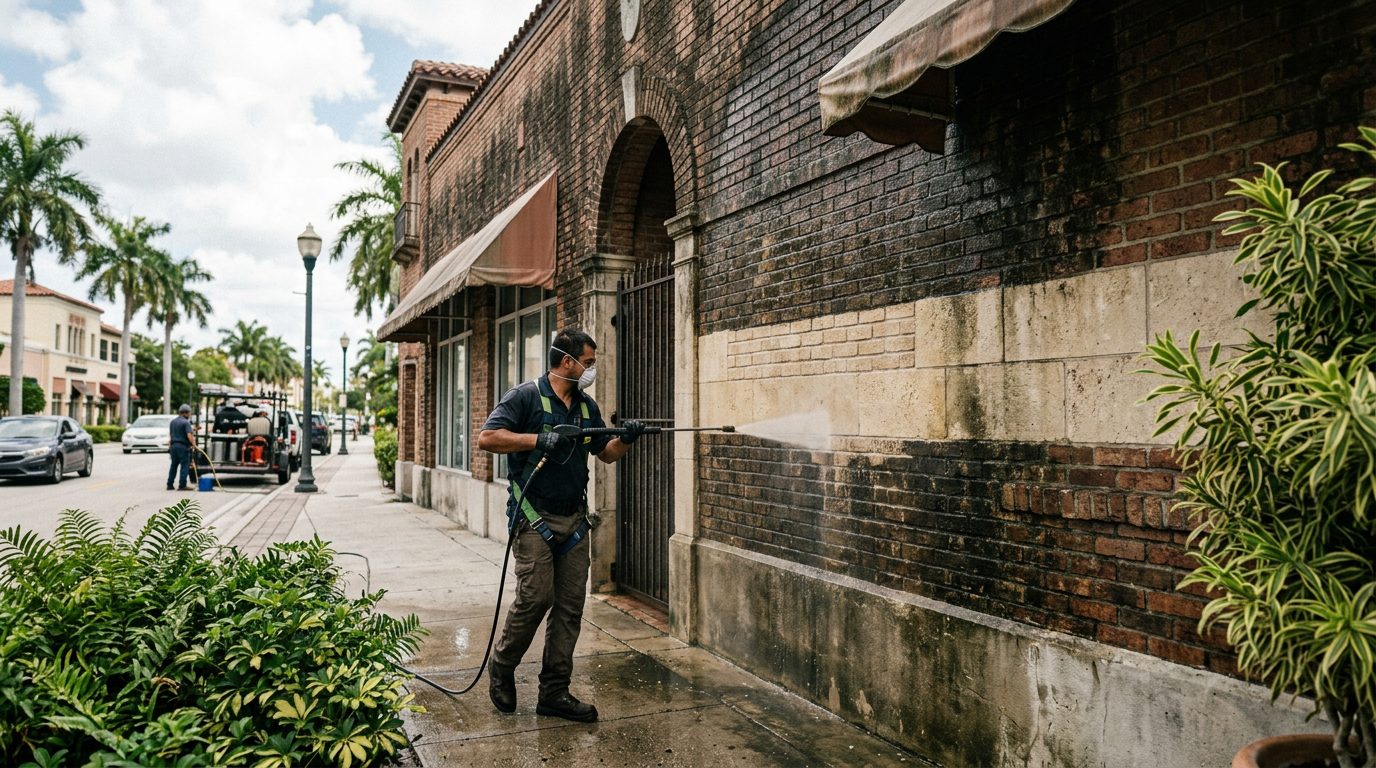
Hard surfaces carry the problem downhill. Runoff can carry pollutants from paved surfaces and properties, according to the South Florida Water Management District page on runoff, and pressure washing of walkways and parking lots can add to it.
Our landscape services page covers the wider picture for commercial grounds, including fertilization and irrigation planning.
Can I water right away if rain is coming?
If heavy rain is forecast, the rain may do the watering for you. Check the product label before deciding either way.
Is watering in needed for every fertilizer?
No. The label decides, and granular products usually need moisture to dissolve.
If you manage grounds you didn’t choose, our team is glad to talk through how watering fits your property. Reach out through our contact page.
La consulta inicial es gratuita, confidencial y sin compromiso de continuar.
Four checks before you water
Read the product label
Fertilizer labels give watering instructions for that specific product. Start there before you decide.
Look at the forecast
Rain in the forecast may already provide the moisture your lawn needs, so adjust your plan to match.
Consider the fertilizer type
Granular and liquid products behave differently, and their moisture needs can vary.
Water evenly, not heavily
Even coverage helps the nutrients reach the root zone without washing product off the lawn.
Why property managers choose our team
Landscape maintenance
Our landscape services cover ongoing care for commercial properties across South Florida.
Scheduled service
Regular visits keep grounds, lawns, and common areas on a consistent plan.
Full-service coverage
Alongside landscape work, we offer day porter service, floor care maintenance, and pressure washing.
Clear communication
Our team keeps you informed about what is being done and when.
Check the label first
Fertilizer labels set the watering instructions for that product. When you are unsure, follow the label and ask our team before you apply.
Your first consultation is free, confidential, and comes with no obligation to continue.
More of our services
- How to Write a Multi-Building Landscape Scope of Work