
Day Porter Service | South Florida Condos
Day Porter Maintenance Reports for South Florida Condos
Clear, consistent daily records that help condo boards and building managers see what was done, what needs attention, and what is still open. Serving Miami-Dade, Broward, and Palm Beach counties.
By Ryan Jurney · Published October 28, 2026
A day porter maintenance report for a condo is a dated, written log of what a porter sees and does in shared areas during the day. A useful report records each condition, where it is, who was told, and whether it’s still open. Here’s what to include, what to flag first, and how to set up a routine your team can keep up with. For background on the service itself, see our day porter service page.
What a Day Porter Maintenance Report Covers
A day porter maintenance report records conditions and work completed during a porter’s shift in common areas. Day porter service covers lobbies, entrances, corridors, restrooms, and other shared spaces. Porters work during business or occupied hours, when residents, staff, and visitors are using the building. That timing matters. A problem found mid-day can be fixed or flagged before the evening crowd arrives.
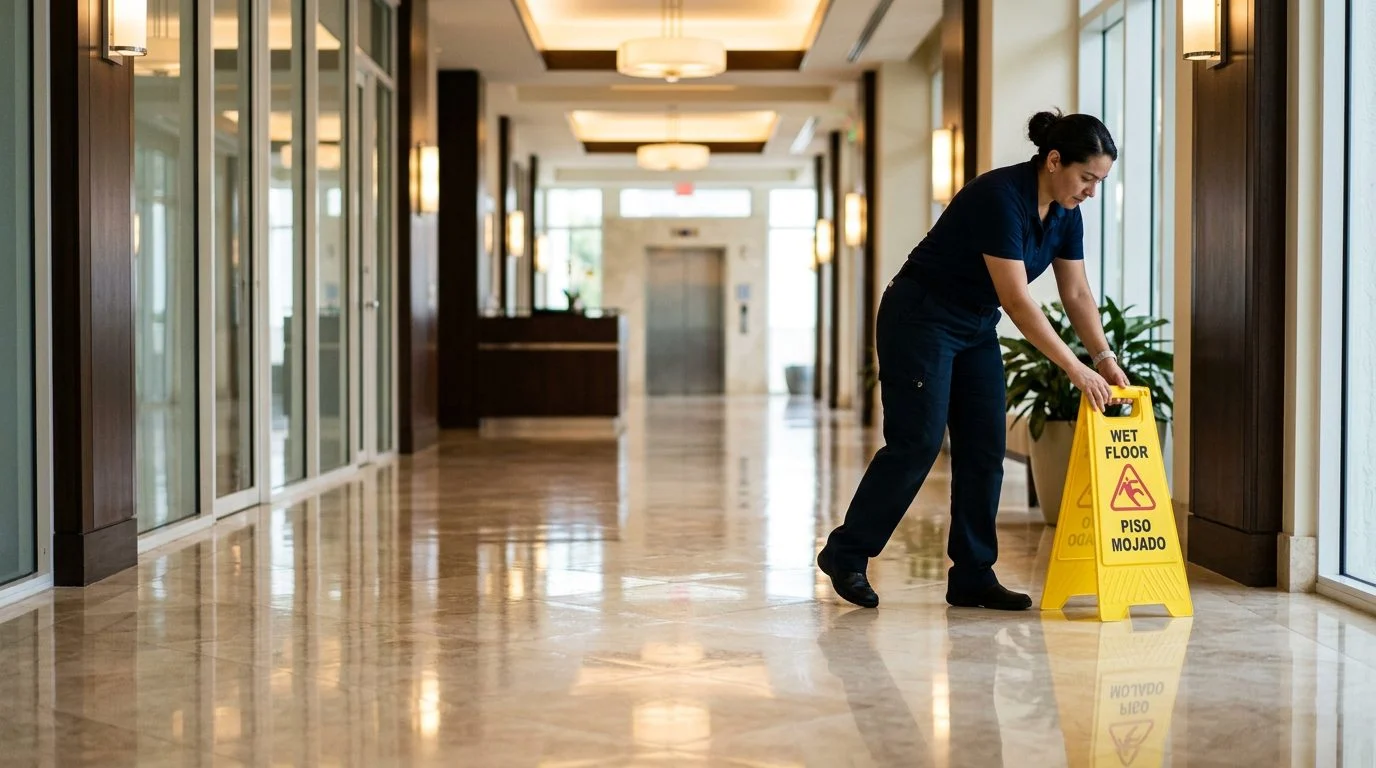
A general cleaning checklist shows tasks that got done. A maintenance report shows issues and their status. Say a spill is found at 10 a.m. A checklist might only say “lobby mopped.” A report shows the spill, the exact spot, the caution sign placed, and whether the floor was dry by noon.
The most common mistake is logging only what got cleaned. The report looks busy, but open problems stay hidden.

Not sure what your next step is?
Talk it through with our team — the first consultation is free, confidential, and carries no obligation.
Why Building Managers and Boards Use Daily Logs
A daily log gives a manager one place to see what was found, when, and where. Without a log, information lives in memory and scattered texts. Someone remembers a wet floor by the mailroom, but not the date or whether it was fixed. A written entry removes the guesswork.
Consistent entries also reveal patterns. The same elevator door, lobby floor section, or drain area may show up week after week. A repeated pattern points to a cause that one cleaning won’t fix. That gives the board a clear reason to schedule a repair instead of another round of wiping.
Logs help at board meetings, too. A factual timeline answers owner questions better than general impressions. It shows what was reported, when it was reported, and what happened next.
What to Include in Each Log Entry
Each entry should name the date, time, exact location, condition, action taken, who was notified, and current status.
- Date and time: the shift and clock time the item was found.
- Location: specific enough to find again, such as “Level 3, east corridor, near door 4.”
- Condition: plain words, such as “cracked tile,” “loose handrail,” or “standing water.”
- Action taken: cleaned, caution sign placed, reported, or left for a repair team.
- Photos: helpful for tile damage, staining, or landscape problems. Reference the file in the entry.
- Notified: the name and time of the person told, so follow-up can be tracked.
- Status: open, in progress, or resolved, with the date of each change.
Write entries the same way every shift. Short, factual sentences make the log easy to scan.
Common-Area Issues Worth Logging Early
The most useful entries cover floors, entries, exterior surfaces, landscape beds, and restrooms. Early notes make small repairs easier to schedule.
Floors. Log slippery spots after cleaning, buffing marks, worn high-traffic paths, and tile or grout damage. These notes help plan floor care maintenance. Regular floor care is part of keeping busy commercial spaces well maintained for the people who use them.
Entrances. Note smudged glass, worn mats, and debris near doors. These details shape first impressions and safety at the front of the building.
Exterior surfaces. Note staining, grime, or buildup on walkways, walls, and entry areas. These entries show when pressure washing may be needed.
Landscape. Overgrown plants near walkways, dead areas in beds, and irrigation leaks are all worth a line. Note the zone and the day you saw a leak, so the landscape team can check it against those rules.
Restrooms and chemicals. Log supply shortages and leaks. When a cleaner or disinfectant is used, record the product name. The EPA selected disinfectant list shows each listed product’s label claims.
Have questions about what happened?
Ask our team directly. The first conversation is free, confidential, and there is no obligation to continue.
Deciding What Gets Flagged Urgently
Flag active spills, water on floors, dark stairwells, and blocked exits for immediate notice. Routine items can wait for the weekly review. Time-sensitive items cannot. Mark them as urgent in the entry so they stand out.
For each urgent item, record the immediate action first. That might mean placing a caution sign or blocking off the area. Then record who was told and when. Escalation timing becomes part of the record.
A common mistake is writing up a wet floor at the end of the shift. By then, nobody knows how long it sat there or who was told. Write the entry when the problem is found, even if the fix comes later.
Setting a Format and Review Routine
Use one format for every shift, review the log weekly, and keep a short open-items summary for the building manager. Consistency matters more than length.
- One format: the same fields on every shift, so entries compare well from day to day and across staff.
- Weekly review: a set time to close finished items and spot repeat problems.
- Open-items summary: each open item, its age, and the person responsible.
- Shared access: store records where the building’s management team can reach them when needed.
A short open-items list is easier to act on than a long log. Managers can see what’s old, what’s stuck, and who owns it.
What should a day porter log include?
Include the date, time, exact location, condition, action taken, who was notified, and the current status. Keep each entry short and factual.
How often should a building manager review the log?
A weekly review works well for closing open items and spotting repeats. Buildings with active problems may need a quicker look.
Do day porters handle exterior cleaning?
Day porters log exterior conditions during their rounds. Pressure washing of walkways and entries is a separate service that Gator Protection offers.
What is the difference between a day porter and a janitor?
A day porter works during occupied hours on ongoing upkeep. Day porter service works on site during business hours, while floor care maintenance is typically scheduled separately.
Talk With Our Team About Your Building’s Reporting
If your building’s log keeps showing the same problems, a short conversation can help you decide on the next step. Boards and building managers often handle this on top of many other duties. A recurring complaint or a new service contract can make the report feel urgent.
Our team offers a free, confidential first consultation with no obligation to continue. Reach out through our contact form or call our office. We can talk through your building’s reporting and common-area needs.
Want to know where you stand?
Tell us what happened and our team will walk you through the options available to you, at no cost.
Why a Clear Daily Report Matters
Organized records
Every task, condition, and follow-up is written down in a format your board and management team can read quickly.
Timely visibility
Daily entries show when issues were found and when they were addressed, so nothing sits unnoticed in the lobby, garage, or common areas.
Consistent standards
A standard reporting routine keeps day porter work measurable from one shift to the next.
Shared communication
Residents, staff, and managers can see the same facts, which reduces repeated questions and confusion.
What Your Day Porter Log Should Include
Date and time
Record when each observation or task happened so entries can be sorted and reviewed later.
Exact location
Name the floor, elevator bank, lobby zone, garage level, or grounds area where the item was found.
Condition and action taken
Describe what was seen and what was done about it, in plain and factual language.
Who was notified and status
List the person or department informed, and note whether the item is open, in progress, or closed.
Not Sure Where to Start?
Our team offers a free first consultation. It is confidential and comes with no obligation to continue. We can review your building's current reporting routine and discuss what would work best for your property.
Get Day Porter Reporting Your Building Can Count On
Related practice areas
- Day Porter Service in Miami-Dade: What It Covers and How to Switch Vendors
- Day Porter Service in South Florida
- Day Porter Service in Miami-Dade County