
Condo Boards | South Florida
Pressure Washing or Power Washing? What Condo Boards Ask For
A practical guide to the terms, surfaces, and questions that come up when a condominium association plans exterior cleaning in Miami-Dade, Broward, and Palm Beach counties.
Starting your conversation with us
Free
First consultation
Confidential
Every initial discussion
No obligation
To continue after the consultation
By Ryan Jurney · Published November 17, 2026
A condo board may receive a pressure washing proposal it never asked for. Or it may hear the words “power washing” in a meeting and wonder if they mean something different. In most cases, the two terms describe the same service. What matters is the method, the surfaces it covers, and what is written down.
This guide covers the terms, the methods, what to ask for in writing, and the South Florida conditions that change the scope.
What the Terms Mean and Why Contractors Use Them Interchangeably
Contractors often use pressure washing and power washing for the same service, because the terms are not standardized. The most common practical difference is water temperature. Power washing generally uses heated water, while pressure washing generally uses cold water.
That difference is real, but it is only one detail. Two proposals can use the same label and describe very different equipment, water temperature, and pressure ranges. A board that relies on the word alone has no way to compare them. The words that matter are the method and the equipment, not the marketing term.
Contact our team to confirm, in writing, the water temperature and equipment planned for your pressure washing project. Then ask our team to walk you through what those choices mean for your building’s surfaces. A clear answer shows the contractor has thought through the job. A vague one tells you to ask again.
Exterior cleaning is one part of ongoing building care. For how it fits alongside daily upkeep, read our day porter service guide.
If your board is weighing a washing proposal you did not request, reach out to talk through your building's surfaces and written scope. Talk it through with our team — the first consultation is free, confidential, and carries no obligation.
Pressure Washing vs Soft Washing: When Each Method Fits
High-pressure cleaning fits hard, durable surfaces. Soft washing fits painted, stuccoed, or delicate ones.
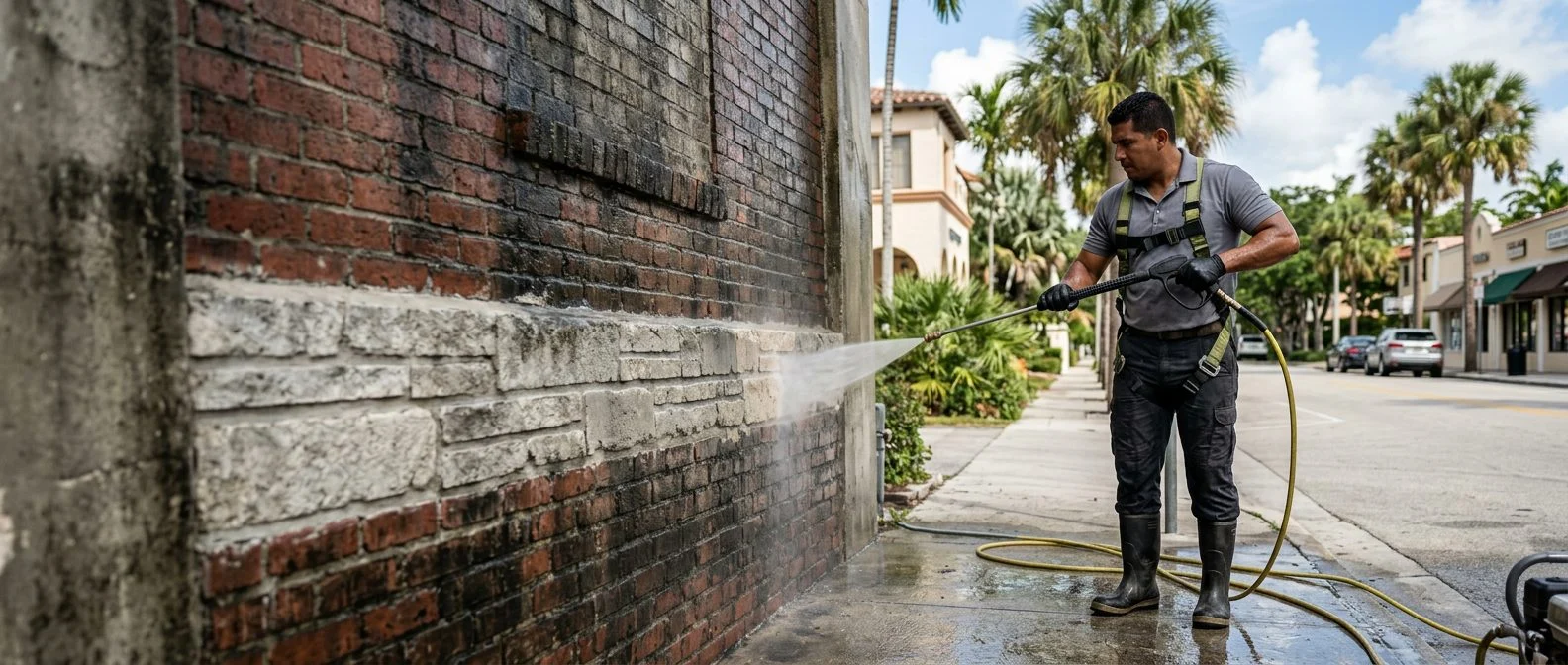
High-pressure cleaning suits concrete, pavers, and pool decks. Dirt, grime, and staining sit on the surface of these materials, and they can handle the force. Soft washing uses low pressure together with a cleaning solution. Contractors generally choose it for painted walls, stucco, and siding, and for mildew and algae removal. The goal is to clean without forcing water into the material.
Most condo buildings need both methods. Concrete walkways may suit high pressure, while painted stucco nearby needs soft washing. Mildew on a painted wall and grime on a parking garage floor call for different approaches. A single method rarely covers both.
So ask for a method listed for each surface, not one method for the whole building. Whether a given surface should be soft washed is a question the contractor should answer for your building, in writing.
More PSI Does Not Automatically Mean a Better Clean
A higher PSI number does not make a washing job more effective or safer by itself.
PSI measures water pressure. Pressure is only one variable. Nozzle type, distance from the surface, water temperature, detergent, and the condition of the material all affect the result.
The risk runs in both directions. Too much pressure on painted stucco, siding, or aged caulk can strip finishes, etch the surface, or force water behind the material. Too little pressure can leave grime in place.
When a proposal lists a PSI number, ask how the contractor adjusts settings from one surface to the next. Ask how it protects windows, landscaping, and adjacent areas from overspray.
The question of whether a given PSI is enough for concrete has no single answer. The answer turns on the concrete’s condition, the nozzle, and the distance used. A board should be wary of any proposal that names a number and nothing else.
What a Condo Board Should Ask For in a Written Proposal
A written proposal should name each surface, the method for it, and the cleaning products that will be used. Ask for these items in the proposal itself:
- Every surface named: exterior walls, walkways, pool deck, parking garage floors, dumpster pad, entry canopies, and balconies.
- A method for each surface: pressure washing, soft washing, or both, plus the detergent or cleaning solution.
- Safety Data Sheets: one for each product.
- Wet floor safety: how garage floors will be left safe to walk on.
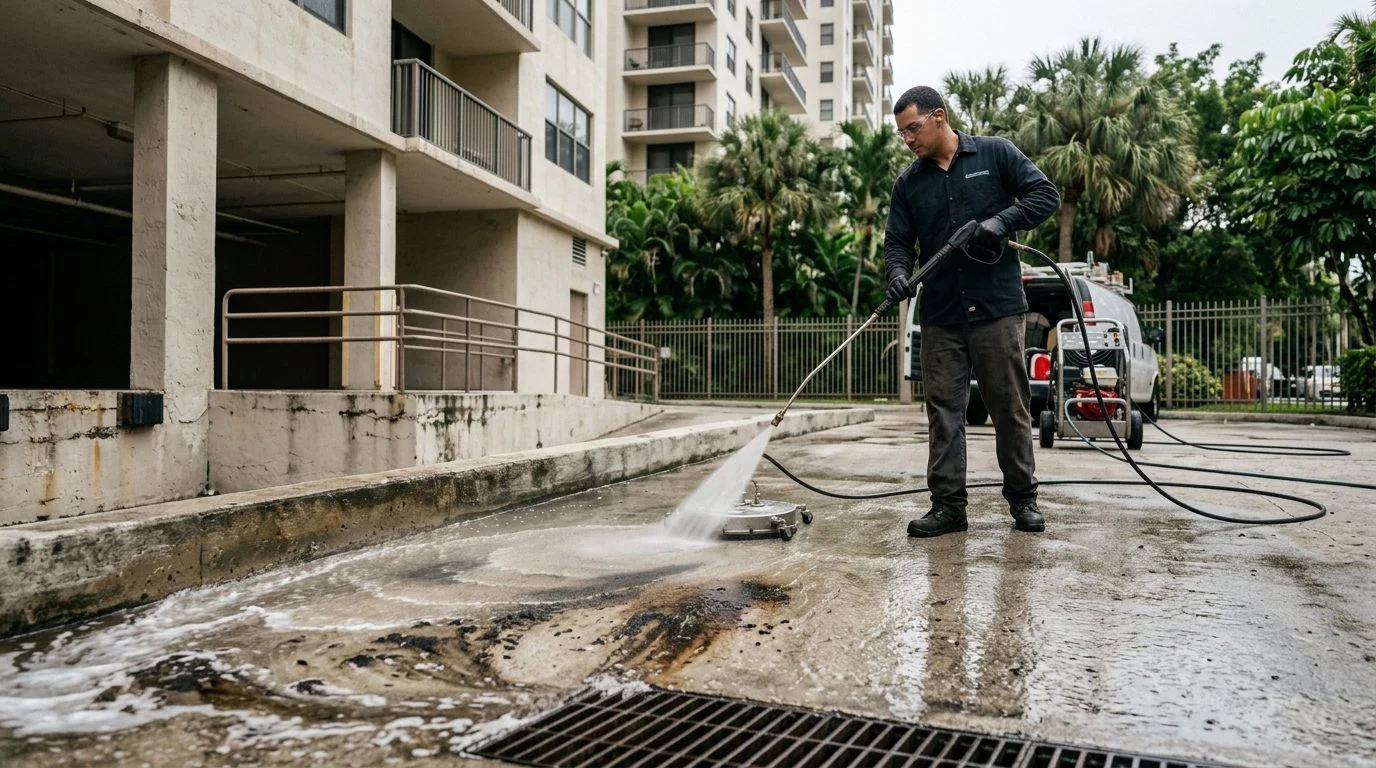
- Runoff controls: how runoff is managed near landscaping, storm drains, and pool areas, and how plants and vehicles are protected.
- Schedule and access: the timing, how residents will be notified, and how access to balconies and units will be arranged.
- Insurance and damage: a certificate of insurance, and a written process for reporting and fixing damage to surfaces, plantings, or vehicles.
- Cleanup: a written cleanup step and a final walkthrough, so the board can confirm what was done.
What Drives the Cost of a Pressure Washing Quote
A quote is built from the scope of work, not from a single rate.
Common drivers include total area, surface types, building height and access, the number of visits, and any add-on work. A proposal that lists these items is easier to check than one that shows only a total.
Some changes move the price. Soft washing, work that needs lifts or extended access, and jobs covering several surfaces can each change the scope. Ask the contractor to show which of these items it has included.
Ask our team for a written scope that lists the surfaces and method for your project. Our team can confirm in writing whether your pool deck or garage floors are included in the scope. Ask whether the total includes cleanup and disposal of wash water. Each proposal should make its scope easy to check line by line.
Is Pressure Washing Good for a Condo Building?
Pressure washing can be good for a condo building when the method matches each surface.
It removes mildew, algae, dirt, and staining that build up on exterior walls, walkways, and pool decks. In humid climates like South Florida, those growths return without regular attention. Regular cleaning makes the building easier to maintain.
The risk is real too. Wrong pressure, the wrong nozzle distance, or the wrong method can damage paint, stucco, siding, and sealants. It can also drive water into building materials, where it can cause problems later.
The benefit turns on how the work is scoped, performed, and supervised. That is why the written proposal matters. It is where the board can confirm the method, the surfaces, and the cleanup before work begins. Boards often find the difference in details, such as whether the contractor wrote down which surfaces to leave alone.
Not sure what your next step is?
Talk it through with our team — the first consultation is free, confidential, and carries no obligation.
South Florida Conditions That Change the Scope
In South Florida, humidity and rain make mildew, algae, and staining a regular concern on exterior surfaces.
Runoff is the condition many boards overlook. The South Florida Water Management District says polluted runoff entering storm drains is discharged untreated into connected water bodies. Runoff can also carry pollutants from paved surfaces. State stormwater rules are run through the NPDES Stormwater Program at the Florida Department of Environmental Protection.
That is why storm drains and pool areas belong in the written scope. Ask how wash water will be contained or directed on paved areas near them.
Older buildings add another layer. Painted stucco and aging sealants often call for soft washing on some surfaces. Concrete elsewhere on the property may take higher pressure. The mix should be written down for each surface.
Gator Protection, Inc. provides these services across South Florida, including Miami-Dade, Broward, and Palm Beach counties.
If You Are Reviewing a Proposal for Your Association Now
If a washing proposal has reached your board, start by listing each surface and asking for the method for it.
You may have been handed a proposal, received a property inspection note, or heard a resident complaint. Now you need to understand the method before the board votes.
Under Fla. Stat. § 718.112, the operation of the association is governed by its articles of incorporation, if it is incorporated, and by its bylaws.
Is power washing the same as pressure washing?
Often, yes. The usual practical difference is that power washing uses heated water, while pressure washing uses cold water.
Is soft washing better than pressure washing for a condo?
Neither is better for every surface. Soft washing generally suits painted and stuccoed surfaces, while high pressure generally suits hard surfaces like concrete.
Can pressure washing affect storm drains?
It can, if wash water runs off paved areas. The South Florida Water Management District says runoff entering storm drains is discharged untreated into connected water bodies.
The first consultation is free, confidential, and carries no obligation to continue.
If your board is weighing a proposal you did not request, contact Gator Protection to talk through your building’s surfaces and the written scope before the vote.
What boards usually want to know
The right method for each surface
Painted walls, stucco, concrete, pavers, and walkways do not all respond the same way to heat or pressure. Ask how each area will be treated.
A schedule that fits the building
Timing matters for residents, parking, and pool areas. Plan the work around the community's daily routines.
Coordination with day-to-day operations
Our team can align exterior work with the other services your building uses, including day porter and landscape maintenance.
Tip for your next proposal request
Services we coordinate for condominiums
Day porter service
Daily upkeep of common areas, lobbies, and entrances to keep the building presentable for residents and guests.
Floor care maintenance
Scheduled care for hard floors and common-area surfaces, planned to keep traffic zones looking their best.
Landscape services
Routine grounds maintenance for entryways, common green spaces, and the exterior edges of your property.
Pressure washing services
Exterior cleaning for walkways, parking areas, walls, and other surfaces, matched to the method each one needs.