
Day Porter Service | South Florida
Had a Problem With Your Condo's Day Porter? Start Here.
A clear, calm plan for handling a resident complaint about day porter work, from the first call to the written follow-up. Start with a free first consultation: confidential, with no obligation to continue.
By Ryan Jurney · Published November 3, 2026
Why a Resident Complaint Needs a Structured First Response
The first step with any resident complaint about day porter condo service is to slow down and write it down. Sort the issue, record it, and check the facts before you decide what to do.
Day porters work in the most visible parts of a building. That includes the lobby, elevators, entrances, amenity rooms, and trash areas. Problems there get noticed fast, and several residents often raise the same issue in one week.
Complaints can arrive by email, at the front desk, or in a hallway conversation. Your first reply sets the tone for the whole process. A calm, fair response protects the building, the residents, and the people doing the work.
This page walks through five steps: classify, document, verify, communicate, and close the loop. For an overview of what a day porter service covers, read the day porter service guide for Miami-Dade.

If you want help thinking through a day porter, floor care, landscape, or pressure washing concern in your building, reach out. Talk it through with our team — the first consultation is free, confidential, and carries no obligation.
Step 1: Classify the Complaint Before You Respond
Sort each complaint into one of four types before you reply. The types are service quality, timing, conduct, and safety. Each type has a different owner and a different check.
Service-quality issues include missed cleaning, full bins, scuffed floors, or dirty entry glass. Timing issues mean the porter was absent or arrived late. Conduct issues involve how a worker spoke to or treated a resident.
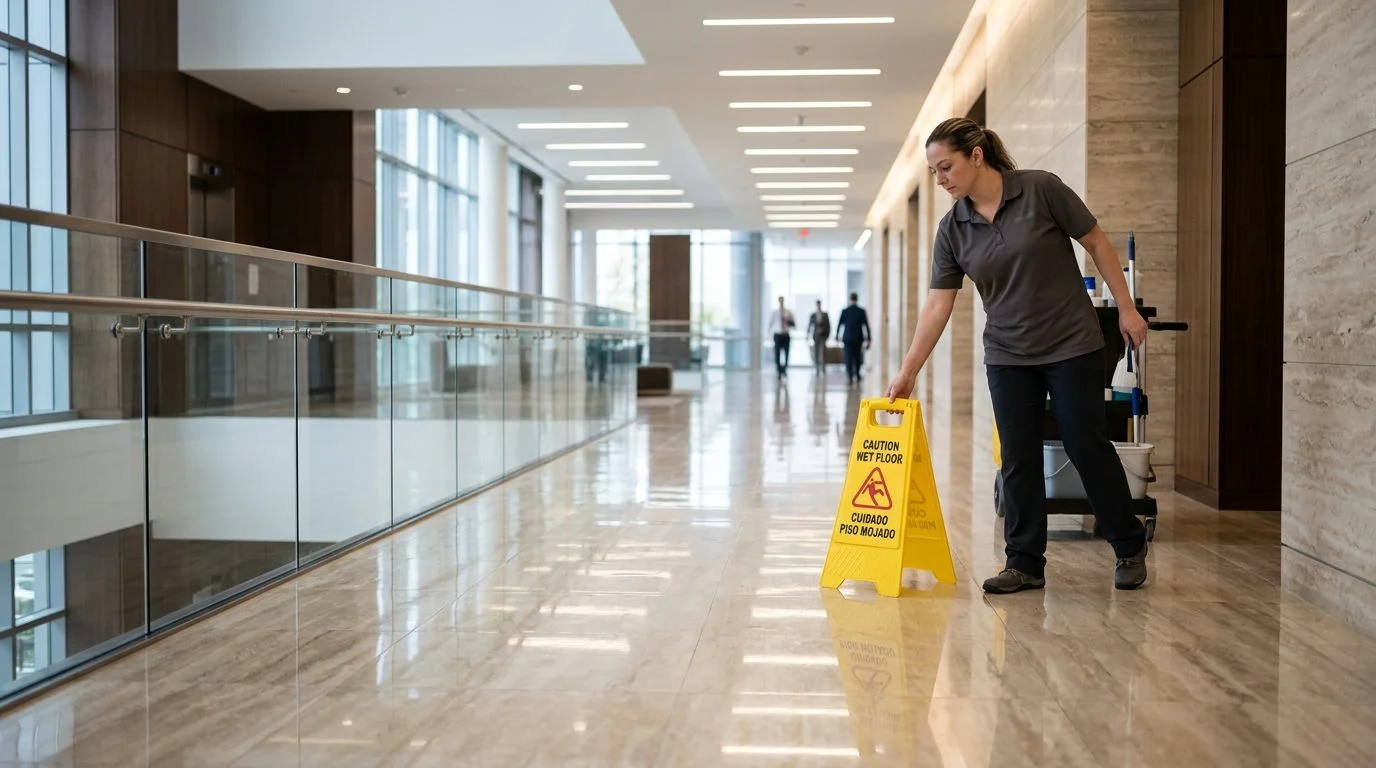
Safety issues come first. Wet floors with no sign, spills left in walkways, or equipment left out need attention the same day. Keeping walking surfaces clean and dry is a practical goal for busy commercial facilities.
One message can hold more than one type. List each type on its own line. Ask the resident for a date, time, and area if they did not give one.
Step 2: Document the Complaint in Writing
Write the complaint down as soon as it comes in. Record the date, the time, the channel used, and the unit or contact details your records require.
Keep the resident’s words as close to exact as you can. Mark what you saw yourself. Mark what someone else reported to you. Keep one file for the complaint, and add a dated note for each follow-up.
Avoid writing conclusions like “the porter is lazy.” Write facts instead, such as “lobby floor near elevator 2 had dried spill at 9:40 a.m.” Don’t rely on personal phone notes alone. Use the association’s standard recordkeeping method.
Step 3: Verify the Facts Against the Work Record and Schedule
Check the complaint against the record before you judge it. Pull the day porter’s shift schedule and checklists for the date and time in question. Confirm which areas were on the list that day.
Walk the area yourself, at the time the resident describes if possible. Take dated photos. Note what you see, not what you expect to see.
Look at other work that touches the same space. Floor care such as stripping, burnishing, or scrubbing can change how a lobby looks for a day or two. Pressure washing of entries and walkways, and landscape work near doors, can leave water, debris, or dust. Any of these can explain a complaint that is not about the porter’s daily tasks.
Pet waste complaints in dog runs and green areas are common. Compare the reported condition with scheduled cleanup times. The pet waste routines guide explains how those routines are usually set up.
For busy weeks such as Art Basel in South Beach, check whether the schedule changed in advance. The event planning notes cover common adjustments.
Not sure what your next step is?
Talk it through with our team — the first consultation is free, confidential, and carries no obligation.
Step 4: Communicate With the Day Porter and the Service Provider in Writing
Put every request in writing. Share the complaint with the day porter in a neutral, factual way. Focus on the task or area, not on the resident’s view of the person.
Ask the service provider for its account of the day. Ask about staffing changes, equipment problems, or supply shortages. If the complaint involves a cleaning product, ask for the product’s Safety Data Sheet.
Set a response window for the provider’s written reply. Agree on one person who sends updates from the manager’s side. One voice avoids mixed messages.
If a fix is needed, describe it in writing. Examples include a revised checklist, a changed cleaning frequency, new signage, or a moved floor care or pressure washing task. Name the owner and the date for each change.
Keep conduct matters separate from service matters. Handle conduct concerns under the association’s and the provider’s written policies.
Step 5: Close the Loop With the Resident
Reply to the resident within a reasonable time. Acknowledge the specific concern. Confirm that you received it and reviewed it.
Share only what the resident needs. Say that the area was checked and what action is being taken. Do not discuss another person’s performance or private details.
Give a realistic time for the next update, and keep it. Log the final reply in the complaint file. Walk the area a few days later to confirm the fix holds.
What should I do after a resident complaint about day porter condo work?
Classify the complaint, write it down, and check the schedule before you reply. Then respond to the resident and the provider in writing.
Should safety complaints wait?
No. Wet floors and unmarked spills should be handled the same day.

Have questions about what happened?
Ask our team directly. The first conversation is free, confidential, and there is no obligation to continue.
Talk Through Your Building’s Situation With Gator Protection
Many managers receive this kind of complaint in the middle of a busy week. You may be answering to a board or an owner before you have all the facts.
If you want help thinking through a day porter, floor care, landscape, or pressure washing concern in your building, reach out. Our team offers a free first consultation, which is confidential and carries no obligation to continue. Use the contact form, call the office, or request a quote.
Four First Steps for Handling a Complaint
1. Classify the Complaint
Decide whether it is a safety issue, a cleanliness issue, or a missed task. Safety issues come first.
2. Write It Down
Record the date, time, location, what was seen, and who was involved. Attach photos if you have them.
3. Check the Schedule
Compare the complaint with the day porter's service schedule and the work checklist for that building.
4. Respond in Writing
Reply to the resident and the service provider in writing, so everyone has the same facts and next steps.
Do Not Wait on Safety Complaints
Wet floors and unmarked spills create slip hazards for residents, guests, and staff. Treat them as urgent and address them the same day.
How We Help Condo Communities
We Listen First
We take the time to understand the concern, the building's routine, and what residents have already noticed.
Clear Written Records
Our team keeps organized notes and written follow-ups so every party knows what was reported and what happens next.
Schedule-Based Review
We review day porter tasks against the agreed service schedule to show what was planned, completed, and still open.
Focus on Safety
Our approach puts safety-related concerns at the front of the line, from spills to entryways and common areas.