
Day Porter Service | South Florida
What Do Porters Do in an Apartment Building?
A practical look at the daily work that keeps shared spaces clean, safe, and welcoming for residents across Miami-Dade, Broward, and Palm Beach counties.
By Ryan Jurney · Published October 27, 2026
What do porters do in an apartment building? They keep the shared parts of the property clean, orderly, and ready for residents and guests during the day. That covers lobbies, hallways, entrances, trash areas, and outdoor walkways. Porters don’t work inside individual apartments. Their focus is the spaces everyone shares. For an overview of the service, read our day porter service guide.
What a porter does in an apartment building
A building porter is the on-site person who handles routine upkeep of shared areas during the day. The role centers on what residents and visitors see and use every day. A clean lobby and an orderly entrance shape how a building feels the moment someone walks in. Porters keep those spaces ready, watch for problems, and pass along repairs that fall outside their job.
Daily porter service is one practical option for keeping shared areas clean and well maintained.
If you're weighing porter service for a building, our team can talk through the areas and schedule that fit it. Talk it through with our team — the first consultation is free, confidential, and carries no obligation.
What does a porter clean in lobbies and hallways?
Lobby and hallway work is mostly sweeping, mopping, and wiping the surfaces people touch most. A typical shift in these areas includes:
- Sweeping and mopping lobby floors, entry mats, and stairwell landings.
- Cleaning entry doors, glass, and handrails.
- Wiping elevator buttons and door handles on a set schedule.
- Clearing debris from hallways, mailroom areas, and elevator interiors.
- Noting leaks, burned-out lights, or damaged surfaces for building management.
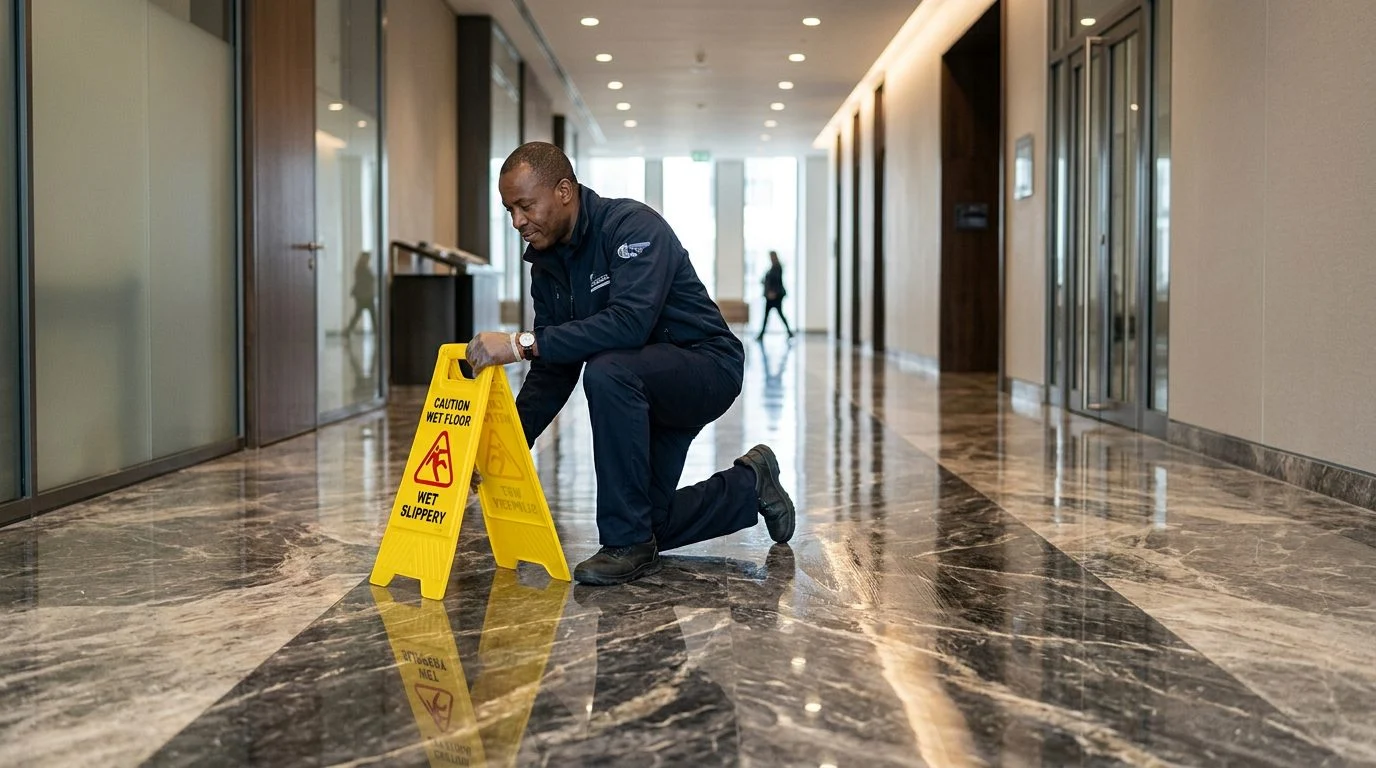
Entrances take the most traffic. In South Florida’s rainy season, water and sand tracked in from outside build up quickly near doors. Porters spot-clean those areas more often than the rest of the lobby.
High-touch surfaces need the right product. The U.S. EPA publishes lists of registered disinfectants that show each product’s label claims. Workers should use each product the way its label directs.
How do porters handle trash and refuse areas?
Porters collect trash from common areas, move it to the refuse room or dumpster area, and keep those spaces clean. Their trash-area work usually includes:
- Emptying lobby and common-area bins into the building’s refuse area.
- Keeping trash rooms swept and rinsed, with spills cleaned up.
- Keeping recycling bins sorted by building rules.
- Checking chutes where the building has them.
- Following the building’s own disposal rules.
A common problem is waiting until bins overflow. Once trash spills near a busy door, the smell can reach the lobby fast. Regular runs keep that from happening. Trash removal is a routine part of keeping shared spaces clean and orderly.
How is floor care handled day to day?
Floor care on a porter’s shift is routine. Porters sweep and mop hard floors and spot-clean spills before they set in. Tile, terrazzo, and stairwell floors each need the right method for their surface. Porters also wipe walls, baseboards, and ledges in shared areas to keep them presentable.
Using too much product is a common mistake. It leaves a film that shows footprints and dulls the floor. Diluting cleaners as the label directs gives a cleaner result.
Chemicals used on building floors also carry rules. Cleaning products used in commercial buildings should be stored and handled as their labels direct.
Not sure what your next step is?
Talk it through with our team — the first consultation is free, confidential, and carries no obligation.
Do porters pressure wash and work on the grounds?
Often, yes, when the property’s cleaning and landscape plan includes it. Exterior work for a porter may include sweeping walkways, entrances, and parking-area edges. It may also include clearing leaves, litter, and debris from outdoor common areas. Some properties add pressure washing for entrances, sidewalks, pool decks, and garage areas. Basic landscape upkeep, such as litter removal and keeping shrub edges and planters tidy, often fits the same plan.
Irrigation schedules are planned around the needs of the plants and the site. Landscape irrigation in South Florida is planned around plant needs, soil, and weather conditions.
Timing matters too. Pressure washing at the front door during peak arrival hours disrupts residents. Exterior work should be scheduled around entry and exit times.
How is a porter different from a janitor, and is it hard work?
A porter focuses on the daily upkeep and presentation of shared spaces. Janitorial work is usually more intensive or scheduled cleaning. Many buildings need some of each. The right split depends on the building’s size, its layout, and the scope set by management.
The work is physically active. Porters stand, walk, bend, and lift supplies or trash bags through the shift. The load varies with the building’s size and the tasks on the plan.
Frequently asked questions
What is the difference between a porter and a janitor?
A porter handles daily upkeep and presentation of shared spaces. A janitor usually does more scheduled, intensive cleaning.
Is a porter job physically demanding?
Yes. The work involves standing, walking, bending, and lifting throughout the shift.
Talk with our team about your building’s needs
If you’re weighing porter service for a building, our team can talk through the areas and schedule that fit it. You may be reading this because tenants have complained about lobby mess. You may also be dealing with a trash room that needs attention. Or you may live in a building that needs better daily upkeep and want to raise it with management. Either way, a conversation is a good first step.
We provide these services throughout South Florida. Our first consultation is free, confidential, and carries no obligation to continue. Reach out through our contact form, call the office, or request a free quote to discuss your building’s areas and schedule.
Have questions about what happened?
Ask our team directly. The first conversation is free, confidential, and there is no obligation to continue.
What a porter's day typically covers
Lobby and entrance upkeep
Keeping entry areas, doors, glass, and walkways clean and presentable throughout the day.
Safety and tidiness
Addressing spills, debris, and hazards promptly so residents and visitors move through shared spaces safely.
Consistent daily schedule
Regular, scheduled rounds that keep common areas looking their best during business and resident hours.
Clear communication
Reporting issues to building management so small problems are handled before they grow.
Porter or janitor: what's the difference?
A porter handles daily upkeep and presentation of shared spaces. A janitor usually does more scheduled, intensive cleaning. Many buildings benefit from both roles working together.
Common areas a porter helps maintain
Lobbies and entryways
First impressions matter. Porters keep entrances, elevators, and seating areas neat and inviting.
Hallways and stairwells
Regular attention to high-traffic corridors helps maintain a clean, orderly environment for residents.
Restrooms and amenity spaces
Routine checks and upkeep for shared restrooms, fitness rooms, and community areas.
Trash and recycling areas
Keeping waste areas tidy and orderly, with prompt attention to overflow or spills.