
Landscape Maintenance | South Florida
Know Exactly What Commercial Landscape Maintenance Covers
From turf and beds to pruning and debris removal, here is how a practical grounds care scope takes shape for busy properties.
By Ryan Jurney · Published November 17, 2026
If you just took over a commercial property, or tenants have started asking why the beds look rough, you need a clear answer. Landscape maintenance is the recurring care that keeps lawns, planted beds, shrubs, and grounds healthy and tidy after they are installed. It is the upkeep that follows the design and construction work.
This page covers the core tasks, how lawn care fits in, and how South Florida commercial grounds are usually scoped. For a broader view of upkeep, see our day porter service guide.
What is landscaping, and how does maintenance fit into it?
Landscaping is the planning, planting, and shaping of outdoor space. It includes design, grading, and installing new beds, trees, and turf. Maintenance starts after those pieces are in the ground, and it keeps them healthy and presentable.
The main difference is timing. An installation is a one-time project with a finish date. Maintenance repeats on a schedule for as long as the grounds need care. Planting a new row of shrubs is a project. Trimming that row every month is maintenance.
Many managers take over a site mid-contract. They inherit whatever was already planted and whatever schedule was already running. Asking what was installed and what was being maintained tells you a lot about what you are now responsible for.
If you inherited a grounds contract or tenants are complaining about overgrown beds, you don't have to sort out the scope alone. Talk it through with our team — the first consultation is free, confidential, and carries no obligation.
What counts as landscape maintenance: the core recurring tasks
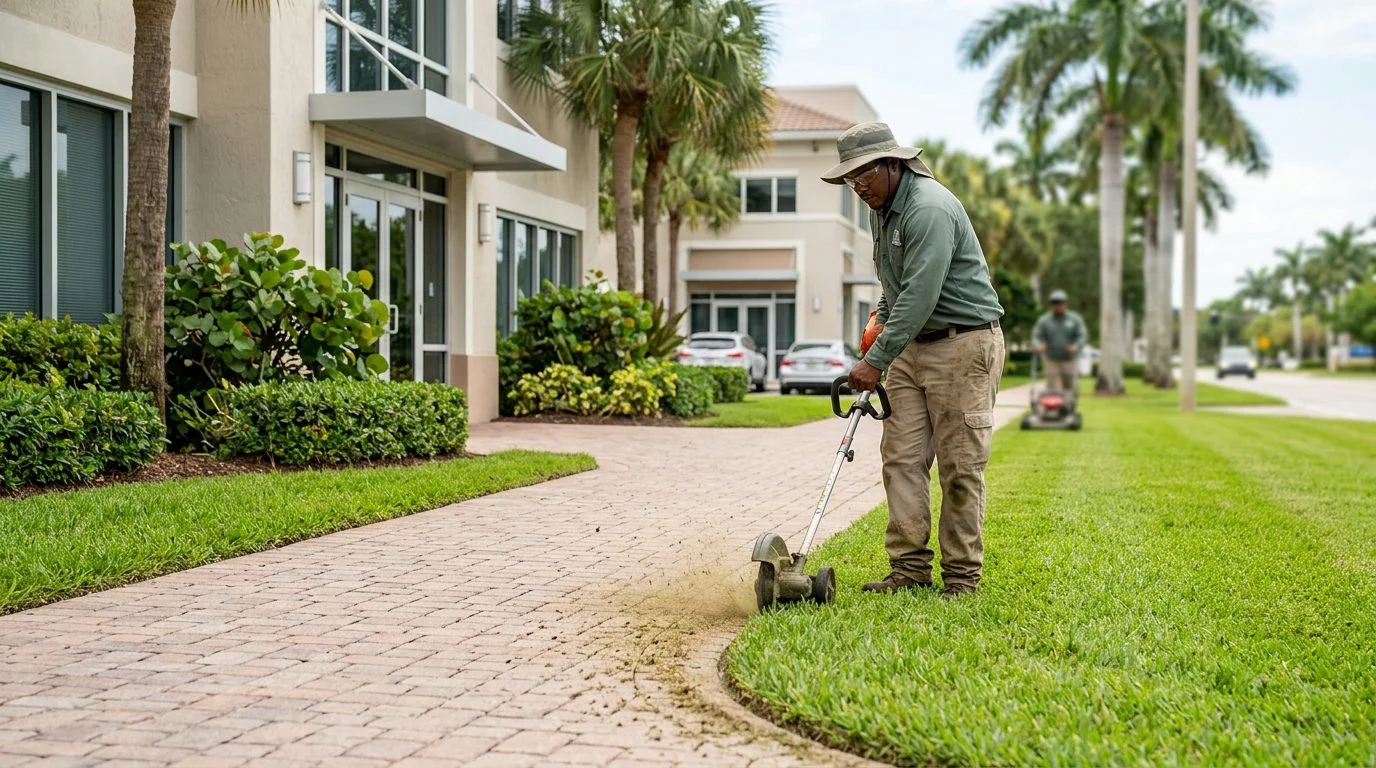
Landscape maintenance is the set of routine tasks that keep planted areas in working order. The usual list includes mowing, edging, string trimming, hedge and shrub trimming, weeding, bed clean-up, and leaf and debris removal.
Each task does real work. Mowing and edging keep turf even and walkways clear. Trimming keeps shrubs from growing into light fixtures, signs, or parking lanes. Weeding stops unwanted growth from crowding out the plants you chose. Debris removal keeps leaves and litter from building up on walkways.
Skipped tasks show up quickly. Edges that go unedged, or hedges that grow past a walkway, are often the first thing tenants notice.
The exact list depends on the property. An office campus with palms, a condo with turf and hedges, and a retail strip with planters each need a different mix. Plant types, site use, and foot traffic all shape the scope.
Crews usually work a site in a set order, starting at the entrance and moving through beds and turf. They finish with clean-up so nothing gets skipped. A fixed route also makes the work easier to check.
Seasonal trimming, mulching, and cleanup
Seasonal trimming shapes and thins plants so they stay healthy and sightlines stay clear. Heavy growth can block signs, lights, and driveway views. Trimming is planned around the calendar rather than left until it becomes a problem.
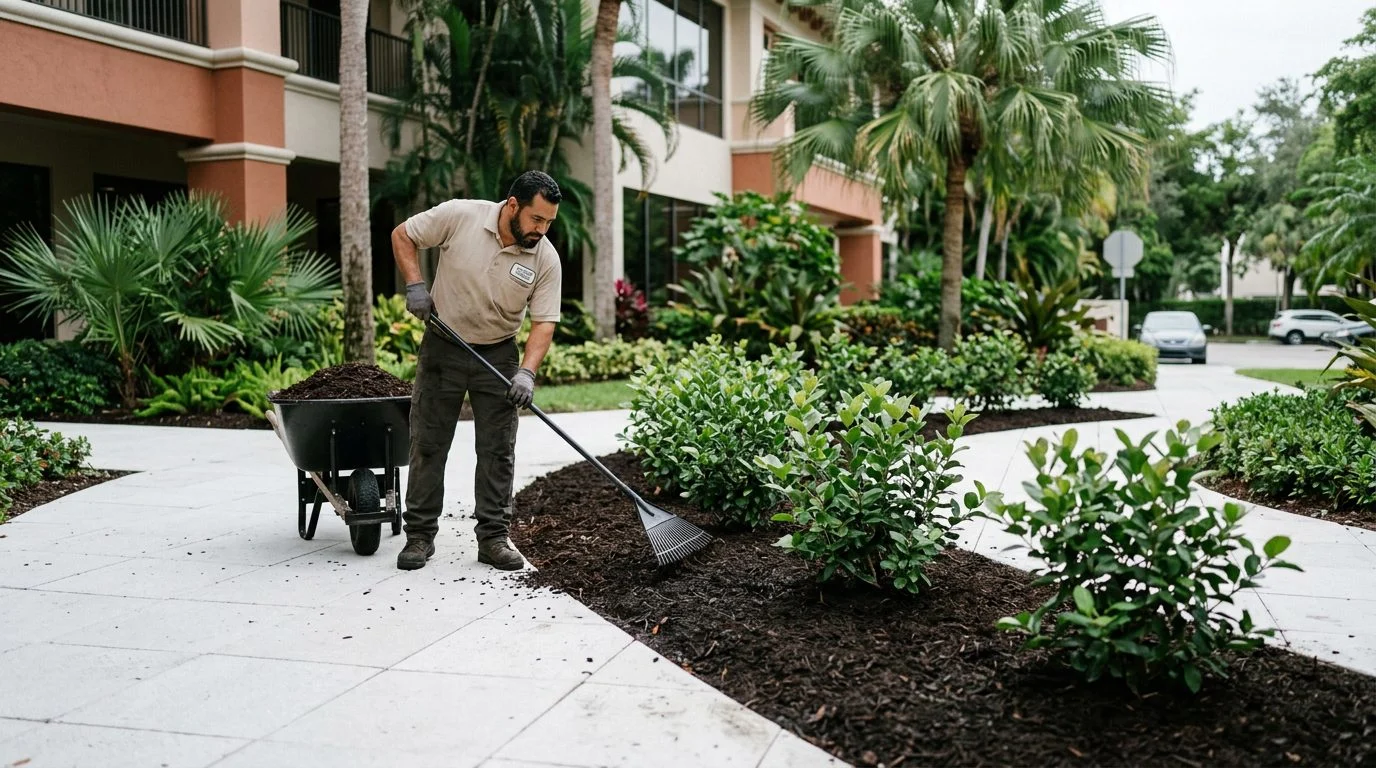
Mulching is a layer of material spread over planting beds. It helps the soil hold moisture and slows weed growth. It is a routine part of bed care on many grounds.
Seasonal cleanup clears storm debris and dead material after heavy rain or wind. Branches and leaves on walkways and parking areas are a safety issue as well as an appearance issue. Clearing them also keeps drains open, which helps water move off paved areas.
Hard surfaces such as walkways, walls, and entrances are a separate scope. Cleaning them falls under pressure washing. You can read more in our guide on pressure washing a building.
Do landscapers do lawn maintenance?
Yes, lawn maintenance is one of the core parts of landscape maintenance. It covers turf care alongside beds, shrubs, and trees.
Lawn maintenance focuses on the turf itself. That means mowing at a suitable height, edging along walks and curbs, and keeping clippings from piling up on the grass. A lawn that is cut too short or left with thick clippings can thin out, so the mowing schedule matters as much as the cut. Landscape maintenance covers the whole grounds, so the lawn is one part of the picture.
Commercial grounds usually combine turf and ornamental areas under one scope. One contract often covers the lawn, the beds, and the shrub line along a building. Splitting them can create gaps where one crew’s work ends and another’s begins.
For general principles, the Florida-Friendly Landscaping FAQs cover Florida-Friendly principles and turfgrass selection and care.
What a basic lawn care package typically includes
A basic lawn care package usually includes regular mowing, edging along walks and curbs, blowing off hard surfaces, and debris removal. These are the steps most people expect to see on each visit.
Turf health sits underneath the mowing. Cutting at a suitable height and keeping clippings from smothering the grass help the turf stay thick and even.
Fertilizing and weed control are often scoped separately, based on what the site needs. Fertilizer and irrigation practices are part of many South Florida landscape programs, and our team can explain how they fit into a property’s routine. The UF IFAS GI-BMP program trains landscape professionals on fertilizing, irrigation, and protecting water quality.
Ask what is in the base scope and what is billed separately. Clear line items prevent surprises later.
The 3-5-7 rule: a planting guideline, not a maintenance task
The 3-5-7 rule is a design convention for planting. It groups plants in odd-numbered clusters, such as three, five, or seven of one kind, so the arrangement looks natural.
It guides layout during installation or redesign. It is not a recurring task, and crews do not regroup plants on a schedule.
Maintenance keeps those groupings intact. Crews trim and replace plants inside the existing layout, so a dead shrub in a cluster gets swapped for a matching one. If a planting plan calls for a 3-5-7 grouping, the maintenance crew’s job is to keep it looking like that grouping over time.
Not sure what your next step is?
Talk it through with our team — the first consultation is free, confidential, and carries no obligation.
Scoping landscape maintenance for a South Florida commercial property
A commercial scope starts with site size, plant types, tenant use and traffic, and how often the grounds need attention. Those answers set what the work covers and how often a crew returns.
Local rules shape the work too.
Near the beach, the state’s dune vegetation maintenance guidelines address native dune plants seaward of a Coastal Construction Control Line.
We provide landscape maintenance across South Florida, including Miami-Dade, Broward, Palm Beach, South Beach, Coral Gables, and Brickell. The first step is a consultation. La consulta inicial es gratuita, confidencial y sin compromiso de continuar.
Quick answers
Is landscape maintenance the same as lawn care?
No. Lawn care is one part of landscape maintenance, which also covers beds, shrubs, and grounds.
Is the 3-5-7 rule a maintenance task?
No. It is a planting layout convention used during installation or redesign.
If you inherited a grounds contract or tenants are complaining about overgrown beds, you don’t have to sort out the scope alone. Reach out through our contact page and we’ll talk through what your property needs.
Common Recurring Landscape Tasks
Turf and Grounds Care
Mowing, edging, and routine turf attention keep common areas neat and consistent from visit to visit.
Beds, Shrubs, and Trimming
Weeding, pruning, and shaping help plantings look maintained and stay clear of walkways, signs, and entrances.
Cleanup and Debris Removal
Clearing leaves, clippings, and litter keeps grounds presentable and reduces hazards for staff and visitors.
Seasonal and Periodic Work
Scheduled tasks such as mulching, bed refreshes, and seasonal cleanups are planned around the property's needs.
Why a Clearly Defined Scope Matters
Written Expectations
A defined list of tasks and visit frequency makes it easier to know what is included and what is not.
Consistent Schedules
Regular service intervals help grounds look maintained week after week instead of only after problems appear.
Tasks Matched to the Property
Plant types, traffic levels, and site layout all shape which tasks belong in the scope.
Coordinated Crews
Our team plans routes and visits so landscape work fits around the rest of your property operations.
Not Sure Where Your Property Stands?
The first consultation is free, confidential, and carries no obligation to continue. We will review your grounds and walk through the tasks that fit your site.