
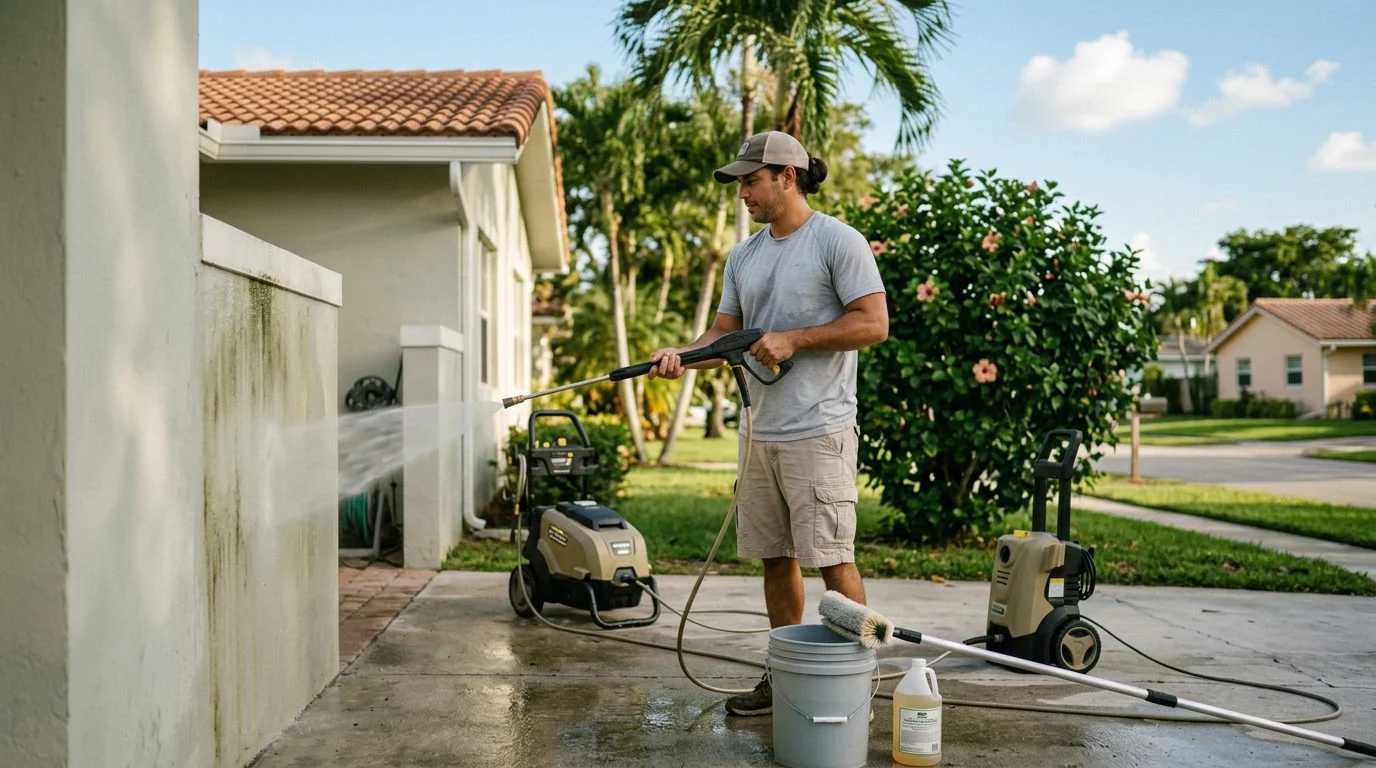
Pressure Washing | South Florida
Clean Exterior Walls Without Damaging the Surface
Commercial buildings across Miami-Dade, Broward, and Palm Beach counties need a cleaning method matched to the material underneath. Here is how to choose one.
By Ryan Jurney · Published November 17, 2026
A building with streaked, dark, or green walls raises one question right away: what should you wash it with? The short answer is that no single product is the best thing to wash exterior walls with in every case. The wall material and the type of soil decide which cleaner and method fit. This guide walks through the main options for South Florida buildings, plus the safety and runoff steps that matter.
The short answer: the wall surface sets the cleaner
The wall surface and the soil on it set the cleaner, not a single product. Vinyl siding, stucco, painted masonry, brick, and concrete block each react differently to the same solution. Dirt, mildew, algae, oxidation, and grease also call for different treatments. A cleaner that works on one surface can be the wrong choice on another.
Cleaning is a match between the surface and the method. Pressure, dwell time, and rinsing matter as much as the cleaner itself. Plan the job around those choices before anyone mixes anything.
Start by identifying the material and what sits on it. Note which walls are shaded, which face the sun, and how close they sit to plants, walkways, and parking. Those details shape the plan more than any label does.
For how exterior work fits into overall building upkeep, see our day porter service guide.
If a building's exterior landed on your desk and you need to choose a cleaning method, we'd be glad to talk through its surfaces with you. Talk it through with our team — the first consultation is free, confidential, and carries no obligation.
What can I wash my walls with?
Plain water, mild detergent solutions, diluted sodium hypochlorite, and degreasers cover most exterior jobs. Each one has a clear role.
Plain water comes first. Low-pressure rinsing removes loose dust and light dirt. It also shows how much soil is left before any chemical goes on.
Mild detergent solutions are the core of soft washing. Surfactants (cleaning agents that loosen dirt and film) lift grime without harsh scouring.
Sodium hypochlorite is the active ingredient in household bleach. Exterior crews use diluted solutions to address mold, mildew, and algae. Strength and dwell time matter. Trained crews also protect nearby plants and surfaces while they work.
Degreasers handle oily soil, such as near entrances, garages, or dumpster areas. Choose one that suits the wall finish, because harsh chemicals can harm some finishes.
Stronger is not automatically better. The goal is the lowest strength that removes the soil on that wall.
Is an outdoor house-wash cleaner just bleach?
Not exactly. Many outdoor house-wash products use sodium hypochlorite, but they also contain surfactants and other additives. Those additives help the solution cling to vertical walls.
The additives change how the solution spreads, how long it stays on the surface, and how it rinses. Pouring straight household bleach on a wall is a different process, with different results and risks.
Concentration matters too. A formulated product is mixed to a set strength for its purpose. A homemade mix can be too strong or too weak for the surface.
The EPA publishes a list of registered disinfectants and their label claims, the Selected EPA-Registered Disinfectants. It shows what each registered product claims to do.
One safety rule holds for every product. Never mix bleach with ammonia-based or acidic cleaners. The combination can release toxic gases.
What is a good cleaner for exterior siding?
For vinyl siding, a mild detergent solution applied at low pressure is the usual starting point. Ask what the wall is made of before choosing any product.
Rinse the siding thoroughly, working from the top down. The water carries residue off the wall instead of leaving streaks.
Painted surfaces and stucco need methods that avoid forcing water behind the finish. Too much pressure can chip paint and damage the surface. Crews keep the pressure low and let the cleaner work before rinsing.
Brick and concrete block are more porous. They can hold mildew and staining deeper in the material. They often need a different approach than siding or painted walls.
Hardscape around the building, like walks and entrances, usually needs its own plan. Our sidewalk and entrance pressure washing guide covers that companion work.
How do you clean vinyl siding without scrubbing?
Soft washing lets the cleaner sit on the wall so it can work on mildew and algae. That cuts down on hand scrubbing.
The general sequence runs in a set order. Wet nearby plants and surfaces first. This helps protect them from the solution.
Next, apply the solution from the bottom of the wall upward. Let it dwell, which means sit on the surface for a set period, so it can act on the growth.
Then rinse from the top down. The rinse carries the solution and loosened growth off the wall.
Dwell time changes with the soil level, the temperature, and how much sun the wall gets. Experienced crews adjust the process as they go rather than following a fixed timer.
Several light applications usually work better than one heavy pass. They also keep the strength of the solution lower on the wall.
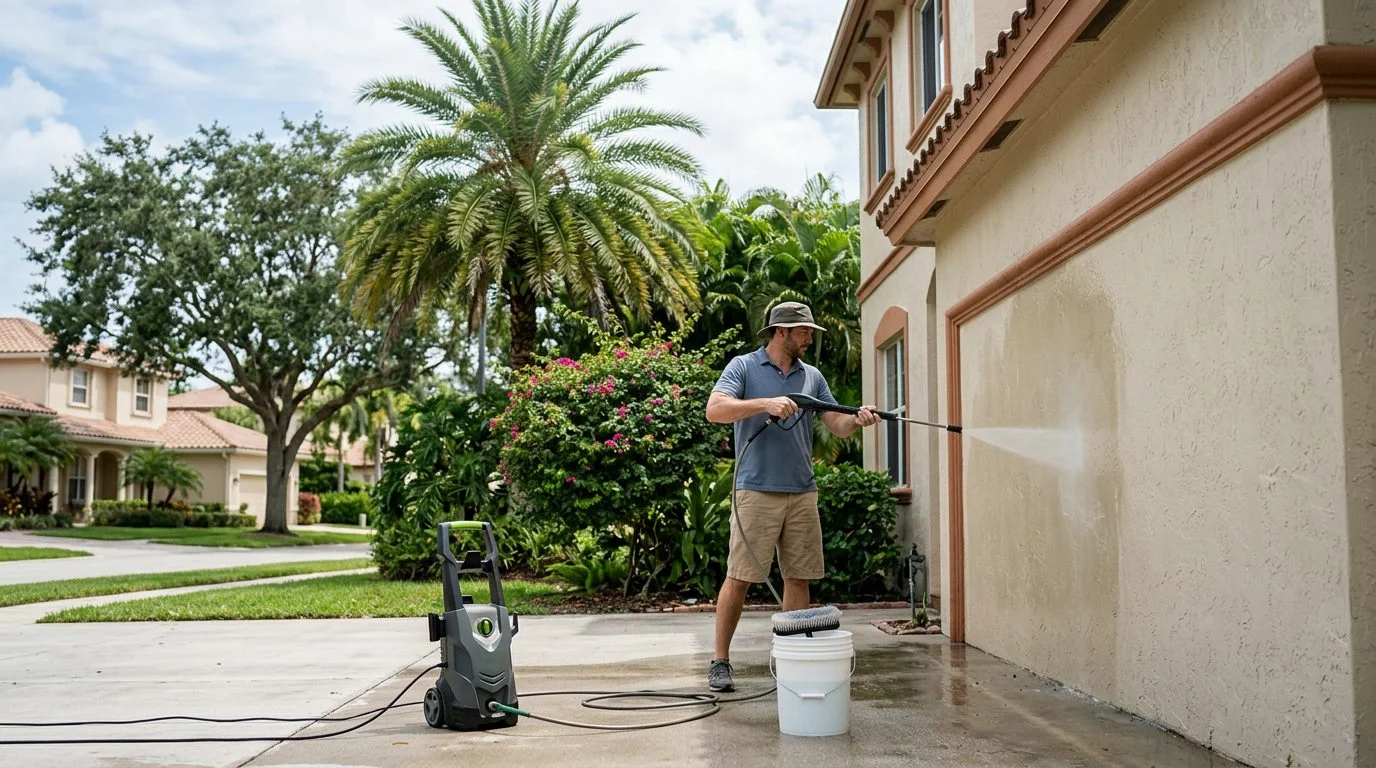
Soft washing versus pressure washing exterior walls
Soft washing uses low pressure and cleaning solutions. Pressure washing uses high-velocity water on tougher surfaces.
Pressure washing suits durable hardscape and some masonry, such as concrete walks and block that can take the force.
Soft washing is the usual choice for delicate exterior finishes like vinyl siding, stucco, and painted walls. The solution does the work that force would otherwise do.
High-pressure water can push moisture behind siding, damage caulking, and etch softer materials. That is why the method matters as much as the cleaner.
Grime on the outside often travels indoors on shoes and carts. Planning exterior and lobby cleaning together keeps one from undoing the other. See the terrazzo and lobby floor care guide for the interior side of that plan.
A property manager should ask which method the crew plans to use and why.
Not sure what your next step is?
Talk it through with our team — the first consultation is free, confidential, and carries no obligation.
South Florida conditions: mold, algae, humidity, and salt air
South Florida’s heat, humidity, and rain favor mold and algae growth. Shaded and north-facing walls are the most common trouble spots.
Salt air near the coast leaves a film on walls, windows, and vehicles. Regular cleaning on a set schedule keeps that buildup from becoming a bigger job.
Runoff is part of the method here. The South Florida Water Management District notes that polluted runoff entering storm drains is discharged untreated into connected water bodies.
That makes containment and plant protection part of the plan. Pre-rinse plants, cover sensitive shrubs, and direct runoff away from planting beds and water features where practical.
Florida’s Green Industries BMP program provides state-recognized training and practices for landscape professionals on protecting water quality.
Walkways get wet during the job too.
For how grounds and walls are maintained together in common areas, see the landscape maintenance guide.
When to talk through the job with this team
If you manage a building and notice streaking, dark staining, or green growth on its walls, you face a choice about method. That choice comes before any product is picked.
The right cleaner comes from the wall material, the soil, the location, and the plants and walkways nearby. Each one changes the plan.
Does high pressure damage stucco?
It can. High pressure may chip paint and force water behind the finish, so soft washing is the usual method for stucco.
If a building’s exterior landed on your desk and you need to decide how to clean it, the surfaces are the place to start. Reach out through our contact form, call the office, or request a quote, and we can review those surfaces with you. La consulta inicial es gratuita, confidencial y sin compromiso de continuar.
Frequently Asked Questions
What is the best thing to wash exterior walls with?
The right cleaner depends on the surface being cleaned, so no single product is the best choice for every exterior wall. Stronger cleaners are reserved for stains or mildew that water alone cannot lift.
Is pressure washing safe for stucco or painted exterior walls?
It can be, when the pressure stays low to moderate and the nozzle is kept at a safe distance. Excess pressure can chip paint, erode stucco, or force water behind siding, so our team adjusts the method to each surface.
Do exterior walls need bleach to remove mold or mildew?
Many cleaning technicians use a diluted sodium hypochlorite solution on mold and mildew, applied at low pressure and rinsed thoroughly. The right concentration depends on the surface type, so a trained technician should choose the mix for your walls.
How do you protect plants when washing exterior walls?
Wet nearby plants with clean water before and after cleaning, cover sensitive foliage, and direct runoff away from garden beds, since many cleaning solutions can damage leaves. For a professional assessment of your walls and landscaping, reach out to our team.
Why Property Managers Work With Gator Protection
Surface-Appropriate Methods
We match the cleaner and the pressure to the wall material, so stucco, painted block, and other exterior finishes are treated with care.
Scheduled Around Your Operations
Exterior work can be planned around tenant hours, deliveries, and daily business activity.
A Dedicated Support Team
Our team stays in touch from the first call through the completed job, so questions get answered quickly.
Test Before You Treat
Strong chemicals and high pressure can etch, strip paint, or leave marks on some wall surfaces. Test a small, hidden area first, and let a professional assess the surface before using anything stronger than water and mild detergent.
A Simple Approach to Washing Exterior Walls
Start With Water
Low-pressure water removes dust, pollen, and loose grime without touching the finish, and it is often enough for routine cleaning.
Add a Mild Detergent
A pH-balanced detergent loosens dirt and film that water alone cannot lift, while keeping the surface intact.
Use Targeted Treatments Carefully
Mildew and stubborn stains may need a specialized treatment. Apply it to the affected area only, rinse thoroughly, and confirm the result on a test patch first.
Your First Consultation Is Free. The first consultation is free, confidential, and carries no obligation to continue.
More of our services
- Can You Pressure Wash a Building? What Owners Should Know