
Condo Maintenance | Miami
Trash Room Smells in Your Miami Condo? Start With a Thorough Clean
Regular trash room cleaning, pressure washing, and day porter service help keep shared waste areas fresh across Miami-Dade, Broward, and Palm Beach counties.
By Ryan Jurney · Published November 7, 2026
If your trash room smells every day, something in the room isn’t being cleaned. Air freshener hides the smell for a while, but the source keeps producing it. Here’s what a condo manager in Miami can do, in order.
Why a Daily Trash Room Smell Needs a Response, Not Just Air Freshener
A smell that lasts every day means organic residue is building up somewhere. Food waste leaks, dries, and sticks. It collects in the bottom of bins, in floor drains, on chute walls, or in a spill that was mopped but never fully removed.
Heat and humidity speed up that decay, so a small leftover can smell within a day. Fragrance covers the odor for a short time. The source keeps producing the smell until someone cleans or repairs it.
Covering the smell also hides problems that can grow, such as a leak under a bin or a slow drain. Residents notice these odors quickly. A manager who answers with a written plan shows the board and residents that the problem has an owner and a schedule. That matters more than a quick spray.
If the odor keeps coming back after cleaning, you don't have to sort it out alone; our team can take a look at your room with you. Talk it through with our team — the first consultation is free, confidential, and carries no obligation.

Find the Source: A Walk-Through Checklist for the Trash Room
Walk the room with a notebook before you clean anything. You need to know where the smell starts.
- Check bin bottoms, lids, and wheels for liquid, crusted debris, and grease under the bags.
- Look at floor drains for standing water, sludge, or slow flow. Check for dried residue around the covers.
- Inspect the chute opening, chute doors, and nearby walls for stains, drips, or sticky buildup.
- Note where the smell is strongest: the door, the bins, the drains, or the chute. The strongest spot usually points to the source.
- Look for signs of pests, such as gnaw marks on bags or droppings.
Odor often comes from one spot. Finding that spot first saves time and cleaning product. Take a photo of each problem area. Photos give the board and the hauler something specific to review.
Immediate Steps to Take This Week
Clean the source first, then the bins, then the drains. Work in that order so residue doesn’t spread.
- Remove visible waste and spilled material first. Then clean the floor, walls, and bin exteriors with a cleaner made for food-waste areas.
- Wash bins inside and out. Let them dry fully before they go back in the room.
- Flush floor drains with water. Then use an enzyme-based drain product made for organic waste, and follow the label.
- Check each disinfectant’s label claims against the EPA’s registered disinfectants list before you use it.
- Use one product at a time. Never mix cleaning chemicals, and keep the room ventilated while you work.
- Keep room doors closed when no one is using them, so odor stays out of hallways and lobbies.
Let the floor dry, then check the room the next morning. Note whether the smell is lighter.
Set a Recurring Cleaning Routine With Your Day Porter Service
A recurring routine with a named person in charge keeps the room from sliding back into odor. One deep clean fixes today’s problem. A daily smell needs a schedule that someone is accountable for.
A day porter service can check and clean the trash room on a set schedule, log each visit, and report repair needs such as a leaking bin or a damaged chute door. Set a check-in time, such as a morning walk-through, so someone looks at the room every day.
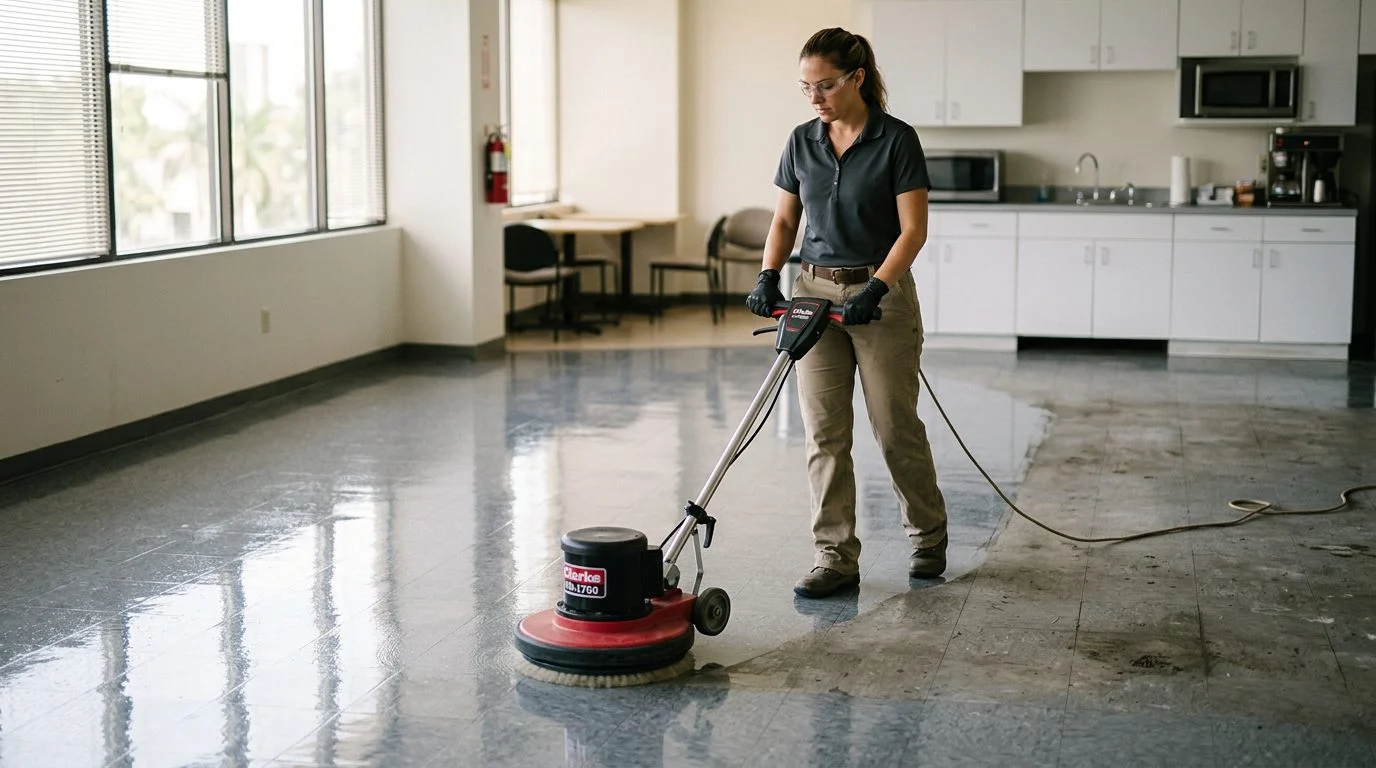
Pressure washing the room’s floor, walls, and bin area on a regular basis removes buildup that routine mopping can miss. Floor care for the room’s surfaces helps residue stop soaking into the floor, where it keeps producing odor.
Organized checklists help. The Community Associations Institute’s maintenance report supports organized maintenance programs and checklists when you write a vendor scope of work.
Write the routine down with frequencies, tasks, and a named contact. A written plan survives staff changes. A common mistake is cleaning once, then waiting for the next complaint. The smell returns because nothing in the routine changed.
Coordinate With the Waste Hauler and Collection Schedule
Start by matching your pickup days against the days the smell is worst. Bins that sit past pickup often add to the odor.
If pickups are missed or late, record the date, time, and photos. Send that record to the hauler in writing. Ask the hauler to confirm pickup frequency for your property’s volume, and whether an added pickup makes sense.
Bins that fill early need a second look. Check whether residents are leaving bulky items in the room, since those fill bins fast.
A written record matters if the problem reaches the board or the hauler. It shows what you reported and when you reported it.

Communicate With Residents and the Board, and Know When to Call for Help
Tell residents what you’re doing, and keep a dated log the board can review. Clear communication helps residents report problems early.
Post a short notice explaining the cleaning schedule and how to report a problem, such as a full bin or a chute blockage. Keep a simple log of complaints, inspections, cleanings, and repairs. A dated record shows the board progress over time.
Board rules matter too. Ask that cleaning items go on the agenda.
Vendor bids matter too.
If you have questions about our services or how we work, our team is happy to talk them through during a free initial consultation, which is confidential and comes with no obligation to continue.
How do I know when a trash room needs a repair?
If the smell returns after a full cleaning and a set routine, the cause may be a repair beyond routine cleaning.
Does air freshener fix a trash room odor?
No. Air freshener covers the smell for a short time, but the residue causing it stays in place.
How long should vendor bids be kept?
If you’re facing this smell every morning and it keeps coming back, you don’t have to sort it out alone. Gator Protection, Inc. offers a free first consultation that is confidential and carries no obligation to continue. Reach out through our contact form or call our office to describe the room and what you’ve already tried.
What a regular trash room routine covers
Floor care
Scrubbing and sanitizing the floor where liquid residue and debris collect, including the edges and drains.
Surface cleaning
Wiping down walls, bin surfaces, and door areas that build up grime and odor over time.
Scheduled visits
A set cleaning schedule keeps odor from returning between deep cleans, so residents notice a difference week after week.
Day porter support
On-site day porter service keeps the trash area and surrounding common spaces tidy during daily hours.
Air freshener is not a fix
Fragrance masks odor for a short time, but the residue that causes the smell stays in place. Clean the surfaces first, then keep up a regular routine.
A simple approach to a fresher trash room
Clear and inspect
Remove waste, check bins and surfaces, and note areas where residue or moisture is building up.
Clean the floors and walls
Use the right products for each surface to lift grime that odor-causing residue clings to.
Pressure wash the area
Pressure washing reaches the grime in corners, floor seams, and exterior trash enclosures that routine wiping can miss.
Keep a routine
A consistent cleaning schedule helps prevent buildup, so the room stays fresher between visits.
Get a free, confidential first consultation with no obligation to continue
Related practice areas
- Day Porter Service in Miami-Dade: What It Covers and How to Switch Vendors
- Day Porter Service in South Florida