
Floor Care Maintenance | South Florida
Burnishing, Buffing, or Scrubbing: Which Does Your Floor Need?
Three methods that look alike from across a lobby, but each one works on a different problem.
By Ryan Jurney · Published November 26, 2026
A floor looks dull, and someone suggests scrubbing it, buffing it, or burnishing it. Which one fits? The difference between burnishing and scrubbing floors comes down to what each process works on. Scrubbing removes soil and residue from the surface. Buffing and burnishing work on the finish, the protective coating on top of the floor.
Quick Answer: Three Different Jobs, Often Confused
Scrubbing cleans the floor. Buffing and burnishing work on the finish. Burnishing is the faster of those two, and it is aimed at shine.
These three terms get mixed up all the time. Floor care crews, equipment sellers, and building staff do not always use them the same way. One person’s buffing may be another person’s burnishing. So this page defines each term by what the process does to the floor, not by what a machine or label is called.
Why does this matter? Each process fixes a different problem. A floor covered in soil needs cleaning first. A clean floor with a scuffed finish may need buffing. Using the wrong step can leave the real problem in place. For the full picture of how these steps fit into a regular plan, see the floor care maintenance service overview.
If a floor in your building still looks dull after cleaning, our team can talk through what it needs and which step should come first. Talk it through with our team — the first consultation is free, confidential, and carries no obligation.
What Scrubbing a Commercial Floor Means
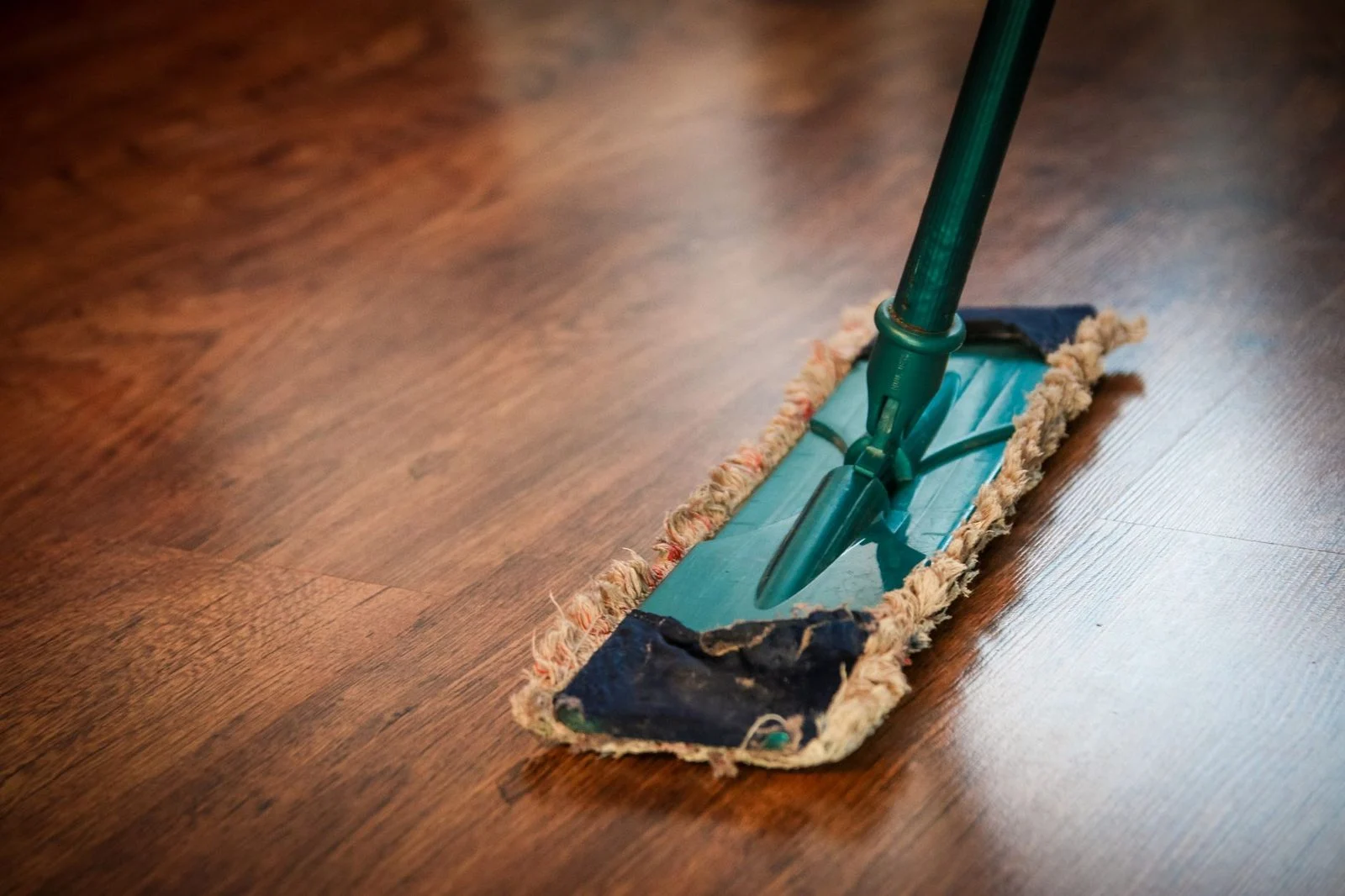
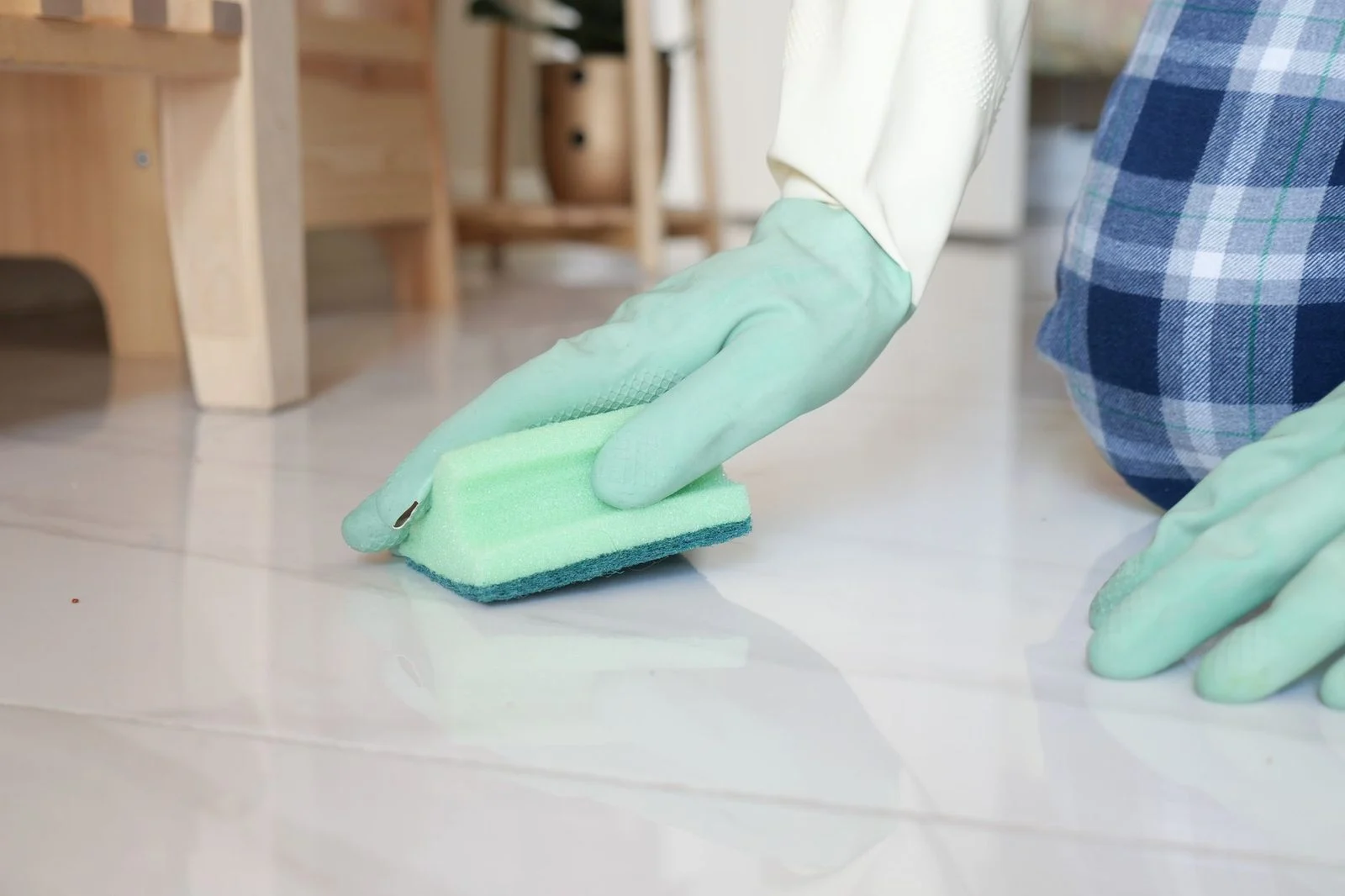
Scrubbing is the process of agitating the floor to loosen and lift soil. A worker applies a cleaning solution, works it into the surface with a brush or scrub pad, and then removes the dirty liquid.
What does scrubbing a floor mean in practice? It means the surface gets physically worked, not just wiped. The solution loosens dirt, grime, and residue that are on or in the floor. Then the dirty liquid comes up and out, so the floor is not left with a film behind.
Scrubbing is different from buffing and burnishing in one key way. A buffer or burnisher on its own does not remove that soil. Running a pad over a dirty floor mostly spreads the grime around. That is why a floor that looks dull with dirt in it needs scrubbing before any shine work.
Scrubbing changes how clean a floor is far more than how shiny it is. Chemicals used in the process also carry safety duties.
What Buffing Does and What a Floor Buffer Is
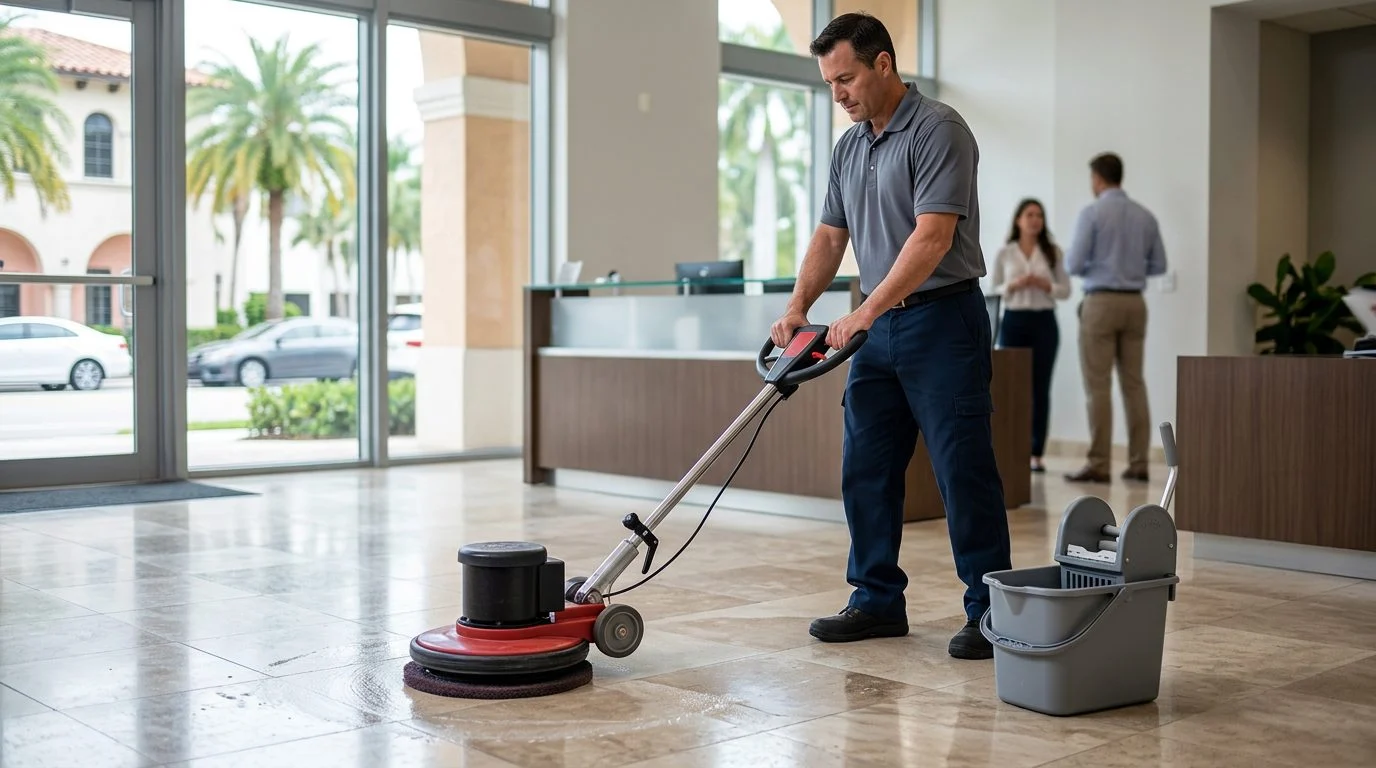
Buffing refreshes a worn finish by working the surface with a rotating machine and a pad. The machine that does this is called a floor buffer.
What does buffing remove? It works on light marks and scuffs in the finish. It can bring back some sheen on a floor that has lost its luster. Buffing works the top layer of the finish, not the floor underneath.
Spray buffing is a common variation. A diluted floor product is sprayed onto the floor, and the pad buffs it in. This is a lighter step than a full strip and refinish. It helps keep a finish looking even between those heavier cycles.
Buffing usually uses less heat and less polish than burnishing. The goal is to refresh the finish, not push it to a high gloss. Buffing also assumes the surface is reasonably clean. If soil covers the floor, the pad drags that soil across the finish and can grind it in. That is a common reason a buffed floor still looks dirty.
What Burnishing Does and How It Differs From Polishing
Burnishing raises shine on a finish that is already in place. It uses a high-speed floor machine and a pad that creates friction against the surface.
In its basic form, burnishing adds no liquid. It relies on speed and friction alone. Because of this, it works best on a floor with a maintained finish that is not heavily soiled. The pad needs a clean surface to do its job well.
What is burnishing vs. polishing?
Burnishing relies on speed and friction across the existing finish. Polishing usually means working a polish product into the floor to restore or build a finish. Burnishing does not add a new layer. Polishing often does.
Buffing and burnishing are often done together. A floor may be buffed first to refresh the finish, then burnished for shine. Tile and other hard surfaces respond to these steps in different ways. The porcelain tile floor care guide covers how these steps apply to tile.
Key Differences: Speed, Finish, and Floor Condition
The main difference is what each process works on. Scrubbing targets soil. Buffing and burnishing target the finish. Speed is the main mechanical difference between buffing and burnishing.
| Process | Main purpose | What it works on | Machine speed | Floor condition it suits |
|---|---|---|---|---|
| Scrubbing | Remove soil and residue | Soil on or in the surface | Agitation with a brush or scrub pad | Visible dirt, grime, or buildup |
| Buffing | Refresh and smooth the finish | The top layer of the finish | Lower speed | Scuffed or worn finish, surface otherwise clean |
| Burnishing | Raise shine on the finish | An existing, maintained finish | Higher speed | Clean, maintained floor needing uniform shine |
Higher speed with a suitable pad produces the shine burnishing is known for. Scrubbing is the only one of the three aimed at removing soil. That is why it comes first when a floor is dirty.
The right choice depends on the facts of each floor, including its finish, traffic, and soil level. The same floor may need more than one of these steps over time.
Use Cases: When Each Process Fits
Scrubbing fits a floor with visible soil, grime, or residue that routine cleaning has not removed. This is the first step when dirt is part of the problem.
Buffing fits a floor whose finish looks scuffed or dull in high-traffic lanes, but whose surface is otherwise clean. Hallways, entry paths, and store aisles often show this pattern first.
Burnishing fits a maintained, cleaned floor where the goal is a higher, more uniform shine across the area. Lobbies and large open common areas are common examples.
The sequence used in practice is simple. Scrub when soil is present. Then buff or burnish once the surface is clean and the finish is ready.
Retail spaces, office lobbies, and common areas in Miami-Dade, Broward, and Palm Beach counties can combine these steps on a regular schedule. Grit tracked in from outdoors wears down a finish over time. Heavy foot traffic in busy buildings adds to that wear. Planning the steps in order helps keep each one doing its own job.
Not sure what your next step is?
Talk it through with our team — the first consultation is free, confidential, and carries no obligation.
Floor Buffing Pads and Common Mistakes
Floor buffing pads differ mainly in how firm and how abrasive they are. Pads are matched to the process and the finish.
What are the different types of floor buffing pads?
Softer pads suit lighter work on a finish. Harder or more abrasive pads suit more aggressive work. A pad that is too aggressive can wear a finish unevenly. A pad that is too soft may not do the job the crew intended.
Clean pads often during the job. Soil picked up in one area can move across the floor if the pad stays dirty.
Three mistakes come up again and again:
- Burnishing a floor that has not been scrubbed. Soil can get sealed into the surface, and the shine ends up uneven.
- Using a buffer where the floor needs scrubbing. The dullness gets treated as a finish problem when the real cause is soil.
- Using the same process on every floor type. Tile, vinyl, and other surfaces can respond differently to the same equipment.
Does burnishing replace scrubbing?
No. Burnishing works on a clean finish, so scrubbing usually comes first when soil is present. Each step builds on the one before it.
Talk Through Your Floor With Our Team
If you manage a building, a dull floor can land on your desk with no clear cause. You may be trying to figure out whether the floor needs cleaning, buffing, or burnishing before you decide anything. That is a reasonable place to start.
Maybe the floor still looks dull after cleaning. Maybe the traffic lanes are scuffed while the rest of the floor looks fine. Maybe the shine is uneven across a retail space, office, or common area in South Florida.
Our team serves South Florida buildings. If you want help sorting out which step your floor needs first, reach out through our contact form and we will talk it through with you.
La consulta inicial es gratuita, confidencial y sin compromiso de continuar.
Frequently Asked Questions
What is the difference between burnishing and scrubbing floors?
Scrubbing is a deep cleaning process that uses water, cleaning solution, and a brush or pad to lift dirt, grime, and buildup from the floor. Burnishing is a polishing process that uses a high-speed machine and a pad to buff the floor’s existing finish to a higher shine.
Does burnishing clean a floor the way scrubbing does?
No. Burnishing mainly improves appearance by adding gloss and can lightly reduce minor scuffs, but it does not remove heavy soil or buildup the way scrubbing does. Floors that are dirty or dull from buildup usually need to be cleaned before they are burnished.
When should a commercial floor be scrubbed instead of burnished?
Scrubbing is the better choice when a floor has visible dirt, staining, sticky residue, or old layers of finish that have built up. Burnishing is typically used on floors that are already clean and have a protective finish that needs to look brighter.
Can burnishing be done without scrubbing first, and how do the two fit into floor care maintenance?
Burnishing alone can work on a floor that is already clean and in good condition. In regular floor care maintenance, scrubbing and burnishing are often used together, with scrubbing removing soil and buildup first and burnishing restoring shine afterward. You can ask our team which approach fits your floors.
Check the finish before you choose a method
Burnishing and buffing rely on a finish that is still intact. If the finish is worn through or heavy buildup covers the surface, a polishing pass will not restore the shine. Scrubbing or a finish restoration step usually has to come first.
Matching the Method to the Floor
Scrubbing
Best suited to floors with embedded dirt, grime, or built-up residue that regular cleaning has not removed.
Buffing
A light-duty pass that refreshes a floor's appearance between more intensive maintenance visits.
Burnishing
A high-speed polishing step that brings an existing, intact finish up to a higher shine.
Floor Care as Part of Your Facility Routine
Confidential first consultation
Your first consultation is free, confidential, and carries no obligation to continue.
Scheduled around your operations
Floor care visits can be planned to minimize disruption to daily business.
Day porter and floor care together
Our team can coordinate floor care with day porter service and other commercial maintenance services.
Serving South Florida
We provide commercial floor care across Miami-Dade, Broward, and Palm Beach counties, including South Beach, Coral Gables, and Brickell.