
Floor Care Maintenance | South Florida
Restore Your Vinyl Floors, One Stain at a Time
Stubborn marks don't have to mean a worn-out floor. Here is a practical way to approach them, and when it makes sense to bring in a professional.
By Ryan Jurney · Published November 26, 2026
A dried stain on vinyl flooring can feel permanent, but it usually isn’t. Learning how to remove hard stains from vinyl flooring starts with one habit: work from gentle to stronger. Remove loose debris, test your cleaner in a hidden spot, then move from mild dish soap to a soft pad. Stop if the finish changes.
This guide walks through each step. You’ll learn how to tell stain types apart, which products to skip, and when a stubborn mark needs a closer look.
Why Hard Stains Set Into Vinyl Flooring
Hard stains set because dirt and residue dry onto the surface, even though vinyl does not soak up liquid. Vinyl and other resilient hard-surface floors do not readily absorb spills, soil, odors, or moisture. Most stains sit on the surface or in the finish, not inside the floor.
Common stain types include:
- Dried mud or grit
- Scuff marks
- Adhesive or tape residue
- Food or drink residue
- Dark marks from rubber or shoe soles
Black marks are a common question. Most are rubber or shoe-sole scuffs sitting on top of the surface, and they usually lift with gentle cleaning. A stain that has dried into the finish takes more patience.
The IICRC states that identifying a floor’s material affects how it should be cleaned. Check your flooring type before you start. For the wider routine, see our floor care maintenance guide for Miami-Dade.
If a stain you didn't make is sitting on a floor you're responsible for, you don't have to work out the next step alone. Talk it through with our team — the first consultation is free, confidential, and carries no obligation.
Step 1: Let Dried Mud or Residue Loosen, Then Sweep or Vacuum
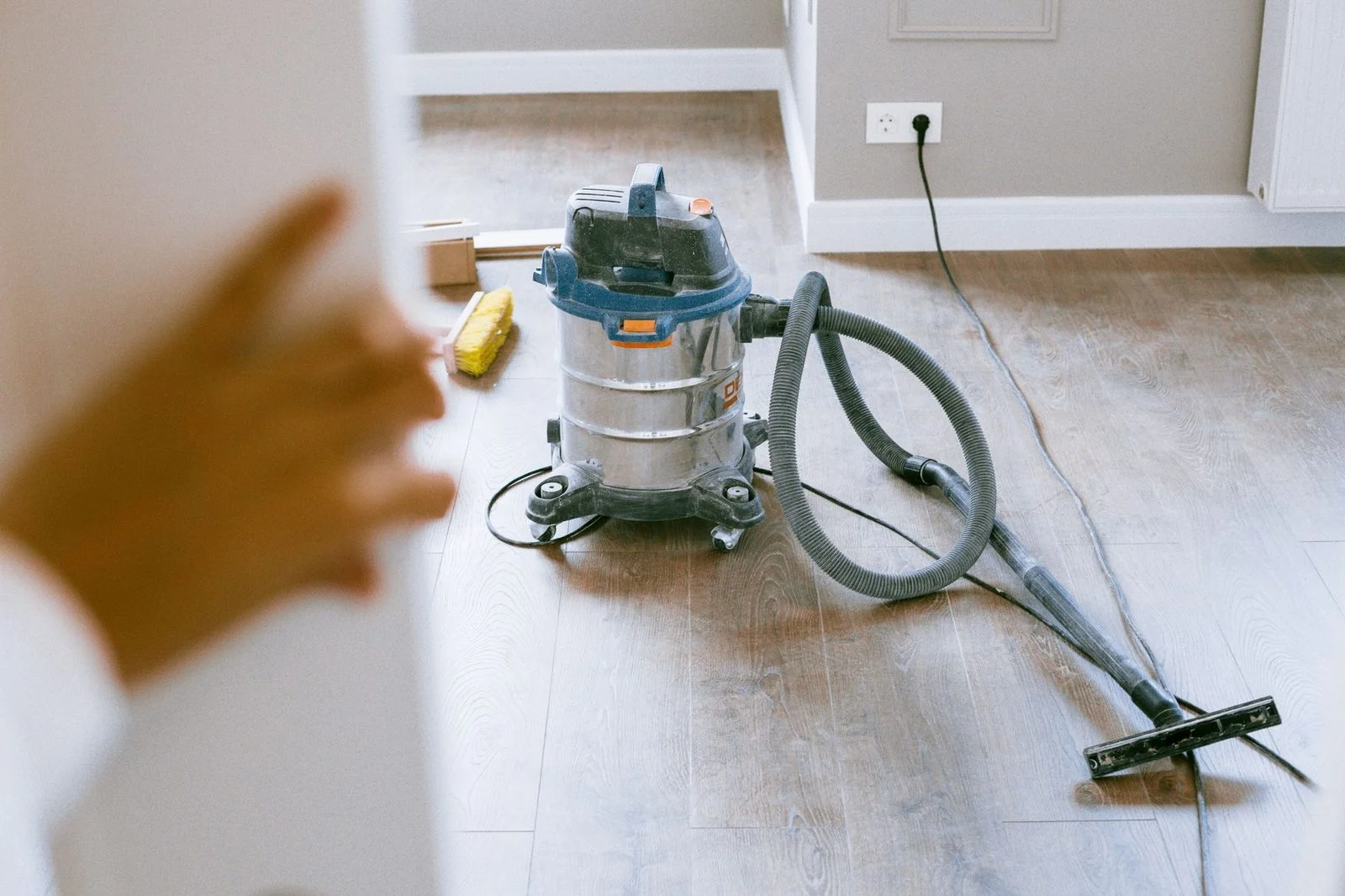
Remove dry debris before any liquid touches the floor. Wet grit can scratch when a mop drags it across the finish. Use a soft-bristle broom or a vacuum with a hard-floor setting. Work along seams and edges, where grit tends to collect.
For dried mud, dampen a cloth with plain water. Lay it on the mud for a moment to soften it. Then lift the mud gently with a plastic scraper. Don’t use a metal blade or a sharp tool. Metal can scratch vinyl and leave marks that look like the stain itself.
Stay gentle at this stage. You want loose material out of the way, not scrubbed into the surface. The cloth should be damp, not wet, because standing water can seep into seams.
Step 2: Test Any Cleaner in a Hidden Spot First
Test every cleaner in a hidden spot before you use it on the stain. Pick a closet floor, an area under furniture, or a strip along a wall edge.
Apply a small amount of the solution, then let it dry completely. Check the spot for three things: dullness, color change, or sticky residue. Changes can show up after drying, not right away. Look again once the area is fully dry.
Move on only if the test spot looks the same as the rest of the floor. If it doesn’t, stop and choose a gentler option. This small test protects the whole floor. A cleaner that dulls one corner can do the same to a larger area. For ingredients to skip, see what should you not use on vinyl floors.
Step 3: Mix a Mild Dish Soap Solution
Start with warm water and a small amount of mild dish soap. A light solution works better than a concentrated one. Strong soap leaves a film that can hold new dirt.
Dawn is a common mild dish soap, and many people use it on luxury vinyl plank (LVP). Check the manufacturer’s care instructions first, since finishes differ between brands. If the instructions say something different, follow them.
Apply the solution with a microfiber cloth, not a soaked mop. Work in small sections so the liquid doesn’t pool on the floor. Let the cloth rest on the stain briefly, then wipe. For a fuller explanation of LVP care, read can I use Dawn to clean luxury vinyl plank flooring.
Step 4: Consider Vinegar Carefully and Know When to Skip It
Diluted vinegar is a common household cleaner, but it is not the first choice for hard stains. Vinegar is acidic. Repeated use of acidic solutions can affect some finishes over time. Use it only after the hidden-spot test passes.
Keep the solution diluted. Wipe it up with a clean, damp cloth, and don’t let it sit on the surface. Rinse the area afterward so no acid residue remains.
Skip vinegar on waxed or sealed floors unless you have confirmed the product is compatible with your finish. Never mix vinegar with bleach or other cleaners.
Step 5: Use a Soft Pad or Magic Eraser With Light Pressure
A magic eraser can help with stubborn marks, but only with light pressure. These erasers are made of melamine foam, which works by abrasion. Scrub hard and you can dull or thin the finish.
Use one only after the hidden-spot test passes. Make short, light strokes, then check the area. Stop if the shine changes.
For most set-in marks, a soft white pad or a microfiber cloth does the job with less risk. Avoid steel wool, scouring powders, and abrasive brushes. They cut into the finish and leave scratches that can trap dirt. Pad type matters too. To see how pads affect the finish, read what are the different types of floor buffing pads.
Not sure what your next step is?
Talk it through with our team — the first consultation is free, confidential, and carries no obligation.
Steps 6 and 7: Rinse, Dry Completely, and Repeat If Needed
Rinse with clean water and a fresh cloth to remove soap film. Leftover film holds dirt and can make the floor look dull. Wring the cloth well so it isn’t dripping.
Dry the floor fully with a dry microfiber cloth. Pay attention to seams and edges, where moisture can linger. Keep foot traffic off the area until it is dry.
If a mark remains, repeat the process on one small area at a time. Use the same gentle method, not a stronger one. Repeating gently is fine. Escalating to a harsher product is not. Stop if the finish looks dull, hazy, or changed, and don’t keep working on that spot.
When a Stain Will Not Lift and What to Avoid
A stain that won’t lift after gentle methods may be bonded into the finish or built up from dirt over time. Stop there rather than reaching for a harsher product. Avoid bleach, ammonia, and strong solvents on vinyl.
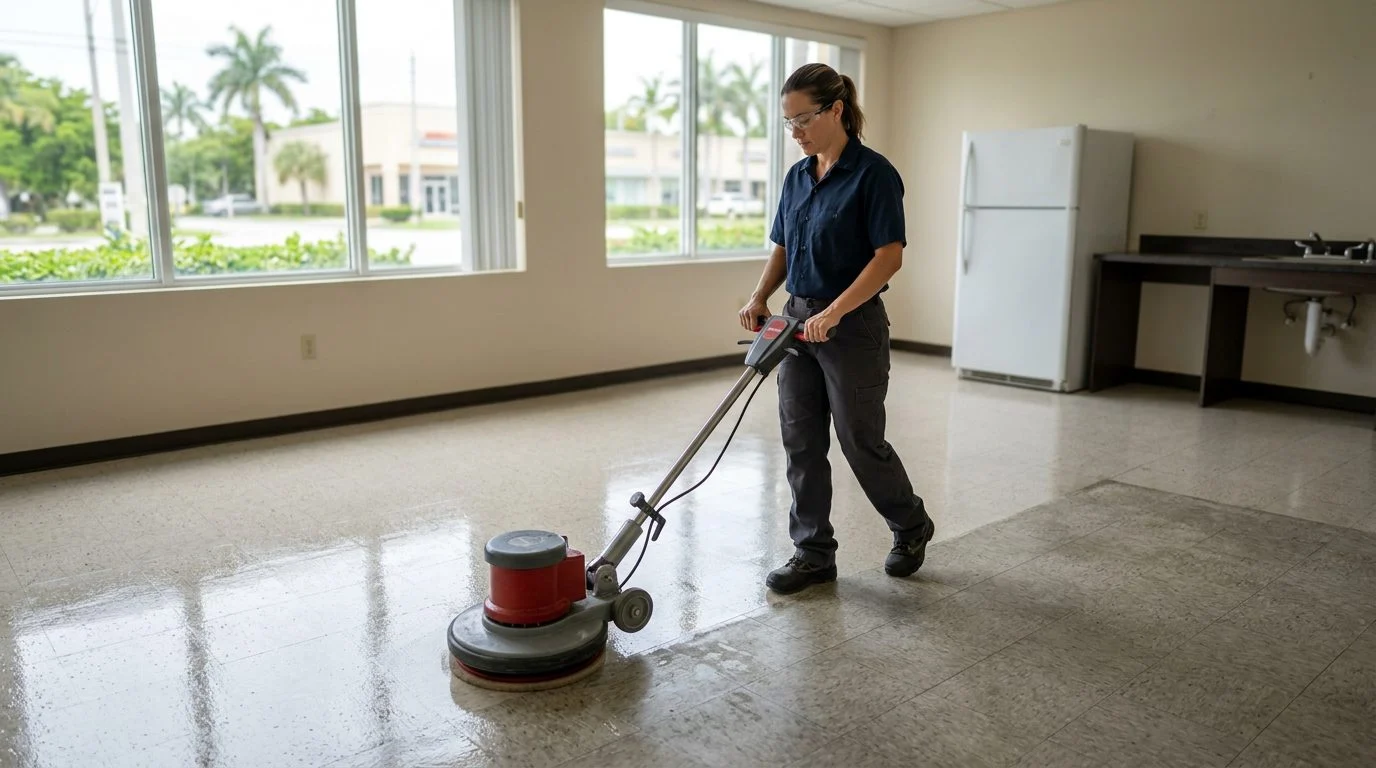
The Florida Department of Health’s guidance on cleaning lead dust from hard floors calls for wet-mopping with an all-purpose cleaner or water. Floor care is ongoing work. Floor care maintenance is planned around the flooring type and foot traffic in each common area, and our team can review your facility’s needs.
If a stain you didn’t make is sitting on a floor you’re responsible for, our team can help. We provide floor care maintenance for commercial floors across South Florida. We can assess the floor and recommend an approach that fits its material and use. Reach out through our contact form, call the office, or request a free quote.
La consulta inicial es gratuita, confidencial y sin compromiso de continuar.
Frequently Asked Questions
What is the first step to removing a hard stain from vinyl flooring?
Start with a pH-neutral floor cleaner mixed with warm water, then apply it with a soft cloth or nylon brush. For dried-on residue, let the cleaner sit for a few minutes before gently scrubbing.
Which cleaning products are safe to use on vinyl flooring?
Most vinyl floors do well with a pH-neutral cleaner made for resilient flooring. Always check the manufacturer’s care instructions and test any product on a small, hidden area first.
What should I avoid when cleaning hard stains on vinyl flooring?
Avoid steel wool, abrasive scrubbing pads, and strong solvents such as acetone, because they can scratch or dull the surface. Harsh chemicals can also damage the vinyl’s protective top layer over time.
When should I call a professional for a stubborn stain on vinyl flooring?
If a stain remains after gentle cleaning, or if your commercial floors see heavy foot traffic, a professional can help. Gator Protection, Inc. offers floor care maintenance, and you can contact our team for a free first consultation, which is confidential and carries no obligation to continue.
Test Before You Scrub
Harsh solvents, steel wool, and abrasive pads can dull or scratch vinyl's surface. Always test any cleaner on a small, hidden area first and wait for it to dry before judging the result.
Common Hard Stains on Vinyl Floors
Dried Food and Beverage
Sugary spills and dried residue often respond best to a gentle cleaner given time to loosen before light scrubbing.
Scuffs and Shoe Marks
Rubber and friction marks usually lift with a soft nylon brush and a neutral cleaning solution, without heavy pressure.
Grease and Oil Buildup
Kitchen and entryway grime calls for a degreasing approach that is still gentle on the floor's protective layer.
Stubborn or Set-In Marks
When a stain persists after careful cleaning, a professional floor care review can help decide the next step.
How Our Floor Care Maintenance Helps
Protective Routines
Regular maintenance keeps floors looking their best and reduces the buildup that leads to hard stains.
Scheduled Visits
Recurring service fits around your business hours so your floors stay clean without disrupting daily operations.
Commercial-Focused Work
Our floor care services are designed for commercial spaces across South Florida, from Miami-Dade to Palm Beach County.
Responsive Team
Our team stays in touch throughout the process so you always know what to expect.