
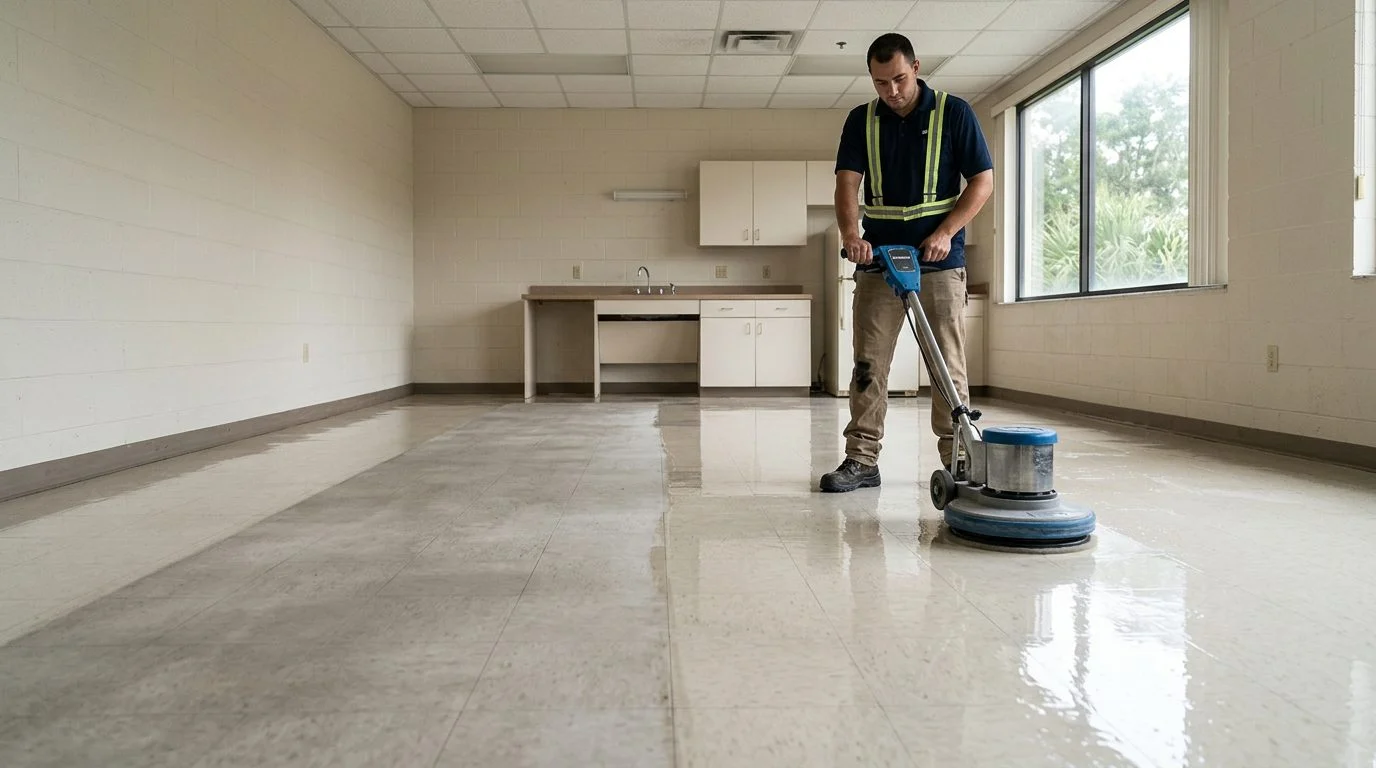
Floor Care Maintenance | Palm Beach County
Commercial Floors That Look Cared For, Visit After Visit
Palm Beach County businesses depend on clean, well-kept floors every day. Here is how our floor care maintenance keeps them that way.
By Ryan Jurney · Published November 11, 2026
Commercial floors take a beating every day. Foot traffic, sand from the parking lot, and spills wear down the finish, even in a well-run building. Floor care maintenance is the regular work that keeps those floors clean and protected between deeper restorations. Gator Protection, Inc. provides commercial floor care across South Florida, including Palm Beach County.
What Floor Care Maintenance Covers for Palm Beach County Properties
Floor care maintenance is the recurring work that keeps commercial floors clean, protected, and presentable. It runs on a schedule, not as a one-time visit. The schedule follows how the building is used.
A front lobby takes the most foot traffic, grit, and rainwater tracked in from outside. A back office usually sees far less wear. Treating both areas the same wastes time and leaves the busy spaces under-protected.
Palm Beach County properties vary a lot. Offices, retail stores, restaurants, medical suites, and shared commercial buildings each bring different soil and different hours. Some work happens early in the morning, before a store opens. Other work must fit around a restaurant’s dinner rush. A good plan accounts for those hours so the work doesn’t get in the way.
Maintenance is the steady work. Deeper restoration comes later, when the finish has worn thin.
If your lobby, entryway, or dining room floors are dulling, staining, or wearing unevenly, reach out to Gator Protection, Inc. Talk it through with our team — the first consultation is free, confidential, and carries no obligation.
Hard Floor Types We Maintain: Tile, Grout, Marble, and Hardwood
Each hard floor type needs its own routine. One generic mop method can damage some floors while missing the dirt on others.
Tile and grout. Grout is porous. It traps soil, oils, and mop residue, and it can look dingy even when the tile looks clean. Routine scrubbing keeps the whole floor looking even.
Marble. Marble is a natural stone. The wrong products or tools can etch and dull it. It needs gentle cleaning and careful polishing to keep its shine and protect its surface.
Hardwood. Wood reacts badly to standing water. Cleaning should leave the floor barely damp, so moisture doesn’t sink into seams or boards. The finish should look consistent from one end of the room to the other.
Tell the team which floor types are in the building. Mixed floors, such as tile in a lobby and hardwood in a conference room, need a plan that covers both.
Why Palm Beach County Floors Need a Regular Schedule
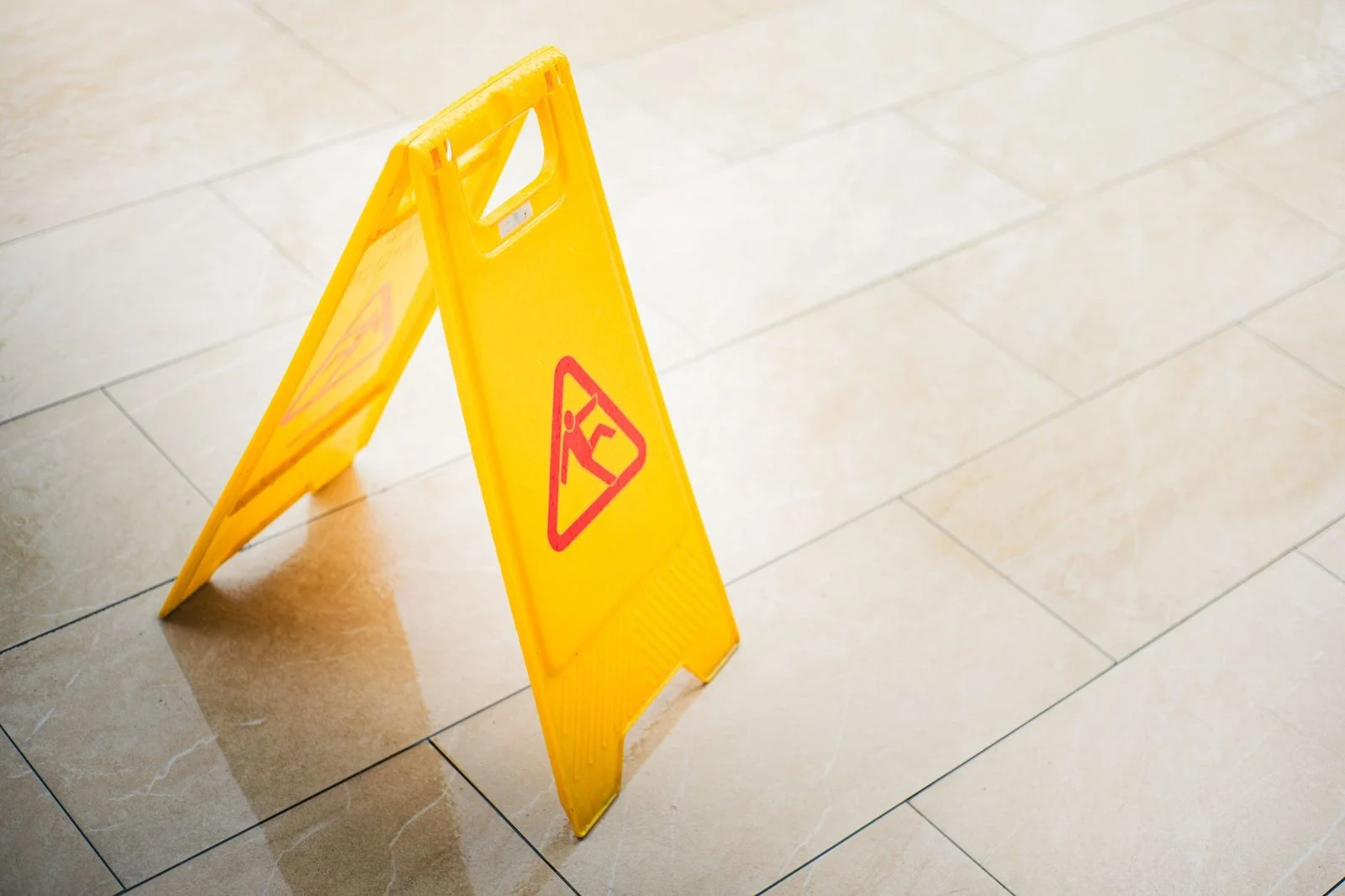
South Florida’s heat and humidity make moisture control part of floor care. Damp floors take longer to dry, and standing water invites dirt and slips.
Sand and grit are the next problem. Sand tracked in from parking lots, entrances, and landscaped areas works like sandpaper. Each footstep scratches the finish and dulls the shine a little more. Regular dust mopping removes that grit before it does damage.
Traffic matters too. Lobbies, entryways, and food-service areas wear protective coatings faster than back offices. Restaurant floors also collect grease and spills, which can break down a finish if they sit. A schedule keeps these high-wear areas on a tighter cycle.
Waiting until a floor looks bad usually means a bigger job. Regular care keeps the job smaller.
Routine Floor Care Steps: Daily Care, Scrubbing, Stripping, Waxing, and Polishing
Routine care keeps floors clean day to day. Periodic restoration renews the protective finish. Both matter.
Daily and routine care. Dust mopping and spot cleaning remove grit and spills before they wear the floor. This step protects everything else.
Scrubbing. Periodic scrubbing lifts soil that builds up in tile and grout. It restores a clean look without stripping the whole floor.
Stripping and waxing. Old finish builds up over time and can turn cloudy or yellow. Stripping removes that buildup. Waxing then restores a protective coating on floors where a wax finish suits the surface. Not every floor takes wax, so the plan must match the floor.
Polishing and buffing. Marble and other hard surfaces keep their shine through periodic polishing between deeper service.
Chemicals are part of this work. Cleaning products in your building should be labeled, documented, and used by trained staff, as required by the OSHA Hazard Communication Standard.
Planning a Floor Care Program for Your Facility
A good floor care plan starts with a few facts about your building. Bring these details to the conversation:
- Approximate square footage of each floor area
- Floor types, such as tile, marble, or hardwood
- Traffic patterns, including entrances and food-service zones
- Operating hours, so work can happen before or after business
A written schedule helps you budget for floor care. It also helps you avoid emergency restorations, which cost more and disrupt the space. The team reviews current floor condition and recommends a cadence that suits each area.
Coverage matters too. Bring those coverage questions to your consultation so you can review them before work begins.

Free First Consultation for Floor Care Maintenance in Palm Beach County
Our first consultation is free, confidential, and carries no obligation to continue.
During the consultation, the team reviews your floors and talks through traffic and schedule. Then it outlines a maintenance approach that fits your building. You leave with a clear picture of what your floors need.
Common Questions
Do I need to know my floor types before I call?
No. Rough square footage and a sense of your traffic help. The team can sort out the rest during the consultation.
Does floor care maintenance include stripping and waxing?
It can, when the floor type suits a wax finish. The consultation covers which steps fit your floors.
If your lobby, entryway, or dining room floors are dulling, staining, or wearing unevenly, reach out to Gator Protection, Inc. through our contact form, call the office, or request a free quote today.
Why Palm Beach County Businesses Work With Gator Protection
Scheduled Maintenance
Floor care is planned around your business hours, so your floors stay in step with your daily traffic.
Floor-by-Floor Approach
Our team looks at each surface type and its wear pattern before recommending a maintenance routine.
Support Staff Behind Every Visit
Our assistants and office staff coordinate scheduling and communication so the work stays organized.
Confidential Consultation
Your first consultation is free, confidential, and comes with no obligation to continue.
Tip Before You Call
Have a rough estimate of your square footage and note which areas see the heaviest foot traffic. That information makes your consultation faster and more useful.
What to Expect From Your Consultation
Tell Us About Your Space
Share your facility type, approximate square footage, and how many people use the floors each day.
Review Your Floor Types
We discuss the surfaces in your building and which care steps suit each one.
Plan a Routine That Fits
You receive a maintenance outline that matches your traffic and schedule, with no pressure to proceed.
Ready to Talk About Your Commercial Floors? Start With a Free, Confidential Consultation.
More of our services
- Floor Care Maintenance for Miami-Dade Condos, Apartments and Gated Communities
- Floor Care Maintenance in Coral Gables
- Floor Care Maintenance in Brickell
- Floor Care Maintenance Miami-Dade County