
Floor Care Maintenance | South Florida
Still Slippery After Mopping? Find Out Why
Residue, over-dilution, and worn finishes are common culprits in commercial lobbies. Learn what causes the film and how our team focuses on keeping floors clean and safer to walk on.
By Ryan Jurney · Published November 4, 2026
Why Are Lobby Floors Slippery After Mopping? Causes and Fixes
Not sure what your next step is?
Talk it through with our team — the first consultation is free, confidential, and carries no obligation.
What a Slippery or Sticky Lobby Floor Usually Means
Why are lobby floors slippery after mopping? Usually because a thin film is left on the surface when the job ends. The floor material itself is often not the real cause.
Two symptoms come up most. A slippery floor gives less grip underfoot. A sticky floor makes shoes or carts seem to grab, or it feels tacky even after it should be dry.
A lobby takes heavy, repeated foot traffic. Every shoe that comes through the entrance carries grit and moisture. Small film problems show up fast in a space like that.
This page walks through the common causes in an order you can check on site. It starts with leftover cleaner and moves through too-strong solution, dirty rinse water, the wrong product, and drying habits. A daily routine and clear signs for a deeper clean come last.
Cleaner Residue Left Behind After Mopping
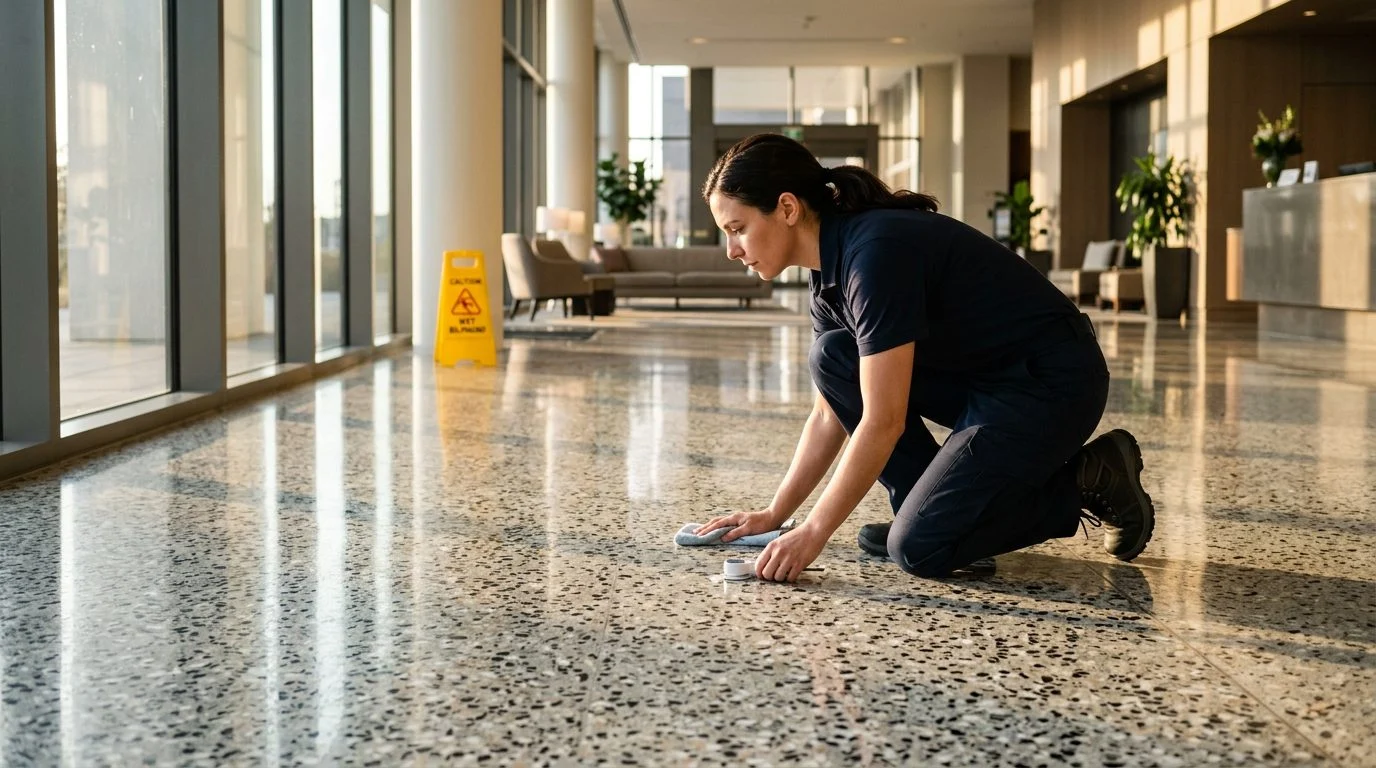
A tacky finish after mopping is often cleaner residue. Soap or cleaner dries on the surface instead of being fully removed. The floor then feels grabby, even when it looks clean.
More product does not clean better. An over-concentrated solution leaves more film behind. It feels like a stronger mix should work harder, but the extra product has nowhere to go. It stays on the floor.
Reused mop water is another source. When the bucket turns gray after a few passes, the dirty water puts soil and cleaner back down as a film. Each pass can spread the problem wider.
Watch for these warning signs:
- Streaks or haze that appear as the floor dries
- A footprint pattern that looks dull once dry
- A tacky feel on a floor that otherwise looks clean
Buildup Under the Floor Finish
Floor finishes wear down in high-traffic lobby paths over time. Dirt and cleaner get trapped in the worn areas. Over months, those layers can make a floor feel slick or tacky.
This is why one lane of a lobby can feel sticky while the area along the walls feels fine. The middle of the room takes the most steps, so the finish wears there first.
Buildup is different from a fresh film. A fresh film often clears once the mopping routine is corrected. Buildup returns soon after mopping and does not respond to one extra pass.
When the same spot keeps returning to the same feel, the problem likely sits below the surface. That calls for a deeper clean, not a stronger mop solution.
Using a Cleaner That Does Not Match the Floor
Match the cleaner to the floor type the manufacturer specifies. Common commercial lobby floors include luxury vinyl tile, ceramic and porcelain tile, terrazzo, and sealed stone.
Some products suit certain floors and leave a film on others. The product choice matters as much as the amount you use.
A household soap is not automatically a safe choice for a commercial floor. Using a product that is not meant for the floor is a common reason a floor feels sticky.
Before you change products, read the label and the Safety Data Sheet. You can also ask the floor’s installer or the manufacturer for cleaning instructions.
Mopping Technique and Drying Habits
Mop with a damp, well-wrung pad, not a dripping one. A dripping pad leaves the floor wet with solution, and that solution dries into a film.
Change the rinse water often. Don’t carry dirty water across the lobby. Dirty water spreads soil over a wider area with every pass.
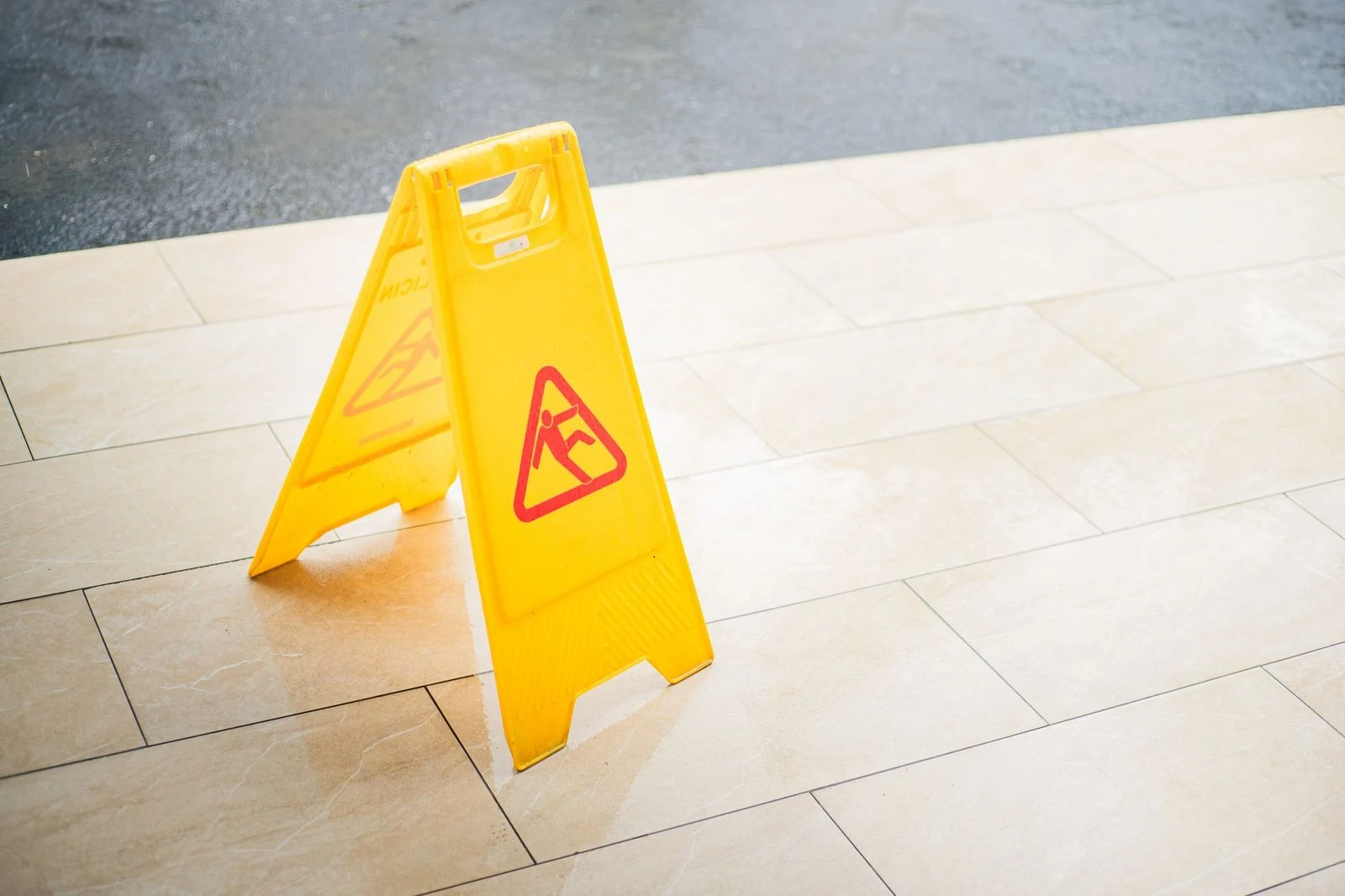
Let the floor dry fully before foot traffic returns. Use wet floor signs during drying so people can see the wet area. Drying belongs in the routine, not at the end of it.
Airflow and humidity matter too. A humid lobby with little ventilation dries slowly. A slow-drying floor makes any film easier to notice underfoot.
Have questions about what happened?
Ask our team directly. The first conversation is free, confidential, and there is no obligation to continue.
A Routine to Stop the Problem
Run these steps on every shift. Consistency keeps the film from building up again.
Step 1: Measure the cleaner by the manufacturer’s dilution ratio. Don’t measure by eye. A quick pour is how over-concentration happens.
Step 2: Use fresh water for the cleaning pass. If the floor still feels tacky, make a separate clean-water rinse pass to lift leftover residue.
Step 3: Use a clean mop head or microfiber pad. Rotate or replace it as it loads with soil.
Step 4: Let the floor dry completely. Touch the surface and check for tackiness before you reopen the lobby.
Write the routine on a shift checklist. Day porter staff can also check the floor during the shift and respond to spills right away, as covered on our day porter service page.
When Mopping Is Not Enough: Deep Cleaning or Recoating
The problem likely sits below the surface when the floor stays tacky after a careful routine. The same is true when the finish looks worn, dull, or patchy.
A deep clean removes built-up residue and layers that routine mopping cannot lift. Once those layers are gone, the regular routine has a clean base to work from.
Whether a floor needs stripping, waxing, or recoating depends on the floor’s age, finish condition, and traffic pattern. Each floor is different, so the decision depends on the facts of that space.
These guides cover the next questions:
- How often to strip and wax commercial floors
- When a commercial floor needs a deep clean or recoat
- Why vinyl floors yellow in condo lobbies
Frequently Asked Questions
What does sticky floor mean?
A sticky floor feels tacky or grabby underfoot. A residue film usually causes it, not the floor material itself.
How do you get rid of sticky floors after mopping?
Rinse with clean water, remove excess product, and let the floor dry fully. Then check that the cleaner is diluted to the manufacturer’s ratio.
How do you reduce slippery floors?
Use the correct dilution, rinse the floor, and dry it completely. If routine mopping no longer clears the film, a deep clean may be the next step.
Is household soap good for a commercial floor?
Check the floor type and the manufacturer’s cleaning guidance first. Read the product label before using any product on a lobby floor.
For the full service overview, see our floor care maintenance in Miami-Dade County page.
Talk With Our Team About Your Lobby Floor
If you manage a lobby where residents, tenants, or staff have raised concerns about a slick floor, you may be weighing what to do next. That is a hard spot to be in, especially when people are walking the floor every day.
Reach out through the contact form or call our office to talk through the floor’s condition and your options. Our first consultation is free, confidential, and carries no obligation to continue.
Want to know where you stand?
Tell us what happened and our team will walk you through the options available to you, at no cost.
How Our Team Approaches Lobby Floor Care
Matching Products to the Floor
Different floor finishes respond to different cleaners. We focus on selecting and diluting products to match the surface and the manufacturer's guidance.
Rinsing and Residue Removal
Our routines include thorough rinsing and removal of excess product so a sticky film does not build up between cleanings.
Scheduled Floor Maintenance
Regular maintenance schedules help keep high-traffic lobbies consistent, rather than relying on occasional deep cleans.
Support for Busy Commercial Spaces
Our team works around building hours and heavy foot traffic across South Florida, from Miami-Dade to Palm Beach County.
Tip: Adding More Cleaner Rarely Helps
Using extra product or stronger solutions often leaves more residue behind, which can make floors feel tacky and slippery. Measure your cleaner carefully and rinse as directed.
Quick Checks Before Your Next Mopping
Check Your Dilution
Compare the mix you are using with the label or manufacturer's ratio. Too much product is a common reason floors feel sticky.
Rinse With Clean Water
After mopping, rinse with clean water to lift remaining product from the surface and reduce film buildup.
Let the Floor Dry Fully
Allow the floor to dry completely before foot traffic returns, and keep wet-floor signage in place until then.
Review the Floor Finish
Worn or dull finishes can hold residue more easily. A professional floor care assessment can show whether maintenance is needed.
Get a Free Consultation for Your Commercial Floors. It's Confidential and Comes With No Obligation to Continue.
Related practice areas
- Condo Garage Floor Cleaning in Florida: Who Is Responsible