
Floor Care Maintenance | South Florida and Atlanta
Surface Cleaner vs Floor Cleaner: Which One Does Your Property Need?
A product that works well on one surface can dull, damage, or leave residue on another. Here is how to tell them apart before you clean.
By Ryan Jurney · Published November 16, 2026
Maybe a vendor’s bid lists a surface cleaner for a lobby floor, or a building report mentions a floor cleaner for the restrooms. The two terms sound alike, so the difference is easy to miss. In short, a floor cleaner is made for floors and the finishes on them, while a surface cleaner is a broader term for many hard surfaces.
The Short Answer: Surface Cleaner vs Floor Cleaner
The main difference is the job each product is built for. A floor cleaner is designed around floor finishes and the soil that builds up on them. A surface cleaner is designed to work across counters, glass, appliances, and sometimes floors.
The words overlap in everyday use. Store shelves label many products “all-purpose,” “multi-surface,” or “floor and surface,” so the names blur together. A product name alone does not tell you which floor it suits.
This page sorts out those meanings. It covers what each term means, how multi-surface products fit, the main floor cleaner types, routine versus deep cleaning, and the pressure washing attachment that also goes by “surface cleaner.”
If a floor problem has landed on your desk and you're still working out which cleaner fits, our team is glad to talk it through with you. Talk it through with our team — the first consultation is free, confidential, and carries no obligation.
What Is a Surface Cleaner?
A surface cleaner is a cleaning product or tool made for a range of hard, flat surfaces. Common examples include countertops, glass, stainless steel, and some sealed floors. The goal is to lift dirt, grime, and light staining from many materials without a separate product for each one.
Multi-surface cleaners are the most common form people buy. Their main design goal is broad use. A formula that works on many materials has to be a compromise, so it rarely matches the needs of one specific floor finish.
Surface cleaners carry a second meaning in pressure washing. There, the term names a rotating attachment for the washer, covered later on this page.
Disinfecting claims are a separate matter. The U.S. EPA publishes lists of registered disinfectants and their label claims, which show which products are registered for restroom and high-touch surface disinfecting. You can review those EPA registered disinfectant lists to see the claims in context.
What Is a Floor Cleaner?
A floor cleaner is a product formulated for floor surfaces and the finishes applied to them. Typical floors include sealed concrete, tile, vinyl, and sealed or finished wood. The formula works with the finish instead of against it, lifting soil without stripping the protective coat.
That job differs from cleaning a glass table or a stove top. Many commercial floor cleaners are concentrates, so crews mix them with water to a set strength. They then apply the solution with a mop, a microfiber system, or an auto-scrubber, depending on the floor and the size of the area.
Handling these products is also a workplace matter.
Can You Use a Multi-Surface Cleaner on Floors?
Some multi-surface products can clean certain floors, but their formulas are built for many surfaces at once. The product’s stated uses decide which floors it is meant for. Using it outside those uses carries real risks.
The common problems are residue buildup, a dulled finish, and a film that makes the floor slippery. A product that leaves residue can make a hallway look dirty again even after a careful mop job.
Unsealed and wood floors are the most sensitive. A product that suits sealed tile may not suit unsealed stone or wood at all. Two factors decide the choice: the floor type and the finish on it. The finish matters more than the product’s name on the bottle.
Types of Floor Cleaners and Where Each Fits
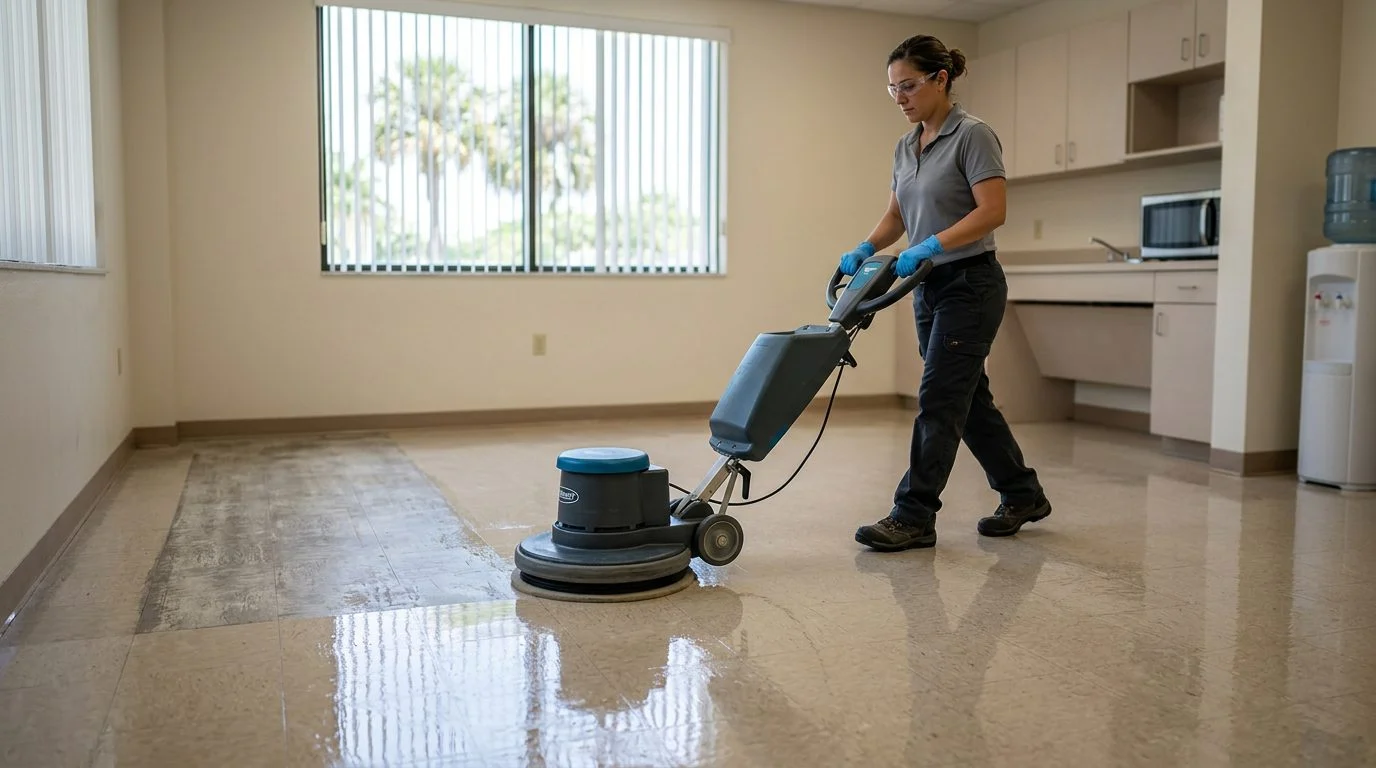
Floor cleaners fall into a few working groups, and each group matches a specific job. A floor care program uses these groups together, not one product for everything.
Neutral floor cleaners are pH-balanced routine cleaners for regular upkeep on sealed floors. They are the everyday product for lobbies, corridors, and offices.
Tile floor cleaners are formulated for ceramic and porcelain tile and grout lines. Grout holds soil, so these products reach into the lines where general cleaners often miss.
Concrete floor cleaners handle heavy soil on concrete, which is porous and takes soil into its surface. They suit loading areas and garages.
Floor degreasers target kitchen, loading-area, or heavy grease soil. They must be rinsed away thoroughly afterward, so residue doesn’t create a slip hazard.
Floor strippers and finishes remove old finish buildup and apply new protective coating during periodic maintenance. They are not daily products.
Many people ask about a set of “four types” of cleaners. Floor care crews sort products by the job they do, and the groups above cover the floor-specific jobs in a commercial program.
Deep Cleaning vs Surface Cleaning for Floors
Routine cleaning removes everyday dust, dirt, and light soil. Deep cleaning removes buildup, embedded soil, and old finish on a set schedule. Both belong in a sound floor care plan.
A common mix runs routine cleaning on a regular cycle, with deeper work at set intervals. Frequent passes use a neutral cleaner. Periodic deep work uses a degreaser, a stripper, or a new finish, depending on what the floor needs. The product changes with the job.
The mistakes are predictable. One is using a stripper or degreaser for daily mopping, which can wear the finish and leave residue. Another is waiting too long between deep cleanings, so buildup gets heavy and needs a harsher product. Both problems show up in the floor’s look and its slip resistance.
Commercial programs often follow written standards. The ISSA Cleaning Industry Management Standard addresses service quality, staffing, and green cleaning practices for commercial cleaning organizations.
Not sure what your next step is?
Talk it through with our team — the first consultation is free, confidential, and carries no obligation.
Surface Cleaner Attachments in Pressure Washing
A pressure washer surface cleaner is a rotating attachment for broad, flat exterior areas. It cleans concrete, pavers, and driveways with a wide spray instead of a single narrow jet.
This tool differs from floor cleaning products. It works with water pressure on outdoor flatwork. Indoor floor cleaning relies on a cleaning formula and a finish system, applied with mops or scrubbers. The two jobs share a name but not a method.
Gator Protection, Inc. offers pressure washing services for exterior flatwork. The attachment is one of several tools used for that work.
Frequently Asked Questions
Is a floor cleaner the same as a surface cleaner?
No. A floor cleaner is made for floors and their finishes, while a surface cleaner covers a wider range of hard surfaces.
Are surface cleaners safe to use around children and pets?
Store them out of reach of children. Keep pets away from treated areas until floors are dry and rinsed as the product directs.
Which product should go on a sealed commercial floor?
The floor type, its finish, and the product’s stated uses decide it. A neutral floor cleaner is a common routine choice for sealed floors.
How often should floors get deep cleaning?
Foot traffic, soil load, and the floor’s finish set the schedule. Heavier traffic usually calls for a shorter cycle.
If a floor problem has landed on your desk and you’re still working out which cleaning approach fits, you don’t have to sort it out alone. Gator Protection, Inc. provides commercial janitorial and floor care services across South Florida, including Miami-Dade, Broward, and Palm Beach counties. La consulta inicial es gratuita, confidencial y sin compromiso de continuar. Contact our team to start the conversation.
Where Each Type of Cleaner Fits
Floor cleaners
Formulated for floor finishes such as sealed tile, VCT, and other finished flooring, with attention to gloss and slip resistance.
Surface cleaners
Designed for a wider range of hard surfaces, including counters, fixtures, glass, and walls, where a general-purpose product is appropriate.
Exterior hard surfaces
Walkways, patios, and building exteriors often need a different approach, and pressure washing may be part of the plan.
Mixed-use properties
Many buildings need both. A clear plan for each surface helps protect finishes and keeps routines consistent.
Read the Label Before You Mix or Pour
Never combine cleaning products, and follow the label's dilution, dwell time, and rinse instructions. Keep all products stored out of reach of children and pets.
Not Sure Which Cleaning Program Fits Your Property?
The First Consultation Is Free, Confidential, and Carries No Obligation to Continue.