
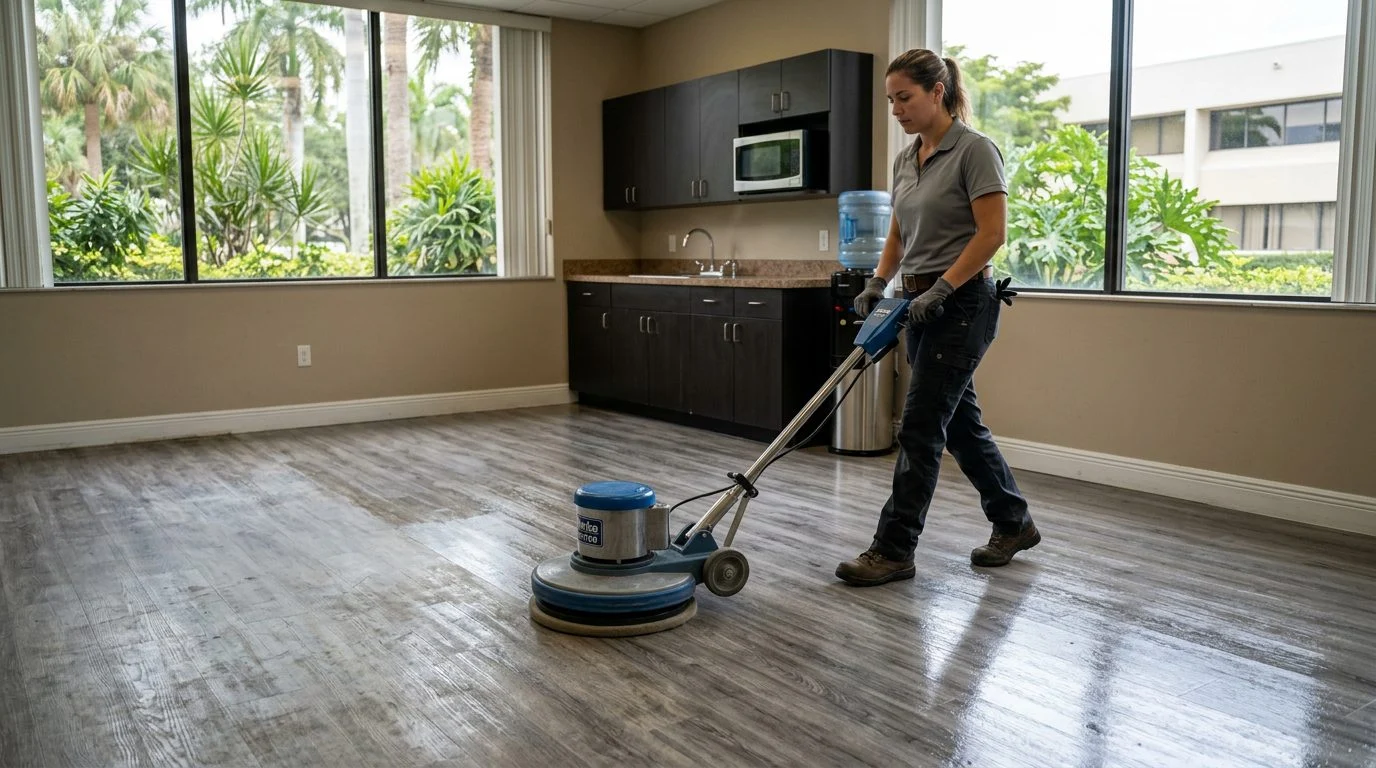
Floor Care Maintenance | South Florida
Keep Your Luxury Vinyl Plank Floors Looking New
Commercial foot traffic wears down even durable flooring. Here is how to clean vinyl plank without dulling its finish or leaving it slippery.
By Ryan Jurney · Published November 18, 2026
Dull, streaky, or worn luxury vinyl plank floors are frustrating, especially when cleaning doesn’t fix them. You may be the person responsible for them, in a home, a rental, or an office.
The best way to clean luxury vinyl plank floors is a three-part routine. Remove dust and grit first. Then mop with a pH-neutral cleaner made for vinyl, using a mop that is only barely damp. Dry the floor right away, and follow the manufacturer’s care instructions for your specific product.
The rest of this guide explains why each step matters. It also answers the questions people ask most often about common cleaning tools.
Why Luxury Vinyl Plank Needs a Different Cleaning Approach
LVP needs gentle, low-moisture cleaning because its surface and seams react badly to water and harsh chemicals. LVP is a multi-layer synthetic product. It has a printed design layer under a clear protective wear layer. The wear layer takes daily foot traffic. Harsh cleaners and rough scrubbing can dull it over time.
Seams are the second weak point. Planks meet at tight joints. Liquid that sits in those joints can work down toward the underlayment and subfloor. So the goal is a barely damp floor, not a wet one.
Dirt that stays on the surface acts like grit. Each pass with a dirty mop spreads it across the floor. Clean it up before it builds.
Most LVP products come with care instructions from the manufacturer. Read them first. They are the most specific reference for your floor. For the wider routine, see our floor care maintenance page.
If you are responsible for floors that look dull, streaked, or worn, our team can talk through your situation with you. Talk it through with our team — the first consultation is free, confidential, and carries no obligation.
Step-by-Step: How to Clean LVP Floors
To clean LVT or LVP, remove loose dust and grit first, damp-clean with a pH-neutral vinyl cleaner, and then dry the floor.
- Dust or dry-mop first. Use a soft microfiber head. Do this daily or several times a week in busy areas.
- Mix a pH-neutral cleaner made for resilient or vinyl floors. Dilute it as the product directs.
- Mop with a cloth or mop wrung out until barely damp. Work in small sections so the floor never stays wet.
- Dry each section promptly with a dry microfiber mop or cloth. Pay attention to seams and edges.
- For scuffs and sticky spots, use a damp cloth and gentle pressure. Skip abrasive pads and scrub brushes.
Sand and grit act like sandpaper when people walk on them. That is why the dust step matters most. Floors kept clean and dry are one practical way to lower slip risk in busy commercial spaces.
Can You Use a Swiffer Wet Mop on Luxury Vinyl Plank?
Sometimes. The answer depends on whether the pad is damp instead of soaked, and on whether the cleaning solution suits your floor.
A dripping pad is the real problem. Excess water can work into seams and leave haze or streaks on the surface. Wring out the pad or swap it so it leaves only a little moisture.
Sweep first. A wet pad full of grit drags that grit across the wear layer. A wet pad also works poorly on a dirty floor. Pick up grit first, then make one light pass with a slightly damp pad.
Before you use any wet mop system, look up the manufacturer’s approved cleaning methods and solutions for your product. Streaks that stay after drying usually mean the pad was too wet or the solution left a film.
Can You Use Dawn Dish Soap on Luxury Vinyl Plank?
Dawn is made to cut grease on dishes, so it is not the right choice for LVP floors.
Dish soap can leave a thin film when it dries. That film attracts dirt and can make the floor look dull. Rinsing with clean water helps reduce the residue. Still, a rinse adds work and may not remove all of it.
A floor cleaner labeled for resilient or vinyl floors is the more practical choice. It is made for floor surfaces and works at the dilution its label sets.
Then use the manufacturer’s care guidance as the final check. If your floor looks hazy after a soap-based cleaning, residue is a likely cause. A clean-water rinse is the first fix to try.
Can You Use Clorox Wipes on Luxury Vinyl Plank?
Disinfecting wipes are made for a labeled use, not for everyday floor cleaning. Disinfecting is a specific job with specific instructions.
The U.S. EPA publishes lists of EPA-registered disinfectants and their label claims. Those labels show which products are registered for hard surfaces and how long they must stay wet.
Repeated wipe use can leave a residue that builds up. A film like that dulls the finish and holds dirt, which is the same problem soap causes. Wipes can also leave sticky spots and a strong chemical smell.
Use this sequence instead: clean first with a floor-appropriate cleaner, rinse with clean water, and then use a disinfectant only where the product label and the flooring’s care guidance both allow it.
What to Avoid When Cleaning Vinyl Floors
Avoid steam mops, abrasive pads, harsh solvents, ammonia-based cleaners, oil-based soaps, and standing water.
Steam mops add heat and moisture, which many LVP products do not handle well. Abrasive pads and scrub brushes scratch the wear layer. Harsh solvents and ammonia-based cleaners can dull the finish over time.
Oil-based soaps and waxes can build up into a film. Standing water and spills left to sit can swell seams and edges, so wipe spills up right away.
Be careful with vinyl cleaners sold for kitchen floors, too. They may not match your specific finish, so the manufacturer’s directions remain the reference.
Pressure washers are a tool for exterior surfaces, not interior floors. Keep high-pressure water away from interior LVP.
Teams that use cleaning chemicals benefit from reading product labels carefully and knowing how to handle each product safely.
Not sure what your next step is?
Talk it through with our team — the first consultation is free, confidential, and carries no obligation.
Keeping Luxury Vinyl Plank Looking Its Best in South Florida Conditions
In South Florida, sand, humidity, and heavy foot traffic wear LVP faster, so regular dry removal matters most.
Sand and grit tracked in from outdoors work into the wear layer over time. Offices, retail spaces, and rental units see heavy foot traffic, and that speeds up the wear.
Rain and humidity bring more moisture onto floors. Dry high-traffic entries promptly so water does not sit near seams.
Put entry mats at exterior doors. Dust regularly. Add furniture pads under chairs and tables, and replace them when they wear down.
A steady routine is easier on the floor than occasional heavy cleaning. Our day porter service covers ongoing upkeep of high-traffic floors in offices and buildings. For readers who also maintain tile areas, see our tile and grout cleaning page.
Talk With Our Team About Your Luxury Vinyl Plank Floors
If you are responsible for floors that look dull, streaked, or worn, our team can talk through your situation with you.
Maybe the floors came to you after a cleaning routine stopped working. Maybe you manage a rental, a condo common area, or an office and must decide who keeps the floors clean. Either way, you are facing the decision now.
There is no need to have every answer before you reach out. Bring the manufacturer’s care instructions if you have them. Describe your cleaning routine and what the floor looks like. Then reach out to Gator Protection, Inc. through our contact page.
Frequently Asked Questions
How often should luxury vinyl plank floors be cleaned?
Sweep or vacuum high-traffic areas regularly to remove grit that can scratch the surface. Damp mop as needed, and use a more thorough cleaning schedule for commercial spaces with heavy foot traffic.
What cleaner should I use on luxury vinyl plank floors?
Use a pH-neutral cleaner made for luxury vinyl plank, or follow the manufacturer’s care instructions. Avoid ammonia, bleach, vinegar, oil-based soaps, and abrasive scrubbers, which can dull or damage the finish.
Is it safe to use a steam mop or a lot of water on luxury vinyl plank floors?
Avoid steam mops and never soak the floor. Excess water and heat can seep into the seams and cause swelling or warping, so damp mop with a well-wrung mop instead.
How do I remove scuffs and stains from vinyl plank floors without damaging them?
Test any cleaner on a small hidden area first, then use a soft nylon pad and work in the direction of the planks. If marks remain or the floor needs deeper care, contact our team for a free consultation. The initial consultation is free, confidential, and comes with no obligation to continue.
Avoid These Common Mistakes
Skip abrasive scrub pads, harsh solvent cleaners, and excess water. Wax-based and oil-based products can leave a residue that dulls the surface and makes it slippery.
A Simple Routine for Vinyl Plank Floors
Sweep or Vacuum Often
Remove grit and debris regularly. Small particles act like sandpaper under foot traffic and can scratch the surface over time.
Damp Mop as Needed
Use a well-wrung microfiber mop and a pH-neutral cleaner made for vinyl plank. Wipe the floor, then let it dry.
Spot Clean Promptly
Address spills and scuffs quickly with a soft cloth and a gentle cleaner so stains do not set into the finish.
Schedule Deeper Cleaning
High-traffic commercial spaces benefit from a planned maintenance schedule that keeps floors clean, safe, and presentable.
How Our Floor Care Maintenance Helps
Scheduled Maintenance
Routine cleaning fits around your business hours so your floors stay in good condition between visits.
Methods Suited to Vinyl Plank
Our team follows cleaning practices that protect the surface and keep the finish looking consistent.
Attention to Safety
Proper cleaning and timely spot care help reduce slippery surfaces in busy commercial areas.
Serving South Florida
We provide floor care maintenance across Miami-Dade, Broward, and Palm Beach counties, including South Beach, Coral Gables, and Brickell.