
Floor Care Maintenance | Broward County
Flooded Commercial Floor? Start With a Plan, Not a Scrub Brush
Water damage on a commercial floor can spread quickly. Here is how to protect the surface, document what happened, and decide on the right next step.
By Ryan Jurney · Published November 26, 2026
Your floors are wet, and you need to know what to do first. In short, stop the water, photograph the damage, hold off on harsh stripping, then clean gently and check the floor before anyone walks on it again.
That order matters more than most people expect. The steps below follow a 72-hour sequence for a flood damaged commercial floor in Broward, with the reason behind each one.
What Floodwater Does to Commercial Flooring
Floodwater can damage a commercial floor in ways you can’t see on day one. Hard surfaces, sealed finishes, and carpet each react differently to standing water and the silt it carries.
Water that sits under or on a finish can soften it, lift its edges, and leave a film. Over time, that can change how the floor looks and how slippery it feels when wet. Keeping work-area floors clean and, as far as practical, dry is a common step in reducing slip hazards.
The floor type changes the first steps. Vinyl composition tile (VCT), tile, sealed concrete, hardwood, and carpet each need different handling. Identifying a floor’s material is an important first step in deciding how it should be cleaned and maintained.
Every site is different. How long water stood, how deep it got, and what it carried in all change the picture. The full picture depends on the facts of each site.
If floodwater has left your Broward floors wet or changed, we can walk the space with you and help you decide what to clean now and what to hold. Talk it through with our team — the first consultation is free, confidential, and carries no obligation.
Hours 0 to 6: Stop Further Water Exposure and Make the Area Safe
The first step is to stop more water from reaching the floor. Confirm the source is shut off before any cleanup starts.
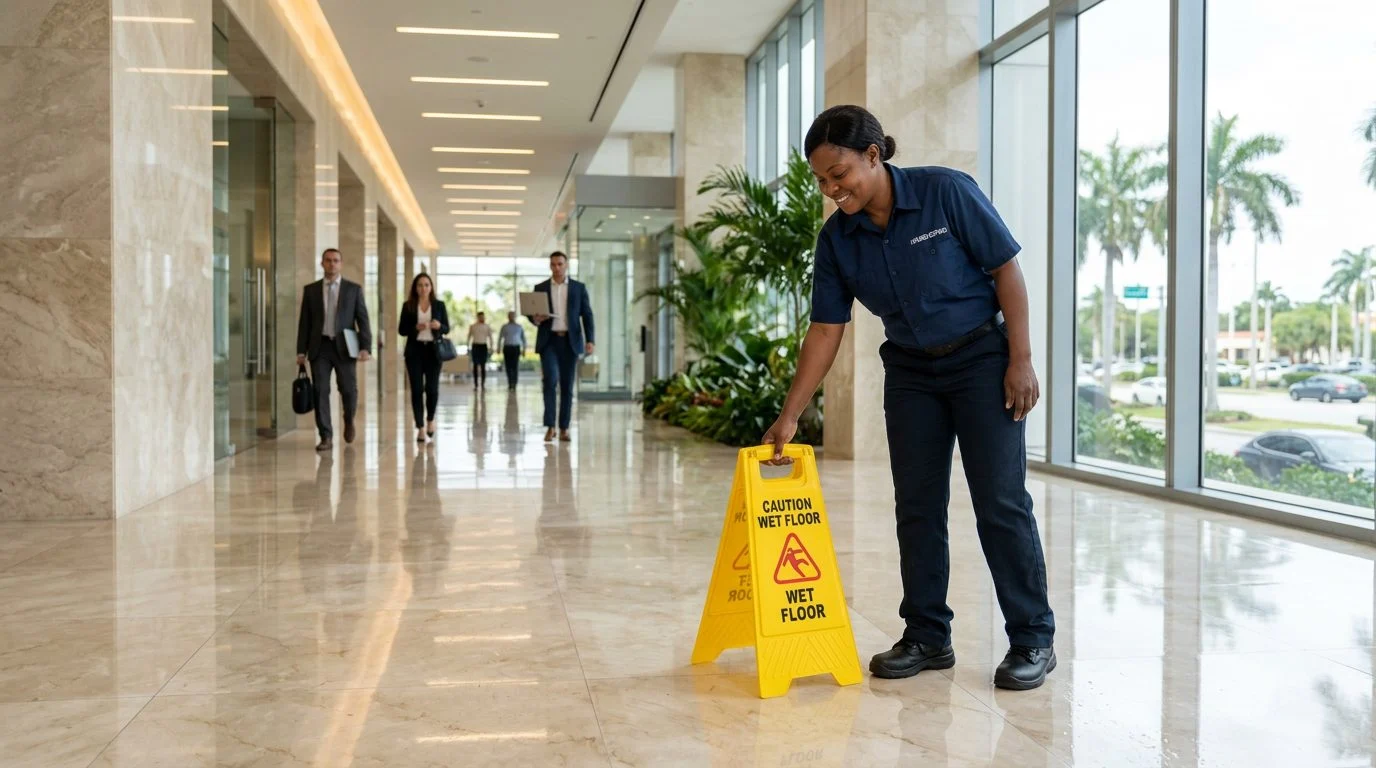
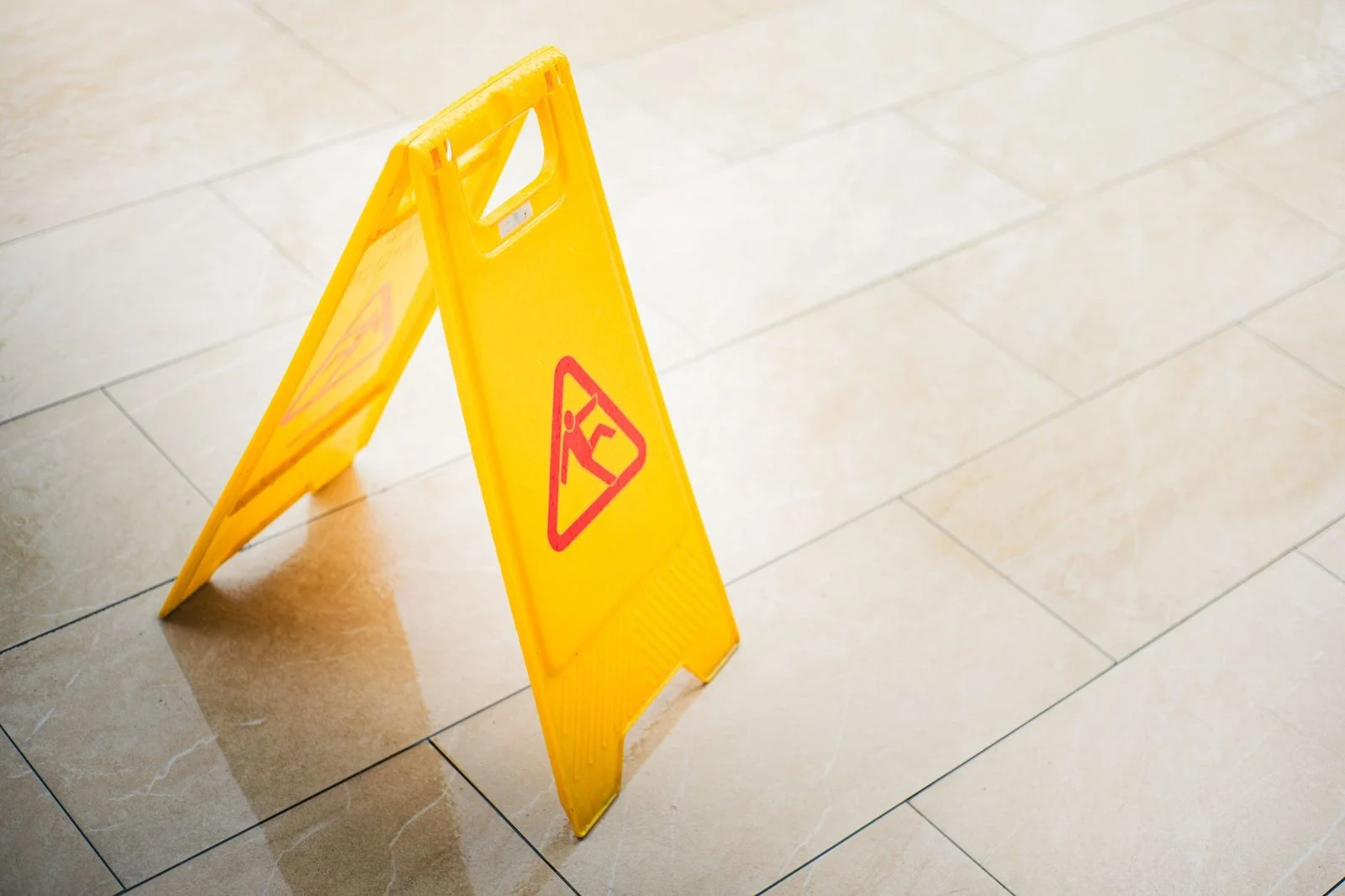
Next, keep people off wet floors. Put out cones or signs at each wet area and at the entries that lead to it. A wet commercial floor is a slip hazard. Keeping floors clean and dry is a practical step toward reducing slip hazards in busy commercial spaces.
Power needs care. Turn off power to affected outlets and equipment only if it’s safe to do so. If wiring or panels are wet, keep electrical work with licensed electricians.
Close exterior doors and entries to foot traffic that would track mud and silt across the floor. Mud spreads fast. It’s harder to lift from grout and seams once it dries.
Last, write it down. Note the time the water was found and the time it was stopped. These times anchor your photo log and any later conversation about the floor.
Document the Damage With Dated Photos
Start a dated photo record before anything gets moved, wiped, or thrown out. Clear records show the floor’s condition at each stage.
Take wide shots of each room first. Then take close-ups of stains, lifted tiles, buckled planks, swollen edges, and grout lines. Photograph baseboards, transitions, and the water line on walls to show how far the water reached. Keep the original files unedited, with the date and time on each one.
Keep a simple log. List each area, the floor material, what you saw, and who was present. A short written note beside each photo helps. Mark any cracks or spots where furniture stood in water, since those marks can change over time.
Save the paperwork too. Keep invoices, the plumber’s or fire department’s report, and any notices from the building owner or property manager.
Hold Off on Harsh Stripping Until a Condition Check
Wait before you strip or scrub hard. Aggressive stripping can remove finish that might have been assessed and saved.
Strong solvents and heavy scrubbing make the problem worse on a wet, soft floor. Scrubbing pushes silt into seams and joints, where it dries and stays. Harsh chemicals can also react with a finish you haven’t identified yet.
Don’t mix new chemicals on the floor until you know the floor type and the finish. Each cleaning product should come with a Safety Data Sheet (SDS). Cleaning chemicals should be clearly labeled, and staff should be trained to handle them safely.
Keep the affected areas as they are, apart from the safety and drying steps described here. A condition check comes first. The cleaning plan follows from what that check finds.
Day 1 to 2: Remove Debris and Begin Gentle Cleaning
Begin with the least aggressive method that works. Remove loose debris, wet paper, and standing water first, using squeegees and wet vacuums rated for the job.
Use a pH-neutral cleaner suited to the floor type. Test it on a small hidden area before you use it across the room. Work from the cleanest area toward the most soiled, and change rinse water often so you don’t spread silt across clean floor.
Pressure washing has a narrow role here. Once water has receded, it can clear mud and silt from exterior walkways and entries. Keep the spray away from damaged interior floors, because high pressure can force water into joints.
Ventilate the space and let it dry. Don’t judge the final condition while the floor is still damp, since wet floors can look better or worse than they are. Hard-surface floor cleaning is generally routine, periodic, and restorative work, and the floor material guides the method.
What a Floor Condition Assessment Covers
A floor condition assessment checks what the flood did to the floor and what it takes to bring it back. It starts with the floor type and finish, then looks deeper.
The assessment checks whether the damage is on the surface or has reached adhesives, subfloors, or seams. It looks for lifted, cupped, or loose tiles and planks, grout or sealant breakdown, and stains that cleaning may or may not address.
A good assessment starts from your photo log and the cleaning steps already taken. That record shows what the floor looked like before and after each step. The review begins from facts, not memory.
The result is a recommended sequence of next steps. It names what can be cleaned now, what should wait until the floor is fully dry, and what needs further floor work. A written scope and estimate follow, so the property owner can decide with the facts in front of them.
Not sure what your next step is?
Talk it through with our team — the first consultation is free, confidential, and carries no obligation.
Before Foot Traffic Returns
Keep foot traffic off a finished floor until its cure time has passed. Cure time differs by product. A finish that feels dry can still be soft underneath, and walking on it too soon can leave marks that stay.
Our finish cure guide for South Florida offices covers this timing in more detail.
Plan temporary protection for entries and high-traffic lanes. Mats and barricades keep people off the recovering floor and catch grit before it reaches the finish.
Set a schedule for the first post-cleaning maintenance visit and for daily floor care afterward. Ongoing care protects the floor long after the flood. The floor care maintenance hub covers the options for commercial buildings.
Ask About a Walk-Through of Your Flooded Floors
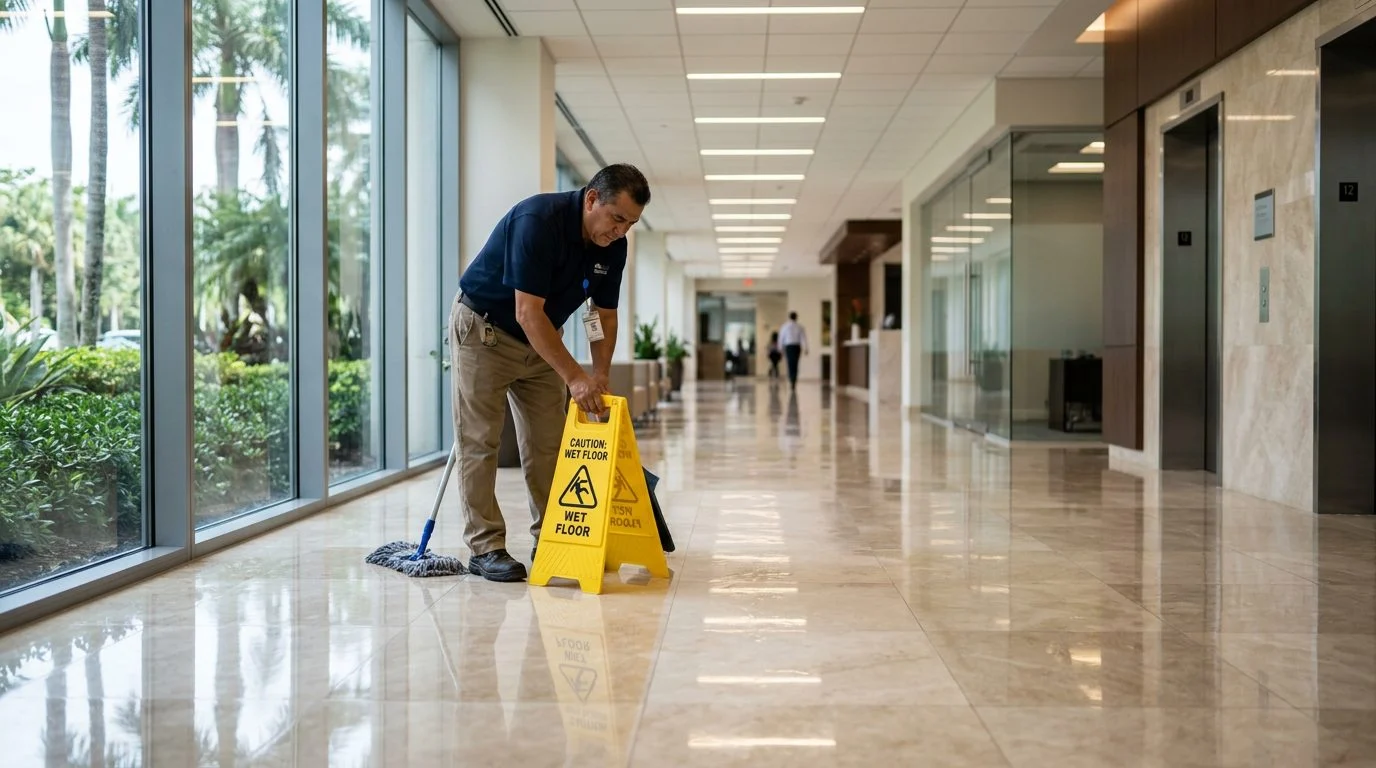
A walk-through of the affected floors is the next step when cleaning and holding decisions feel unclear. Seeing the floor in person makes those choices easier to weigh.
Can I pressure wash flood mud off commercial entryways?
Yes, once the water has receded, pressure washing can clear mud and silt from exterior walkways and entries. Keep the spray away from damaged interior floors.
When should a flooded commercial floor be stripped?
Not until a condition check is done. Aggressive stripping can remove finish that might have been saved.
What is the first thing to do after floodwater reaches a commercial floor?
Stop the water source, keep people off the wet floor, and photograph the damage before you clean.
Gator Protection, Inc. provides floor care maintenance, day porter service, landscape services, and pressure washing across South Florida, including Broward County. If water has reached your commercial floors, reach out and we will talk through the next steps for your building.
The initial consultation is free, confidential, and carries no obligation to continue.
To get started, use the contact form, call the office, or request a quote.
Why Broward Businesses Work With Our Team
Responsive Scheduling
Water damage does not wait for a convenient day, so we plan visits around your operating hours and urgent needs.
Careful, Surface-Aware Methods
Our team matches the cleaning approach to the flooring type, so wet materials are handled with care.
Ongoing Floor Care Support
Floor care maintenance, day porter service, pressure washing, and landscape services can be coordinated through one team.
A Free, Confidential First Consultation
We review your flooring, your schedule, and your concerns before you commit to any service.
Immediate Steps for a Flooded Commercial Floor
Stop the Water Source
Shut off the leak or drainage source if it is safe to do so, and keep people away from standing water and electrical hazards.
Document Everything
Photograph and video the affected areas, note water levels, and keep records of when the flooding was discovered.
Remove Standing Water
Extract as much water as possible, then ventilate the space. Speed reduces the chance of staining, warping, and odor.
Arrange a Condition Check
Have the floor assessed before any stripping, sealing, or heavy cleaning begins, so the finish and substrate are not damaged further.
Key Warning: Don't Rush Into Stripping
Aggressive stripping or high-pressure washing on a flooded interior floor can remove finish that might have been protected. Get a condition check first, then choose the method.