
Floor Care Maintenance | Miami, South Florida
Dull VCT Floors After Cleaning? Bring Back the Shine the Right Way
Here is how buildup, residue, and worn finish make a condo floor look tired, and what a maintenance plan can do about it.
By Ryan Jurney · Published November 18, 2026
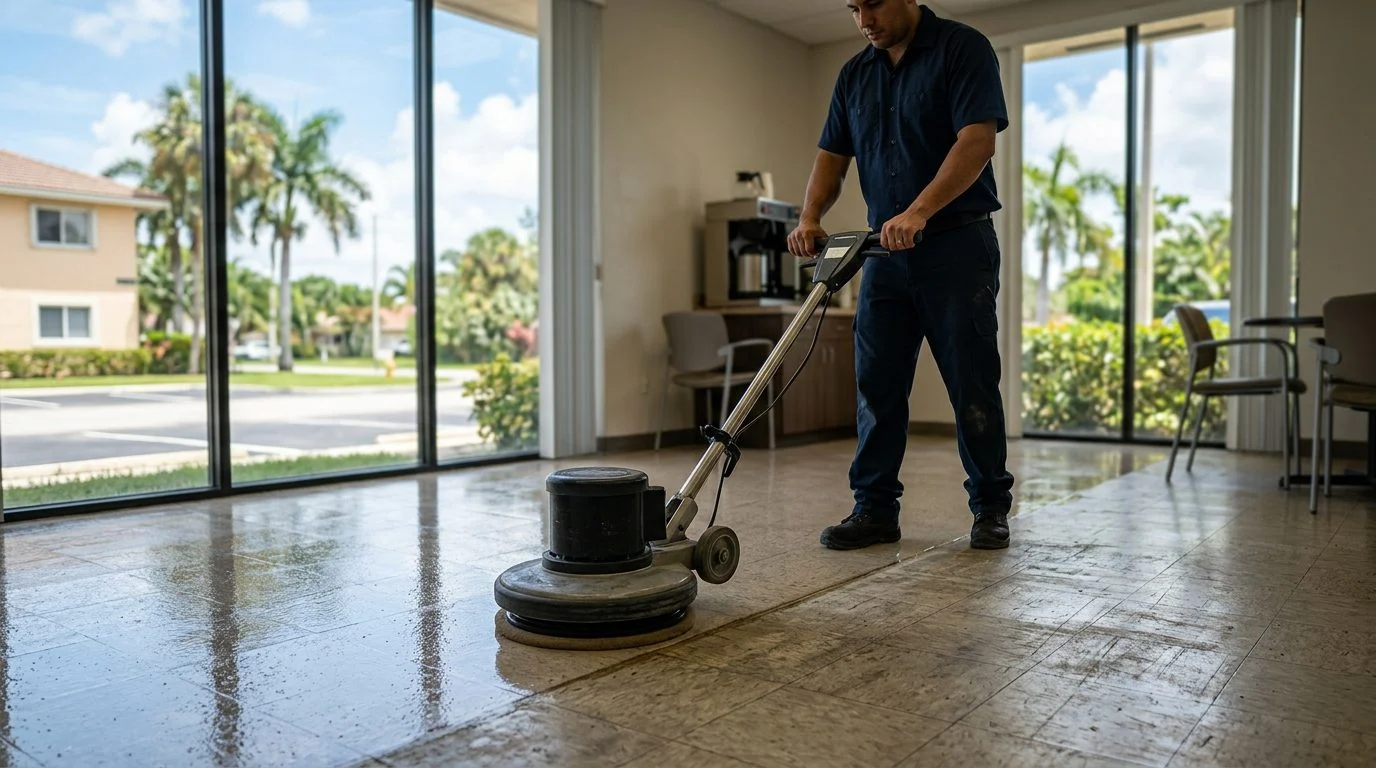
You cleaned the floor, and it still looks dull. Why does a VCT floor look dull after cleaning? Usually the cleaning is fine. The problem sits in the finish coating on top of the tile, which has faded, yellowed, or built up over time.
This guide explains how to tell buildup from wear, why condo lobbies show the problem first, and when stripping and refinishing is the next step.
Why cleaning alone may not bring back the shine
Cleaning alone can’t restore shine when the dullness lives in the finish rather than the dirt on top. VCT, or vinyl composition tile, gets most of its gloss from the protective finish coated over it. Routine cleaning lifts loose soil off that finish. It doesn’t strip away finish that has already faded, yellowed, or built up in layers.
That’s why a floor can look clean and still look dull. The surface may be free of grime, yet the shine you remember is gone. Think of a car with a faded clear coat. A wash removes the dirt, but it can’t restore the coat underneath.
Set your expectations early. If the dullness is in the finish, more mopping alone won’t bring the gloss back. The finish itself needs a closer look.
If your condo's VCT floor still looks dull after cleaning, we can talk through its finish and its heavy-traffic areas with you. Talk it through with our team — the first consultation is free, confidential, and carries no obligation.
What builds up on VCT and turns it yellow
Layers of old finish and wax, trapped soil, and cleaning residue are the usual causes of a yellow, hazy VCT floor. Each new coat goes over the last one. When old coats are never fully removed, they stack up.
Soil and grit get trapped between those layers. Wax residue is sticky, so it grabs dust and holds it. Over time the stack takes on an amber tint. Edges and spots near walls often show it first.
Yellowing is a change in the finish, not a stain in the tile. That difference matters when you choose a fix. A dark perimeter next to a lighter center can look uneven, even when the middle of the room looks fine.
Why high-traffic condo areas show the problem first
Lobbies, elevator landings, hallways, and entries wear down first because they take the most foot traffic. Each step grinds a little grit into the finish. Rolling carts and chairs add more wear.
Sand and grit tracked in from outdoors act like sandpaper on the finish. A floor can look worn in one lane while quieter rooms in the same building still look acceptable.
Uneven wear across one floor points to traffic patterns, not one bad cleaning. Walk the floor and note where the dullness begins. Those spots show where the finish works hardest. Routine floor care in busy commercial spaces can help reduce the chance of slips, so tidy, well-maintained lanes matter.
Why repeated mopping can make dullness worse
Too much cleaner, the wrong product, or dirty mop water can leave a film that dulls the finish further. More mopping doesn’t always help. Heavy cleaner doesn’t rinse away fully and leaves residue behind.
Mop water that isn’t changed often enough spreads soil back across the floor. Each pass that ignores buildup adds another thin film.
Product choice matters. The EPA Safer Choice products list identifies floor-cleaning, floor-finish, and floor-stripper products that meet its criteria. Labels matter too.
A steady cleaning routine still needs periodic stripping when buildup is present.
How to tell buildup from a worn finish
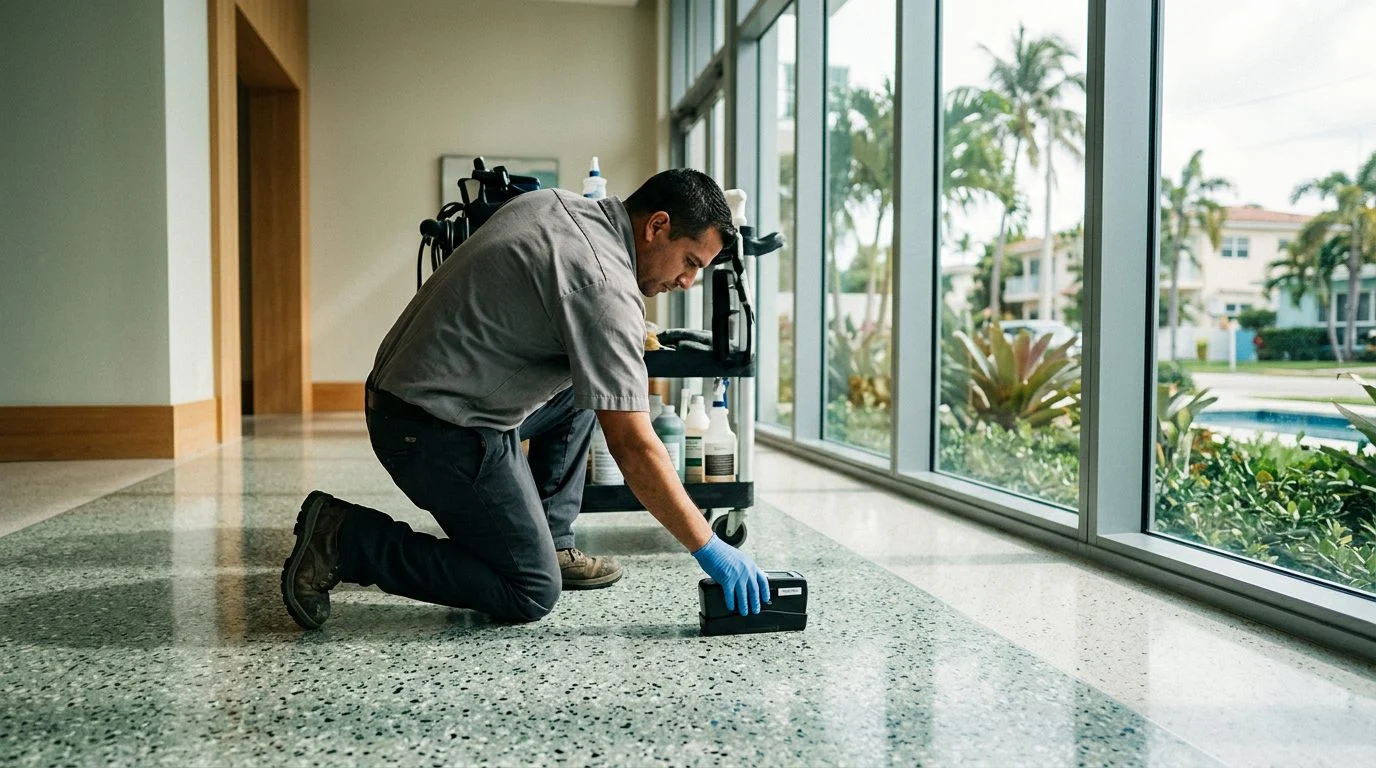
Buildup usually shows as haze and uneven gloss, while worn finish shows dull or scuffed patches. Three simple checks help you tell them apart.
First, use raking light. Turn off the overhead lights and shine a flashlight low across the floor. Buildup shows a cloudy film and uneven gloss. Worn finish shows bare or scuffed spots, often in traffic lanes where the coating has thinned.
Second, compare the traffic paths with the edges and corners. If the dullness is uniform, the whole finish may be tired. If it’s patchy, start with the heavy-use paths.
Third, test one small section. Clean it thoroughly and watch whether the shine returns and holds. If it returns briefly and fades fast, residue or a thin finish is likely. A floor that doesn’t respond to cleaning at all needs a closer look at its finish layers.
What stripping and refinishing involves and how long VCT lasts
Stripping removes old finish and built-up residue. New finish coats then restore sheen and protection. The steps are simple to describe but need care in practice.
The area is cleared and cleaned. Old finish is removed with a stripper, which is a strong chemical, so follow its label. The floor is rinsed well and allowed to dry. New coats go on last. Leftover residue can dull new coats, so the rinse matters.
How long VCT lasts depends on the facts: traffic volume, the cleaning routine, and the condition of the finish. A lightly used amenity room and a busy lobby won’t wear the same way. The building’s usage history matters. A professional look at the floor’s current condition helps decide whether stripping and refinishing is the right service or whether routine care is enough.
Not sure what your next step is?
Talk it through with our team — the first consultation is free, confidential, and carries no obligation.
Keeping VCT floors bright after the work
Routine care after refinishing keeps the floor from building up again. Dust mop high-traffic areas often to pick up grit before it grinds into the finish. Damp-mop with a product diluted as its label directs, and change the water often. Spot-clean spills promptly.
Recoat on a schedule set by traffic, not by guesswork. Entry mats also cut the grit tracked in. Keep a simple record of when each area was last cleaned, stripped, or recoated. That record makes the next decision easier.
Frequently asked questions
Can cleaning alone fix a yellow VCT floor?
Cleaning alone usually can’t fix yellowing caused by built-up finish. Those layers often need to be stripped first.
Why are the edges of a VCT floor darker?
Edges often hold more wax, soil, and finish, and mops reach them less thoroughly. That makes them look darker than the center.
Gator Protection provides floor care maintenance for condo and commercial buildings across South Florida, including Miami-Dade and Broward counties. If your floor still looks dull after cleaning, reach out through our contact form and we’ll talk through its condition. La consulta inicial es gratuita, confidencial y sin compromiso de continuar.
Before You Try a Shortcut
Adding more wax or finish over a dull floor can trap the dirt and haze already there. Have the floor assessed first so the right cleaning or stripping step comes before any new coating.
Common Causes of a Dull VCT Floor
Layered Finish Buildup
Coats applied over time can cloud the surface and turn a floor yellow or hazy, even when it looks clean.
Soap and Residue
Detergent left behind by mopping can attract soil and leave a film that dulls the floor between cleanings.
Edges and Corners
Traffic and mop coverage often leave these areas darker and dirtier than the center of the room.
Inconsistent Maintenance
Irregular cleaning schedules let grime and wear build up faster than a planned routine can remove it.
How We Approach Floor Care Maintenance
Floor Assessment
We look at the finish, the buildup, and the traffic pattern before recommending a method.
Scheduled Maintenance
A regular routine helps keep grime from building up between deeper cleanings.
Careful Process
Our team chooses cleaning steps that suit the condition of your floor and the needs of your building.
Free First Consultation
The initial consultation is free, confidential, and comes with no obligation to continue.