
Landscape Services | South Florida
Landscape Crews That Work Around Your Business Hours
Grounds care can fit into an open workday when every visit is planned around entrances, noise, and foot traffic.
By Ryan Jurney · Published November 22, 2026
Your storefront faces the parking lot, and the grounds crew needs to work there while you’re open. Can that happen without upsetting customers or staff?
Landscape crew work during business hours is often possible. Whether it disrupts people turns on the tasks, the layout, and how the visit is planned. Quiet routine work fits easily into open hours. Loud equipment near entrances needs more care.
Landscape Crews Can Usually Work While a Business Is Open When the Schedule Fits the Property
The same crew can be nearly unnoticed at one site and very visible at another. Layout, foot traffic, and the equipment in use make that difference.
Picture two properties with the same hedges and the same crew. One has a side lot and a rear entrance. The other has a front door opening onto a narrow sidewalk. The work is identical, but the people feeling it are not.
A manager weighing a daytime visit should look at three things: the tasks, the physical site, and the hours when people are present. Each one shapes how much the work will be felt. The sections below walk through them in order, from the loudest tasks to the planning steps that keep a visit on track.
If a daytime grounds visit is planned near your entrance or office windows, we can talk through the site, the tasks, and the hours that suit your property. Talk it through with our team — the first consultation is free, confidential, and carries no obligation.
Loud Equipment and Ladder Work Cause the Most Disruption During Open Hours
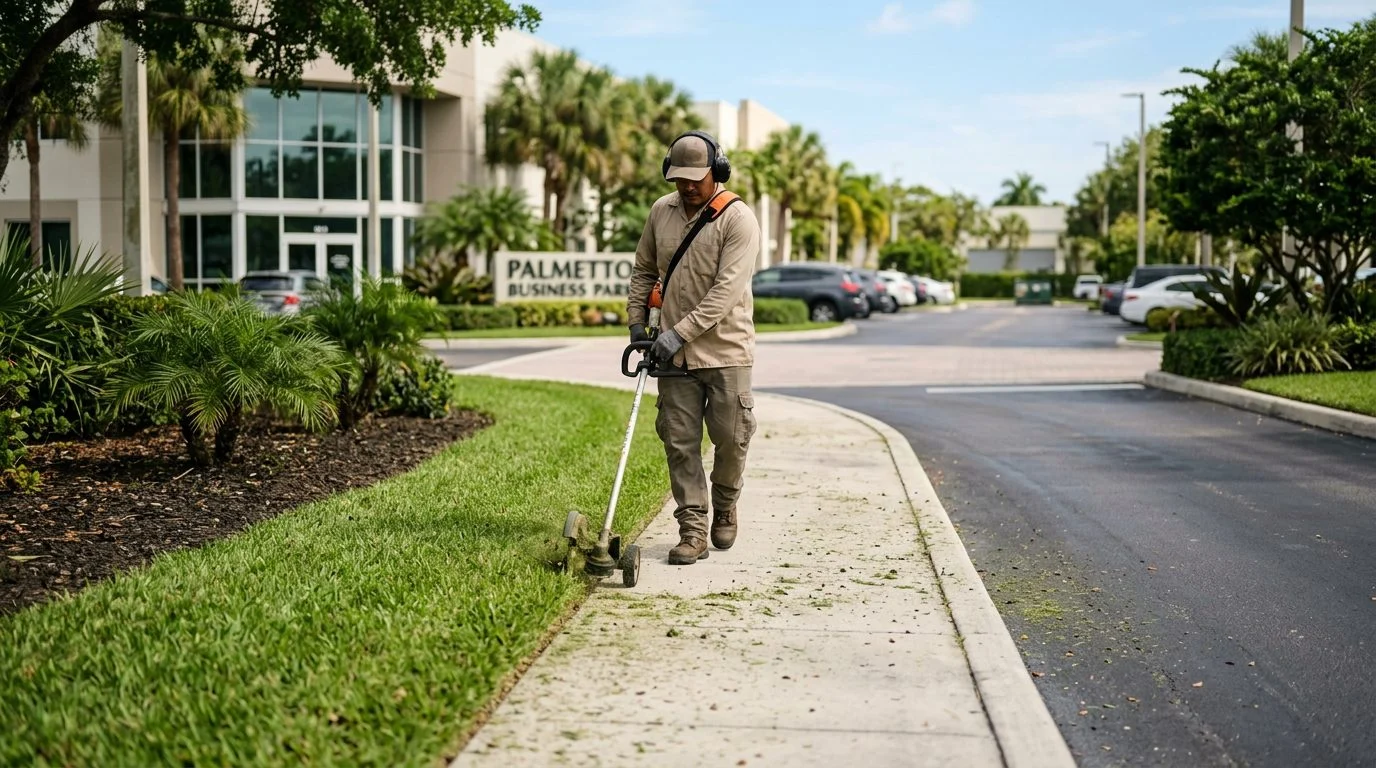
Gas-powered blowers, mowers, edgers, and trimmers are the loudest everyday tasks. They are often the first concern for staff working near open windows or doors. When these tools run near the public, plan them for a time or zone away from the busiest areas.
Blowers also push leaves and dust toward walkways and doors. Running them in a quieter corner of the property keeps that drift away from people.
Hedge trimming, tree work, and debris removal take a different kind of planning. They can need ladders, lifts, or cleared paths. Those tools can block walkways and parking, even when the noise is moderate.
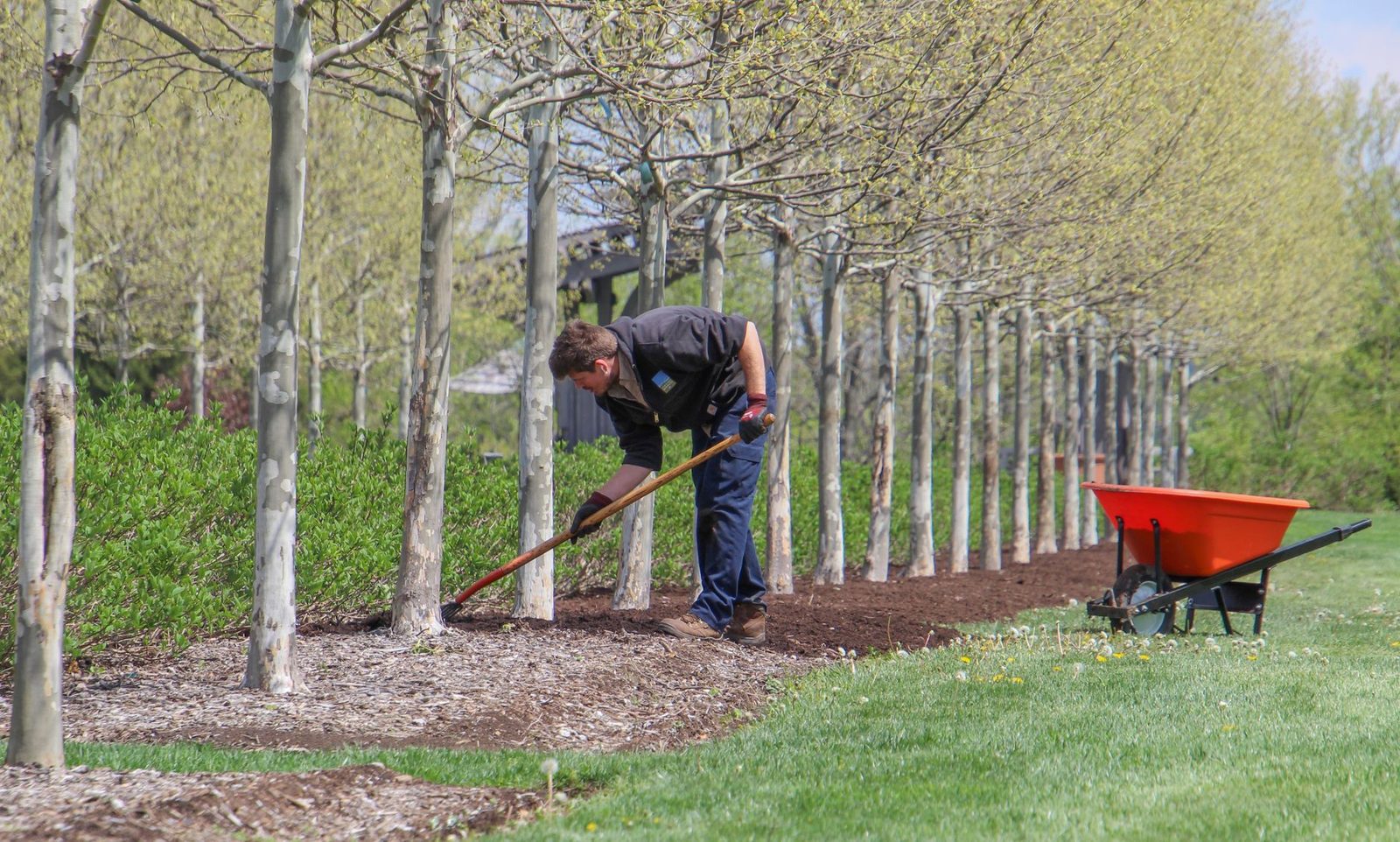
Routine work such as bed maintenance, weeding, and irrigation checks is usually quieter. It is the easiest task to schedule alongside open hours.
Pressure washing and heavy debris hauling bring their own issues. Spray, runoff, and noise can reach people close to the work. Plan these with the same site questions in mind, and keep walkways free of standing water while the work runs.
Five Site Questions Decide Most of the Disruption
Five site questions decide most of the disruption. Answer them before the first visit.
- Which entrances, loading areas, and parking spaces will be partly blocked, and for how long?
- Where do customers and staff walk, sit, or wait outdoors, such as patios, bus stops, and smoking areas?
- Which windows, doors, or ventilation intakes face the work zone?
- Will any task involve chemicals, and which areas must stay clear while they are applied?
- When are the busy periods, such as lunch hours, the opening rush, or delivery windows?
A blocked front entrance can push customers toward a side door they don’t expect. Knowing that before the crew arrives prevents confusion on the first morning.
A written answer to each question gives the crew a clear plan. It also shows where a visit may need to move to a different hour.
Daytime Grounds Work Is Usually Planned by Zone, Sequence, and One Clear Contact
Daytime grounds work is usually planned by zone, sequence, and one clear contact on site. Split the property into areas. Put the noisiest tasks in zones away from people, and do quieter tasks near busy areas.
Clear the busiest entrances first, and reopen them before peak traffic. Name one person on site who can answer questions about access or noise in the moment.
Review the schedule after the first visits, because real traffic often differs from what a site plan suggests. Small changes to timing usually solve most early problems.
Other service providers may also work on the property. Coordinate visits so they do not overlap in confusing ways. Our day porter service can keep entrances and walkways tidy during open hours, which helps when grounds work runs close to customers.
Grounds Needs Vary Across South Florida, So the Schedule Should Match Each Property
Commercial grounds needs vary across Miami-Dade, Broward, and Palm Beach counties. A dense frontage in Brickell, South Beach, or Coral Gables can have tight access and steady foot traffic. A larger campus-style lot has more room but more zones to plan.
The schedule should match the property. A crew working a narrow frontage needs a tighter sequence than one on an open lot. Both need the same clear contact on site.
Florida also sets rules for crews that apply fertilizer.
The University of Florida IFAS GI-BMP program covers fertilizing, irrigation, and water quality for landscape professionals.
Our landscape services page covers the full range of commercial grounds work.

A Manager With a Planned Daytime Visit Needs Clear Answers Before the Crew Arrives
A manager with a planned daytime visit near the lobby or office windows needs clear answers before the crew arrives. Those answers come from the site itself and from the people who use it each day.
Can landscaping be done during business hours?
Yes, many grounds tasks can run during open hours when the visit is planned around entrances, noise, and traffic. Loud equipment and ladder work usually need the most planning.
Can pressure washing happen while a store is open?
It can, when the work zone, spray, and water are planned around customers and entrances. Use the same site questions as you would for a grounds visit.
La consulta inicial es gratuita, confidencial y sin compromiso de continuar.
If a daytime grounds visit is planned near your entrance or office windows, reach out through our contact form, and we’ll talk through the site, the tasks, and the hours that suit your property.
How We Plan Landscape Work Around Your Operations
Timed Visits
We schedule grounds tasks for windows that suit your open hours and keep the site running smoothly.
Safe Work Zones
Equipment and work areas are marked off so customers, staff, and vehicles stay clear of the work.
Coordinated Crews
Our team briefs each crew on entrances, peak traffic, and the areas to avoid before work begins.
Site-Specific Plans
Every property has its own layout, so we map the work to the entrances, parking, and walkways on your site.
Open Communication
We keep your contact informed about the schedule and adjust the plan when your needs change.
Plan the Loud and Elevated Tasks First
Blowers, mowers, and ladder work create the most disruption during business hours. Tell us about your peak times so these tasks can be scheduled around them.
What a Planned Landscape Visit Looks Like
1. Site Walkthrough
We review the property together, noting entrances, parking, delivery routes, and sensitive areas.
2. Work Zone Mapping
Each task is assigned a clear zone so crews and customers can move without interference.
3. Timing and Noise Planning
Loud equipment and ladder work are placed in the quieter parts of the day whenever possible.
4. Ongoing Review
After each visit, we adjust the plan based on what worked and what your team needs next.