
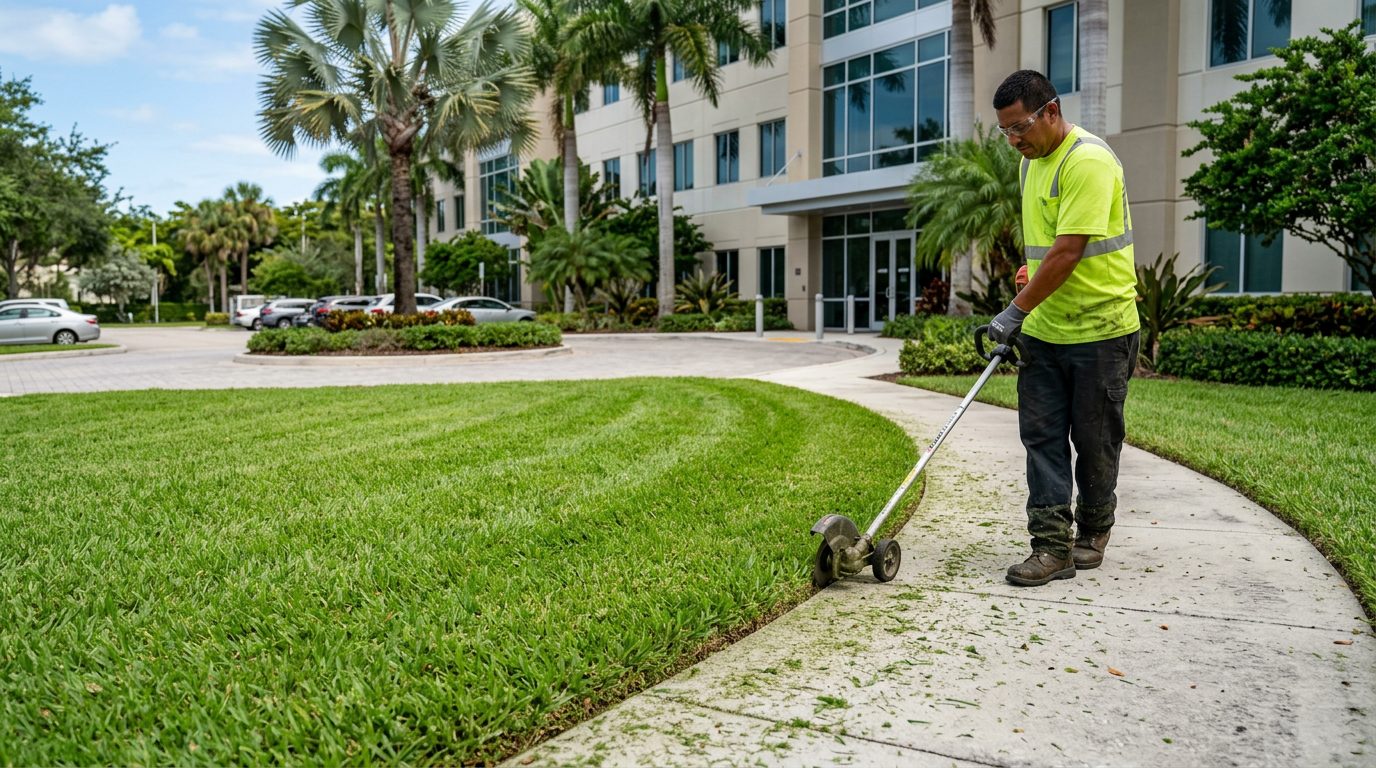
Landscape Maintenance · South Florida
Switching Landscape Maintenance? Make the Move Without Losing Ground
A calm, organized changeover keeps your grounds looking their best from the first day with a new crew.
By Ryan Jurney · Published November 22, 2026
To switch landscape maintenance vendors before your contract ends, start by reading the term, renewal, and termination language in your signed agreement. Then give written notice the way the contract requires, and plan a handover so grounds care never stops.
Whether you can leave early depends on that wording and on the facts. This guide walks through each step, from reading the contract to setting the new start date.
How a Landscape Maintenance Contract Is Structured
A landscape maintenance contract has four parts you need to find: scope, service frequency, term, and price.
The scope of services lists what the crew does, such as mowing, edging, bed care, irrigation checks, and debris removal. Service frequency shows how often visits happen. The term sets the start and end dates. Pricing covers the regular fee and any extra charges.
Don’t assume the end date is the day service stops. Many agreements include a final visit, a cleanup period, or a notice window that falls before the stated end.
Some contracts also renew on their own. An automatic renewal clause carries the agreement into a new term unless someone acts first. The renewal window can open well before the end date you have in mind, so mark it on your calendar.
Scope matters most. A vague scope makes it hard to show later that work was missed. Check who the contract names as the contact for changes, and confirm that person can approve a switch.
Before you decide anything, pull the signed agreement and every amendment. Work from the signed version, not from memory or an old email.
If your landscape contract is nearing its end and your current vendor is missing agreed visits, our team can help you plan a handover that keeps your grounds on schedule. Talk it through with our team — the first consultation is free, confidential, and carries no obligation.

Read the Termination and Notice Clauses First
The termination and notice clauses control how and when you can leave, so read them before anything else.
Look for four things. Termination for convenience lets a party end the deal without a specific failure, if the contract allows it. Termination for cause ties ending the deal to a specific failure. A cure period gives the vendor a set time to fix a problem after written notice. The notice requirement names who must receive notice, the address, and the delivery method.
A condition precedent is an event that must happen before a party has a right to perform or before a breach occurs, as Land Co. of Osceola County explains. If your contract says notice or a cure period comes first, follow that order exactly.
A common mistake is sending a casual text or email and assuming it counts as notice. Check whether the contract names an address or a delivery method.
Flag any unclear wording now. Confirm the timeline with your board or ownership group before you act, since they usually have final say over vendor changes.
Can You End a Landscape Contract Before Its End Date?
You may be able to end a landscape contract early, but only if its wording or your facts allow it.
Whether your contract can end early depends on the facts. Check three things: the termination clause, your reason for ending it, and whether the vendor is meeting the written scope.
If the contract allows termination for convenience, follow its steps and notice rules exactly. Some agreements attach a fee or a payment for the rest of the term, so read those terms before you give notice.
If the contract allows termination for cause, you generally need to show a specific failure. Examples include repeated missed visits, work that ignores the agreed frequency, or a problem left unfixed after written notice. A dated list of missed visits is easier to follow than a general complaint.
If neither route is in the contract, plan the switch around the remaining term. The sections below cover documentation, timing, and handover.
Can I end my landscape contract early?
Sometimes, if the contract’s terms or the vendor’s performance allow it. Read the wording before you give any notice.
How much notice do I have to give?
Your signed agreement sets the notice period and the delivery method. Follow those terms exactly.
Will there be a gap in service during the switch?
Setting the new start date for the day after the last visit helps keep service on schedule.
Document the Problems and Write a Clear Notice in Writing
Put your reasons in a short, dated, factual notice, and back each reason with records.
Gather dated photos, logs of missed or late visits, and any written complaints you sent. Note whether the vendor answered them and fixed the problem. Keep everything in date order.
A useful notice names the property and the contract date. It cites the clause you rely on, asks for a specific effective date, and requests a final invoice and confirmation of any equipment removal. Keep the tone businesslike. State what is happening and when, without argument.
Send the notice by the method the contract names. Keep a copy and proof of delivery. Calendar the notice deadline from the contract’s own wording, not from memory.
If your property is a condominium, board records matter too. Florida law says bids for work must be kept for at least 1 year after the association receives them, under Fla. Stat. § 718.111. The same statute says association records must be made available to a unit owner within 45 miles of the condominium property or within the county where the property is located, within 10 working days after the board or its designee receives a written request, though the distance requirement does not apply to an association governing a timeshare condominium.
Plan the Handover So Grounds Never Go Unserviced
Start the new vendor’s first visit right after the outgoing vendor’s last one, so no scheduled service is missed.
Gaps happen when dates don’t line up. Mowing, edging, bed care, and irrigation checks each need a slot. Map which service falls in which week during the switch, and write it down.
Cover the practical handover items. These include a site walk-through, gate and access codes, keys or fobs, irrigation controller settings and schedules, and a list of known problem areas, such as drainage spots or damaged sprinkler heads. Schedule the walk-through before the final visit, not after it, so questions get answered while the outgoing crew is still on site.
Put the handover in a written summary. List the scope, frequency, last service date, and open issues. Ask the board and both vendors to acknowledge it in writing.
A short overlap period can reduce the risk of missed service during the transition. Decide before notice goes out whether you want one, and what it will cost under your contract.
What a Written Landscape Scope Should Cover
A clear written scope protects the property during a switch and afterward.
The scope should match what the property actually needs. List each area, task, visit frequency, and the standard the work must meet. A Community Associations Institute report notes that organized maintenance programs and checklists are useful when developing vendor scopes of work.
Insurance belongs in writing too. Florida employers generally must carry workers’ compensation insurance, which pays benefits for job-related injuries, according to the state insurance regulator. A contractor must also require a subcontractor to provide evidence of that coverage, under Fla. Stat. § 440.10.
Licensing matters for some work. Write that requirement into the scope if the work includes those applications.
The UF IFAS best management practices program addresses training and practices for landscape professionals on fertilizing, irrigation, and water quality. Scope language can call for those practices.
Not sure what your next step is?
Talk it through with our team — the first consultation is free, confidential, and carries no obligation.
Bring Your Situation to a Conversation With Our Team
A switch goes more smoothly when the paperwork is ready before the first conversation.
Picture a common situation: a landscape contract nearing its end date, a vendor that has stopped meeting the agreed frequency, and a board that needs a clean handover with no gaps. Bring the signed agreement and amendments, the start, end, and renewal dates, photos or logs of service problems, and the frequency each property needs.
Our team can talk through your property’s timing and scope. The initial consultation is free, confidential, and carries no obligation to continue (La consulta inicial es gratuita, confidencial y sin compromiso de continuar.).
If your landscape contract is close to ending and your current vendor is missing agreed visits, contact our team to plan a handover that keeps your grounds on schedule.
A Simple Path to Switching Providers
Gather Your Agreement
Pull out your signed landscape contract and read the sections on term, notice, and termination together.
Plan the Timing
Map your notice date against the mowing, trimming, and seasonal work already on your schedule.
Hand Off Cleanly
Share site notes, gate codes, irrigation details, and special requests so the transition is smooth.
Confirm Your New Service
Walk the property with your new provider and agree on a schedule before your previous service ends.
Read Before You Give Notice
Your signed agreement sets the notice period and how notice must be delivered. Check those terms before you send anything to your current provider, and follow them exactly.
How Our Team Supports Your Switch
Contract Review Support
We help you locate the terms that matter for your landscape service so you know what to check.
Timing Coordination
We plan our start date around your current service so your property stays maintained.
Clear Communication
You get straightforward answers about scope, schedules, and next steps at every stage.
Local Service Across South Florida
Our landscape crews serve Miami-Dade, Broward, and Palm Beach counties, plus South Beach, Coral Gables, and Brickell.