
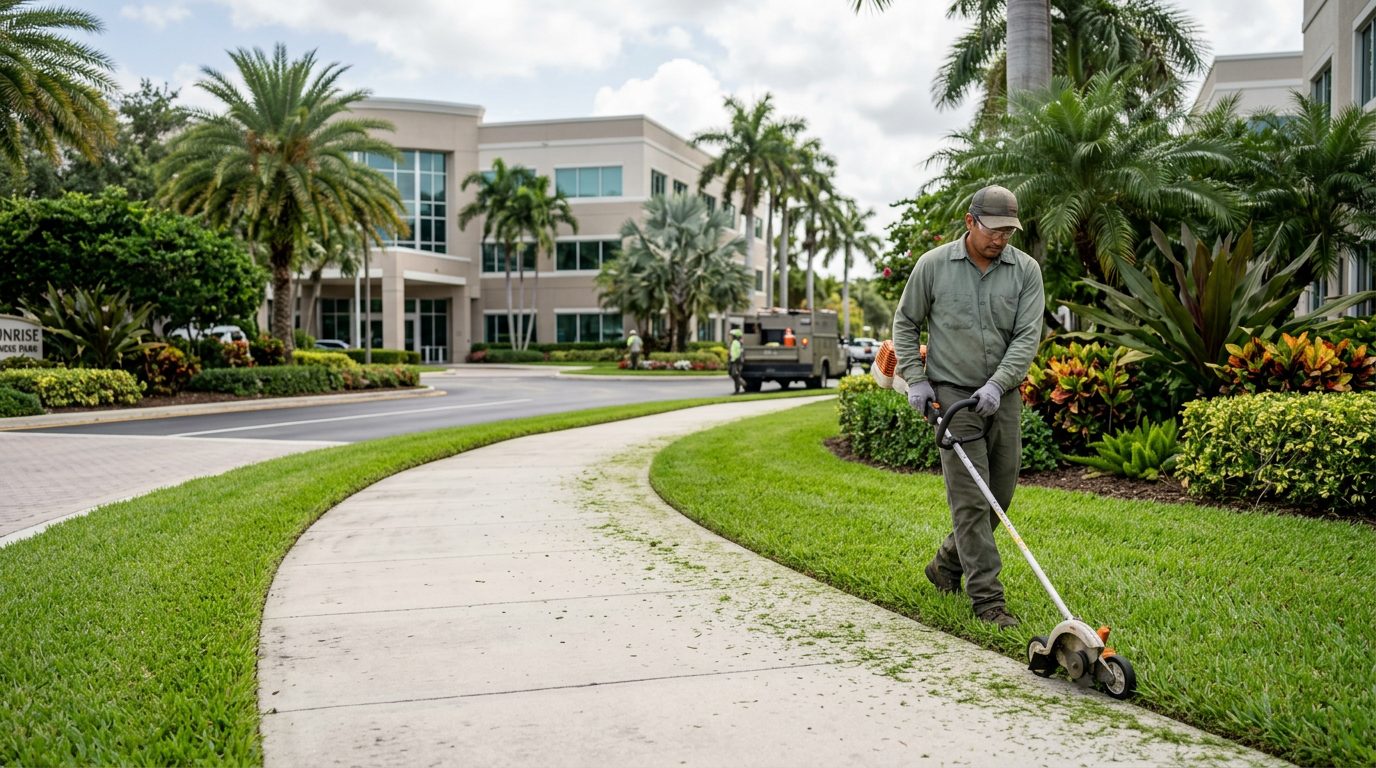
Commercial Landscape Maintenance | South Florida
Plan Your Commercial Landscape Budget With Confidence
A clear look at what shapes your quote, and how our team builds a plan around your property.
By Ryan Jurney · Published November 22, 2026
Budgeting for a grounds contract and wondering what commercial landscape maintenance costs per month in South Florida? The short answer is that the number follows the work. Property size, how often crews visit, which services are included, and how hard the site is to reach set the monthly figure. Two nearby properties can land far apart.
This guide covers the cost drivers, a simple budget method, and what to gather before a quote.
What a Monthly Commercial Landscape Budget Covers
A monthly budget covers the recurring work your grounds need on a set schedule. In a typical monthly agreement, that means mowing, edging, trimming, debris removal, and bed upkeep. Each scheduled visit repeats these tasks, so the cost spreads across the month. Monthly figures give a board a steady line to plan around. Per-visit work moves with each visit that happens, so it can be harder to forecast.
Work that falls outside the regular schedule is different. A storm cleanup, a large pruning job, or a bed refresh is one-time work. Put it on its own budget line so it doesn’t inflate the recurring figure. Ask for a written list of the tasks in the base price. If a task isn’t on that list, treat it as separate work. Each recurring line should name the area, the task, and the frequency. Clear lines make the monthly number easier to check and control.
If your board must set next year's grounds line, or your current contract no longer matches the work, contact our team with your property details. Talk it through with our team — the first consultation is free, confidential, and carries no obligation.

Which Factors Move the Monthly Number Most?
Property size, visit frequency, service scope, and site complexity move the monthly cost most.
Size comes first. The usable turf and planting area, measured in square feet or acres, sets how much time each visit takes. Bigger isn’t always costlier per visit, though. Layout matters.
Visit frequency is next. A weekly schedule costs more than a biweekly one, and growing-season months often need extra visits. The monthly figure can stay steady while the visit list changes with the season.
Scope matters just as much. Hedge and tree trimming, irrigation checks, and fertilization can sit in the base agreement or be priced separately. Confirm which one applies.
Site complexity rounds out the list. Slopes, obstacles, tight access, parking-lot islands, and separate zones all add time to each visit. A property with three small zones can take more service time than one large, open lawn, because travel between zones adds time. Fertilization brings its own rules, so confirm who does the work. Landscape maintenance can involve products that are subject to rules, so questions about what applies to your property are worth raising during your free consultation. Pesticide and fertilizer use on landscapes can be subject to rules, and our team can walk you through what applies to your property during a free consultation.
How South Florida Conditions Shape Maintenance Needs
South Florida’s warm, humid climate keeps turf and beds growing for much of the year, which shapes how often they need attention. Heavy seasonal rain and storm-season debris change the workload from month to month. A budget that uses one flat workload for every month will often miss the busy stretches. Build a reserve for variable months rather than guessing. Plan for both wet and dry stretches, and check the budget against the schedule as the seasons turn.
If the property has an irrigation system, add inspection and adjustment to the scope. Confirm whether irrigation checks are inside the monthly price before you finalize the line. Training on fertilizing, irrigation, and water quality is offered through UF IFAS Green Industries training.
How to Build a Realistic Monthly Budget
Start with a simple method you can repeat each budget cycle.
- List each zone, such as the front entry, parking islands, and rear courtyard.
- Note the service type and the number of visits each month.
- Mark each line as recurring, seasonal, or add-on.
- Total the recurring lines for the base monthly figure.
Write down the visit days for each zone, not only the total. Keep the list in a shared file so the board and staff can update it.
Add a reserve line for variable months and unplanned cleanup. Review actual service against the budget each quarter and adjust. If you serve on the board of a homeowners’ association that operates a community as defined in s. 720.301, Florida law requires the association to prepare an annual budget that sets out its annual operating expenses (Fla. Stat. § 720.303). The association must give each member a copy of the budget, within the time limits set forth in subsection (5), or written notice that one is available on request at no charge. An agreement that separates base services from add-ons makes the monthly figure easier to check and control.
What to Check in Your Contract and Insurance First
Check the term, renewal, and termination language in your current contract before you change the budget. Review the renewal date early, so there is time to adjust the budget.
Read the exact wording of your own notice and termination terms. A notice clause can change how you end an agreement, so read it before you plan a switch. If anything is unclear, put the question in writing.
Basic contract rules matter for the written scope too. Keep the scope in writing next to the monthly price, so the budget matches the work performed.
Ask your provider for written proof of insurance coverage. Also ask which state licenses and training the crew holds for fertilizer and pesticide work.
Next Step: Request a Quote for Your Property
Your next step is a quote built from your property’s own details.
A board setting next year’s grounds budget, or a property manager checking the monthly line against a current contract, needs the same details. Bring any current contract or proposal too, so the scope can be checked line by line. Gather these before you contact us:
- Property address and approximate landscaped area
- Current service frequency and visit days
- Current scope, including trimming, irrigation, and fertilization
- Tree and irrigation items on the site
- Access limits, such as gates, parking, and slopes
How much does commercial landscape maintenance cost per month in South Florida?
Each property gets its own number, set by area, visit frequency, scope, and site access.
Is monthly billing different from per-visit billing?
A monthly agreement spreads recurring visits into one fixed figure. Per-visit billing charges for each visit instead.
Do storm-season months cost more?
Storm-season rain and debris can raise the workload in some months. Set aside a reserve line for those months.
Does irrigation add to the monthly cost?
Irrigation checks and adjustments add work. Confirm whether they sit in the base scope before you finalize the budget.
La consulta inicial es gratuita, confidencial y sin compromiso de continuar.
If your board must set next year’s grounds line, or your current contract no longer matches the work, contact our team with your property details for a quote.
What We Review Before Quoting
Property Area
We walk the grounds together to understand the size and layout of the areas that need care.
Visit Frequency
We discuss how often your property needs service and how that rhythm fits your operations.
Scope of Work
From mowing and edging to pruning and seasonal upkeep, we confirm exactly which services you need.
Site Access
We note parking, gate codes, and access hours so crews can work efficiently at your location.
Why Businesses Work With Gator Protection
South Florida Focus
Our commercial landscape crews serve Miami-Dade, Broward, and Palm Beach Counties, including South Beach, Coral Gables, and Brickell.
Scheduled Visits
We plan recurring visits around your business hours so your property looks its best without disrupting your day.
Clear Written Quotes
Each quote explains the scope, visit schedule, and terms so you know what to expect before work begins.
Responsive Team
Our team stays in touch throughout the agreement to address questions and keep service on track.
Tip: Share Your Site Details Early
Photos, a rough property map, and your preferred service days help us prepare a more accurate quote from the start.