
Landscape Services | South Florida
Give Your Palms Room to Thrive
Planting distance affects how your landscape looks and grows for years, so a little planning at the start goes a long way.
By Ryan Jurney · Published November 24, 2026
Planting a palm row near a condo entrance or a commercial lot raises one question before anyone digs: how far apart should you plant palms? The short answer is that spacing depends on the species and its mature crown spread, not on how small the palm looks on installation day.
Palms are often installed at a size that looks sparse. Over the years, the fronds fill in the gaps. This guide explains how to plan palm spacing so the planting still works when it matures on South Florida properties.
Short answer: how far apart palms should be planted
Space palms by their expected adult size, measured from the mature canopy, not from the sapling you’re buying. The species, its mature crown spread, and the way the space will be used all set the distance. A palm meant to frame a walkway needs different room than one planted as a backdrop along a wall.
Clustered palms and single-trunk palms also space differently. A clustering palm sends up several stems from one base, so it needs room for the whole clump to spread. A single-trunk palm needs room for one crown and one trunk. Check the growth habit before you mark the layout. Writing the spacing on the site plan before digging keeps the layout consistent, from the first hole to the last.
If you're planning palms after a removal or a design change, our team can talk through your site with you. Talk it through with our team — the first consultation is free, confidential, and carries no obligation.
Why mature crown spread drives palm spacing
Mature crown spread is the width a palm’s fronds reach once the tree is fully grown. It sets the minimum distance between palms. Frond length matters too. Longer fronds reach farther, so a palm with a wide, arching crown needs more room than a compact one.
An open planting on installation day can look too wide. Within a few years, neighboring crowns can touch and interlock, which crowds the lower fronds. Crowding has practical effects. Dense fronds block airflow and light, which can weaken lower leaves over time. Tight crowns also make it harder to prune, inspect the trunk, and reach the base for cleanup.
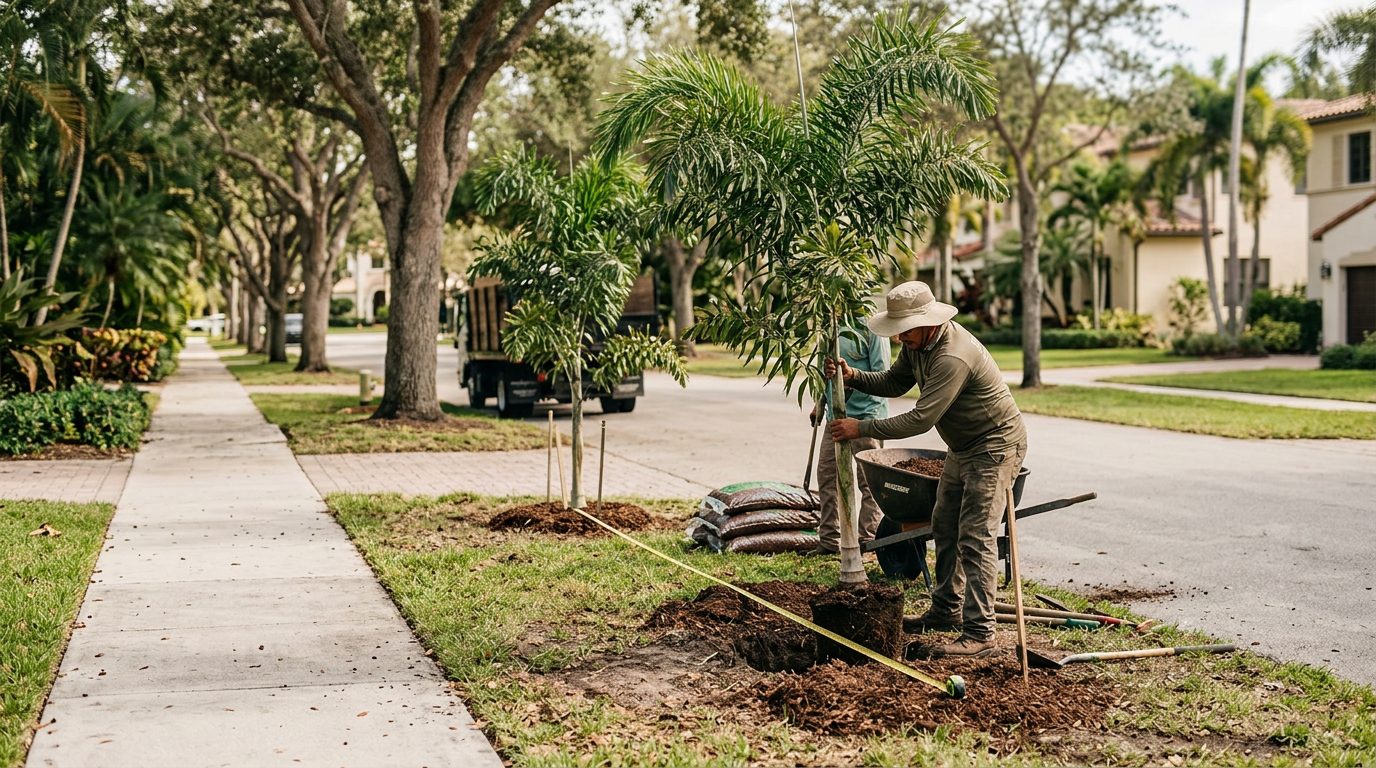
To check the mature size, start with the nursery tag or a horticultural reference for the species. Use the adult spread listed there, not the size in the pot, when you draw the layout. Measure the planned footprint on the ground with stakes or marking paint before anything goes in.
Spacing palms around buildings, walkways, and utilities
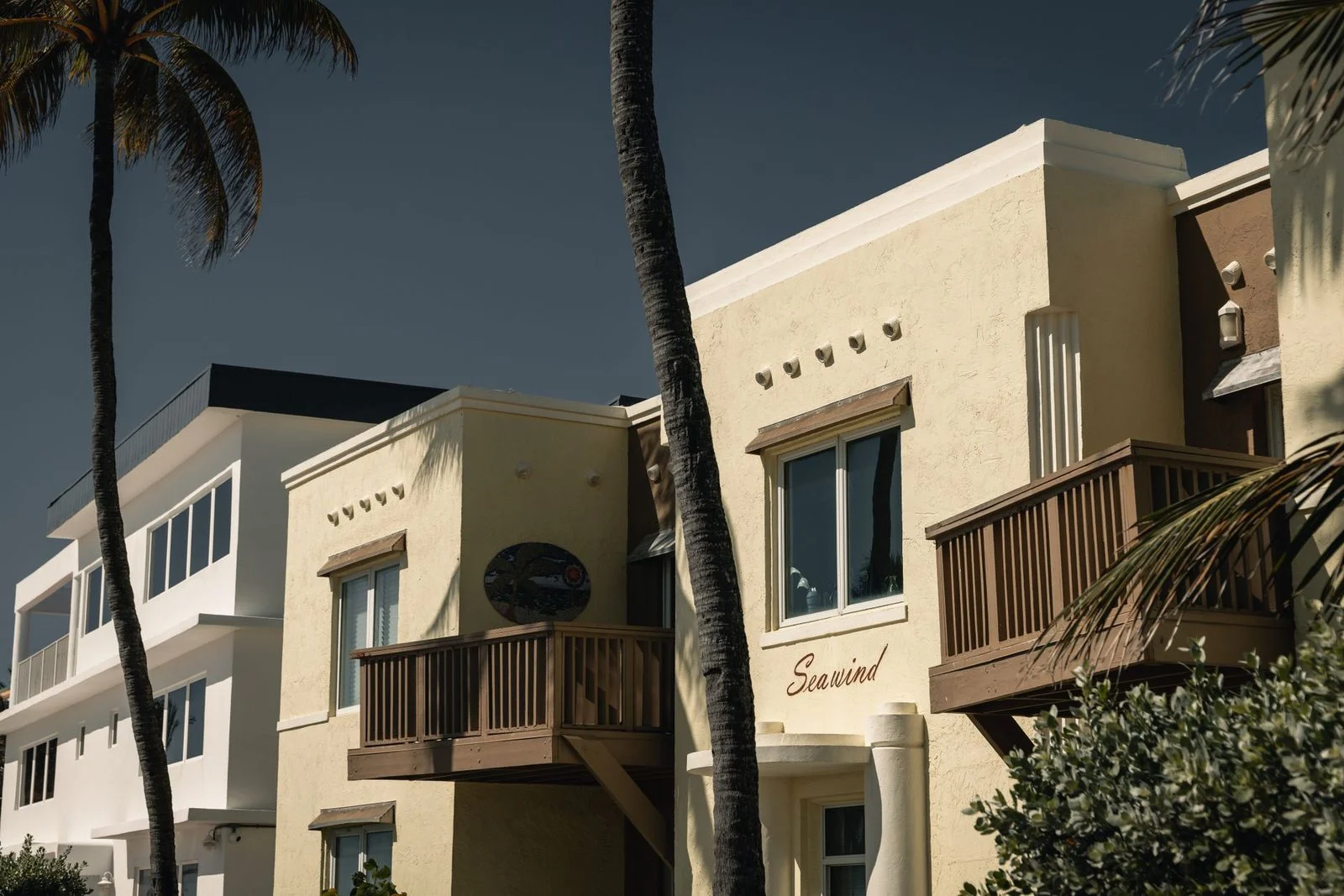
Keep palms far enough from building walls, walkways, parking, and overhead lines to allow for their full adult size. Plan for the palm the site will hold in later years, not the one you buy this week. A trunk set close to a wall or walkway will press against both as it grows.
Locate underground utilities and root zones before any digging starts. Confirm where lines run using site plans and marked locations, and keep planting holes clear of any buried line.
Sight lines matter just as much. At entrances, driveways, and pedestrian routes, keep trunks and lower fronds from blocking a driver’s or walker’s view of a curb, a sign, or a crossing. In condo and commercial common areas, a palm that hides a step creates a safety problem fast.
Drainage belongs on the list too. Avoid low spots where water pools around the base. Plan the grade so runoff moves away from the planting.
Planting in rows, clusters, and focal groupings
Evenly spaced rows suit a straight entrance or boulevard, while grouped plantings suit courtyards and garden corners. Rows look orderly and make spacing easy to check on site. Clusters feel more natural and can soften a large building face.
Leave room for staggering, so one palm can be replaced later without disturbing its neighbors. Keep a clear lane around each trunk so a lift or crew can reach it during service.
Matching species and height keeps a planting uniform as it grows. Mixed sizes can look uneven for years, even when the spacing is correct. When you review a new design, check each palm against the plan before the crew leaves. A quick walk with the layout in hand catches most spacing errors early. Boards and property managers can use the same walk to confirm sight lines.
Planting timing, site preparation, and placement in South Florida
Plant in a well-drained spot with the right sun for the species, and set the root ball level with the surrounding grade. Dig a hole wide enough for the root ball. Set the palm at the same depth it grew in the pot, backfill, and water it in. Mulch the surface, but keep the mulch away from the trunk.
Planting timing in South Florida depends on the species and the season. The landscape planning pillar guide covers the wider timing context, so check it before you schedule digging.
Cooler sites, including parts of Atlanta, call for a palm rated for that climate. Read the cold tolerance on the tag before you choose a species.
Irrigation needs care too. The Florida-Friendly Landscaping Guide from the South Florida Water Management District advises irrigating only when needed and avoiding overwatering. Good irrigation keeps roots healthy without wasting water.
Ongoing care that keeps spacing working over time
Regular pruning keeps lower fronds clear of walkways and sight lines, so the spacing you planned still reads as planned. Timing matters for trimming, so the trimming timing in Florida guide gives related scheduling context.
Soil additions like coffee grounds don’t fix a site that drains poorly or gets the wrong sun. Site choice and drainage do most of the work. The EPA landscaping best practices describe soil testing and integrated pest management as part of environmentally friendly landscape maintenance.
Regular pressure washing and cleanup of palm bases and hardscape keep a planting presentable in a commercial or condo setting. Learn more about pressure washing services for these areas.
How far apart should palms be planted in a row?
Space them by the adult crown spread listed for the species, not the sapling size. Rows that look sparse at planting often need more room than they appear to.
Are coffee grounds good for palms?
Coffee grounds don’t replace a well-drained site with the right sun. Soil fixes help only after the planting location is right.
Not sure what your next step is?
Talk it through with our team — the first consultation is free, confidential, and carries no obligation.
Talking through a palm layout for your property
If you’re planning palms after a removal, storm damage, or a design change you didn’t choose, you don’t have to work out the spacing alone. For a condo board or property manager, spacing decisions affect maintenance, budgets, and how residents and visitors see the property for years.
Our team can review the site, the species under consideration, and the spacing plan with you. Our initial consultation is free, confidential, and carries no obligation to continue. You can read more about our Miami-Dade condo landscape services first. When you’re ready, reach out through our contact page and we’ll start with a conversation about your property.
How Gator Protection Can Help With Your Landscape
Local Focus
We provide landscape maintenance throughout South Florida, including Miami-Dade, Broward, and Palm Beach counties.
Supported by Our Team
Our team, including assistants and office staff, coordinates scheduling and communication for each property.
Careful Site Work
We take care around established plants, irrigation, and hardscape when we plan and maintain your grounds.
Clear Communication
We explain our recommendations in plain language so you can make decisions with confidence.
Plan Before You Plant
Crowded palms compete for light, water, and root space. Before you dig, have the site reviewed so the layout fits the trees and the property you have.
Landscape Services That Support Healthy Palms
Site Walk-Through
We review sun exposure, drainage, and available space before any planting begins.
Planting Layout
We help you map spacing and placement so each palm has room to develop.
Ongoing Maintenance
Regular grounds care keeps your palms and surrounding beds tidy and well kept.
Pressure Washing
Clean walkways, entrances, and paved areas that frame your planted spaces.