
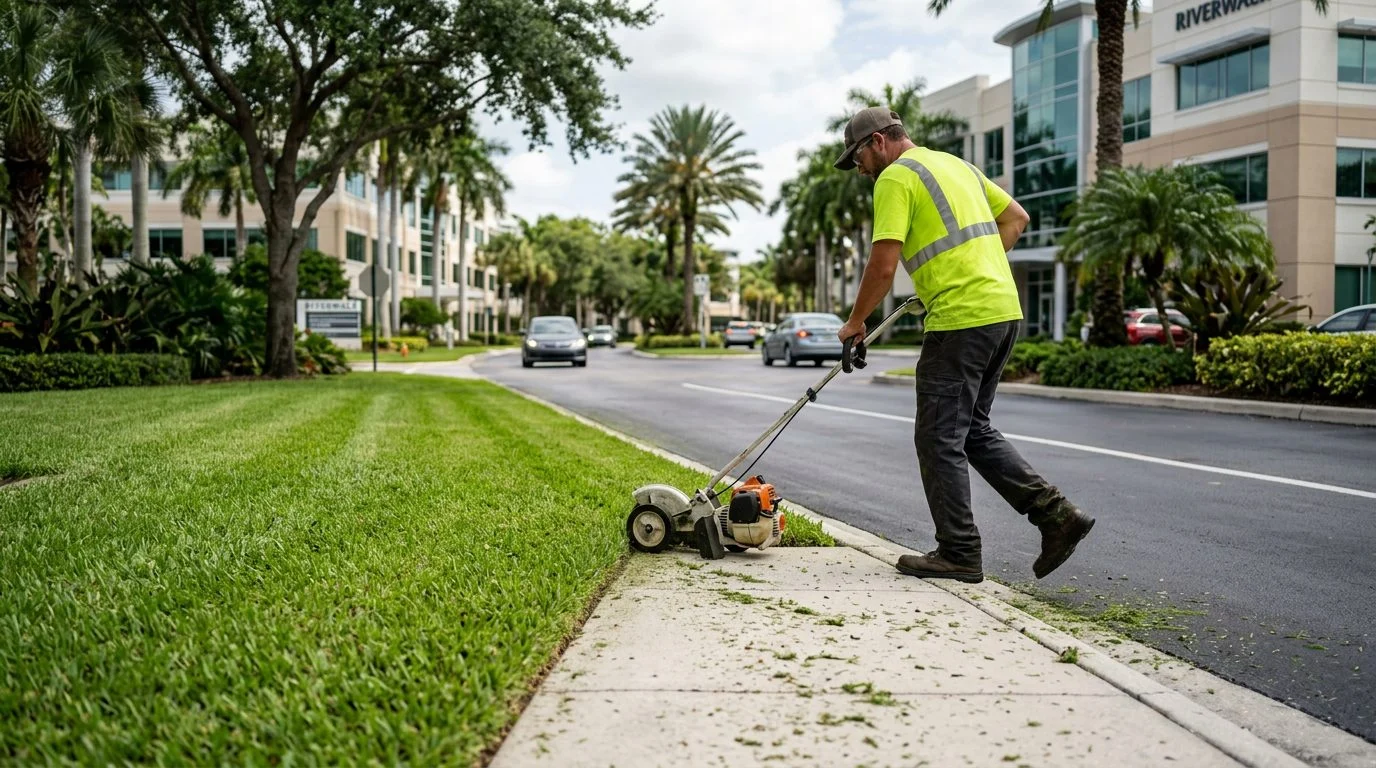
Landscape Services | South Florida
Keep Your Commercial Lawn Looking Its Best All Year
Heat, rain and fast growth all change what a business property needs from its grounds, and the right schedule depends on more than the calendar.
By Ryan Jurney · Published November 21, 2026
If you manage a condo, office park, or retail center in South Florida, you have probably asked how often the grass should be cut. For most commercial lawns, weekly mowing is a common starting point during peak growth, with longer gaps in slower months. This guide explains how to set and adjust that interval in Miami-Dade, Broward, and Palm Beach counties, and in South Beach, Coral Gables, and Brickell.
How Often Should a Commercial Lawn Be Mowed? The Short Answer
Most commercial lawns in South Florida are cut weekly during the fastest-growth months, then less often as growth slows. Treat that as a starting point, not a fixed calendar date.
Growth drives the schedule. A lawn that has grown well past its target height needs a cut. A lawn that barely grew since the last visit can wait. A calendar-only plan misses this. It can leave turf too tall after heavy rain, or cut it too often in a dry stretch.
This matters most for multi-unit properties. Shared lawns at an entrance are seen every day, so an overgrown or ragged look reflects on the whole building. A shorter cycle in a busy season is often the right call. The goal is steady height and clean edges, not a set number of visits.
Four factors set the interval: the season, the grass type, the target mowing height, and how heavily the site is used. The sections below cover each one, starting with why South Florida turf grows so fast.
If the turf at your property has grown tall after heavy rain, our team can review your cutting schedule with you so you know what to change next. Talk it through with our team — the first consultation is free, confidential, and carries no obligation.
Why South Florida Lawns Grow on a Different Schedule
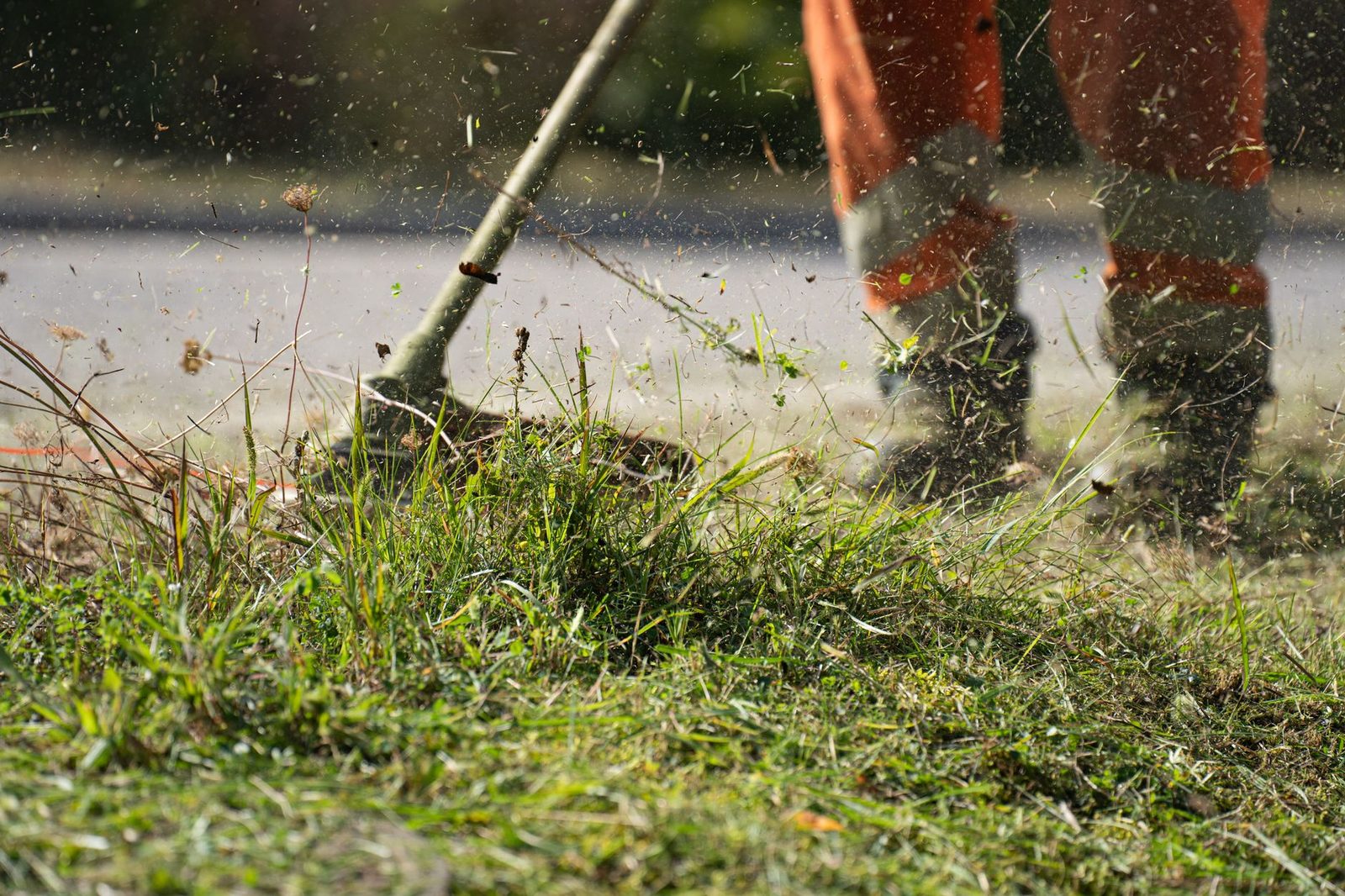
Warm temperatures and long daylight hours keep South Florida turf growing for much of the year. Growth speeds up when heat and moisture arrive together. That is the main reason mowing frequency here differs from cooler regions.
The rainy season, which generally runs from late spring into early fall, brings the heaviest growth. Rain and irrigation feed the grass, and the blades respond with fast top growth. A lawn cut last week can need attention again sooner than you expect.
A schedule set in the dry months often fails when the rains start. The turf gets ahead of the crew, and the property looks neglected by the next visit. Scheduling by growth avoids that gap. For a closer look at how we organize landscape work across the region, see our South Florida landscape services page.
How the Growing Season Changes Mowing Frequency
During peak growth, expect the most frequent cuts. As growth slows in the cooler, drier months, the gap between cuts can lengthen. The change comes gradually, so watch the turf more than the date.
Review the schedule at the start of each season. Review it again after an unusually wet or dry stretch. Write down each change and the reason for it. A note such as “moved to every two weeks after a dry spell” tells the board why the cutting changed.
A schedule tied to growth is easier to defend than one tied to a date. Boards and ownership groups tend to ask why a service changed. A record that links each change to what the turf actually did gives a clear answer.
How many times a week should I mow the lawn?
During peak growth, weekly cutting is a common starting point for commercial turf. The right count depends on the season and how fast the grass is growing.
How to Cut St. Augustine Grass at the Right Height
St. Augustine is a common turf in South Florida. It is usually kept at a taller height than many other turf types. Cutting it too low stresses the plant, especially during summer heat.
Follow a one-pass rule: take off only a small part of the blade in any single cut. If the grass has grown far past its target, cut it in two passes a few days apart rather than scalping it in one.
Sharp blades matter as much as height. Dull blades tear the tips, leaving ragged, brown edges that look worn and dry out faster in heat. Check blade sharpness on a set schedule, not only when the cut looks bad.
Different turf types on one property may need different intervals and heights. A sun-exposed front lawn at an entrance may grow faster than a shaded side area. Map each zone and set its schedule separately.
Should Grass Clippings Be Left on the Lawn or Picked Up?
Short clippings from regular cuts can stay on the lawn. They break down and return nutrients to the turf. That works best when the mowing interval stays consistent.
Collect clippings when conditions call for it. Pick them up after a long gap between cuts, when the turf is wet and clumping, or when clippings cover walkways, entrances, or pool decks.
Site use drives the choice. Common areas and entrances usually need clean removal, because clippings there are seen and walked on. Paved surfaces need extra care. Polluted runoff entering South Florida storm drains is discharged untreated into connected water bodies, according to the South Florida Water Management District. Sweep paved areas after each cut.
Is it better to leave cut grass or pick it up?
For regular, short clippings, leaving them on the lawn is common practice. Pick them up when they are long, wet, or covering hard surfaces.
Building a Mowing Schedule You Can Document
A usable schedule lists each turf zone, its grass type, its target height, and its cutting interval for each season. It also lists edging and blowing for walkways and entrances.
Keep service records. Dates, heights, and notes on conditions help during board reviews and vendor audits. Our vendor documentation guide for Florida condos covers what to keep.
Mowing is only part of the work. Landscape maintenance can involve a range of different tasks, and our team can walk you through which services fit your property. Keep those tasks separate from the mowing schedule on the contract.
A schedule built for a single-family lot will not match the traffic and sightlines of a multi-unit property. Build yours for the site you have.
Not sure what your next step is?
Talk it through with our team — the first consultation is free, confidential, and carries no obligation.
Talk Through Your Mowing Schedule With Our Team
If the turf at your property has grown tall after a wet week, or you are unsure whether your cutting interval fits the season, it is a good time to review it. Property managers and board members responsible for shared lawns may have questions about landscape upkeep.
Our team can look at your grass type, turf zones, and mowing height for your site. The initial consultation is free, confidential, and without obligation to continue.
Contact Gator Protection to set up your review.

Frequently Asked Questions
How often should a commercial lawn be mowed in South Florida?
Most commercial lawns in South Florida need mowing about once a week during the warm, rainy months when grass grows fastest. The schedule can be less frequent during cooler, drier months, and the right timing depends on the grass type and how the property is used.
Why does grass grow so fast in South Florida?
Heat, humidity, and frequent summer rain give grass warm conditions to grow quickly for much of the year. Growth slows when temperatures drop and rain becomes less frequent, so mowing needs change with the seasons.
Can mowing too often or too little hurt a commercial lawn?
Yes. Cutting grass too short can stress it and weaken its roots, while waiting too long can leave the lawn uneven and untidy. A steady schedule that matches how fast the grass is growing helps keep the lawn healthy and the property looking well maintained.
How do I choose the right mowing schedule for my business property?
Consider foot traffic, how visible the property is to customers, the type of grass, and seasonal growth. Our team can review your property and recommend a schedule; the initial consultation is free, confidential, and without obligation to continue, so contact us to get started.
Tip: Don't Wait for an Overgrown Lawn
Grass that has grown well past its usual height is harder to cut cleanly and can leave your property looking neglected to clients and visitors. Set a recurring schedule before growth gets ahead of you.
What Shapes Your Mowing Schedule
Growing season
Warm, wet months push grass to grow quickly, so the schedule usually needs to tighten during that period.
Grass type
Different turf varieties grow at different rates and handle cutting heights differently, which affects how often they need attention.
How the property is used
Busy entrances, parking areas and customer-facing grounds often call for more frequent visits than quieter sections of a site.
Weather and rainfall
Heavy rain can speed growth one week and make mowing difficult the next, so schedules work best when they can adjust.
Why Commercial Properties Work With Gator Protection
Across South Florida
We serve commercial properties in Miami-Dade, Broward and Palm Beach counties, including South Beach, Coral Gables and Brickell.
Landscape and beyond
Landscape services sit alongside our day porter, floor care and pressure washing services for commercial sites.
Schedules planned around your site
We plan visits around how your property is used, so grounds look maintained when clients and staff arrive.
Free, confidential first consultation
La consulta inicial es gratuita, confidencial y sin compromiso de continuar.