
Landscape Services | South Florida
Cold Nights Don't Mean Your Lawn Stops Needing Care
Is 50 degrees too cold to water grass in Florida? Here is how to think through it, and how our team can help maintain the grounds at your commercial property.
By Ryan Jurney · Published November 3, 2026
Short answer: is 50°F too cold to water grass in Florida?
Is 50 degrees too cold to water grass in Florida? No, not by itself. 50°F is a cool temperature, not a freeze, and it does not mean watering must stop.
Cool weather slows grass growth. A slower lawn uses less water. A system that ran at summer settings can apply too much in winter.
So the real question is how much to water, not only whether to water. The answer shifts with overnight lows, wind, recent rain, and any cold snap in the forecast. A night that stays near 50°F is very different from one that drops toward freezing.
Not sure what your next step is?
Talk it through with our team — the first consultation is free, confidential, and carries no obligation.
What temperature is too cold to water grass?
Temperature is one factor, not the only one. Growth stage, recent rainfall, and soil moisture matter too. No single temperature settles the question for every lawn.
The main concern in cold weather is wet surfaces. Water that sits on grass overnight, in cool air, can keep leaves wet for hours. Long wet periods can invite turf disease. Plan watering so the lawn is not left soaked through a cold night.
A freeze changes the situation. When a freeze or cold snap is forecast, the watering plan should change with it. Cold snaps do not hit every neighborhood the same way. Low ground, wind, and open exposure can make one yard colder than the yard next door.
How cold weather changes a lawn’s water needs
Grass uses less water when it grows slowly. Shorter, cooler days slow growth and reduce how much water a lawn loses. Less loss means less need for irrigation.
South Florida winters are generally milder than those in north Florida. Cold snaps can still come and go within a single season. A lawn may have a mild week and then a sharp cold night. Watering should follow the weather as it changes, not stay fixed for the season.
Cold weather can make grass look stressed even when the soil is not dry. Blades may look dull, bluish, or brown after cold damage. Adding more water to fix the color can make the problem worse. Check the soil before you change the schedule.
When should you water your lawn in Florida?
Early morning watering is commonly recommended (South Florida Water Management District guidance). Water applied early gives leaves time to dry during the day. Watering late in the day or at night can keep leaves wet longer, which is the concern in cool weather.
Adjust timing when temperatures drop. Cooler lawns need less water, and wet leaves dry more slowly in cool air. If rain has fallen recently, skip a cycle (Florida Statutes s. 403.9337) and check the soil first.
Have questions about what happened?
Ask our team directly. The first conversation is free, confidential, and there is no obligation to continue.
How long to water: run time and the one-inch question
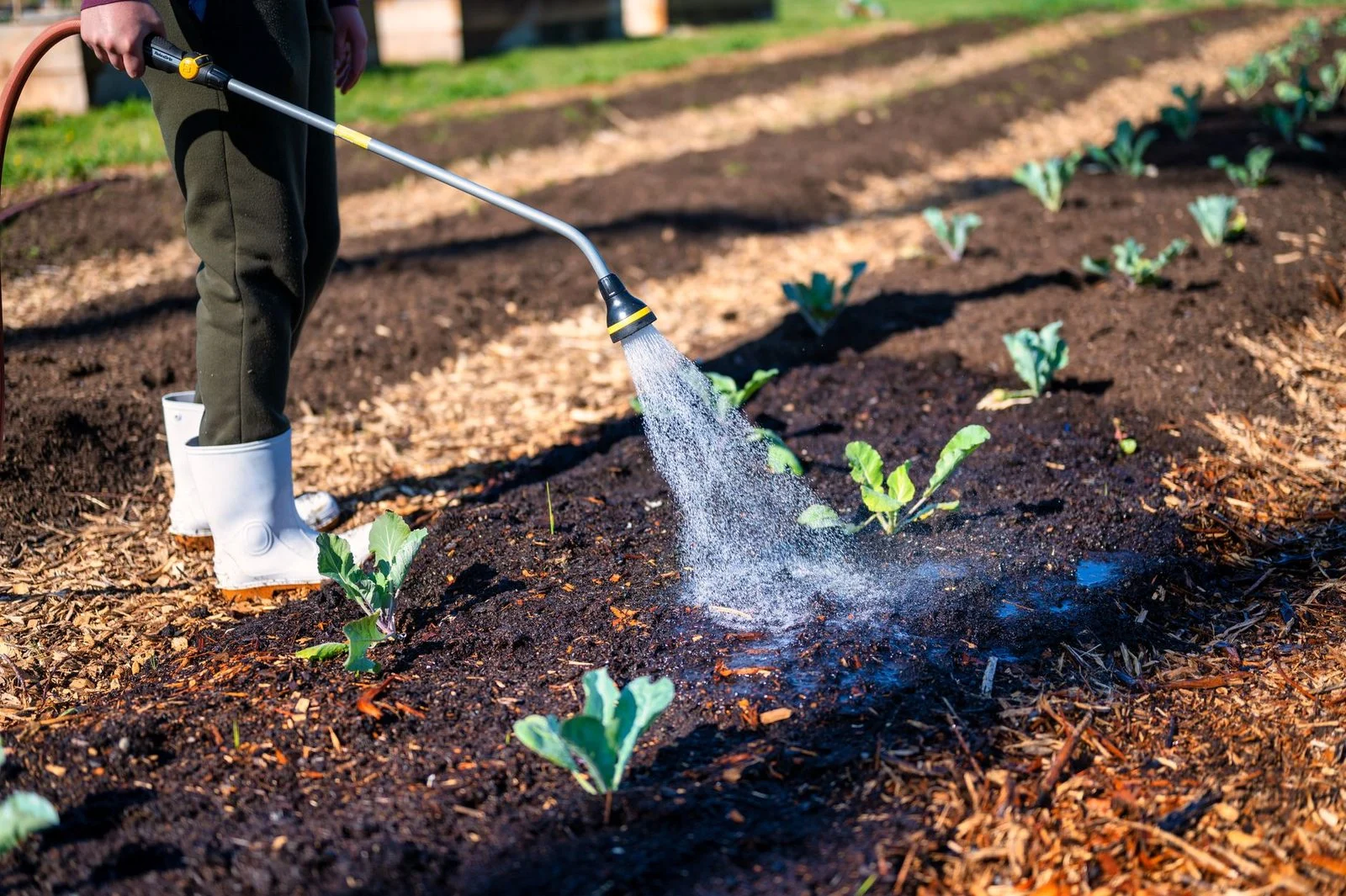
Run time depends on your system, not a fixed number. Sprinkler output, soil type, and how much water reaches the root zone all change how long a zone needs to run. So “is 45 minutes too long” has no single answer for every yard.
The one-inch question comes up often. Many people want to apply a set depth of water each week. To measure your system, place straight-sided containers in the zone, run the system for a set time, and record how much water collects. That shows how long your zone needs to reach your target depth.
In cooler months, run time often gets shorter because the lawn needs less water. Shorter cycles still need to reach the root zone. Runoff and soggy spots are signs the run is too long. Irrigation practices are covered in the UF IFAS GI-BMP program, a training program for landscape professionals.
Brown grass after a cold snap: cold stress or overwatering?
Cold stress and overwatering can both turn grass brown. Cold-stressed grass often looks dull or tan after a cold night, and the soil may be only slightly moist. Overwatered grass often sits in soggy soil and browns in patches where water pools.
Use these checks on your own property:
- Push a screwdriver into the soil. Is it wet below the surface, or dry?
- Note where water collects or drains slowly after a run.
- Map where the brown patches sit. Patches in low spots point toward too much water. Even browning across open sun points toward cold damage.
Browning alone does not settle the cause. Use the checks together. Related questions, such as whether grass will come back after browning and how to treat grass that is turning brown, are useful next steps once you know the cause.
Frequently asked questions
Is 50 degrees too cold to water grass in Florida?
No. 50°F is a cool temperature, not a freeze, so it does not by itself mean you should stop watering.
Is 45 minutes too long to water grass?
It depends on your sprinkler output and soil. Measure what your system delivers before you decide.
How long to water a lawn for 1 inch?
Run time for a set depth depends on your system. Measure it with containers placed in the zone.
When is the right time to water lawn in Florida?
Early morning is commonly recommended, so leaves can dry during the day.
Talk with our team about your South Florida lawn
If a cold night left your lawn brown, you may be wondering what to do next. Many people in this spot are managing a shared property they do not check every day, such as a condo common area. You do not have to sort out the schedule alone.
Gator Protection provides landscape services across Miami-Dade, Broward, and Palm Beach counties. You can read about our landscape services for more detail. Our first consultation is free, confidential, and comes with no obligation to continue. Reach out through our contact form or call our office.
Want to know where you stand?
Tell us what happened and our team will walk you through the options available to you, at no cost.
How Our Landscape Team Can Help
Watering Reviewed On Site
We look at your irrigation system, turf, and property layout before recommending any change to a watering schedule.
Schedules That Fit Your Property
Our landscape services are planned around your grounds, from routine maintenance to seasonal adjustments.
Serving South Florida
We maintain commercial properties across Miami-Dade, Broward, and Palm Beach counties, including Coral Gables, Brickell, and South Beach.
Clear Communication
We explain what we observe and what we recommend, so you can make informed decisions for your property.
Don't Decide by the Thermometer Alone
A forecast of 50°F is not, on its own, a reason to stop or change a watering routine. Check your system output and soil conditions before making any adjustment.
Four Things to Check Before You Adjust
Sprinkler Output
Measure how much water your system actually delivers in a set period. Run times only mean something when you know the output.
Soil and Drainage
Sandy and compacted soils behave differently. Look at how water moves through the ground before deciding how much is needed.
Grass Type and Shade
Different turf varieties and shaded areas have different needs, and a single schedule may not suit every zone of a property.
Recent Rainfall
Check how much rain has fallen recently. Rain can reduce the amount of irrigation needed, while dry stretches may call for more.